sales@bonporaparts.com
0086-10-64988621
English
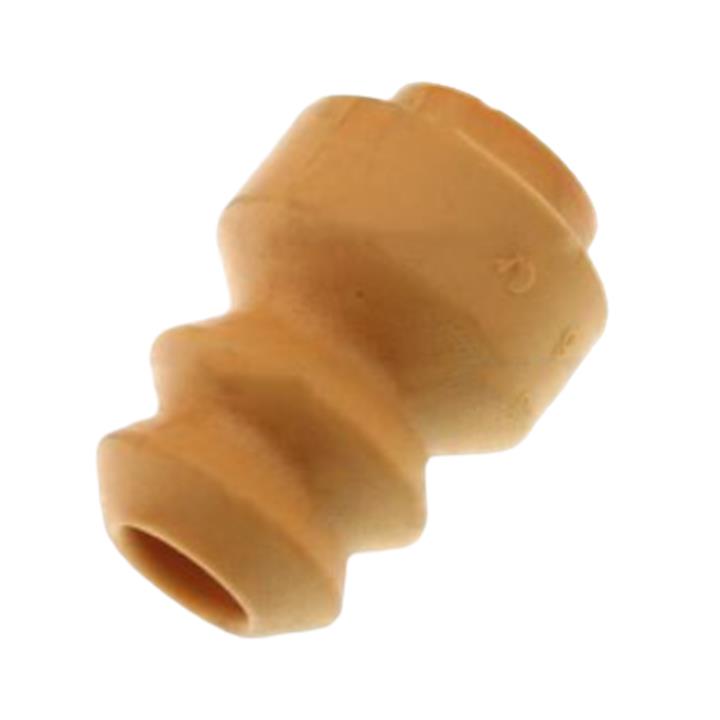
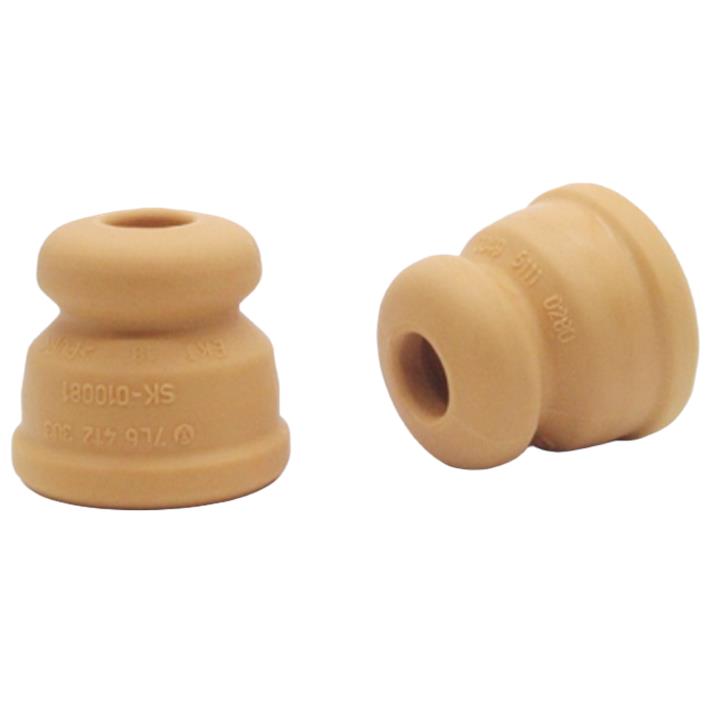
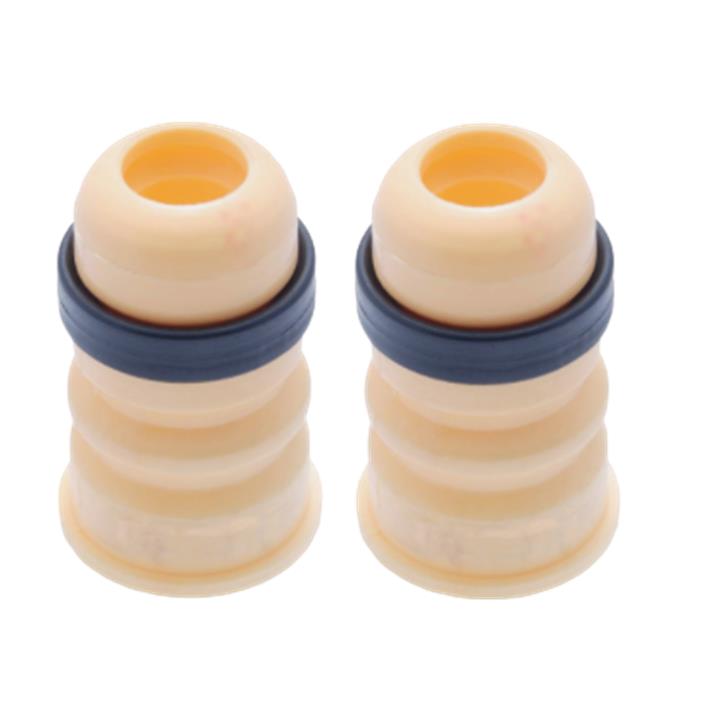
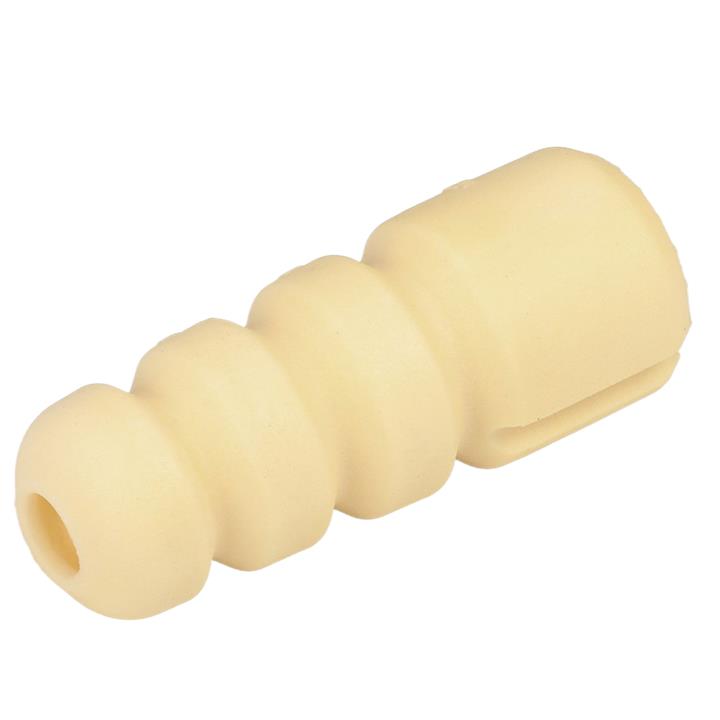
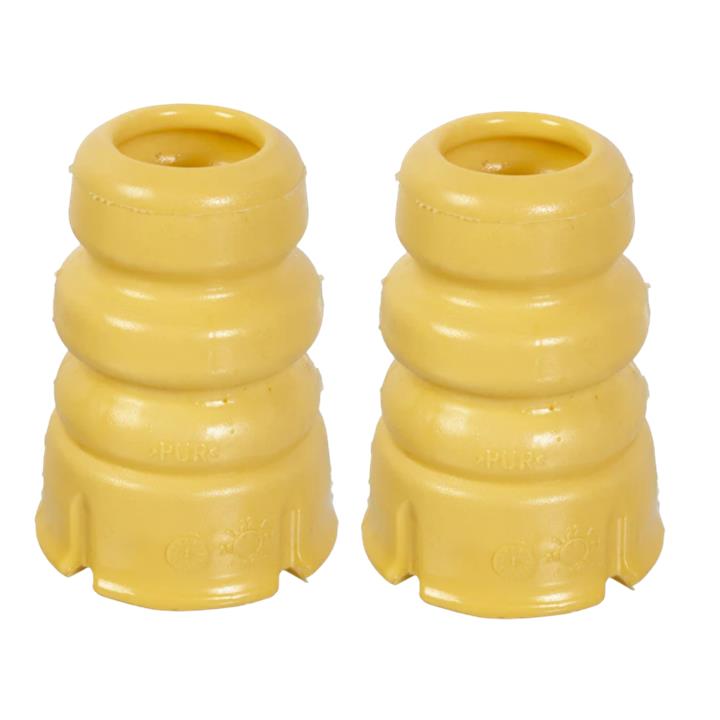
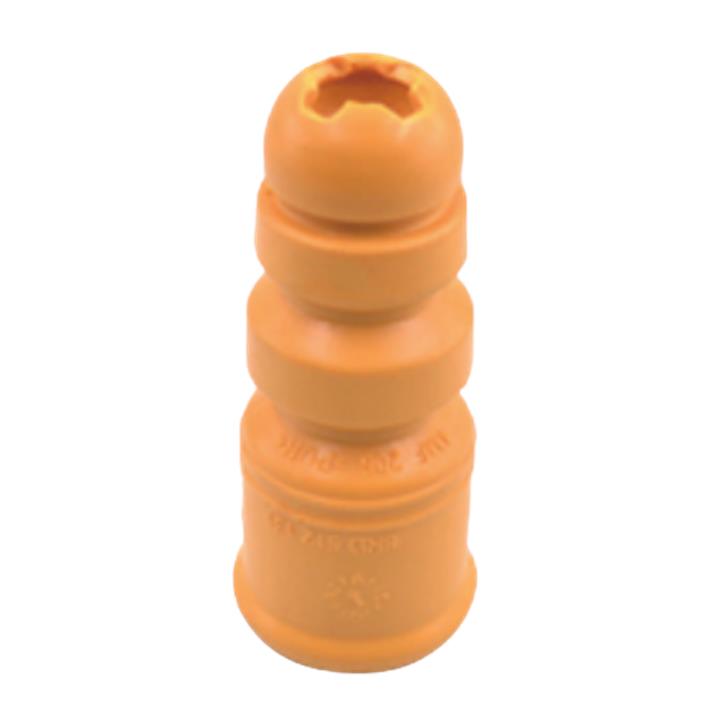
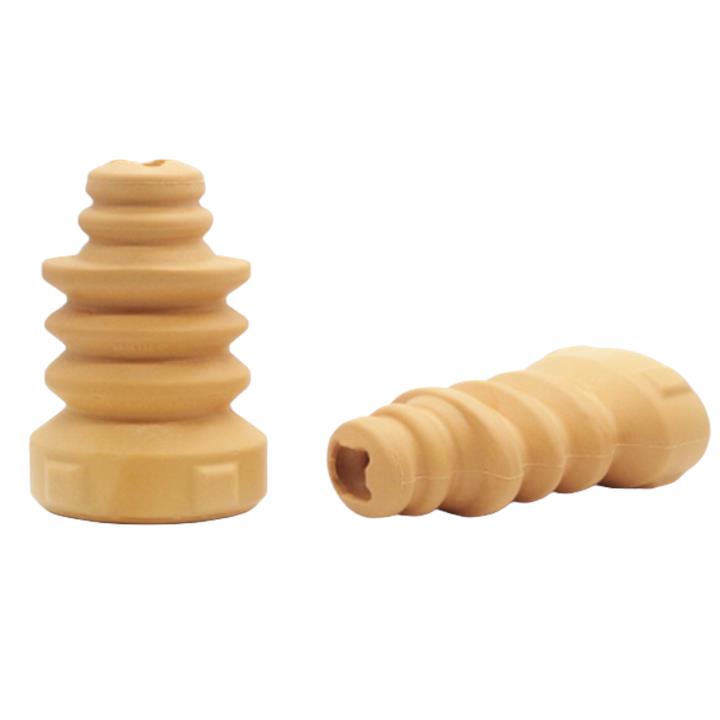
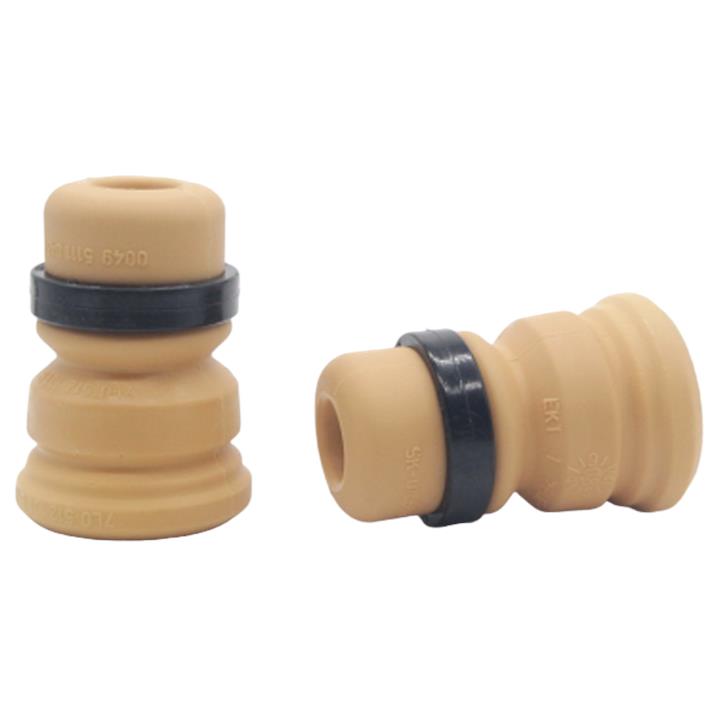
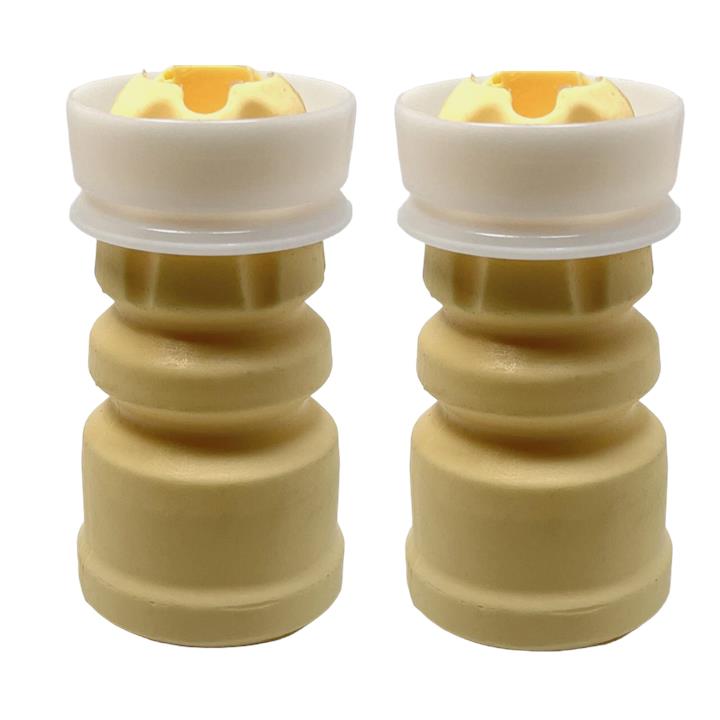
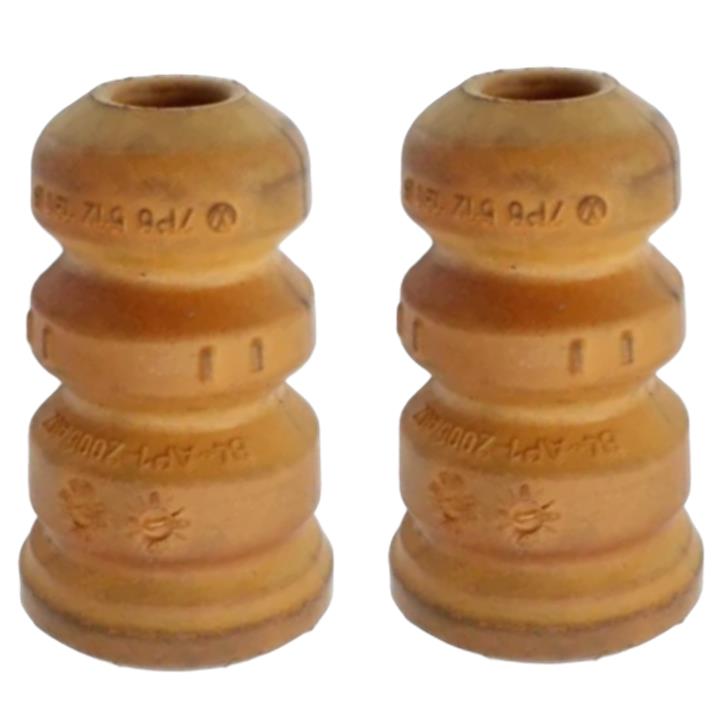
A polyurethane buffer block is a small part that carries a large responsibility: it takes the shock, vibration and misalignment that would otherwise travel straight into a bracket, a frame rail or a damper. The product described on this page is a high elasticity, integrated foam molded polyurethane buffer block — moulded as a single closed-cell piece rather than cut from sheet or bonded from layers — and it can be customized in density, hardness, geometry and colour. For importers, distributors and OE purchasing teams, this is one of the most frequent custom enquiries in the suspension and NVH category, so this page covers how the part is specified, how buyers normally source it, and what to confirm before releasing an order.
Microcellular polyurethane is produced by reaction injection moulding (RIM) or a casting process in which the compound expands inside the tool. The result is a skin-and-core structure: a denser outer skin that resists tearing and abrasion, and a cellular core that gives the progressive, spring-like behaviour needed for shock absorption. Because the part is formed in one shot, "integrated" here simply means there is no adhesive joint inside the block. That matters on parts that see repeated compression, where a bonded or laminated construction is the usual failure point.
Elasticity in a buffer block is not one number. Buyers should look at three things instead: the hardness of the compound (commonly quoted in Shore A), the density of the foam (g/cm³), and the load-deflection curve measured at the working stroke. A block can be soft at light load and firm at full compression, which is what makes microcellular PU useful for end stops and vibration mounts. Raising density normally raises both load capacity and durability; lowering it softens the ride at the cost of load rating.
Typical applications include cabin and body mounting buffers, suspension jounce and rebound bumpers, commercial vehicle limit blocks, off-road and racing suspension hardware, and general machinery vibration isolation. Because the same compound family is used across these fields, many buyers place one enquiry that covers both a polyurethane bump stop range and a custom buffer programme in the same order.
The figures below describe the range that can be moulded. Exact values are fixed on the drawing or the sample approved for each project, so they must be confirmed item by item rather than assumed.
| Parameter | Typical range / option |
|---|---|
| Product name | Polyurethane buffer block / PU buffer |
| Production process | Integrated foam moulding (one-piece, no bonded joint) |
| Material | Microcellular polyurethane (PU / PUR) |
| Hardness | Adjusted per application; quoted in Shore A |
| Density | Set by moulding and formulation, agreed per project |
| Geometry | Cylindrical, conical, waisted, ribbed, block or plate form |
| Colour | Standard colours or matched to a customer reference |
| Elasticity | High elasticity grade for repeated compression |
| Customization | Custom size, hardness, density and marking |
| Country of origin | China |
| Delivery time | 15-30 days |
| Packaging | Neutral export packaging, carton or pallet |
Treat the table as a starting point for a specification discussion. If your application is load-sensitive, ask for the load-deflection curve rather than the hardness figure alone — two blocks quoted at the same Shore A value can behave differently once they are compressed past 50% of their free height.
The most direct search pattern is the part name plus a measurable attribute: "polyurethane buffer block 60 mm diameter", "PU buffer 50 Shore A", "foam molded buffer block high elasticity". If you have those two pieces of information, a supplier can usually quote from an existing mould, which shortens both the quotation and the lead time.
Searches such as "polyurethane buffer block manufacturer" or "custom PU buffer supplier China" are used by buyers who want to compare capability rather than a single part. In that comparison, the deciding questions are usually: does the supplier control its own moulding, can it supply dimensional and density records per batch, and does it handle both a catalogue item and a custom development in the same channel. Those three points are usually what separates a moulding manufacturer from a trading company.
When a buffer block sits in an OE suspension or body mount, the OE reference is the safest identifier. Searching the OE number returns the correct geometry regardless of how the part is named in different catalogues, and it also allows cross-referencing to an internal SKU. If the OE marking has worn off the used part, measure the key dimensions and photograph the profile before the enquiry goes out.
Model-based sourcing (for example, a light commercial van or an off-road platform plus "buffer block") is a useful first filter but not a final answer. One model badge frequently covers more than one suspension specification, and body-mount buffers differ between trim levels. Always confirm fitment against the dimensions or the OE reference before a container is loaded.
Development enquiries usually arrive as a drawing, a 3D file, a used sample or even a photograph with dimensions. All four can be worked from; a sample is the most reliable because it captures the compression behaviour as well as the geometry. The scope of what can be adapted — size, density, hardness, insert type and marking — is set out under custom parts.
A practical way to start is a two-step order: tooling plus a small pilot batch for validation on the vehicle, then the production volume once the load-deflection behaviour is confirmed. That structure keeps the initial commitment low while protecting the delivery schedule.
Because foam-moulded parts are sensitive to process control, verification should be built into the purchase order rather than left to incoming inspection.
A supplier that answers these points with documents rather than assurances is normally the one that also holds a consistent process. Buyers who package the buffer block together with chassis and suspension components can reduce supplier count and freight cost at the same time.
Judging the part as part of the whole assembly gives a more reliable diagnosis than inspecting the block alone, and replacing the buffer while the surrounding hardware is already dismantled is usually the lower-cost decision.
Yes. Size, hardness, density and colour can all be adapted. Send the drawing, a sample or the measured dimensions together with the expected annual quantity, and the supplier can confirm whether an existing mould applies or a new tool is needed.
They suit different duties. Rubber is generally cheaper and works well in simple compression. Microcellular polyurethane offers a wider range of density, better load-deflection control and usually better resistance to ozone, oil and abrasion, which is why it is widely used for progressive end stops and vibration buffers.
Four items are enough to start: the part dimensions, the application and expected load, the target quantity per year, and any OE or internal reference number. A used sample or a 3D file shortens the process further.
Standard production runs follow a 15-30 day delivery window after drawing approval. Custom projects that require a new mould add a tooling and sampling stage before the production batch is scheduled.
If you are specifying a high elasticity foam molded polyurethane buffer block for a suspension, cabin mount or industrial application, send the dimensions, the load condition and your target quantity. A BONPORA engineer will come back with the recommended density and hardness, the tooling position if a new mould is required, packaging options and an indicative lead time, so the part can be priced into your next buying cycle. The full component range is listed in the product catalogue.