sales@bonporaparts.com
0086-10-64988621
English
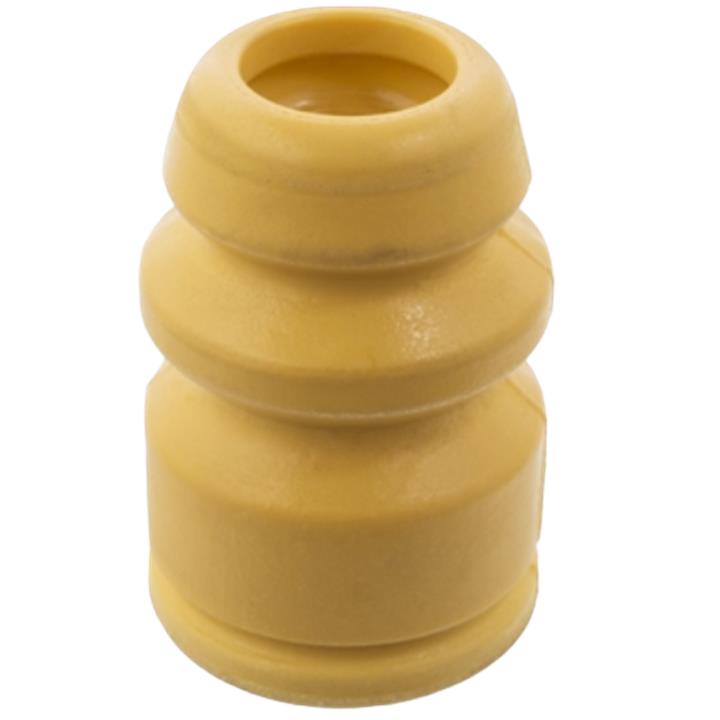
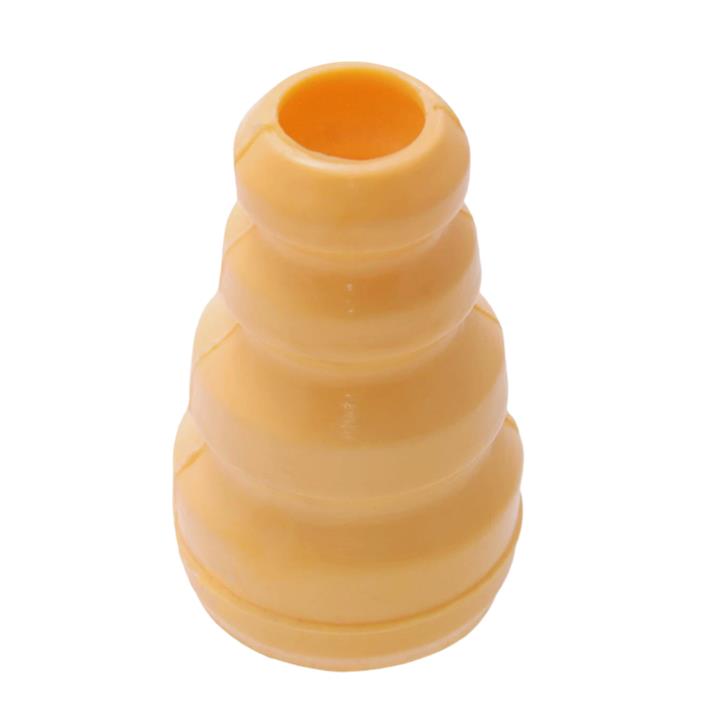
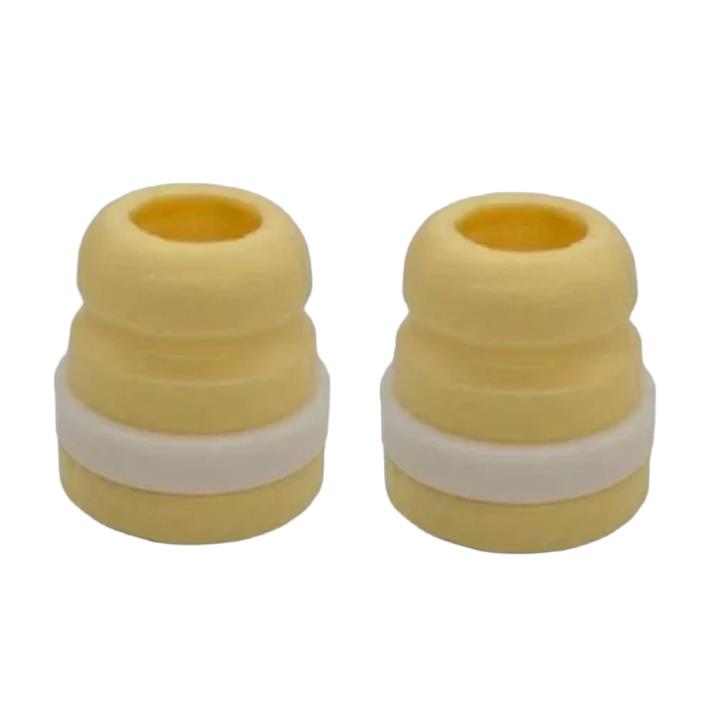
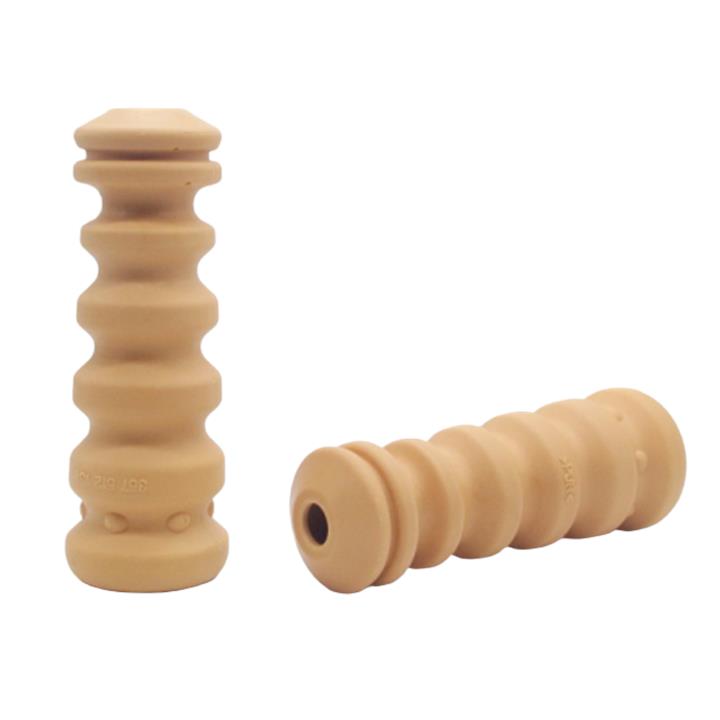
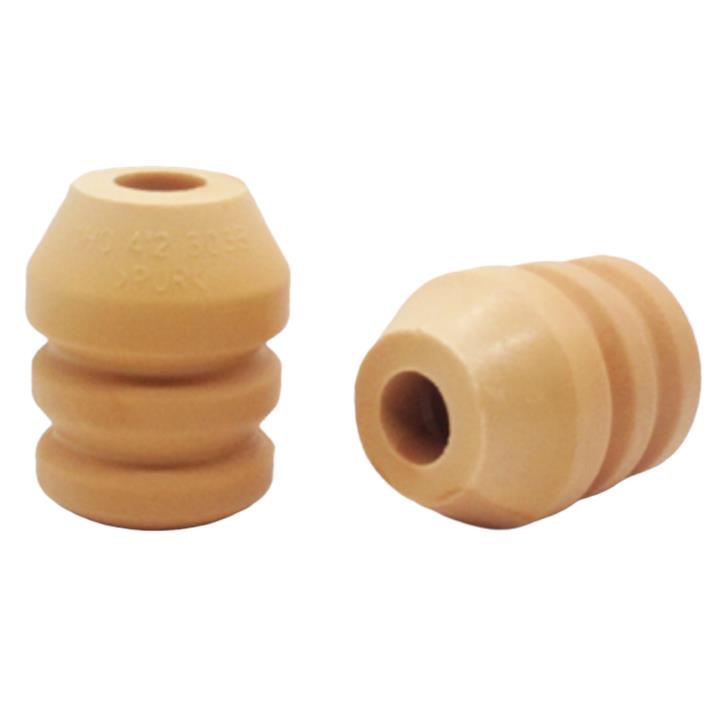
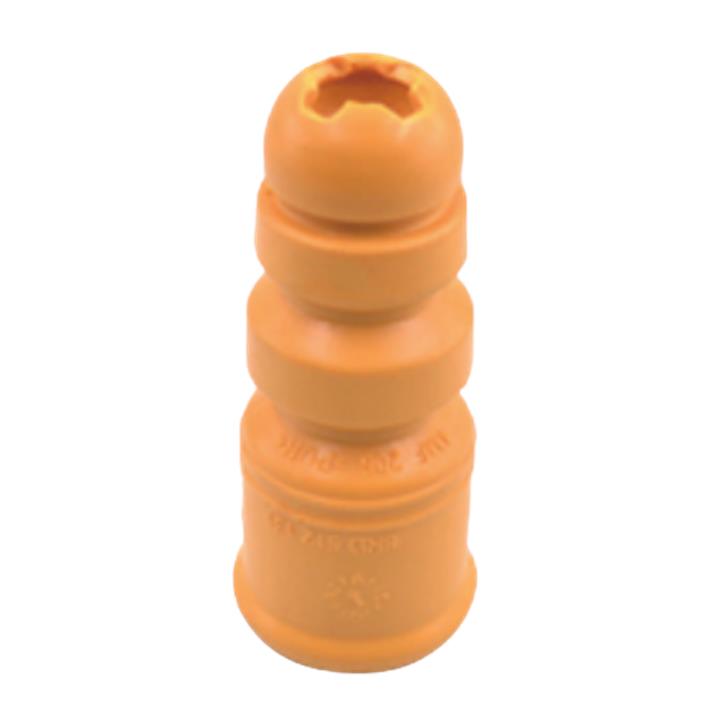
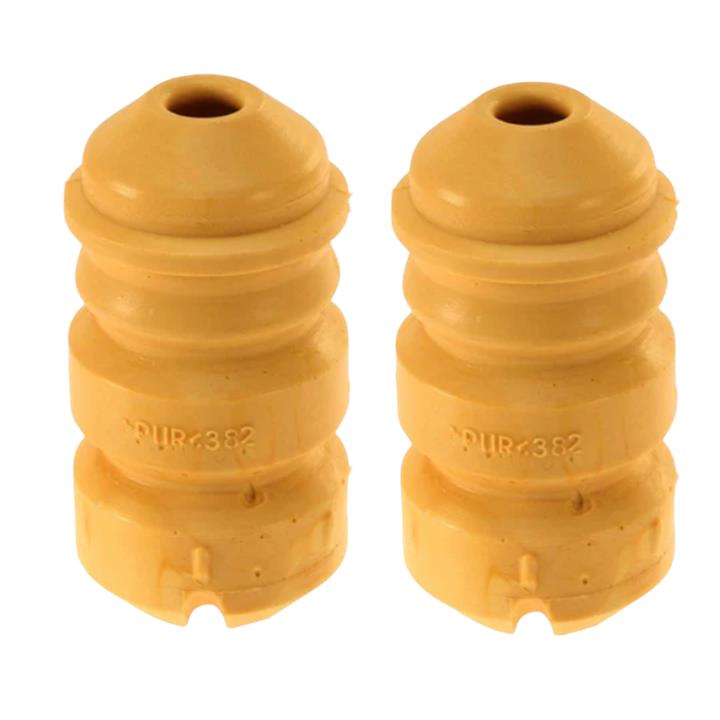
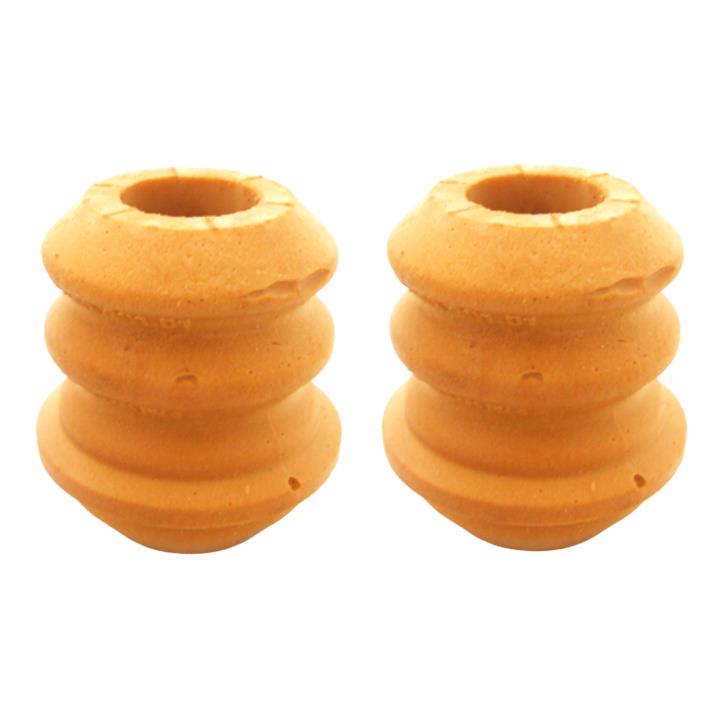
The rear suspension of the first-generation Mazda 6 depends on a small component that rarely gets attention until it fails: the strut bump stop, sold under OE number GJ6A-28-1A0A. Mounted on the rear damper, this compression buffer takes the final impact when the axle reaches full travel and protects both the shock absorber and the vehicle body. Bonpora supplies this part as item 4110049 in micro-cellular polyurethane, a material choice that resists the hardening and crumbling common in aged rubber units.
This guide covers the fitment range, cross-reference numbers, technical dimensions and the practical checks that importers and workshop buyers use when sourcing Mazda suspension bump stops from manufacturers. It is written for parts distributors, online sellers and repair chains that need stable repeat supply rather than one-off purchases.
The GJ6A-28-1A0A is a rear-axle jounce bumper, also listed in catalogues as a rear spring bumper or rear strut bumper. It slides over the damper rod of the rear shock absorber and sits above the dust cover. When the rear suspension compresses beyond normal travel — over a deep pothole, a speed bump taken too fast, or a fully loaded wagon — the bumper compresses and absorbs the energy that the coil spring can no longer take. Without this buffer, the strut bottoms out directly, sending metal-to-metal impact into the chassis and wearing the damper seal far faster.
A collapsed or crumbling bump stop changes how the rear axle behaves long before the driver sees the part. Typical symptoms include sharper impacts on broken roads, clunking from the rear when carrying passengers or cargo, and reduced clearance that lets the tyre reach the wheel arch. Workshops therefore inspect bump stops whenever rear shock absorbers are replaced, and many distributors list the part alongside shock absorber dust covers so both items ship in the same service kit.
Catalogue data from several independent aftermarket suppliers consistently place GJ6A-28-1A0A on the rear axle of the first-generation Mazda 6, sold as the Atenza in Japan and some Asian markets. The table below summarises the fitment range reported by these catalogues.
| Model | Body Style | Chassis Code | Years | Axle |
|---|---|---|---|---|
| Mazda 6 | Hatchback | GG | 2002–2008 | Rear |
| Mazda 6 | Saloon | GG | 2002–2008* | Rear |
| Mazda 6 | Station Wagon | GY | 2002–2008 | Rear |
| Mazda Atenza | Hatchback / Saloon / Wagon | GG / GY | 2002–2008 | Rear |
*Some catalogues extend saloon fitment beyond the main production run for specific markets. Because the same chassis family stayed in production for different periods in different regions, the OE number and the dimensions below remain the safest confirmation before an order is placed.
The same rear bumper appears under several references: Mazda OE GJ6A-28-1A0A and the closely related GJ6A-28-1B0A, the FEBEST aftermarket code MZD-001, and the Bonpora part number 4110049. Buyers comparing quotations should ask suppliers to state the exact OE reference moulded or printed on the part, because the 1A0A and 1B0A versions serve the same application but may differ slightly in height. Storing cross-references in your own catalogue also helps customers who search by OEM number instead of by vehicle model.
The specification below lists the production parameters Bonpora holds for this item. The two-diameter profile and the overall length are the figures that decide fitment, so check them against the used part removed from the vehicle before ordering in volume.
| Parameter | Value |
|---|---|
| Product Name | Strut Bump Stop |
| Bonpora Part Number | 4110049 |
| OE Reference | GJ6A-28-1A0A |
| Fitment | Mazda 6 / Atenza (GG, GY) |
| Axle Position | Rear |
| Dimensions | Φ20 × Φ21.4 × 108.8 mm |
| Material | Micro-cellular polyurethane |
| Warranty | 1 year |
| Delivery Time | 15–30 days |
| Packaging | Neutral export packaging |
| Custom Service | OEM and custom design support |
Independent catalogues list the height of the OE-equivalent part at around 107 mm, which matches the 108.8 mm production dimension within normal manufacturing tolerance. The 20 mm and 21.4 mm diameter steps correspond to the top cap and the base section that fits over the damper rod area.
Original-equipment bump stops are typically produced from micro-cellular rubber. After years of ozone exposure, heat cycles and repeated compression, the cell structure collapses and the surface starts to crumble. Micro-cellular polyurethane keeps a more stable density profile across the same service life, which is why most European suspension brands already supply polyurethane bump stops as their standard replacement grade. For fleet and taxi operators whose Mazda 6 vehicles run high annual mileage, the material difference directly extends replacement intervals.
A bump stop works only in the last few millimetres of travel, so its stiffness curve must stay predictable. Polyurethane keeps its damping behaviour across a wide temperature range, from sub-zero winter roads to the sustained heat of Middle East and Australian summers, where rubber units tend to harden earlier and lose energy absorption.
Because the part controls the clearance between the tyre and the wheel arch, permanent set matters. A rubber unit that sags by several millimetres changes the available travel of the suspension at full load. Polyurethane shows lower compression set, keeps its length, and resists the oil and salt spray encountered around the damper area.
Professional buyers usually combine several search patterns when building a sourcing list: the part type plus the OE number (strut bump stop GJ6A-28-1A0A), the part type plus the vehicle (Mazda 6 rear bump stop), the part type plus the supplier type (bump stop manufacturer or wholesale supplier), and the material for an upgraded option (polyurethane bump stop). Searching by OEM number filters out look-alike parts for other chassis and remains the most reliable method for suspension buffers, where small dimension differences are invisible in photographs.
Before committing to a volume order, request the dimension drawing rather than relying on listing photos. Confirm three figures: overall length, top diameter and base diameter, then compare them with the specification table above. A sample installation on a workshop vehicle is the fastest way to validate a new supplier, and it costs far less than a rejected container.
For repeat supply, ask about mould ownership, material batches, hardness control and inspection records. A manufacturer that can show consistency data on hardness and height will keep the fifth container identical to the first, which protects your catalogue reviews and return rates.
Beyond the catalogue range, Bonpora supports OEM and custom design work for suspension buffers. Buyers can order custom heights, diameters, shore hardness values and colours, with private moulds and branded packaging for distributor programmes. Custom projects start from drawings or from dimensional measurements of a used sample; the engineering team converts them into a mould design and confirms samples before mass production. See the custom parts section for the development workflow and typical project steps.
Production batches are checked for height, diameter, density and visual surface quality before packing. The item carries a 1-year warranty against material defects under normal use. Standard lead time is 15 to 30 days depending on order quantity and season, which fits the replenishment cycles of most distributors. Mixed-container loading with other suspension items is available, so a buyer can combine bump stops with control arms, bushings or stabilizer links in one shipment.
Parts ship in neutral export packaging without factory branding, which lets resellers apply their own labels and barcodes. Each bump stop is bagged, then packed in master cartons sized for stable pallet stacking. For online sellers, neutral packaging also avoids marketplace conflicts with brand-wording claims.
It is a rear-axle part. Catalogues for the Mazda 6 GG/GY list this number only for the rear suspension; the front axle of the same chassis uses different bump stop references. Confirm the axle position before ordering, since front and rear buffers look similar in photographs.
The first-generation Mazda 6 and Mazda Atenza (chassis codes GG and GY, roughly 2002 to 2008) in hatchback, saloon and station wagon body styles. Some catalogues continue the saloon reference beyond 2008 for certain markets, so the OE number remains the primary confirmation.
Both references cover the same rear application on the GG/GY chassis and are commonly cross-referenced by aftermarket brands. The 1B0A version may differ slightly in height. When replacing a worn unit, matching the height of the removed part avoids changing the available travel of the rear suspension.
Yes. The factory accepts custom design projects based on drawings, sample measurements or a target vehicle application, including custom shore hardness and colours, subject to minimum order quantities. Contact the sales team with the OE number or the dimensions to receive an engineering review and a quotation.
Bonpora supplies the GJ6A-28-1A0A rear strut bump stop (part number 4110049) together with a full polyurethane suspension range for Japanese, European and American vehicle platforms. Send the OE number, required quantity and destination port to receive current pricing, packing details and lead time. Samples for workshop validation are available before volume orders.