sales@bonporaparts.com
0086-10-64988621
English
A polyurethane buffer block rarely fails on its own. What decides whether the part still holds its height after a full service life is usually the process behind it — the shot weight, the tool temperature, the cure, the record kept on the shift. IATF 16949 is the quality management system standard the automotive supply chain uses to control exactly that, and for importers, distributors and OE purchasing teams it marks the difference between a part that is correct on the first shipment and one that repeats to the same specification on the tenth. This page explains what the standard covers for a moulded polyurethane buffer, which documents a buyer can reasonably ask for, and how to check a supplier’s claim before a purchase order is released.
IATF 16949 is the automotive sector quality management system standard. It builds on ISO 9001 and adds the requirements the vehicle supply chain needs: risk-based planning, a defined product development sequence, process controls on the shop floor, and documented traceability from raw material lot to shipped carton. The certificate is issued to a manufacturing site, not to a trading company, and the certificate carries a scope that names the site and the processes it covers. Two buffer blocks can look identical and still sit under very different levels of control, which is why the scope matters as much as the certificate itself.
A metal component can often be judged after the fact with a calliper. A microcellular polyurethane buffer is formed while the compound is expanding, so density, cell structure and skin thickness are set by the process rather than by a cutter. Small shifts in material temperature, shot weight or demould time change hardness and compression set without changing the outside appearance. A controlled process, with parameters recorded and reacted to, is what keeps a moulded buffer inside its specification window from one batch to the next.
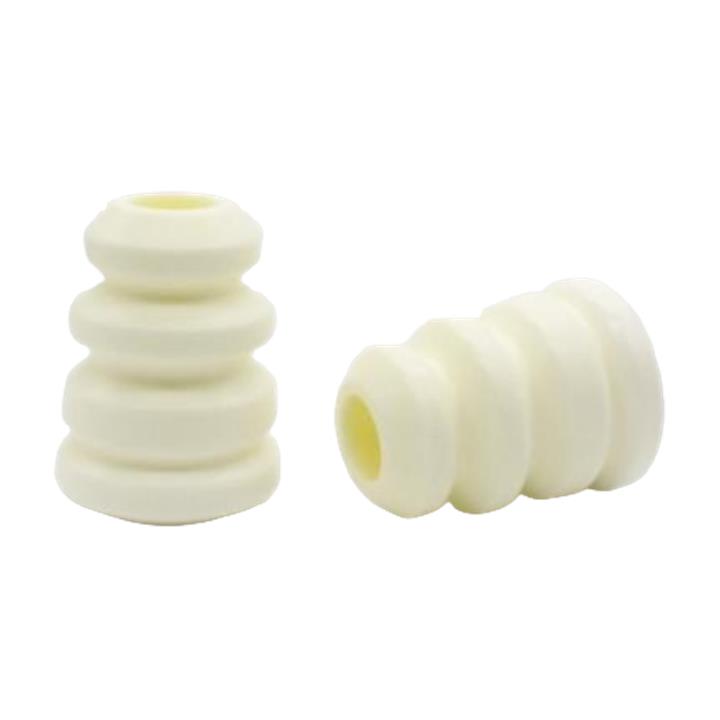
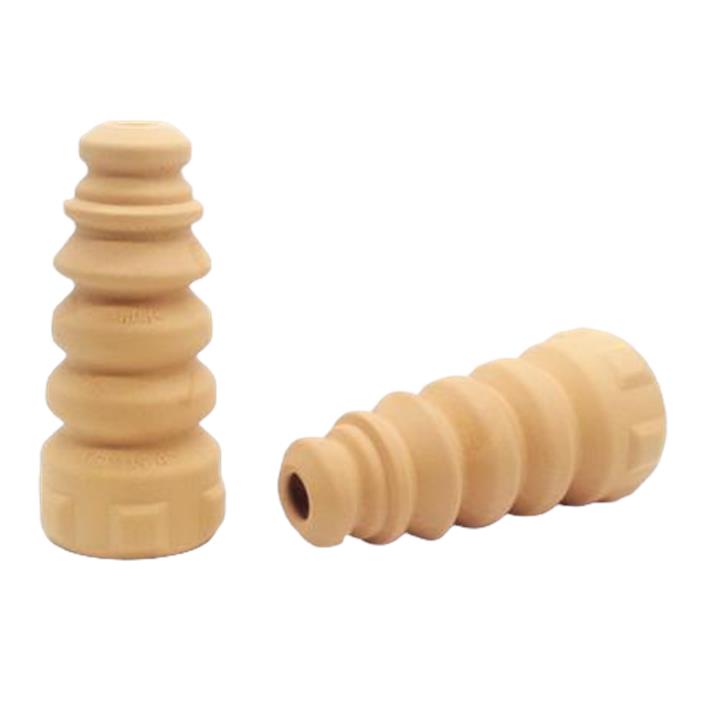
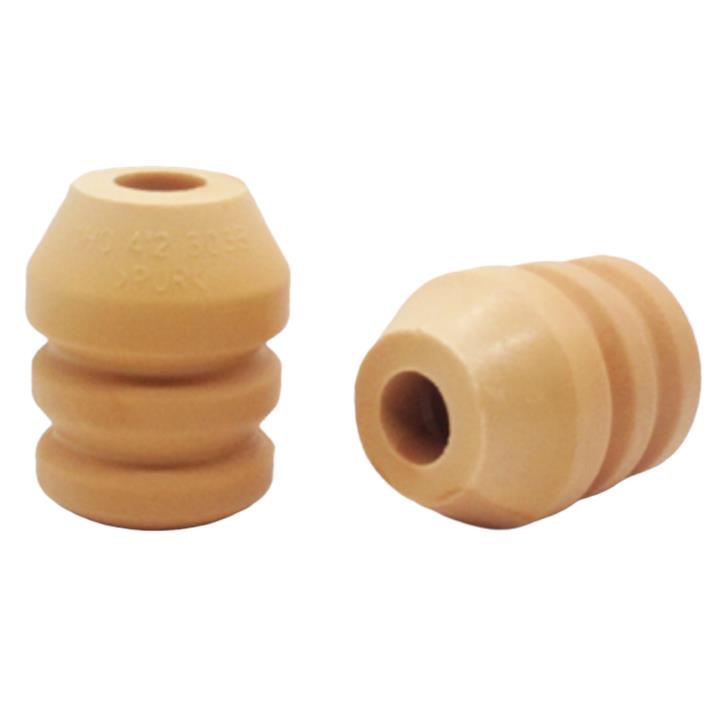
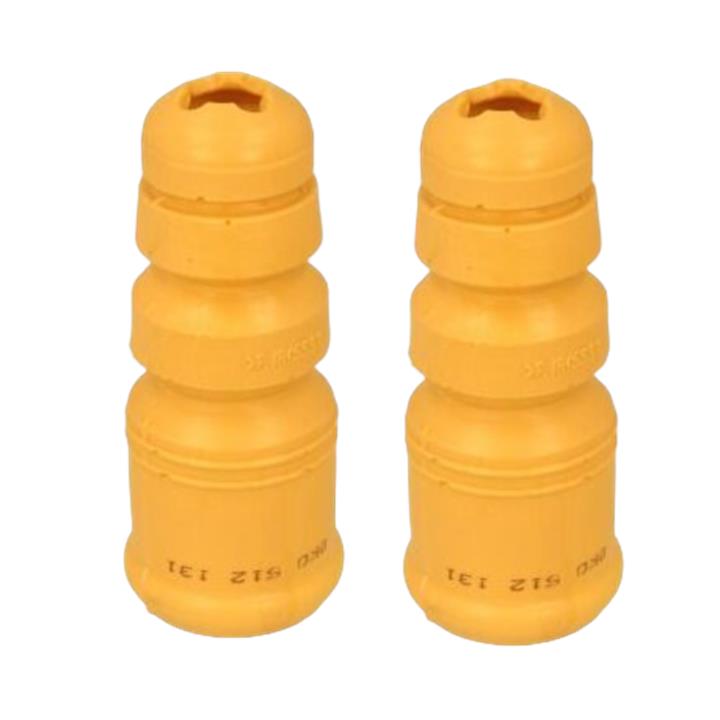
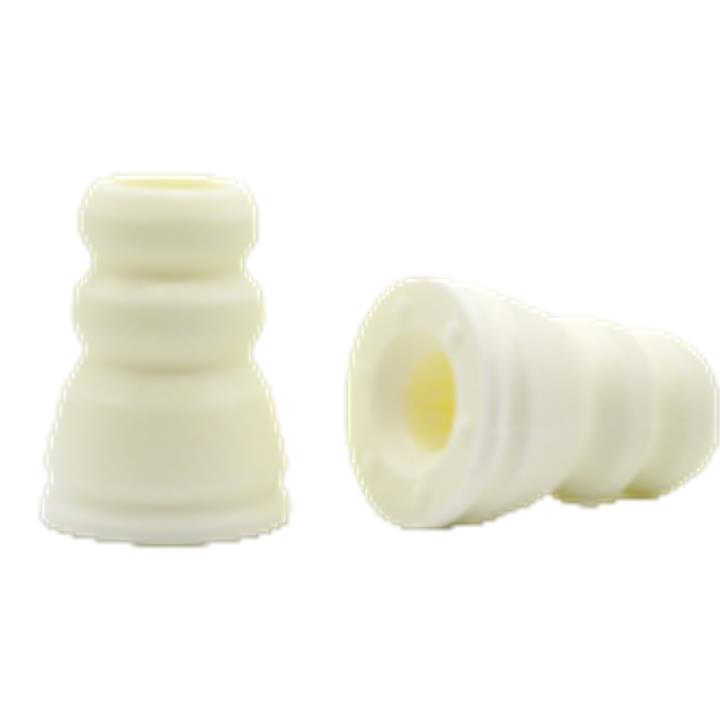
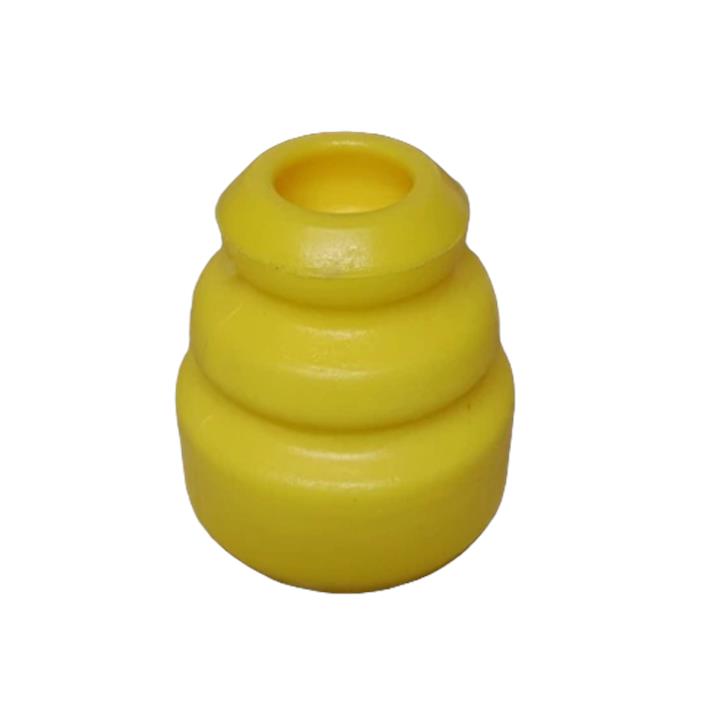
Typical duties include suspension jounce and rebound bumpers, body and cabin mounts, commercial vehicle limit blocks, and industrial vibration isolation. Because the same compound family serves these fields, many buyers place one enquiry that covers both a polyurethane bump stop range and a custom buffer programme, and expect the same documentation standard on both.
The list below is the usual evidence set for an automotive-grade moulded part. Not every project needs every item, so agree the level with the supplier at the quotation stage and write it into the purchase order rather than leaving it to incoming inspection.
| Document | What it demonstrates | What to check |
|---|---|---|
| IATF 16949 certificate | Site-level quality management approval | Scope names the moulding process; validity date current; issuer recognised |
| Control plan | How each process step is controlled | Matches the latest drawing revision; inspection points and frequency stated |
| Process FMEA | Risk analysis of the moulding operation | High-severity failure modes have closed actions, not open ones |
| PPAP package | Production part approval evidence | Level agreed with your team; dimensional report, material data and capability studies included |
| Dimensional report | Measured values against drawing | Sample size, gauge used, and pass or fail against each tolerance |
| Material and performance data | Density, hardness, load-deflection, compression set | Test method stated; values from the production batch, not a generic datasheet |
| Batch traceability record | Link from part marking to raw material lot | Moulded code ties to date, machine and material lot |
| 8D or corrective action report | Response to a past non-conformance | Root cause addressed, not only containment of the affected units |
A certificate alone is not proof of process control. Ask for the certificate number and confirm the scope against the site that will actually run your mould. Where the parts are moulded in-house, the certificate should name that process; where a step is subcontracted, the supplier is still expected to control it.
In a controlled operation, parameters such as material temperature, shot weight, tool temperature and demould time are set on the control plan and recorded per shift. Key product characteristics — normally overall height, bore or insert position, and hardness — are monitored on a defined frequency, and the reaction to an out-of-control condition is decided in advance instead of after the fact. This is the part of IATF 16949 that a buyer actually feels, because it is what prevents a soft batch from reaching the loading dock.
Traceability means a marking on the moulded part that leads back to the production date, the machine and the raw material lot. When a field issue appears months after delivery, traceability decides how narrow the suspect range is. Without it, a complaint can only be answered with a full-batch reaction; with it, the question is limited to a defined production window. Ask how the code is applied and how long the records are kept, because traceability that stops at the carton label is of limited use.
Gauges and test equipment should sit on a calibration schedule, and measurement systems should be checked where a characteristic is critical. Beyond dimensions, the properties that determine buffer life are hardness at a defined position, load-deflection at the working stroke, compression set after heat ageing or repeated cycles, and — for parts exposed to weather, salt or lubricant — ozone and oil resistance results. Requesting the test method alongside the number is a quick way to tell a measured value from a copied one.
Searches such as "polyurethane buffer block IATF 16949" or "automotive grade PU buffer manufacturer" come from buyers who already have a part in mind and need a source that can support a qualified programme. The useful filter here is not the word on the website but the certificate scope and the sample documents behind it.
Enquiries phrased as "PU buffer block manufacturer" or "custom polyurethane buffer supplier China" are usually capability comparisons rather than single-part requests. The deciding questions tend to be the same three: does the supplier control its own moulding and tooling, can it supply batch records with each shipment, and can it handle a catalogue item and a development project through the same channel. Those points normally separate a moulding manufacturer from a trading company.
Where the buffer sits inside an OE assembly, the OE reference is the safest identifier: it returns the correct geometry regardless of how the part is catalogued elsewhere, and it allows cross-referencing to an internal SKU. If the marking has worn off the used part, measure the key dimensions and photograph the profile before the enquiry goes out.
Development enquiries arrive as a drawing, a 3D file, a used sample or a photograph with dimensions. All four can be worked from, and a sample is the most reliable because it captures compression behaviour as well as geometry. The scope of what can be adapted — size, density, hardness, insert type and marking — is set out under custom parts.
Buyers who combine a buffer block with chassis and suspension components from one controlled source usually reduce both the supplier count and the audit workload that comes with it.
For direct supply into an OE programme it is normally a customer requirement. For aftermarket and industrial distribution it is not mandatory, but a supplier working to the standard usually offers better batch consistency, clearer traceability and a documented reaction to problems — all of which reduce the cost of a quality escape, so many distributors treat it as a capability signal even when it is not a formal condition.
IATF 16949 is the automotive-specific standard and includes ISO 9001 as its base. On top of the general requirements it adds a defined product development sequence, production part approval, control plans, process risk analysis, measurement system analysis, statistical process control, part traceability, corrective action discipline and customer-specific requirements. In practice a supplier certified to IATF 16949 maintains a more detailed evidence trail for every production batch.
Four items are enough to start: the part dimensions, the application and expected load, the target annual quantity, and any OE or internal reference number. Adding the quality documents you require — for example a dimensional report with each batch — lets the supplier build them into the quotation instead of renegotiating later.
Standard production runs follow a 15-30 day delivery window after drawing approval, and the batch records are prepared in the same window. Projects that need a new mould add a tooling and sampling stage, including a first-article check, before the production batch is scheduled.
If you are specifying a moulded polyurethane buffer block for a suspension, body mount or industrial application and need the documentation to match an automotive programme, send the dimensions, the load condition, your target quantity and the quality documents your team requires. A BONPORA engineer will reply with the recommended density and hardness, the tooling position if a new mould is needed, the record set that accompanies each batch, packaging options and an indicative lead time, so the part can be priced into your next buying cycle. The full component range is listed in the product catalogue.