sales@bonporaparts.com
0086-10-64988621
English
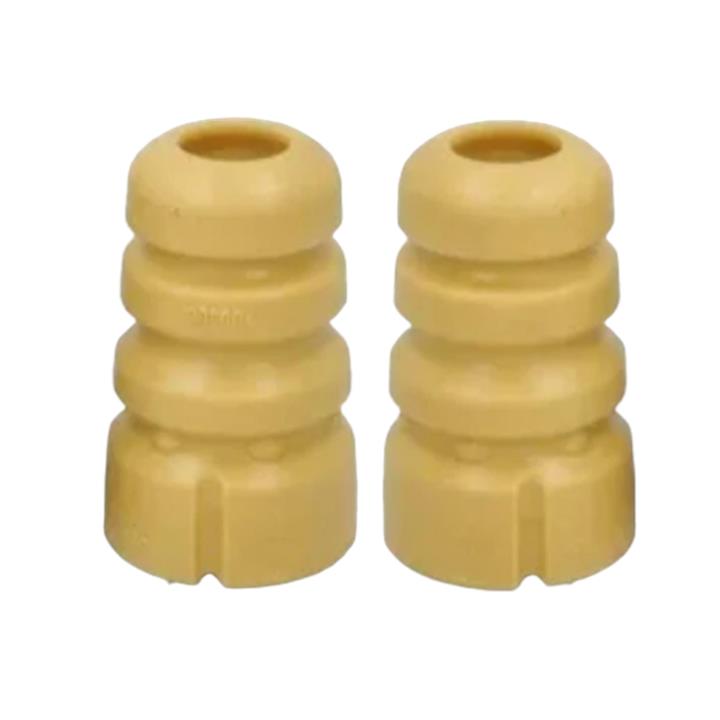
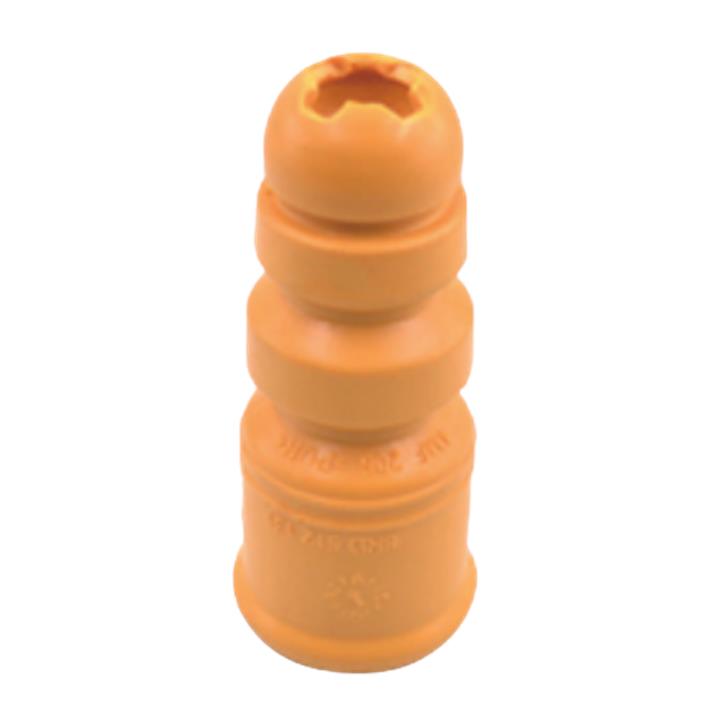
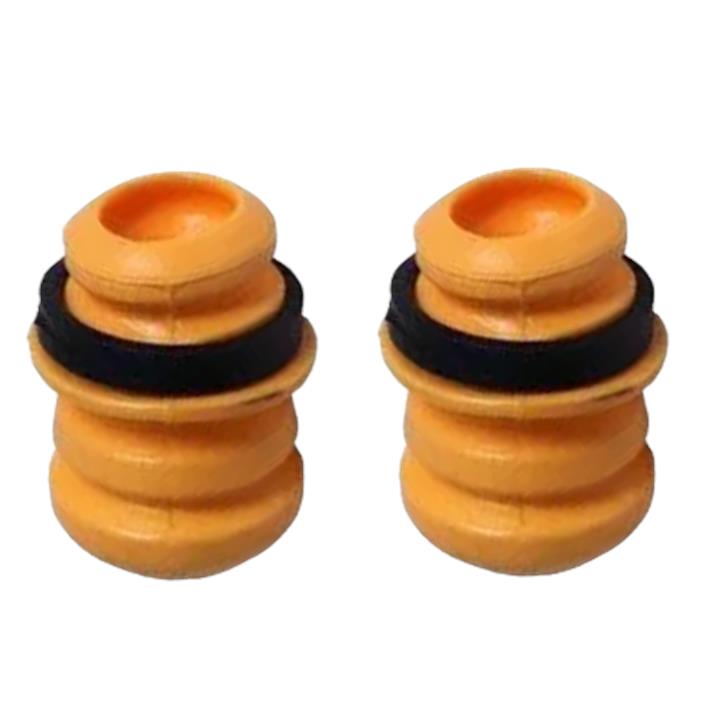
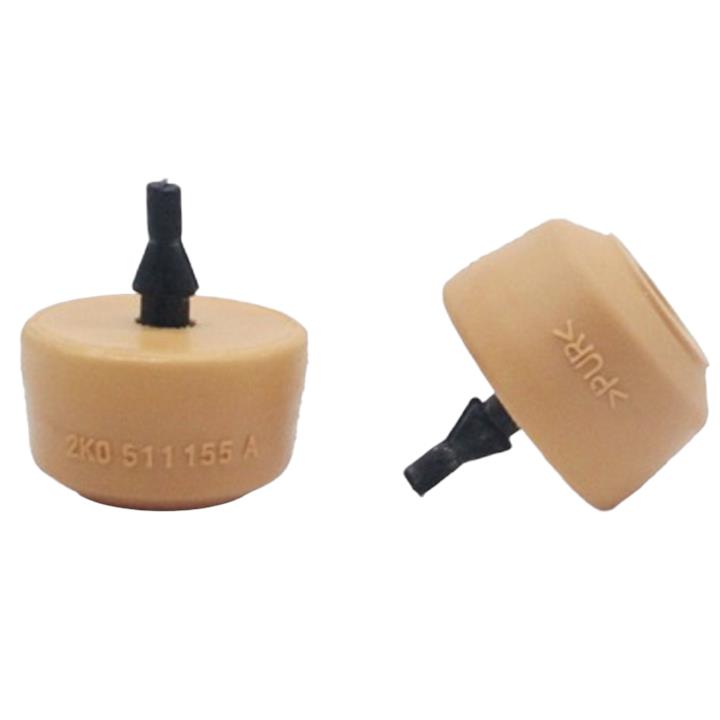
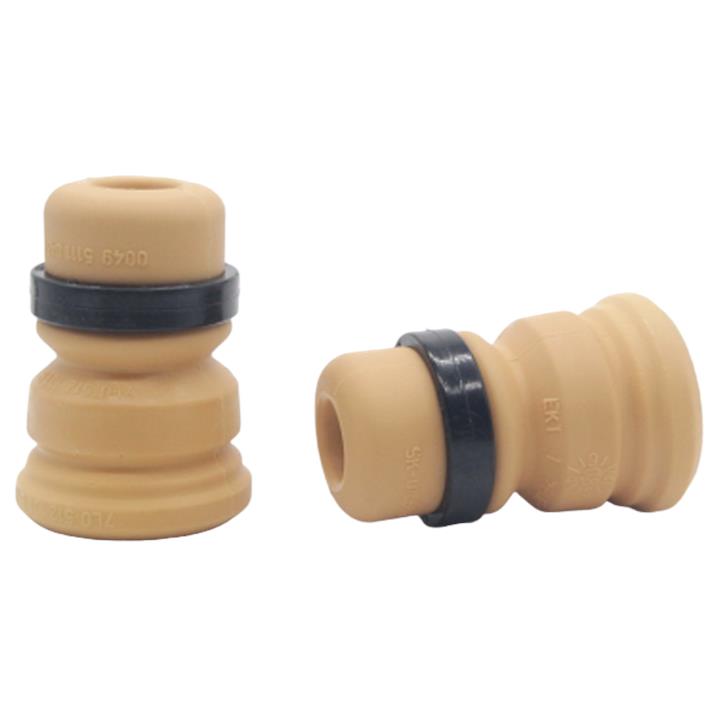
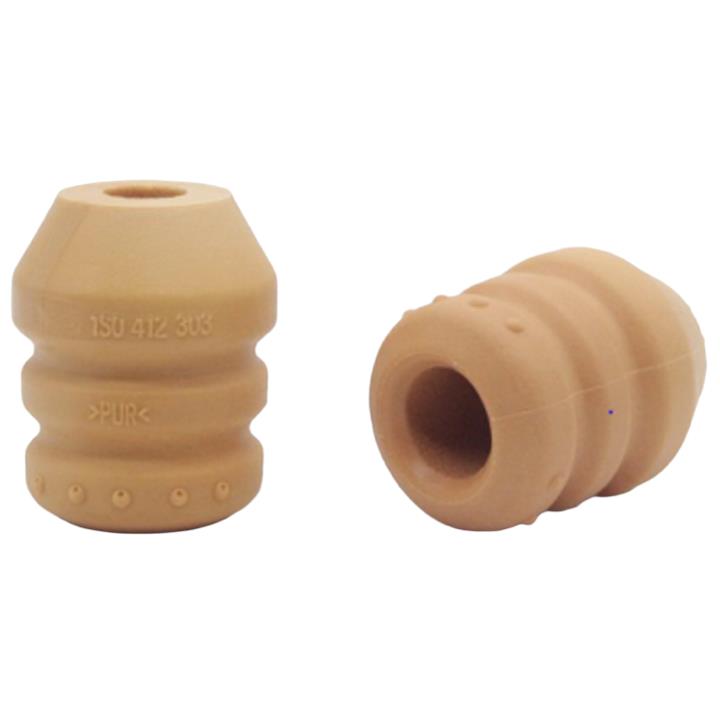
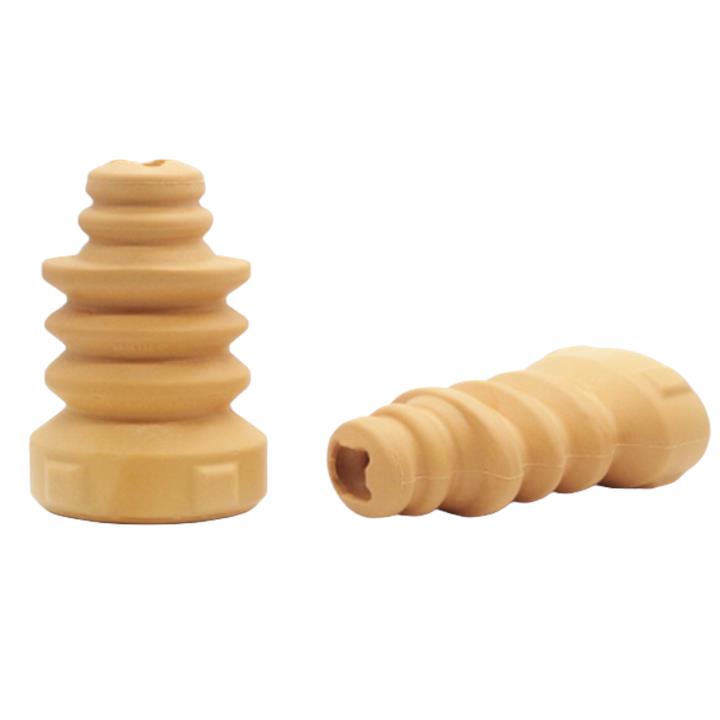
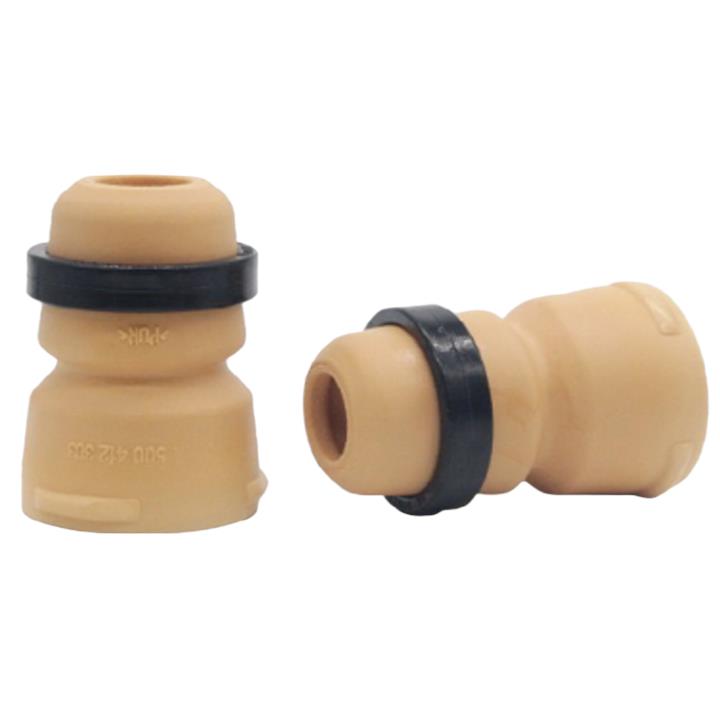
The Porsche strut bump stop 98733330101 is the rear axle suspension buffer used across the 987 generation of the Boxster and the 987C Cayman. It mounts at the top of the rear shock absorber and is often catalogued as a coil spring damper, stopper or additional spring. Because it controls the final stage of rear suspension travel, buyers who search for this number are usually rebuilding a tired rear shock assembly, refreshing a track car, or sourcing the part in volume for a workshop or reseller program.
Bonpora Parts supplies this rear bump stop as a polyurethane replacement built to a measured profile of Φ23 x Φ57.5 x 63 mm. This page explains how the OE number is used, which Porsche models it belongs to, how to specify a custom version, and what purchasing teams should confirm before releasing an order.
On a coil-sprung Porsche the rear damper does not travel freely through its full stroke. An elastomer buffer sits on the piston rod and becomes an active part of the spring rate close to full compression. It performs three jobs at once:
Because the buffer is compressed on every significant bump, it is a wear item. Polyurethane foam and microcellular grades gradually take a compression set, crack at the leading edge, or shed material at the bond line with the mounting plate. Once that happens the buffer stops contributing to the spring rate and the rear axle begins to bottom out earlier than the factory intended.
The genuine Porsche number is written in several ways depending on the catalogue format. All of the following refer to the same component:
| Format | Reference |
|---|---|
| Porsche short form | 987 333 301 01 |
| Porsche dashed form | 987-333-301-01 |
| Continuous form | 98733330101 |
| Bonpora reference | 4110199 |
| Related family number | 98733330100 (active suspension variant) |
The single most important check is the suspension specification. Porsche used more than one buffer on the 987 platform. The 98733330101 is catalogued for cars without active suspension, while 98733330100 is the equivalent for cars fitted with an active damper system. Both are visually similar in shape, which is why a rebuild using the wrong number can still assemble correctly but behave incorrectly. Always confirm against the vehicle build specification or the option code, not only against the model year.
For more background on how these buffers are built, see our polyurethane bump stops product range, and for the parallel damper components browse shock absorber parts.
The 987 platform ran from 2005 to 2012, with the mid-cycle 987.2 update arriving in 2009. The bump stop is used on both sides of the rear axle of the following models in standard suspension specification:
| Model | Generation | Years | Rear axle |
|---|---|---|---|
| Boxster | 987.1 | 2005 - 2008 | Left and right |
| Boxster S | 987.1 | 2005 - 2008 | Left and right |
| Boxster RS 60 Spyder | 987.1 | 2008 | Left and right |
| Boxster | 987.2 | 2009 - 2012 | Left and right |
| Boxster S | 987.2 | 2009 - 2012 | Left and right |
| Boxster Spyder | 987.2 | 2011 - 2012 | Left and right |
| Cayman | 987C | 2006 - 2008 | Left and right |
| Cayman S | 987C | 2006 - 2008 | Left and right |
| Cayman | 987C.2 | 2009 - 2012 | Left and right |
| Cayman S | 987C.2 | 2009 - 2012 | Left and right |
| Cayman R | 987C.2 | 2011 - 2012 | Left and right |
Within those models the buffer is common to the naturally aspirated flat-six engines. In practice this covers the 2.7 L and 2.9 L units and the 3.2 L and 3.4 L units across a fairly wide power band, from the base 2.9 L through to the higher-output 3.4 L fitted to the Spyder and Cayman R.
Porsche carried the 987 rear axle architecture forward, and aftermarket catalogues commonly group the 987.1, 987.2 and later 718 derivatives under the same helper-spring reference family. Buyers should treat that grouping as a cross-reference pointer rather than a blanket fitment claim, and confirm the exact part against the vehicle they are repairing.
Most sourcing conversations start with the OE number and then move to the question that actually matters for volume buyers: can the part be made to the required profile, hardness and durability target. Polyurethane bump stops are well suited to that because the material can be tuned across a much wider range than conventional rubber.
We produce these buffers in microcellular polyurethane and cast polyurethane. Microcellular grades give lower weight and a smoother initial response, which suits a road car that still needs to absorb small irregularities. Cast grades hold a higher load at a given deflection and resist compression set better, which suits heavy use, lowered suspension or a part that operates close to its fully compressed length.
Shore hardness is specified per project. A softer grade engages gently and adds a smaller amount of spring rate at first contact; a harder grade engages earlier and adds a more pronounced final rate. For a rear helper buffer the goal is normally a progressive curve - light engagement for small bumps, firm support close to full compression - and that can be tuned through both the hardness and the internal geometry.
We work to the OEM dimensions you provide, including bore diameter, outside diameter, free height and any internal reinforcing plate or washer. The bond between the elastomer and any metal insert is a common failure point on budget parts, so this is treated as a controlled process rather than an add-on. Tooling can be built from a sample, a drawing or a measured original part.
Parts can be supplied unbranded, marked with your own reference, or bagged and boxed in neutral export packaging. Standard delivery lead time is 15 to 30 days, and every order carries a one year warranty.
Our suspension buffer production follows a documented process: incoming material checks, controlled mixing and curing, dimensional inspection of bore, outside diameter and free height, and compression testing against the agreed load target. Parts are checked against the reference sample or drawing before packing. This is a manufacturing specification approach rather than a performance claim - we describe what the part is and how it measures, and buyers comparing suppliers are encouraged to ask for the same data from every source.
There is rarely a warning light for this part, so diagnosis is usually by inspection and by feel. The following signs point to a buffer that is past its useful life:
Because access is straightforward once the rear damper is removed, the sensible approach is to renew the buffer at the same time as the shock absorber rather than reuse an aged part. The buffer is inexpensive relative to the labour involved in a second strip down, and a new buffer restores the rear spring curve the car was designed around.
When requesting a quotation, include the OE number, the vehicle model, generation and year with the suspension specification, the quantity per vehicle, the annual volume, any drawing or measured dimensions, the hardness or load target, and the packaging and destination requirements. If you only have an OE number and no drawing, that is enough to start.
Yes. The part is catalogued for the left and right rear positions on the 987 Boxster and 987C Cayman, so a complete rear axle refresh means two units. Quantities per vehicle should be confirmed against the vehicle you are working on, particularly if the suspension has been modified.
The two numbers serve the same position on the rear axle but belong to different suspension specifications. The 98733330101 is associated with cars without active suspension, while 98733330100 is associated with cars fitted with an active damper system. Check the vehicle build specification before ordering, because fitting the wrong variant can change how the rear suspension behaves near full compression.
Yes. We build polyurethane bump stops to order, with hardness, free height, bore and outside diameter specified per project. A drawing, a sample or a measured original part is enough to begin tooling. Working from the OE number alone, we will propose a standard equivalent profile for approval first.
Minimum order quantity depends on whether new tooling is required and on the annual volume you expect. Standard lead time is 15 to 30 days after specification approval, and every order is covered by a one year warranty. Send your volume and destination so that we can quote both the part and the freight in one step.
If you are sourcing the Porsche rear strut bump stop 98733330101 for a workshop, a rebuild program, a distribution range or a custom project, we can quote from the OE number and the vehicle details alone. Polyurethane replacement buffers, custom hardness and geometry, neutral export packaging and a documented inspection routine are all part of the standard offer. Send your enquiry through our contact information page with the OE number, the model and year, the quantity per vehicle and the annual volume.