sales@bonporaparts.com
0086-10-64988621
English
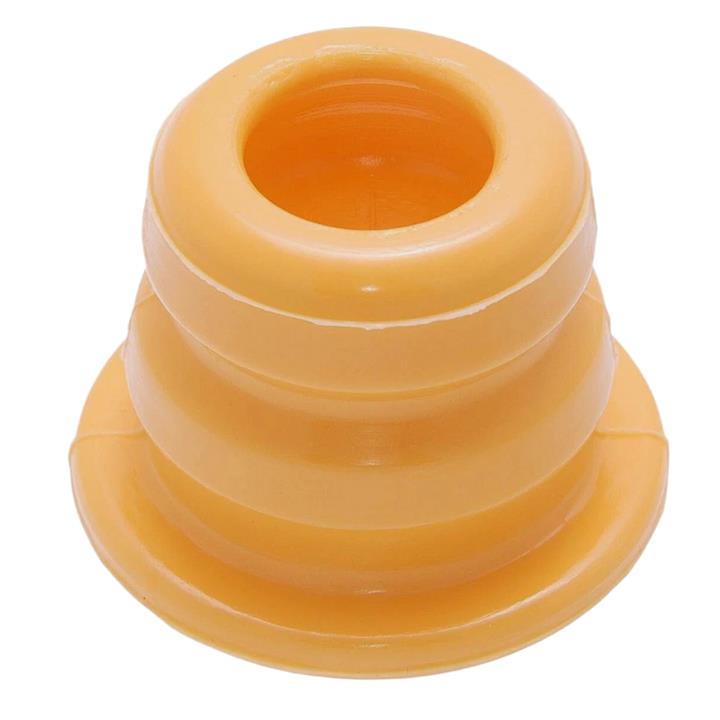
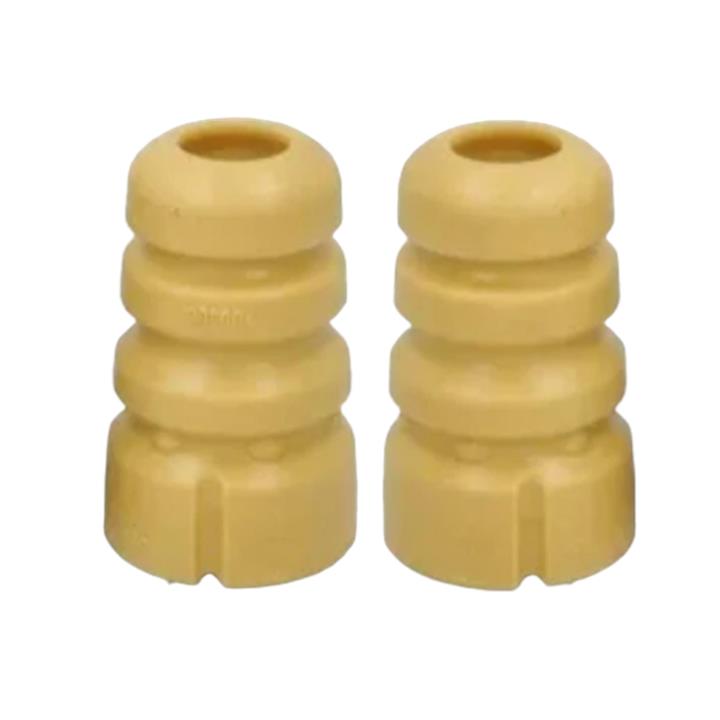
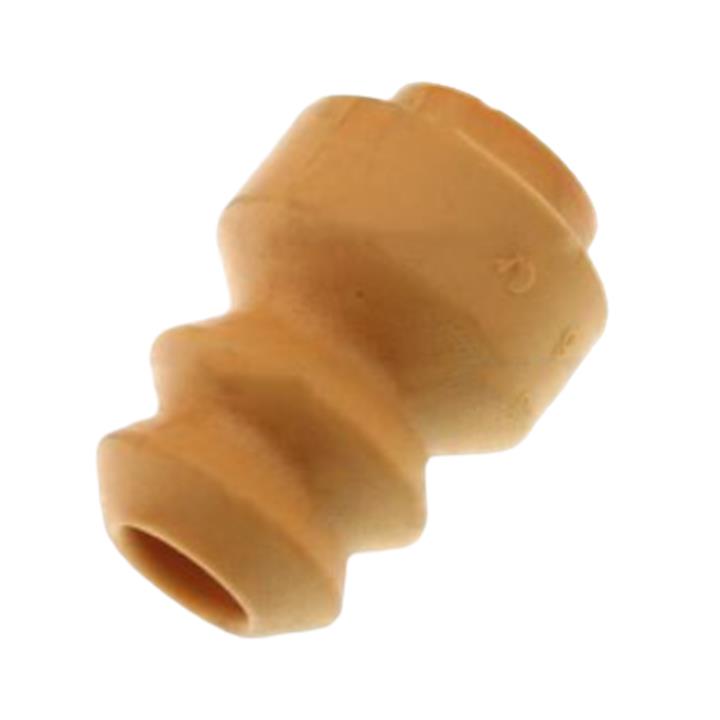
If you are sourcing a front strut bump stop for a W124, W201 190 or C124, you will run into two Mercedes numbers: 2013232044 and 2013231444. They are not two different parts. Mercedes listings show 2013232044 as the current number and 2013231444 as the earlier number it supersedes, so both describe the same front axle shock absorber buffer.
This page covers what the part does, which chassis it fits, the suspension restriction buyers most often miss, how to cross-check a cross-reference number, and how to specify a polyurethane replacement in bulk. It is written for purchasing teams and aftermarket distributors rather than for a single retail buyer.
Mercedes built the W124 front axle around a strut with a coil spring seated around the damper body. The coil carries the vehicle load. The damper controls it through a piston rod, a valve stack and a gas-filled reserve chamber.
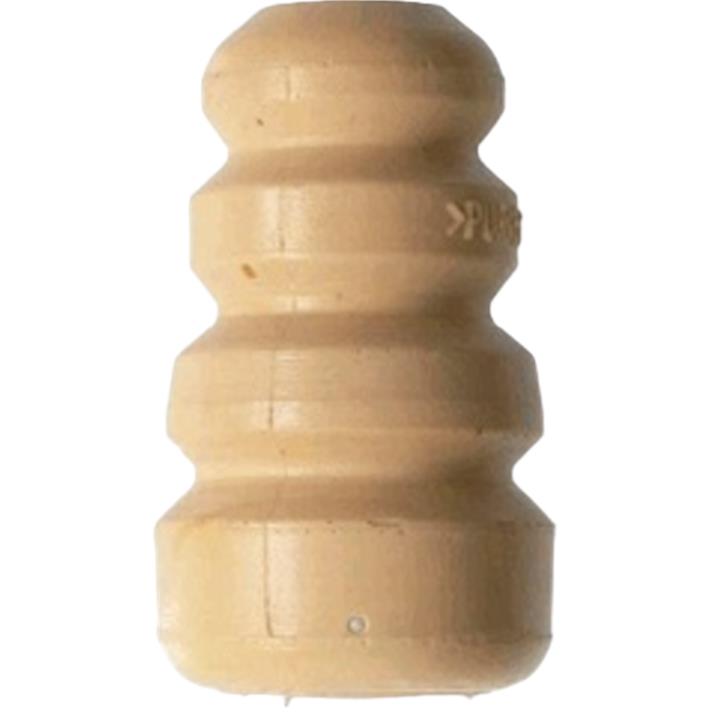
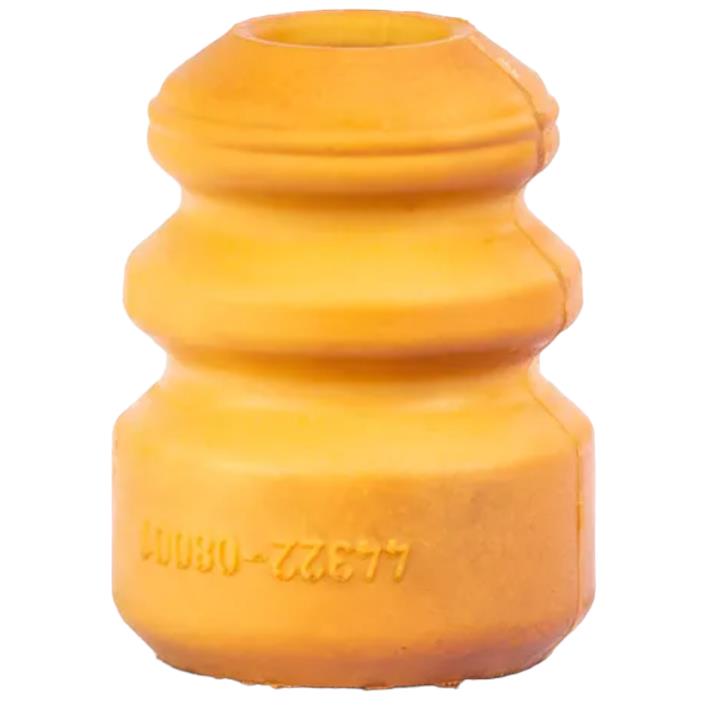
The bump stop is a compressible cushion mounted on the piston rod, hidden inside the dust boot. In normal driving it does not touch the strut mount. It only comes into play near full compression, for example a deep pothole, a kerb taken at speed, or a loaded estate car on a broken road. At that point the coil is nearly fully compressed and the remaining energy has to go somewhere.
Original rubber buffers on 1980s and 1990s Mercedes chassis are now three decades old. Rubber hardens, cracks and eventually breaks down into crumbs. Once the cushion is gone, compression energy transfers straight into the strut mount and the damper rod guide. Typical consequences reported for this family:
| Item | Value |
|---|---|
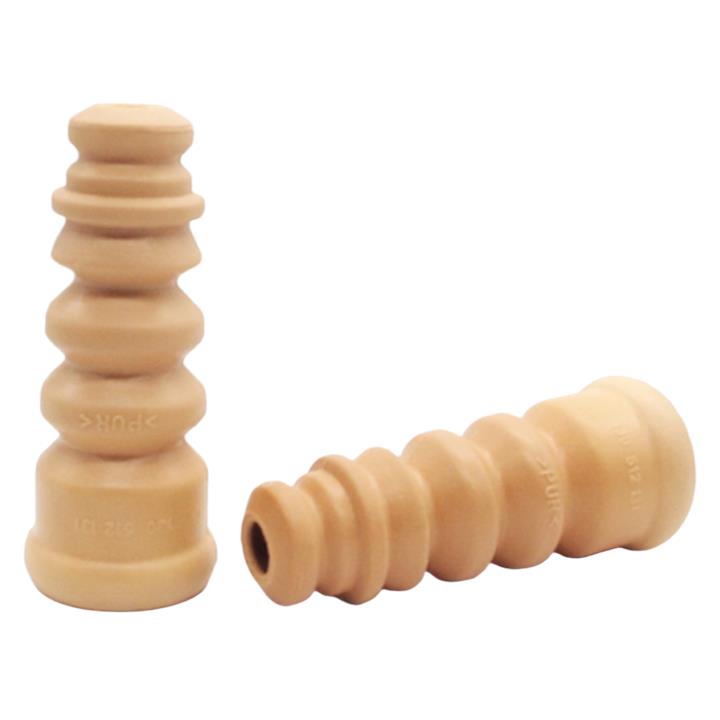
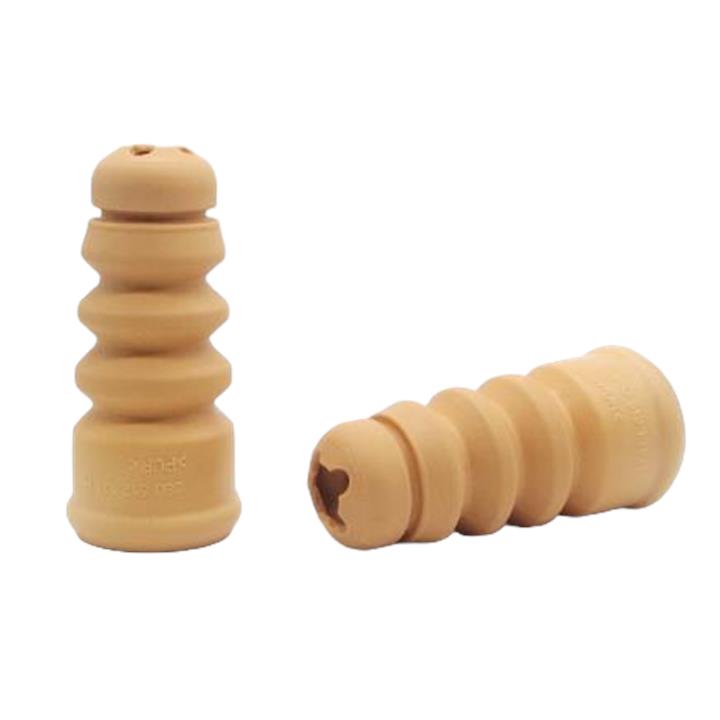
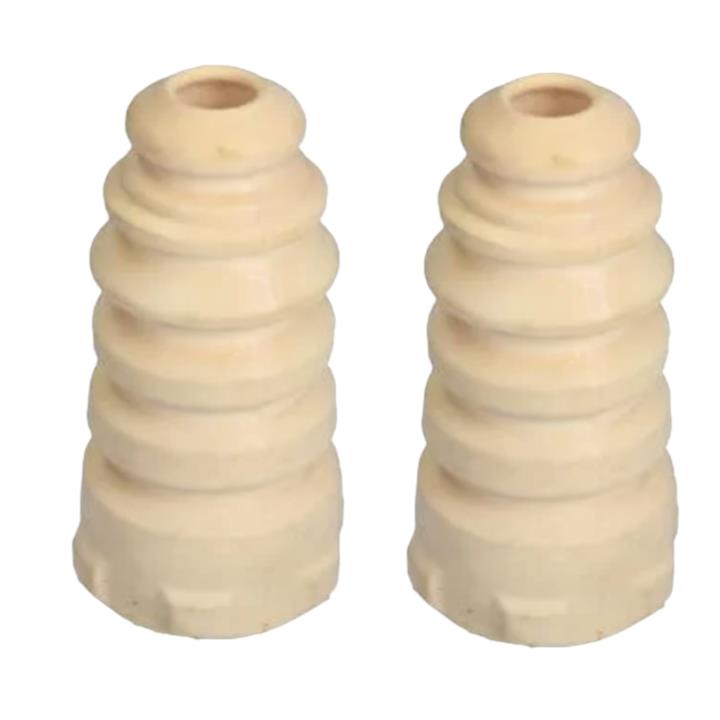
| Product name | Strut Bump Stop / shock absorber rubber buffer |
| OE numbers | 2013232044, 2013231444 (also written A2013232044, A2013231444) |
| Bonpora part No. | 4110085 |
| Fitting position | Front axle, left or right; supplied and replaced in pairs |
| Dimensions as drawn | Φ24 x Φ53 x 97 mm (bore x body diameter x overall length) |
| Material | Polyurethane |
| Country of origin | China |
| Warranty | 1 year |
| Delivery time | 15-30 days |
| Packaging | Neutral export packaging |
| Custom service | OEM and custom design support |
One dimensional note worth flagging before you quote. Several European aftermarket catalogues list a nominal height of 94 mm for this reference, while the drawing behind this listing gives 97 mm. The gap is small and normally comes from the measuring datum: some catalogues measure the free-standing buffer, others measure to the shoulder or include the moulding flash. Confirm the height on the drawing or a physical sample before committing to a tooling or a large order.
This buffer belongs to the 124 and 201 families. The table below summarises the chassis and the versions confirmed by Mercedes-based and aftermarket fitment data.
| Chassis | Body / model | Years | Position |
|---|---|---|---|
| W124 | Saloon / E-Class saloon | 1984-1995 | Front axle, left and right |
| S124 | T-Model estate / E-Class estate | 1985-1996 | Front axle, left and right |
| C124 | Coupe / E-Class Coupe | 1987-1997 | Front axle, left and right |
| W201 | 190 / 190E / 190D | 1982-1993 | Front axle, left and right |
Catalogue coverage for this reference extends across the 2.0, 2.3, 2.6 and 3.0 petrol units and the common 2.0, 2.5 and 3.0 diesel units, including the sixteen-valve 190 E 2.3-16 and 2.5-16 variants. That breadth helps when filling a mixed container, because one line item serves several engine variants on the same chassis.
Here is the point that causes most wrong orders. Many fitment listings for 2013232044 carry the qualifier "for vehicles with heavy duty suspension", and some entries add VIN breakpoints (for example from A862989 / until A862988, or from A469172 on the coupe). Mercedes used more than one front buffer across the 124 range depending on the suspension package fitted at the factory.
A standard-suspension 124 may therefore use a different front buffer, so the OE number alone does not guarantee a match. To confirm, read the number off the old buffer, or check the data card for the suspension code and compare it against the catalogue qualifier.
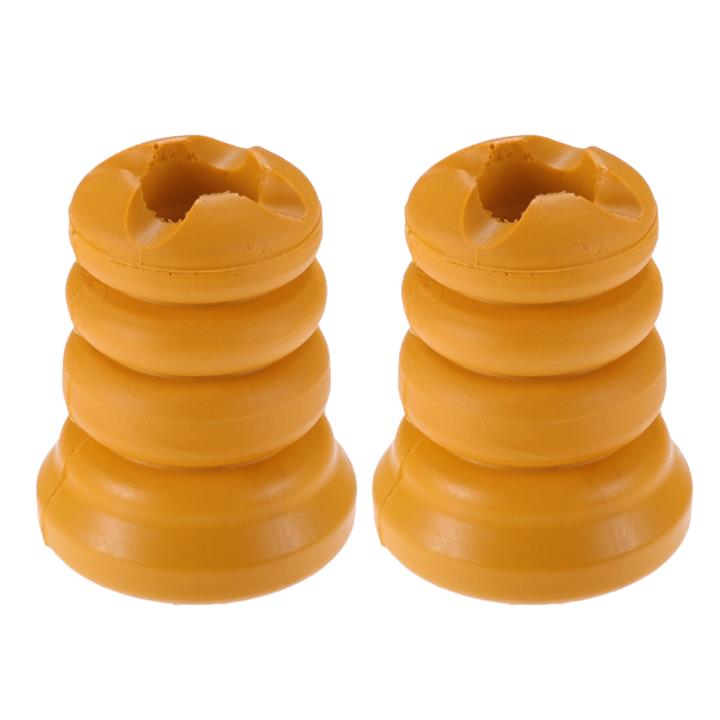
Listings for this reference typically supply two buffers per set and advise replacement in pairs, because both sides age at the same rate. The related reference 2013232044S is the same buffer packaged as a kit with two dust boots.
The companion dust boot is a separate Mercedes number in the 1243230192 / 1293230192 family. If the old buffer has crumbled, inspect the boot at the same time: perished boots let grit onto the damper rod, which is the usual reason a front damper starts leaking early.
Cross-reference numbers from aftermarket manufacturers are useful for searching a local inventory system, but they are a lookup aid rather than a fitment promise. The list below is compiled from catalogue data for this Mercedes reference.
| Brand | Reference | Notes |
|---|---|---|
| Febi Bilstein | 14047 | Listed as a front axle protection kit for 190 (201) and 124 |
| Meyle | 014 032 0078 | Rubber support, front axle |
| Lemf?rder | 22419 01 | Front axle buffer |
| Topran | 400 046 | Bump stop only |
| Topran | 944 001 | 2013232044S kit with dust boots |
| KYB | 915124 | Protection kit |
| Monroe | PK034 | Dust cover kit |
| VAICO | V30-6003, V30-6003-1, V30-0961 | Front axle protection kit |
| Bendix | 043607B, 061659B | Catalogue equivalents |
| GOOM / MDR | DCK-0339 | Dust cover kit |
| JP Group | 1342700210 / 1342700219 | Dust cover kit, front axle |
Two things to watch when comparing these against our part number 4110085. First, several references above are complete dust cover kits (buffer plus bellows plus small hardware), so they cannot be compared line for line with a bare buffer on price. Second, two OE groups appear side by side in the catalogues for the same chassis: the 2013232044 group and the 1243230192 / 1293230192 group. The latter is the dust boot, not the buffer. Mixing them in one purchase order is the most common paperwork error we see on this reference.
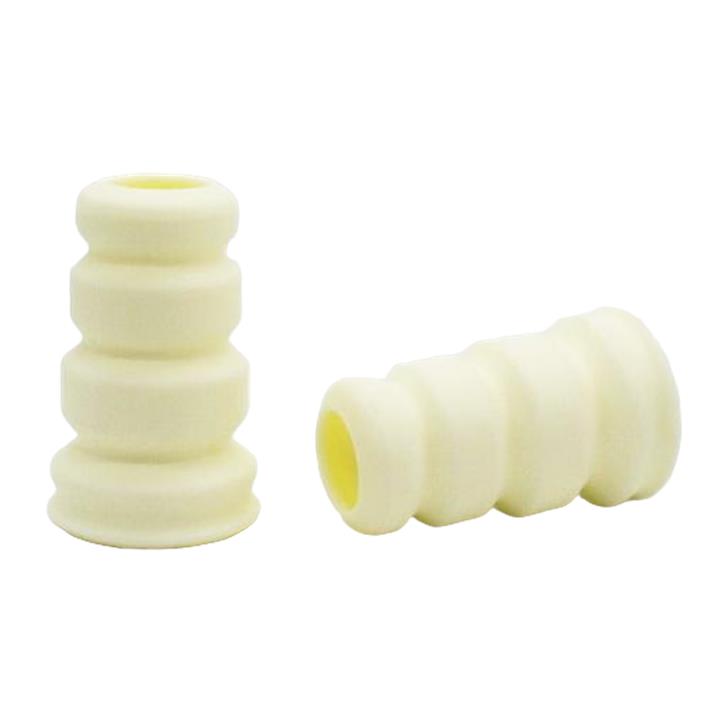
The original part is rubber. Our replacement for 4110085 is moulded in polyurethane. For a classic chassis the difference matters in three ways.
| Property | Vulcanised rubber | Moulded polyurethane |
|---|---|---|
| Ageing behaviour | Hardens, cracks, can crumble with ozone and oil exposure | Retains elasticity longer under the same conditions |
| Abrasion | Wears faster where it rubs the dust boot | Higher tear and abrasion resistance |
| Batches and tooling | Compression moulding, longer set-up | Cast moulding, suits small and repeat batches |
Polyurethane is not universally better in every application, and the honest position is that a correct rubber part in good condition does its job. The advantage shows up on chassis where the original buffers are already failing and the vehicle is being kept in service for another decade. If your project is a restoration, read more about the material options in our polyurethane bump stops range.
We work from the OE drawing, a teardown sample or both. The process is short: mix the two-component system degassed, cast into the mould, cure, then trim flash and check the critical dimensions. Typical control points for a front axle buffer of this shape are the bore diameter where it locates on the damper rod, the body diameter at the widest point, the overall free length with the position of the load shoulder, hardness on the Shore A scale, and compression set after a full-stroke test.
If you are supplying your own brand, the same tooling can run a private-label programme with your part number laser-marked or moulded in. Our custom parts department handles drawings, reverse engineering from a used sample and first-article inspection reports.
A short review avoids most of the returns we see on this reference.
Front and rear buffers on the 124 chassis are different numbers. Confirm the request really is for the front strut.
Ask for the suspension code or the number from the old part if the vehicle is not a standard build. The heavy-duty qualifier is not decorative.
The 1243230192 / 1293230192 group is the dust boot. A front corner rebuild usually needs the buffer and the boot, and often the upper mount as well.
Front axle buffers should be replaced as a pair. Order in multiples of two per vehicle, with a small allowance for wholesale accounts that keep stock on the shelf.
If the height tolerance matters for your line, put the measured datum on the order. Comparing a catalogue height against a drawing height is the easiest way to create a dispute neither side can win.
Neutral export packaging is our default. If you need polybags with barcodes, boxed pair sets, or cartons marked with your own label, specify it at the quotation stage rather than after production.
Bump stops for the 124 family ship from our factory in China with a standard lead time of 15 to 30 days, depending on order size and whether existing tooling is used. Every batch is a good candidate for mixed loading: this buffer is compact and light, so it can share carton space with other suspension items from our chassis and suspension range.
For trade buyers we can provide a certificate of origin, a material data sheet, dimensional inspection records and a sample pair for fitment trial before a full order runs. The buffer is covered by a one-year warranty against manufacturing defects. To see how this reference sits next to related components, look through our shock absorber parts category.
Send us the OE number, the chassis code and, where possible, the old part number. We will confirm the match, quote in pairs and advise on the dust boot in the same reply.
Yes. Mercedes catalogue data shows 2013232044 as the current number and 2013231444 as the number it supersedes. Both refer to the same front axle shock absorber buffer. When you raise a document, use 2013232044 as the primary reference and keep 2013231444 in the secondary field so that older stock systems still match.
It is listed for the W124 saloon and E-Class (1984-1995), the S124 estate, the C124 coupe (1987-1997) and the W201 190 family including 190E and 190D (1982-1993), across the common petrol and diesel engine variants. Many of those listings carry a heavy-duty suspension qualifier, so confirm the suspension variant before ordering.
Yes, and most suppliers of this reference sell it as a pair for that reason. The left and right buffers age together, so replacing one side leaves the other close to failure and the car will still bottom out on the old side. Plan two pieces per vehicle.
The difference is normally a measuring datum, not a different part. Some catalogues quote the free-standing height of the buffer, others measure to the shoulder or include moulding flash. Treat the drawing value as the nominal for production and agree the measurement method with your supplier if the tolerance is critical for you.
It is a functional replacement built to the same mounting dimensions. Polyurethane generally holds its elasticity longer and resists abrasion better than aged rubber, which suits classic chassis kept in long-term service. Ride feel can differ slightly depending on the hardness selected, so if comfort is the priority it is worth testing a pair before a large order.