
- 1. The Real Job of a Dust Cover
- 2. Function of the Dust Cover: Breaking It Down
- 3. Service Life: How Long Should a Dust Cover Last?
- 4. Why Original Replacement Parts Matter
- 5. Sourcing Dust Covers and Suspension Components from Bonpora
- 6. Frequently Asked Questions
- 6.1. Q1: Can I drive with a torn shock absorber dust cover?
- 6.2. Q2: How often should a dust cover be inspected?
- 6.3. Q3: What happens if the dust cover fails and the shock absorber leaks?
- 6.4. Q4: Are dust covers sold separately or only with the shock absorber?
- 6.5. Q5: Does a dust cover affect ride comfort or damping performance?
Shock Absorber Dust Cover: The Small Part That Protects the Whole Damper
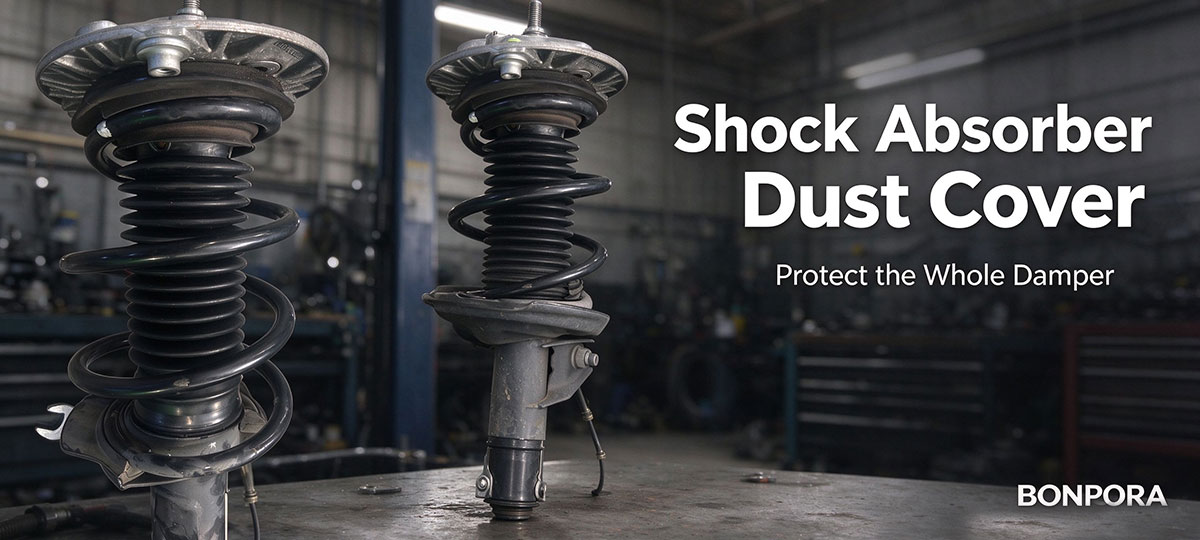
In any shock absorber assembly there is one part that almost everyone overlooks: the dust cover. It is a small, inexpensive sleeve that slides over the piston rod. On its own it seems insignificant. Removed from the damper, it is barely a component at all. But when it breaks, the entire shock absorber — and with it the ride quality, safety and service life of the vehicle — starts to fail.
This guide explains what the dust cover does, how long it lasts, why original replacement parts matter, and why OEMs and repair networks should source this "small part" from a supplier that takes it seriously.
The Real Job of a Dust Cover
Think of the dust cover as a protective shield for the shock absorber. Its job is to block dust, mud, water and road debris before they reach the two most vulnerable areas of the damper:
The piston rod surface, which must stay smooth and clean to move freely
The rod seal and oil seal, which keep hydraulic fluid inside the damper
Without the cover, those "unwelcome guests" slip straight past the seal. The result is predictable and damaging:
Abrasive dust and grit grind against the rod and the sealing ring
The seal wears out quickly and begins to leak
Hydraulic oil drains out, and the damper loses its ability to control motion
In severe cases the shock absorber fails completely and must be replaced
Beyond leaks, a broken cover exposes the rod to moisture, which leads to rust and corrosion, and to foreign particles that create a characteristic creaking or squeaking noise during compression and rebound. So although the dust cover is a small component, its protective effect on the whole shock absorption system cannot be ignored.
Function of the Dust Cover: Breaking It Down
For buyers who need to explain the part to a customer or spec it for a new program, here is the function in clear terms:
Physical barrier — stops dust, mud, sand and water from reaching the rod and seal
Wear protection — keeps abrasive particles away from the sealing ring to prevent premature seal wear
Corrosion prevention — keeps moisture off the polished rod surface to prevent rust and pitting
Noise control — a sound cover prevents the squeaks and creaks caused by grit on the rod
Service life extension — protects the seal and fluid so the damper reaches its intended lifespan
In short, the cover does the unglamorous work of keeping the damper clean. When it is missing or torn, the damper pays the price in leaks, noise, rust and early failure.
Service Life: How Long Should a Dust Cover Last?
A well-made dust cover is designed to last as long as the shock absorber itself — often 80,000 to 100,000 kilometers or more under normal road use. In practice, several factors shorten that life:
Environmental exposure — UV sunlight, ozone, salt spray and extreme temperatures degrade the rubber over time
Mechanical stress — the cover flexes with every compression stroke, so millions of cycles eventually crack it
Impact damage — stones, curbs and debris can tear or puncture the cover during driving
Improper installation — a cover fitted too tightly or misaligned can chafe against the rod and fail early
A torn, cracked or detached dust cover should not be patched and left in service. The moment the barrier is broken, dirt can reach the seal, and the damage is already underway. The right approach is a simple rule: do not wait until the damper fails to replace the cover. Replace it as soon as the damage is found, and build regular inspection into the maintenance schedule.
For repair shops, checking the dust cover is a fast, cheap inspection that prevents an expensive damper replacement later. For OEMs, specifying a durable cover up front directly improves the warranty and reliability of the whole suspension system.
Why Original Replacement Parts Matter
A dust cover looks simple, but its performance depends on material and dimension precision:
Material quality — OEM-grade rubber compounds resist UV, ozone and oil, while low-grade substitutes crack within months
Fit accuracy — the cover must slide over the rod without binding, and seat firmly on the damper body without leaking past
Temperature range — a proper cover stays flexible in cold weather and does not soften or melt in heat
Consistent batch quality — every unit must seal the same way, or the failure rate climbs
That is why reputable buyers insist on original replacement parts — or OE-equivalent parts from a supplier that manufactures to the same standard. An aftermarket dust cover that looks right but fails after 20,000 kilometers damages the damper, the vehicle, and the reputation of whoever fitted it. Whether you are a vehicle manufacturer sourcing for new production, or a repair factory stocking replacement lines, the cover deserves the same quality discipline as the damper itself.
Sourcing Dust Covers and Suspension Components from Bonpora
Bonpora manufactures shock absorber accessories and chassis suspension parts for passenger programs, aftermarket replacement lines and application-specific development. Our dust cover range is produced to fit a wide range of damper diameters and rod sizes, with:
OE-quality rubber compounds designed for UV, ozone, oil and temperature resistance
Tight dimensional control for reliable fit and sealing on the piston rod
Sample development and volume production support
Technical cooperation with OEM and repair-network engineering teams
If you are looking for a long-term supplier of dust covers and related shock absorber and suspension components, we work with distributors, repair factories and vehicle manufacturers worldwide. Browse our product range at https://www.bonporaparts.com/en/dust-covers/ or contact sales@bonporaparts.com for samples and technical discussion.
Frequently Asked Questions
Q1: Can I drive with a torn shock absorber dust cover?
A: You can, but you should not leave it that way. A torn cover lets dust and moisture reach the piston rod and seal, causing seal wear, oil leaks and rust. The longer it stays damaged, the higher the risk of a full damper failure. Replace the cover at the first sign of damage.
Q2: How often should a dust cover be inspected?
A: It should be checked as part of every routine suspension inspection, roughly every 10,000 to 20,000 kilometers or at each oil change. Look for cracks, tears, detachment, hardening or signs of chafing against the rod.
Q3: What happens if the dust cover fails and the shock absorber leaks?
A: When the seal wears out and oil drains, the damper loses damping control, the vehicle becomes unstable on bumps and during braking, and the shock absorber must be replaced. Replacing a cover is far cheaper than replacing the damper.
Q4: Are dust covers sold separately or only with the shock absorber?
A: Many OEMs supply them separately as replacement parts, and OE-equivalent covers are widely available. Bonpora supplies dust covers as standalone components and as part of complete shock absorber and suspension kits.
Q5: Does a dust cover affect ride comfort or damping performance?
A: Not directly. The cover does not change damping force, but it protects the seal and fluid that make damping possible. A healthy cover keeps the damper performing consistently for its full service life.
- Prev.:Why Shim China Manufacturers Win Global Buyers: Raw Material, Standards, Process, Cost, Logistics
- Next.:...