sales@bonporaparts.com
0086-10-64988621
English
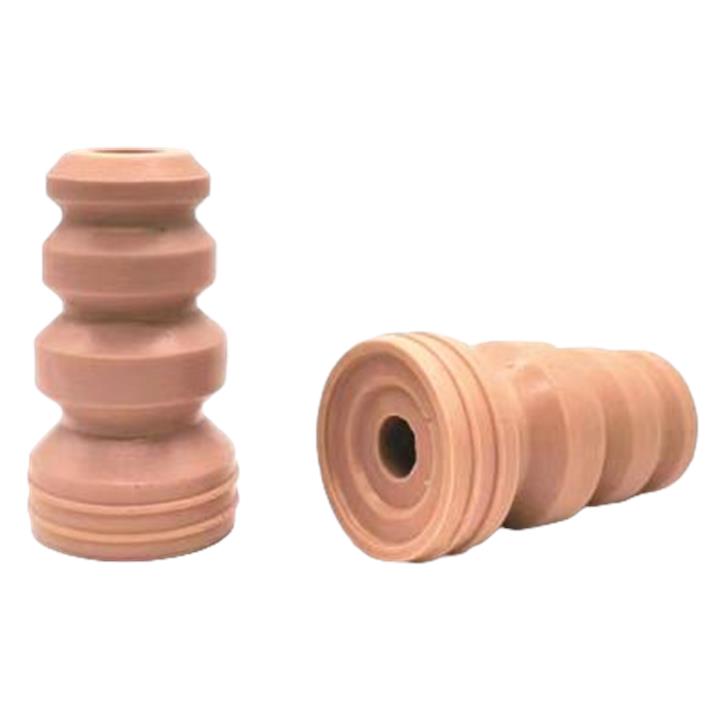
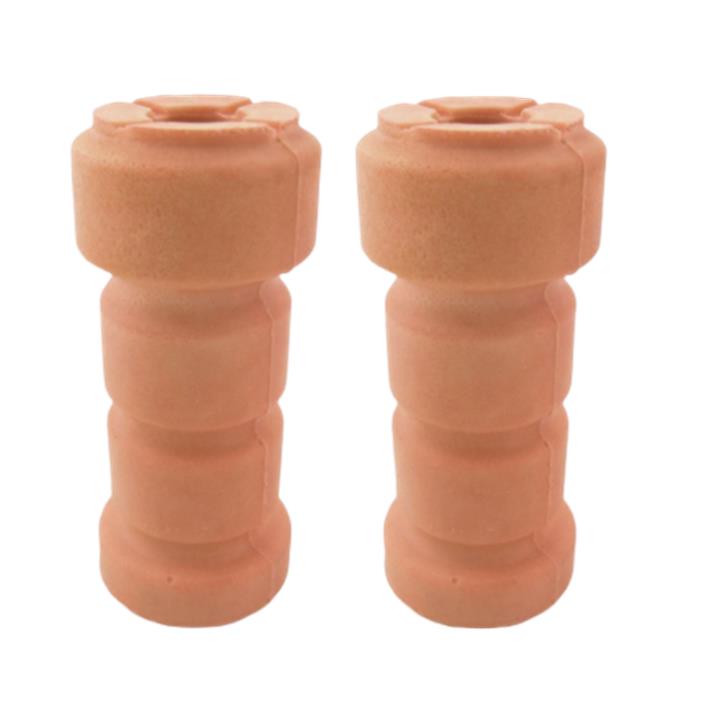
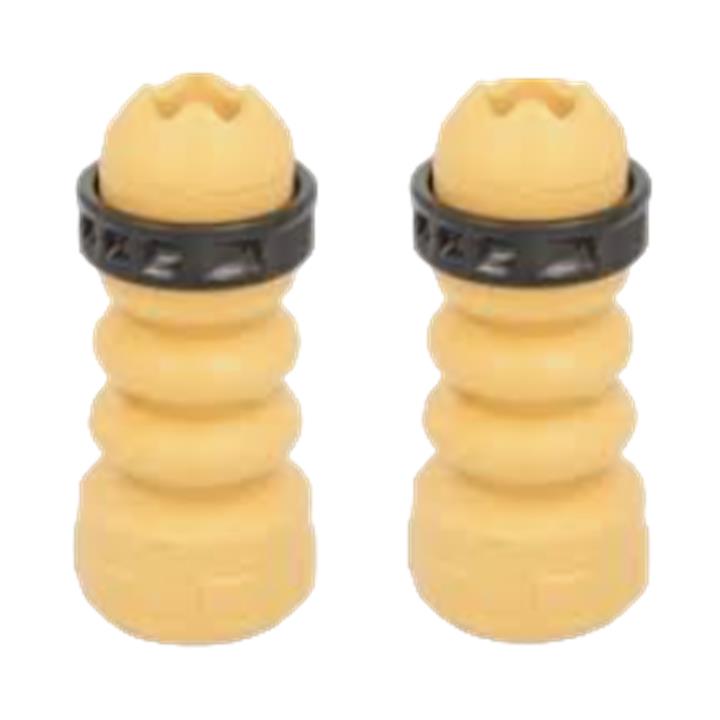
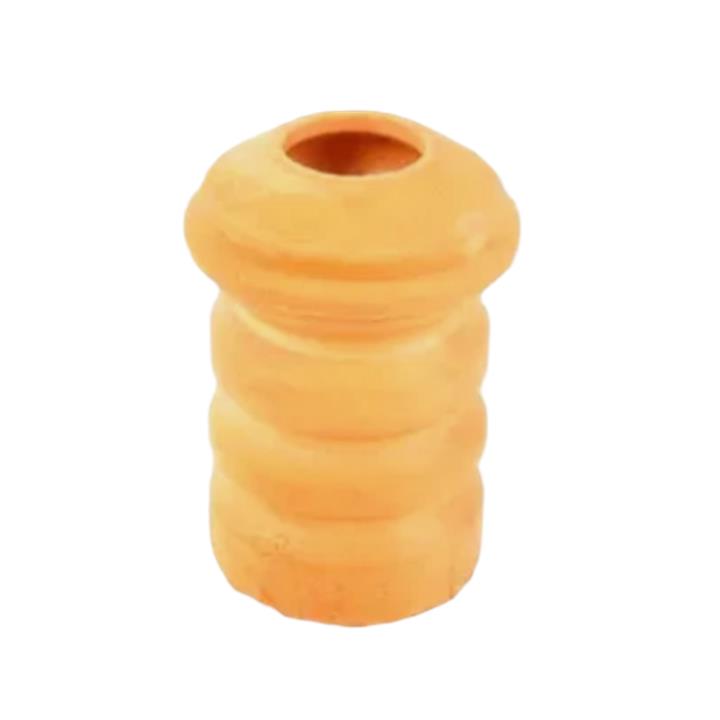
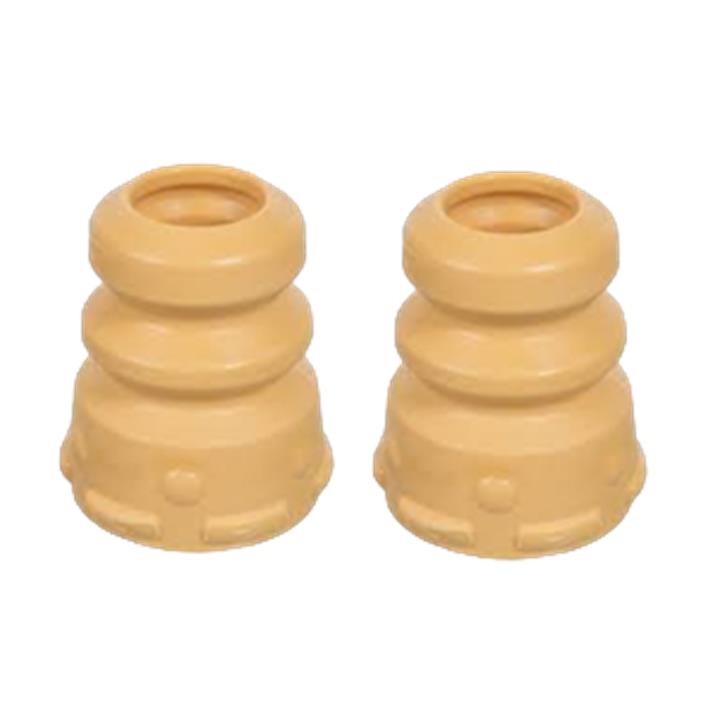
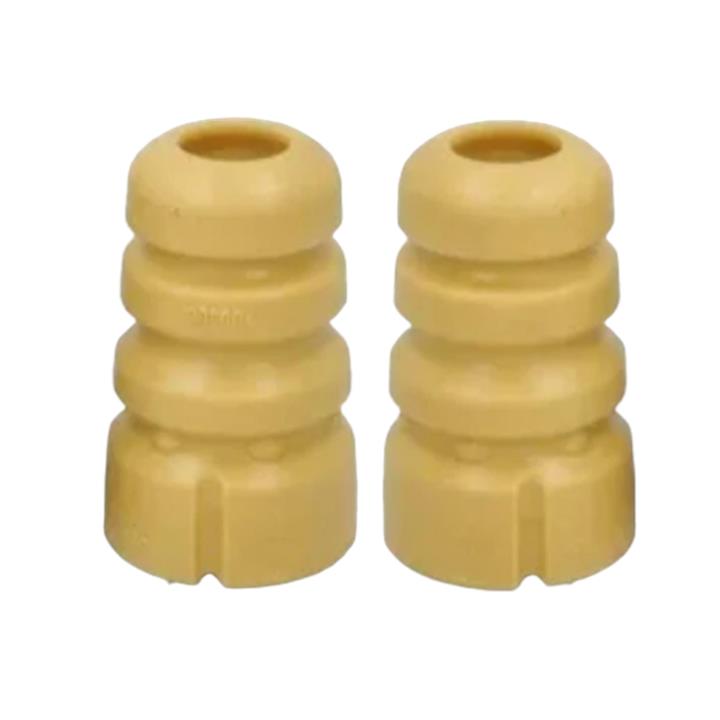
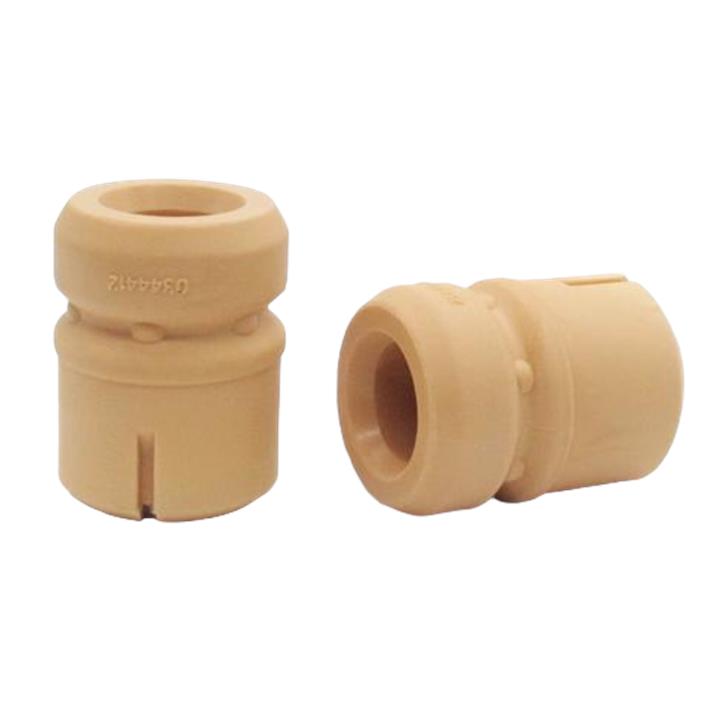
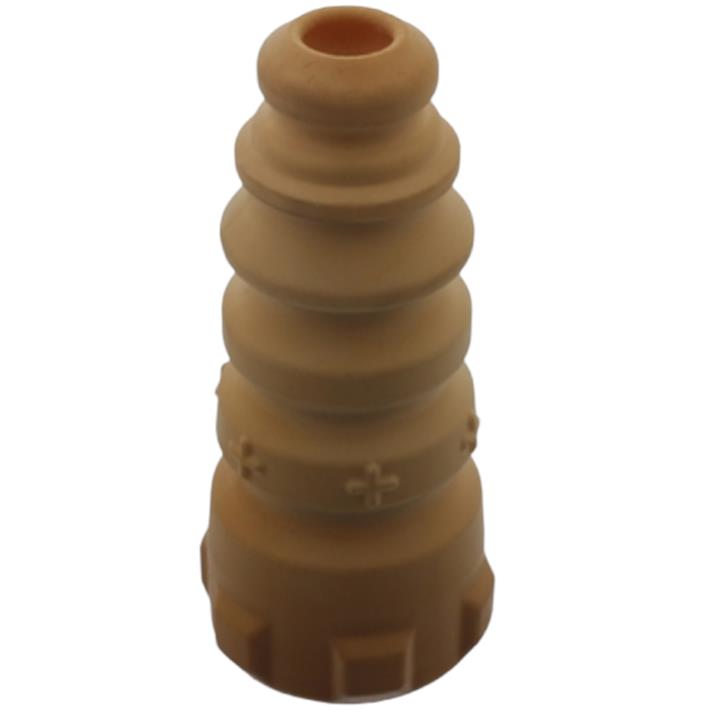
The Mazda front strut bump stop carrying OE reference D651-34-111 is the compressible cushion that sits on the front damper rod, inside the dust boot, on the second-generation Mazda 2. It is a low-cost item that decides how the front end behaves in the last few centimetres of suspension travel. Buyers searching this reference are usually restocking a service part, not rebuilding a strut, so the questions that matter are narrow: does it fit my build, how many go on the car, and what do I get in the box. This page answers those from a factory-direct supplier’s perspective.
On a MacPherson strut front end, the bump stop is threaded onto the piston rod above the damper body. Under normal driving it does very little. Under a hard compression event — a pothole, a speed hump taken too fast, a fully loaded car over broken road — it becomes the first line of defence.
When a bump stop has collapsed, the symptom set is consistent: a metallic knock from the front corner over sharp bumps, a hard jolt where the car used to feel absorbent, and dust-boot damage where the fractured foam has been chewing the boot. Mechanics also find it as a secondary failure — the strut is replaced because it is leaking, and the collapsed stop is found at the same time.
Our stock item is a direct replacement for the reference above. Details below are the ones a purchasing officer needs for a quotation or a technical file.
| Item | Detail |
|---|---|
| Product name | Strut Bump Stop (jounce bumper / bound bumper) |
| Bonpora No. | 4110164 |
| OE reference | D651-34-111 |
| Fitting position | Front axle, left and right |
| Dimensions | Φ19.4 x Φ54.8 x 71.9 mm (bore x outer diameter x height) |
| Material | Polyurethane (PU) |
| Country of origin | China |
| Warranty | 1 year |
| Lead time | 15–30 days |
| Packaging | Neutral export packaging; branded packing on request |
| Custom service | OEM and custom design support |
Numbers are stated as nominal. Because a bump stop is an elastomer moulding, a tolerance band applies to the outer diameter and height, and the exact figure measured on a bench depends on whether the part is measured free-standing or seated on a rod. Treat the reported catalogue value as the manufacturing target, not a gauged dimension, and ask for a dimensional report if your customer requires one on file.
Cross-reference data places this bumper on the Mazda 2 built on the DE platform, and the same catalogue entries also list the later DH generation. In practice the two are catalogued together as Mazda 2 (DE_, DH_) 2007–2015, with the saloon variant listed separately as Mazda 2 Saloon (DE) 2010–2015. The Japanese-market name for the same car is Demio.
The bumper is a suspension part, so it is not engine-specific, but the reference lists against a broad slice of the range: the 1.3 petrol (including the MZR forms), 1.5 petrol, 1.6 petrol, plus the 1.4 MZR-CD and 1.6 MZ-CD diesels, and the LPG BiFuel and 1.5 Flex variants. Front-wheel drive and the four-wheel drive DE3AS body are both covered. Power figures across the range run from roughly 68 hp to 113 hp, which is a useful sanity check when a customer’s registration document is being read out over the phone.
Two boundaries cause most returns. First, this is a front part; the rear axle of the same car uses a different bumper with its own reference, and the two are not interchangeable. Second, it belongs to the DE/DH generation. The later DJ platform car is a different design and does not use this number. A listing that shows this stop against a different model is a matching error in that listing, not proof of a wider application.
Mazda’s numbering is worth reading once because it removes a lot of guesswork. In a number such as D651-34-111, the middle group identifies the system group and the final group the individual part. The 34 group covers the front suspension strut area, while 28 covers the rear. That single digit is often the entire difference between the front and rear bumpers on the same model line.
A trailing letter indicates a revision. The A-suffixed form of this number appears alongside the unsuffixed version in aftermarket catalogues and genuine-parts listings, and both are listed as OEM references for the same function. When two forms of a number circulate, the safe procurement rule is to record both in your inventory description and to quote the number your customer’s catalogue uses, rather than treating one as obsolete.
The original part is an elastomer moulding, and both rubber and polyurethane grades are available in the aftermarket. The choice affects service life more than it affects ride quality.
| Property | Polyurethane (PU) | Conventional rubber |
|---|---|---|
| Oil and grease resistance | Good; suitable for a strut environment | Generally lower |
| Ageing and ozone resistance | Holds shape well over time | Hardens and crazes sooner |
| Load capacity for a given size | Higher; less material needed | Lower |
| Cold-weather behaviour | Retains progressive action | Can stiffen noticeably |
| Consistency between batches | Moulded, repeatable | Varies with compound |
| Typical cost | Slightly higher per piece | Lower |
The practical argument for PU in this application is not that it is a premium material; it is that a strut sees oil mist, road salt and temperature cycling, and PU holds its dimensions in that environment for longer. For a workshop doing repeat work on the same fleet, that translates into fewer comebacks rather than a different driving feel.
Search behaviour in this category is fairly predictable, and each pattern maps onto a different answer.
A query such as “front strut bump stop 19.4 mm bore” works when the customer already has the old part on the bench. It is the most reliable route because the measurement came off the vehicle.
“Strut bump stop manufacturer China” or “PU jounce bumper factory” is a sourcing search. These buyers are comparing capability, lead time and packing rather than a single number, and they usually want a range rather than one SKU.
Typing the OE reference is the shortest path and the one that produces the fewest errors. If the customer has the number, use it and skip the model discussion entirely.
“Mazda 2 front bump stop” is the most common pattern from workshops. It needs a follow-up question about build year, because the answer crosses the DE and DJ boundary described above.
“Custom polyurethane bump stop” signals a buyer who wants a specific hardness, colour or branded bag. This is the route where OEM and custom design support matters most, and where a drawing or a sample is worth more than a description.
Bump stops look interchangeable and are not. Three dimensions decide whether the part will function:
That is why a cheap copy that “looks the same” can produce a hard knock on the first speed hump. If you are sourcing against a sample, send the sample. If you are sourcing against a number, buy against that number and ask the supplier to confirm the three dimensions in writing before the order is confirmed.
Related items that are usually ordered at the same time include the shock absorber components that share this corner of the car, and the wider polyurethane bump stop range if you are building out a suspension line.
Stock is held in China and shipped on a 15–30 day lead time, longer for custom compounds and branded packaging. We supply in neutral export packaging by default, which suits distributors who warehouse under their own label. Mixed containers across our bump stop range are possible, and small trial orders are accepted before a volume commitment. Every shipment is inspected before dispatch.
They refer to the same front bumper function, with the suffixed form being the later revision. Genuine-parts listings and aftermarket catalogues both show the two as OEM references for one component, so either can be used as a search term. Order against whichever number the customer’s catalogue quotes.
No. It belongs to the DE and DH generation, catalogued as Mazda 2 (DE_, DH_) 2007–2015. The later DJ platform car uses a different front suspension design and does not take this reference. Confirm by model generation, not by model name alone.
One per front strut, so two for a complete front-end job. In practice only the side that has been worked is often replaced, which is why they are supplied individually rather than as a mandatory pair. A rebuild of both front corners should always use two.
Yes. Hardness grade, colour and carton artwork can all be specified, subject to a minimum order quantity and a slightly longer lead time than stock items. Send a drawing, a sample or a target shore figure and we will confirm feasibility before quoting.
Send us the OE reference, the position and the quantity you need, and we will come back with pricing, lead time and packing details for Bonpora No. 4110164. If you are working from a sample rather than a number, include the three key dimensions and we will match against our range.