sales@bonporaparts.com
0086-10-64988621
English
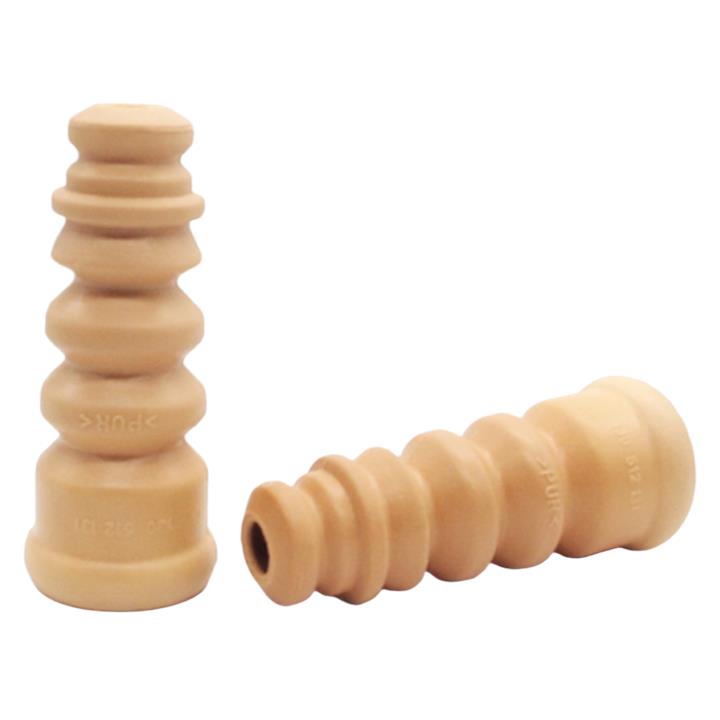
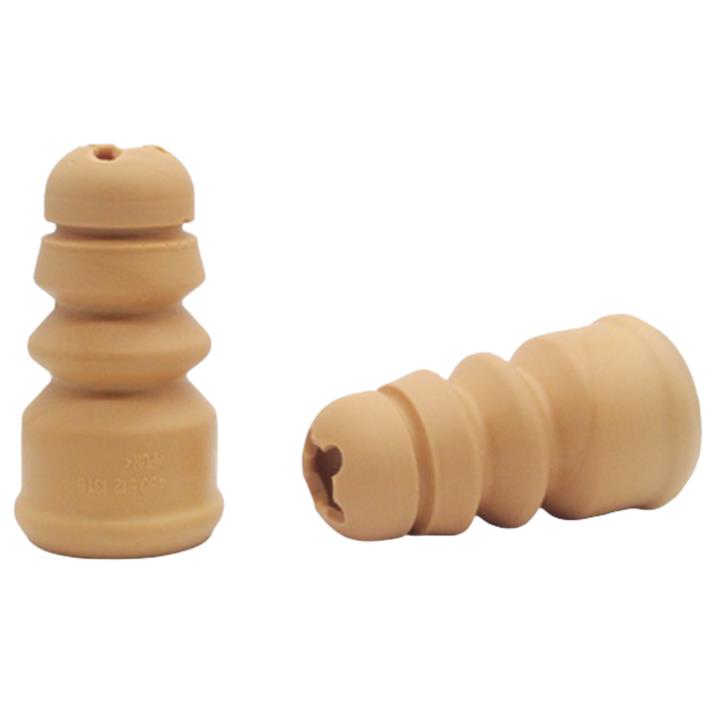
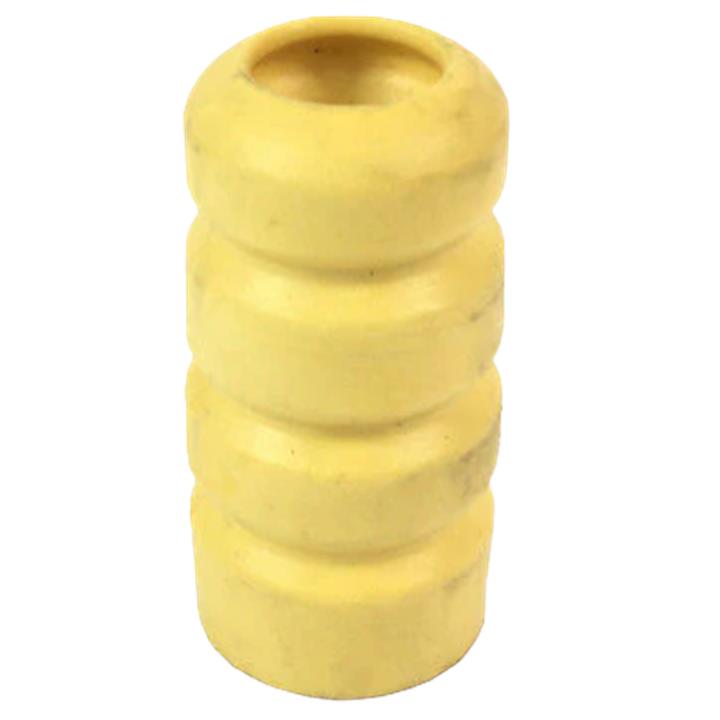
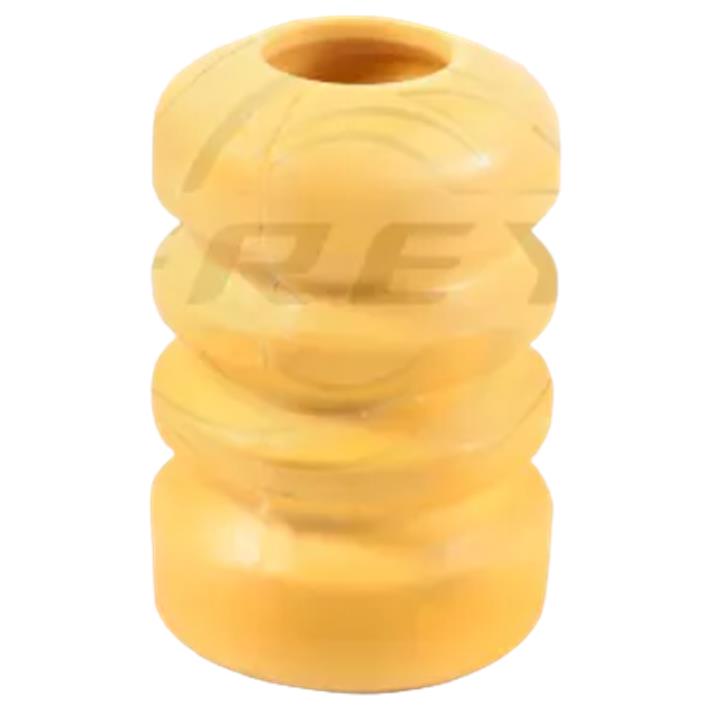
Older Honda platforms still generate steady parts demand, and the suspension buffer is one of the items that wears out first. When a buyer searches for OE 52722-SR3-003, the number usually comes off an old part, an invoice or a catalogue printout, and the real question is whether a replacement is still available and whether it matches the original in size and material. This page covers the specification we supply against this reference, the models it is associated with, how the number relates to its successor references, and what to check before placing an order.
The part itself is simple: a polyurethane body mounted on the strut that cushions the suspension near full compression. The sourcing questions around it are not, because Honda revised this number over the years and aftermarket catalogues list several variants under overlapping references. Sorting those out before ordering avoids the most common returns in this category.
The reference belongs to the Honda 52722 part group, which covers strut bumpers, also called jounce bumpers or suspension buffers. Dealer catalogue data shows the successor reference 52722-SR0-003 replacing 52722-SR0-004 and 52722-SR3-003, with the application described for the Honda Civic across the 1992 to 2000 production span. In practical terms, 52722-SR3-003 identifies the bumper fitted to Civic production of the mid-1990s, before the revision to the SR0 suffix.
The stop sits on the strut rod and works progressively. Through normal suspension travel it is largely passive; as the spring approaches full compression it takes up load rapidly, limiting coil-to-coil contact, preventing metal-to-metal contact inside the damper, and reducing the peak force transmitted to the strut mount and the body. It also protects the dust seal and the damper rod from damage at the end of the stroke.
Honda part numbers are structured. The leading block identifies the component group, here the strut bumper family, the middle block the model platform the part was introduced on, and the trailing block a design revision. The same bumper geometry therefore appears under several suffixes across model years, which is why cross-checking the number on the old part against current replacements matters so much on this application.
The table below lists the specification set we supply against this reference. When comparing quotations, the dimensions and the elastomer are the two lines that decide whether two offers describe the same part.
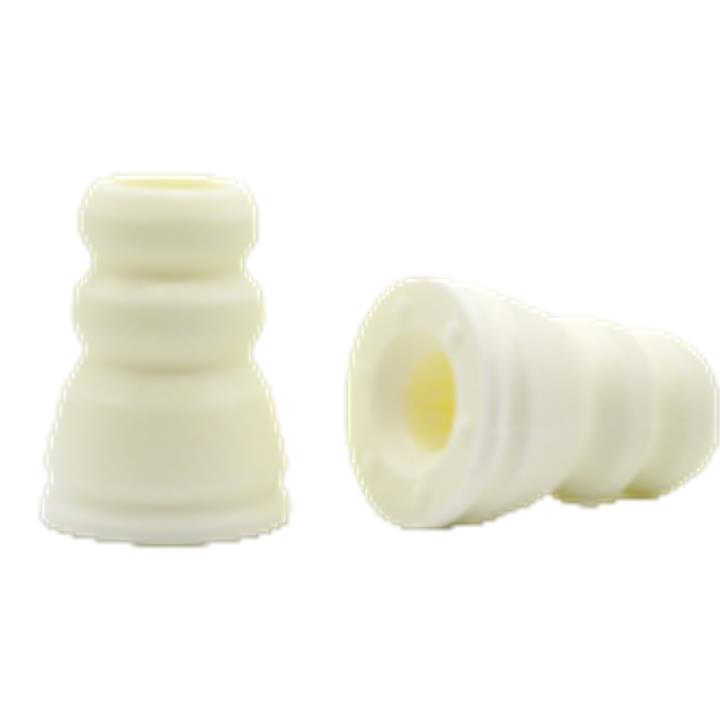
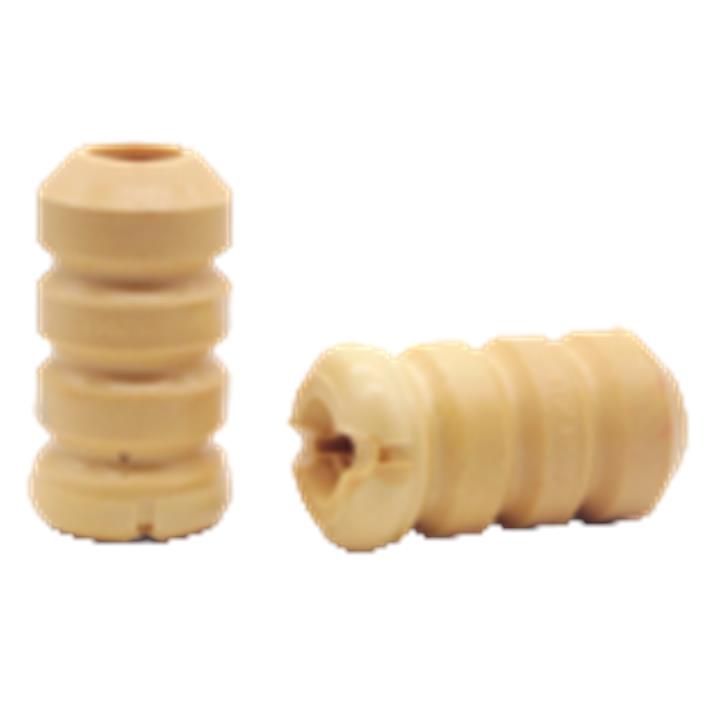
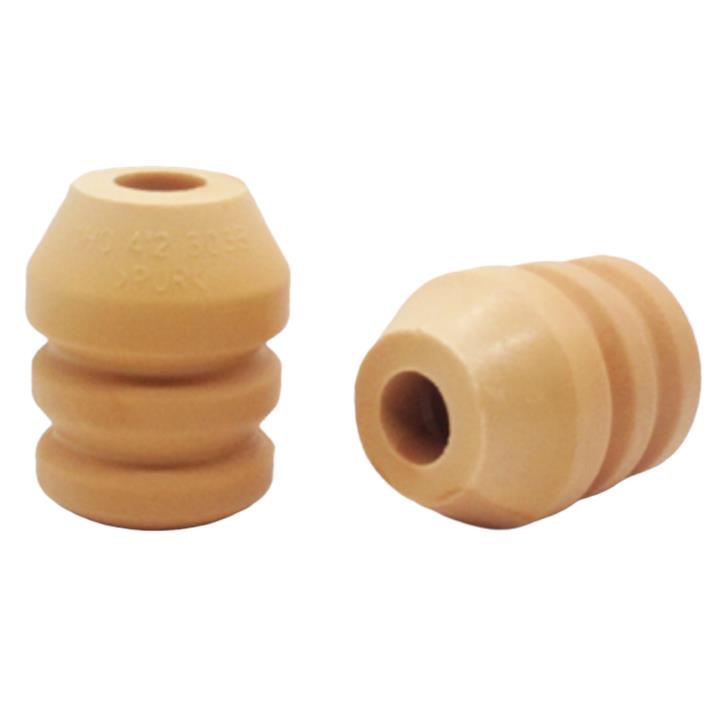
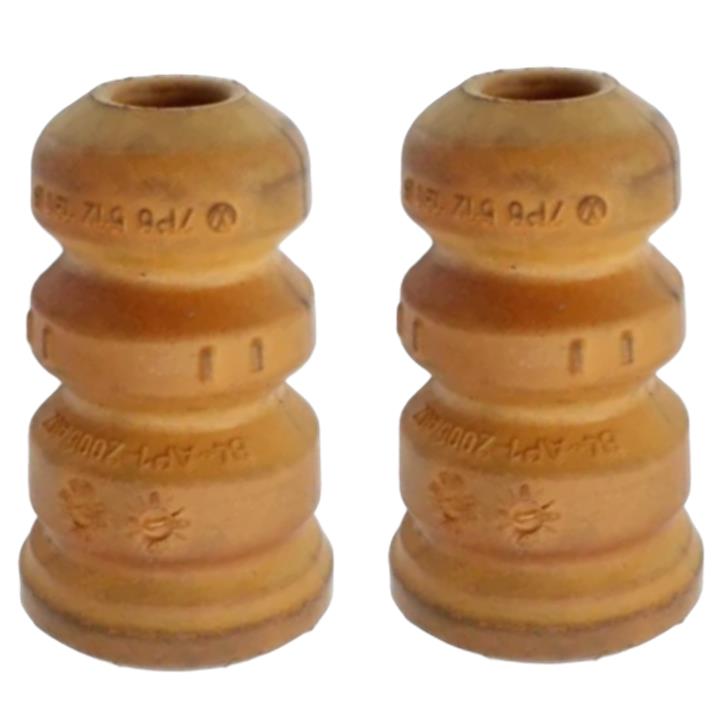
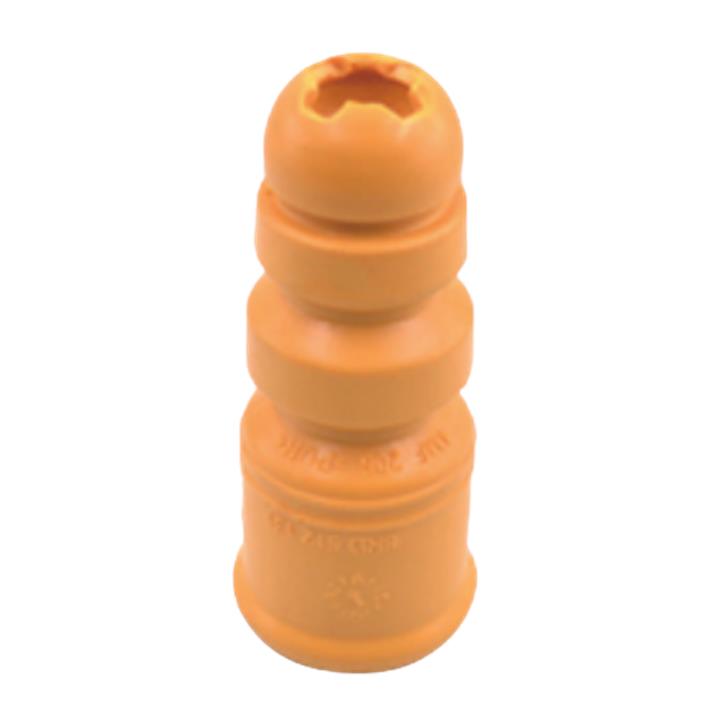
| Product name | Strut bump stop (jounce bumper, suspension buffer) |
|---|---|
| Reference OE number | 52722-SR3-003 |
| Bonpora No. | 4110095 |
| Fitment / application | Honda Civic range, see fitment notes below |
| Position | Strut mounted, left and right sides |
| Material | Polyurethane (PU) elastomer |
| Size | Φ13.44 x Φ46.6 x 82.9 mm (bore, body diameter, overall length) |
| Country of origin | China |
| Warranty | 1 year |
| Delivery time | 15-30 days |
| Packaging | Neutral export packaging |
| Custom service | OEM and custom design support |
Bonpora number 4110095 is our internal item code, useful when requesting a sample or quoting the part later. A lower quoted price achieved by shortening the body, thinning the wall or changing the hardness grade is not a like-for-like alternative: each change alters how the stop behaves in the last part of the suspension stroke, and on a light chassis like the Civic the difference is felt quickly.
European aftermarket catalogues list buffers for this reference at lengths around 74 mm, while our drawing holds 82.9 mm overall. Measurement conventions differ between manufacturers, some measuring the unloaded free height and others the body only, and revision changes within the SR3 to SR0 chain also shift the figure slightly. If your catalogue entry is built on a specific source, send it and we will confirm the figures against our drawing before you commit to a volume order.
Fitment is the first thing a buyer checks, and on this number it needs care, because the reference belongs to a generation of Civic that has been out of production for decades and the catalogue landscape reflects that age.
| Source | Application shown | Position note |
|---|---|---|
| Honda dealer catalogue | Civic, 1992-2000 span, successor 52722-SR0-003 replaces 52722-SR3-003 | Strut bumper, left and right |
| FEBEST cross-reference (HD-EKF) | Honda and Acura front suspension, buffer length 74 mm | Front axle |
| European aftermarket listings | Rubber buffers and dust cover kits listed under the same OE | Front on some entries, rear on others |
Catalogue sources do not fully agree on whether the buffer is applied front or rear, which is common for references of this age. The reliable method is the part itself: read the number moulded or printed on the original stop, or measure the old part and compare bore, diameter and free length against the table above. Where a workshop is repairing both axles at once, it is worth confirming each position separately rather than assuming one number covers both. Send us the number or a photo of the old part and we will confirm the match before quoting.
Honda consolidated this bumper family into successor references, and aftermarket suppliers list the whole chain under shared cross-reference data. The numbers below appear against this application in trade catalogues and are the ones most often quoted in enquiries.
| Number | Status |
|---|---|
| 52722-SR3-003 | Reference number used on this page |
| 52722-SR0-003 | Successor reference in Honda dealer data, replaces SR0-004 and SR3-003 |
| 52722-SR0-004 | Earlier sibling reference in the same chain |
| 52722-SM4-960 / 52722-SM4-961 | Related Civic strut bumpers in the shared cross-reference set |
| 52722-SE0-006 / 52722-SE0000 | Related references listed under the same aftermarket group |
| 52722-SB2-005 / 52722-SB2-G01 / 52722-SB3-005 / 52722-SB3-006 | Earlier Honda bumper references in the same family |
| 51722-SR0-003 / 51722-SR0-004 | Adjacent group references appearing in some trade lists |
Being listed in one cross-reference table does not make every number physically identical: bore, diameter, length and hardness can differ between suffixes. Treat the table as a starting point, and confirm the final match against the old part or the drawing. Third-party brand names in public catalogues are shown for reference only and imply no connection with those manufacturers.
A recurring point of confusion on this application is that aftermarket platforms list single rubber buffers and multi-piece dust cover kits under the same OE number. They solve different problems and their prices are not comparable.
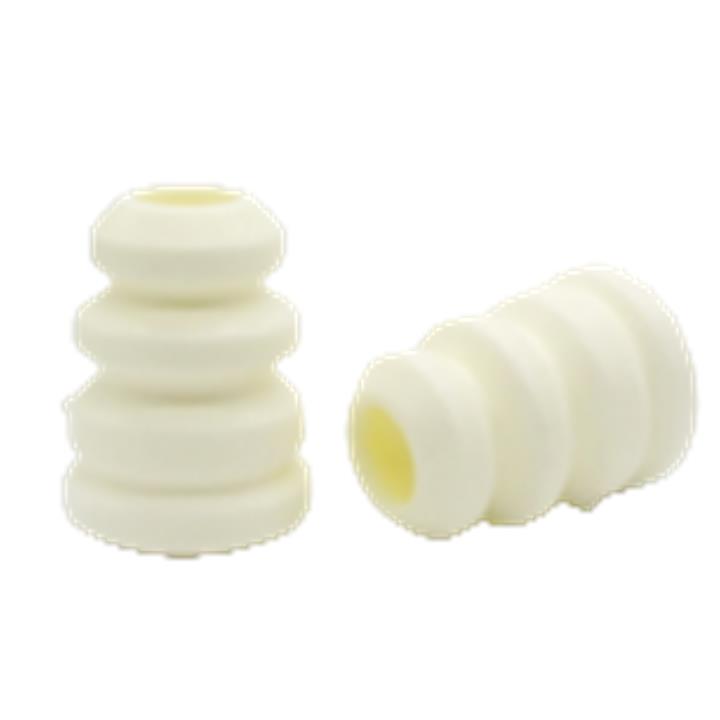
A bump stop is the elastomer body that cushions the end of the suspension stroke. A dust cover kit usually combines the bellows that keeps dirt off the damper rod with a stop, and sometimes clips or washers. When one quotation covers a four-piece kit and another covers a single stop, the difference in price says nothing about value until the contents are placed side by side. For distribution programmes it also matters which item the local market actually reorders: on a twenty-year-old chassis, both are consumed, but at different intervals.
Before comparing offers, confirm three things: the piece count, whether the stop in the kit matches the dimensions of the standalone stop, and the material of each component. We supply the bumper as a standalone part and can quote kit contents where a customer programme requires them. Related items in the same range are listed under our shock absorber parts programme.
Polyurethane suits this class of part because the formulation can be tuned. Changing the mix shifts hardness, rebound and compression set, so one body shape can serve different load cases. Compared with conventional rubber it resists tearing better, is less affected by oils and road salt, and holds its shape longer under repeated compression.
| Property | Polyurethane stop | Conventional rubber stop |
|---|---|---|
| Repeated compression | Holds shape well across the service interval | Tends to take a set earlier |
| Oil and abrasion resistance | Good | Moderate |
| Hardness options | Wide range, tuned per application | Narrower range |
| Load capacity in a small profile | Higher | Lower |
For the wider range of shapes and hardness grades we produce, see our polyurethane bump stops section, which covers replacement stops and parts made to customer drawings.
Because the stop compresses before the damper reaches the end of its travel, it protects more expensive components at the same time, limiting the peak load reaching the mount and body and keeping the spring inside its working range. On cars of this age the elastomer has often hardened or crumbled long before the damper fails. Signs that the stop has reached the end of its life:
Because the part is inexpensive, it is often left in place during a spring or damper change, leaving a new damper working against a crushed original stop and a repair that comes back to the workshop. Replacing both at the same time is usually the cheaper outcome for the vehicle owner.
Enquiries for this reference usually come from distributors serving markets where the older Civic fleet is still on the road, so the questions are about channel reliability as much as about the part itself.
We recommend starting with a sample against the dimensions in the table above, especially where your reference data comes from an older catalogue. Sample lead time is short relative to the 15-30 day production window for series orders, and fitment disputes are far cheaper to settle at the sample stage. If you hold a drawing or a competitor sample of a variant number, send it and we will match the geometry and hardness.
Standard packing is neutral export packaging, with branded cartons and barcode labelling available for private-label programmes. Stops are commonly combined with other chassis parts in one container, which reduces the freight cost per unit. For customers building a longer-term supply channel, our chassis and suspension range groups the parts that are typically reordered together.
Honda dealer data ties the number to the Civic across the 1992-2000 production span, with the successor 52722-SR0-003 replacing SR0-004 and SR3-003. Aftermarket catalogues extend cross-references across the wider 52722 family on Honda and Acura models of the same era. Because catalogues differ on position for this reference, confirm against the old part before ordering.
The SR0-003 reference is the successor listed in Honda dealer data and physically replaces SR0-004 and SR3-003 in the catalogue. They are separate part numbers with their own revisions, so we do not treat them as automatically identical. Send the number you hold and we will confirm which applies and match the dimensions.
Our drawing holds a 13.44 mm bore, a 46.6 mm body diameter and 82.9 mm overall length in polyurethane. European catalogue entries for related references list lengths around 74 mm, reflecting different measurement conventions and revisions. Size is confirmed against the drawing at quotation.
Yes. Send a drawing with the key dimensions, or a physical sample for reverse engineering, together with the required hardness and expected service conditions. We will confirm feasibility and the tooling route. OEM and custom design support is standard; see custom parts for what we need before quoting.
If you are sourcing this reference for a workshop network, a distribution programme or a private-label line, send the quantity, the destination port, and any packing or documentation requirements. We will reply with the price, the confirmed application notes, and the delivery schedule. Quote Bonpora number 4110095 to route your enquiry to the correct production file.