sales@bonporaparts.com
0086-10-64988621
English
The strut bump stop 6383210506 is the front suspension buffer for the first generation Mercedes Vito, the W638 van family built in Spain from 1996 to 2003, and for its passenger sibling, the V-Class. Mercedes data lists the part as a rubber buffer on the front axle under A 638 321 05 06, and Bonpora reproduces it in wear resistant polyurethane with a nominal 85 mm height, a 56 mm body and a 20 mm bore. One van platform served as a panel van, a crew bus, a minibus, a camper base and a family MPV, so this small buffer covers an unusually wide fleet. This guide explains the job of the part, the number, the fitment, the neighbouring catalogue number one base group away, and how to order it from a factory.
The W638 Vito is a front wheel drive van with a MacPherson strut at each front corner and a coil spring wound around the strut. The buffer slides over the piston rod inside the spring and hangs free through the normal ride range. When the front axle compresses fully - a loading ramp with the van full of cargo, a deep pothole on a delivery run, a hard landing after a crest - the buffer crushes progressively and stops the suspension before metal meets metal.
Vans punish this part. The W638 works close to its 2.7 tonne gross weight with roof racks, workshop fit outs and passenger seats, and thousands of units still run as delivery and taxi vehicles twenty years after production ended. A tired buffer passes every full compression event into the strut, and the first casualties are the rod seal and the rod guide, which turn a low cost buffer into a complete strut replacement. Replacing the buffers during front strut or spring work protects the expensive components around them.
| Item | Specification |
|---|---|
| Bonpora reference | 4110140 |
| OEM number | 6383210506 (Mercedes-Benz, also written A6383210506) |
| Part description in Mercedes data | Rubber buffer, front axle suspension |
| Fitting position | Front axle, left and right |
| Nominal size, Bonpora drawing data | Bore, inner diameter 20 mm; body diameter 56 mm; height 85 mm |
| Material | Polyurethane (PU) |
| Quantity required per vehicle | 2 |
| Country of origin | China |
| Warranty | 1 year |
| Lead time | 15 to 30 days |
| Packaging | Neutral export packaging |
| Custom service | OEM and custom design support |
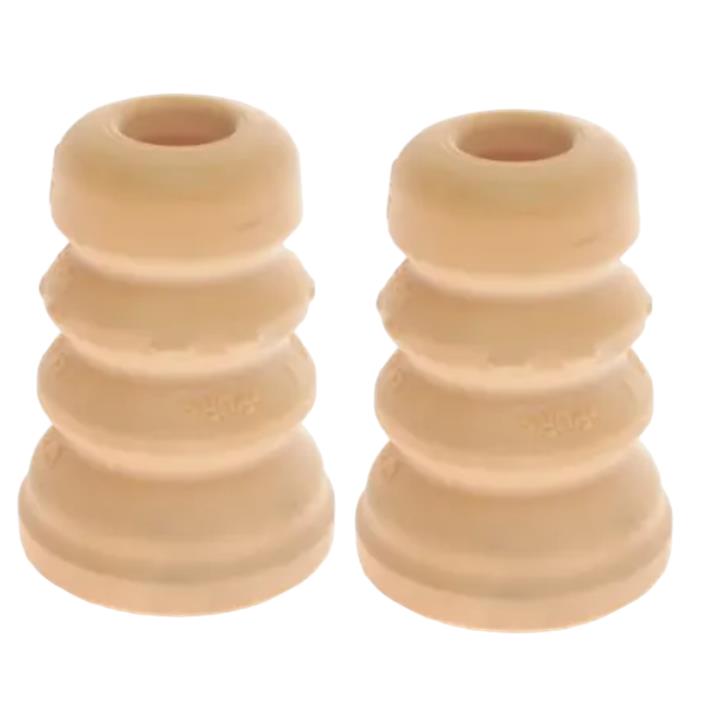
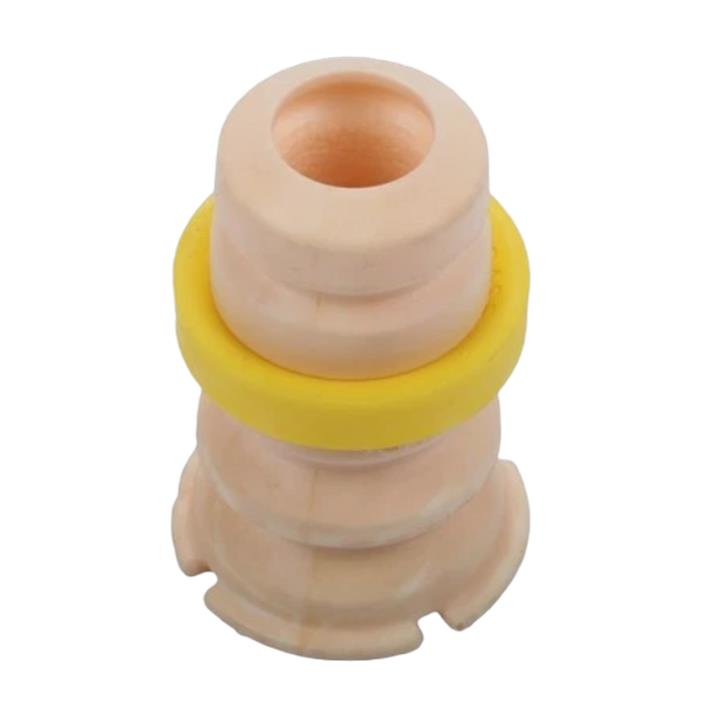
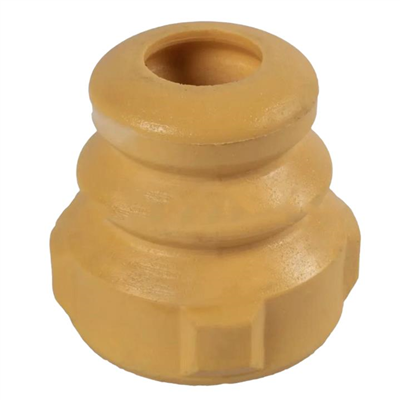
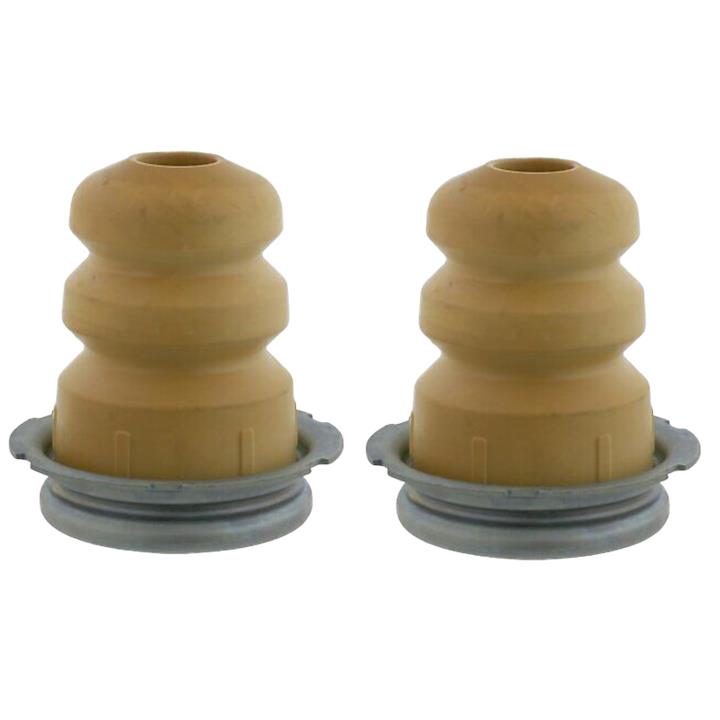
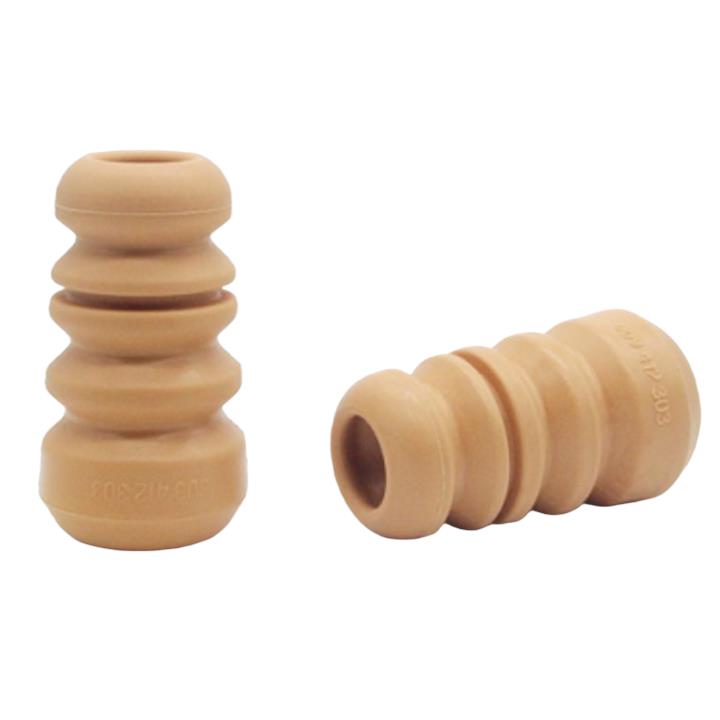
The Bonpora photograph of the moulding shows the classic three stage profile: a top cap around the 20 mm bore, a ribbed waist and a wider base skirt. Catalogue weight for the polyurethane version sits near 77 g. Every figure above is nominal; match the new buffer against the removed part before fitting.
Mercedes-Benz part numbers divide into blocks, and each block answers one question in the enquiry.
| Block | Value | What it tells the buyer |
|---|---|---|
| Prefix | A | Marks a genuine Mercedes-Benz part number. Aftermarket catalogues usually drop the letter and index the reference as the ten digit figure 6383210506. |
| Platform code | 638 | The W638 Vito and V-Class family, produced 1996 to 2003. |
| Main group | 321 | The suspension spring and buffer group. The same group carries front buffers on other Mercedes axles, for example A 204 321 00 06 on the W204 C-Class. |
| Index | 05 06 | Position and design index of the buffer inside the group. |
Search the number in every written form - 6383210506, A6383210506, 638 321 05 06 and A 638 321 05 06 - because catalogues index the reference differently and result lists differ by form.
Catalogues index the buffer across the whole W638 range, petrol and diesel, van and passenger versions. The chassis code behind the VIN confirms the exact body.
| Body | Chassis codes | Engines and notes |
|---|---|---|
| Vito panel van | 638.0 series (638.014 to 638.094) | 108 D, 110 D, 108 CDI, 110 CDI, 112 CDI, 113, 114 |
| Vito Mixto crew van | 638.0 and 638.1 series | Seats plus cargo bay, same front end |
| Vito bus and Kombi | 638.114, 638.134, 638.164, 638.174, 638.194 | 108 D to 114, 79 to 143 hp |
| V-Class passenger MPV | V 200, V 230, V 230 TD, V 280, V 200 CDI, V 220 CDI | M111 petrol, VR6 2.8, OM601 diesel, OM611 CDI |
| Vito Marco Polo camper | 638 based conversions | Motorhome bodies on the same strut layout |
Under the bonnet the family spans the M111 petrol four cylinder in 2.0 and 2.3 litres, the VR6 2.8 in the V 280, the OM601 diesel in 2.3 litres and the OM611 CDI in 2.2 litres. The front suspension layout is common to all of them, so the buffer is one order line for the whole fleet, two pieces per vehicle.
The catalogue field for these vans carries a second front axle rubber buffer under the neighbouring base group, and the two figures are easy to mix on screen.
| Number | Catalogue role | Buying note |
|---|---|---|
| 638 321 05 06 | Front axle buffer indexed for the W638 Vito and V-Class, 1996 to 2003 | The part in this article, nominal 85 mm tall |
| 638 320 00 29 | Front axle rubber buffer listed in TecDoc style catalogues under RIDEX 1182R0064 with fitment shown across Vito W638, W639, Viano and V-Class | Separate catalogue entry, one base group away |
| Verification step | Quote the VIN, the axle and the height of the removed buffer | Do not substitute one base group for the other without checking |
The 320 and 321 blocks sit one digit apart, yet each entry carries its own application data. Some aftermarket ranges cover several van generations with the 320 number, while the 321 reference is anchored to the first generation. Verify by VIN and by the dimensions of the removed buffer rather than by the base number alone.
In 2003 the Vito moved to the W639 platform: rear wheel drive, new engines and a revised suspension layout. Catalogues index 6383210506 for the first generation vans built to mid 2003, so a workshop servicing a late W639 needs a different reference. The boundary falls inside a single model year, which is why the build date and the VIN matter more than the model name: a van registered in 2004 can still be a W638, and a Vito sold as an early 2003 model can already be a W639. Confirm the chassis code before quoting, and keep both references on the price list if the warehouse serves mixed fleets.
The failure pattern on a high mileage Vito is easy to recognise. A hollow clunk from the front over ridges and manhole covers, a bang when the loaded van drops off a kerb, crumb particles around the strut and an oil mist on the strut body once the seal has been hammered all point at the travel limiter. With the wheel removed the buffer is visible inside the spring seat area, so a quick inspection fits into any front axle job. Replace the buffers in pairs, and check the dust covers and protection kits on the same strut at the same time, because a split boot lets grit reach the rod and shortens the life of every part in the corner.
| Property | Rubber buffer | Polyurethane buffer |
|---|---|---|
| Rate under compression | Progressive, firms up near full travel | Stepped rib profile engages in stages and keeps the rate rising |
| Ageing | Ozone and heat age the surface, cracks appear | Resists ozone and generally outlives rubber in the same position |
| Permanent set | Takes a set with age and load cycles | Recovers shape better under the same duty |
| Cold behaviour | Stiffens in deep cold | Rate stays more stable across the working range |
| Failure mode | Crumbles and sheds fragments | Wears at the ribs first, still limits travel |
A polyurethane buffer is a replacement material choice, not a comfort upgrade. The goal is to restore the travel limiter to the height and rate the strut was designed around. For fleet operators the practical benefit is service life; for distributors it is a part that does not perish in the warehouse. The wider polyurethane bump stop range covers other axles and brands in the same material.
Bonpora supplies the part under reference 4110140 with production and stock in China, a lead time of 15 to 30 days and neutral export packaging for distributors who box under their own brand. A complete enquiry contains the full number A 638 321 05 06 or 6383210506, the VIN or the chassis code of the van, the height and bore of the removed buffer and the quantity. Minimum order quantities are friendly to mixed pallets, and the buffer ships alongside other suspension parts without special handling. For a different compound, hardness or height, the custom polyurethane moulding service produces parts against a drawing or a sample.
The Mercedes Vito W638 vans and the V-Class passenger versions built from 1996 to 2003: panel van, Mixto, bus and Kombi bodies in the 638.0 and 638.1 chassis series, the V-Class MPV and camper conversions on the same base. It fits the front axle, left and right, and a vehicle takes two buffers.
No. It is a separate catalogue entry for a front axle rubber buffer in the neighbouring base group, and some aftermarket ranges list it across the W638 and W639 van families. Confirm the application by VIN and by the dimensions of the removed buffer; do not swap base groups on assumption.
This reference is indexed for the first generation built to mid 2003. For a 2003 to 2014 Vito or Viano, confirm the chassis code first; catalogues that cover the newer vans list the 638 320 00 29 entry with extended fitment. Match the height and bore before ordering either number.
Compare it against the removed part: nominal 85 mm height, 56 mm body diameter and 20 mm bore for this reference, with the same three stage rib profile. Check that the bore slides freely over the piston rod, seat the base skirt fully and repeat the check on the other side. Where the removed buffer is rubber and the replacement is polyurethane, expect identical dimensions with a firmer feel near full compression.
Send 6383210506 with the vehicle list and the quantity to receive a factory quotation for the strut bump stop for Mercedes Vito W638. Bonpora supports distributors and fleet suppliers with factory stock, neutral export packaging, 15 to 30 day lead times and OEM and custom design support across the suspension buffer programme.