sales@bonporaparts.com
0086-10-64988621
English
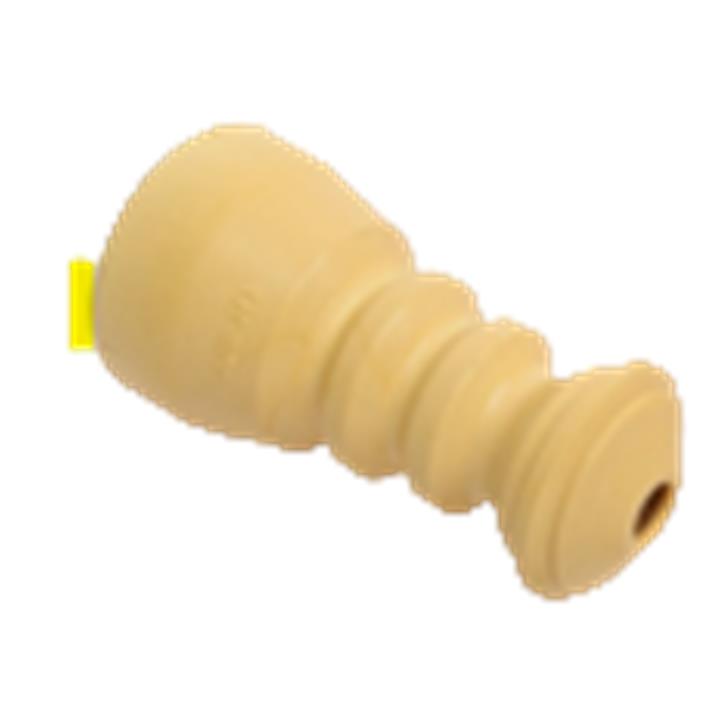
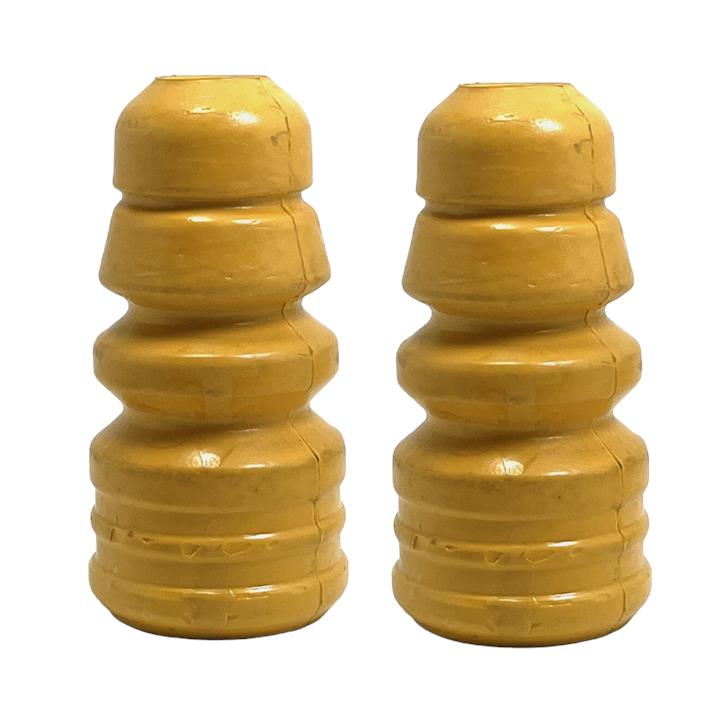
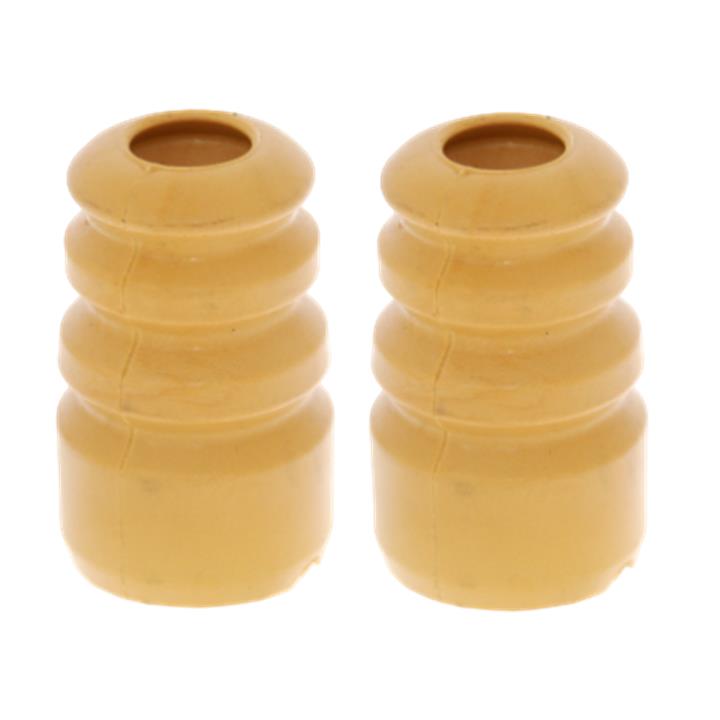
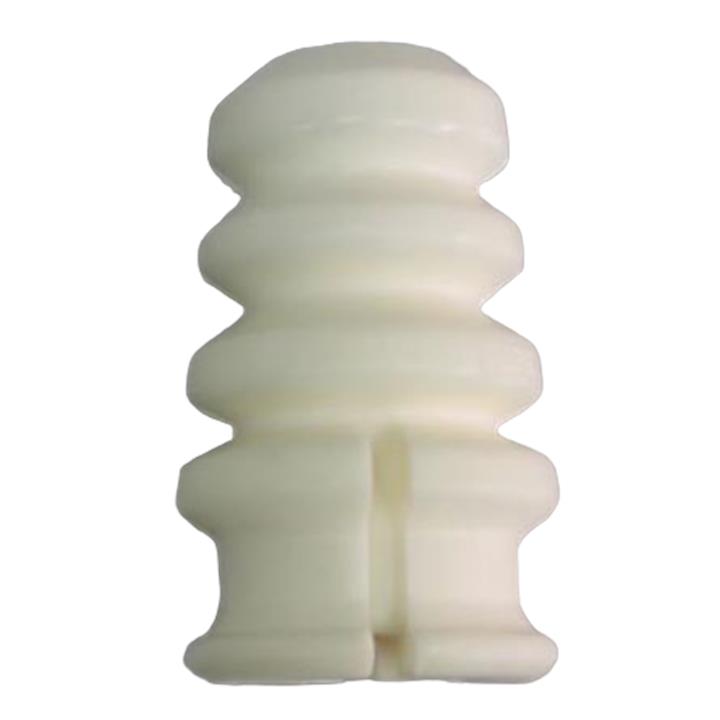
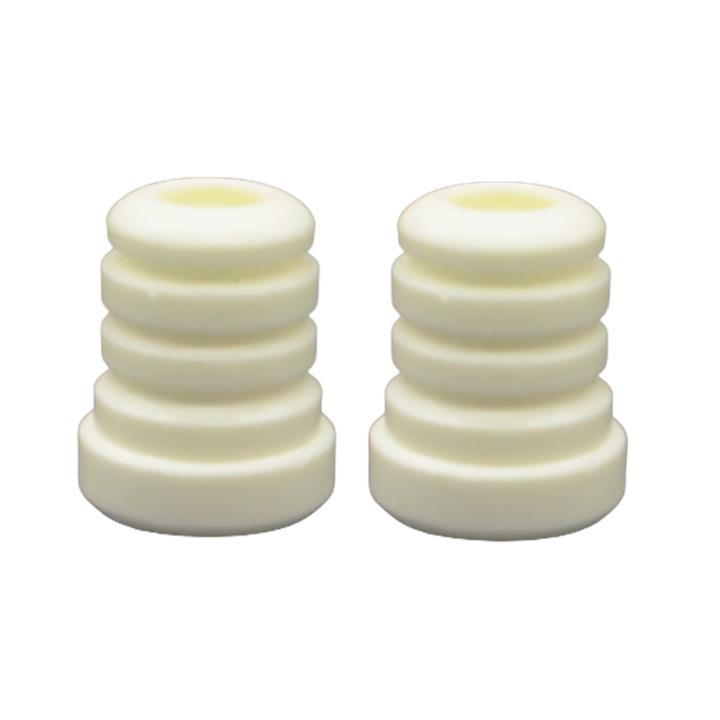
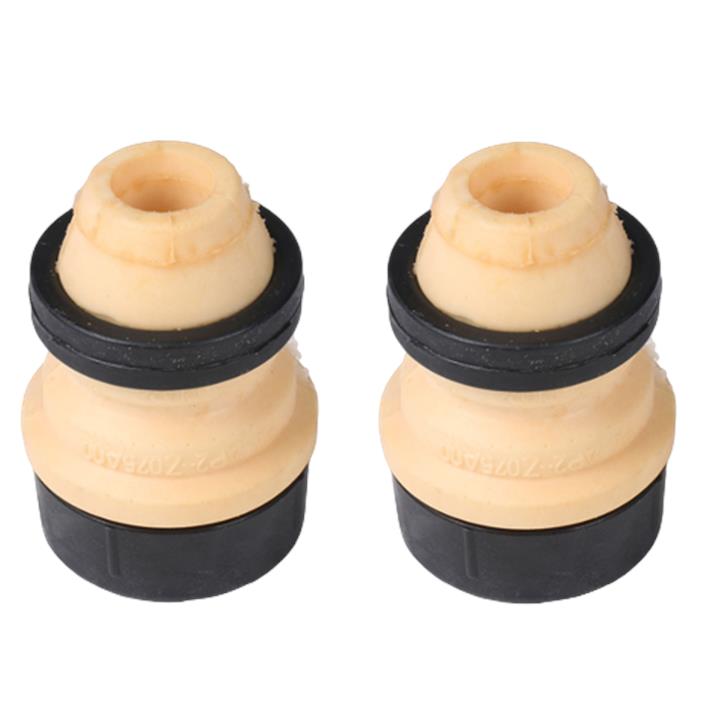
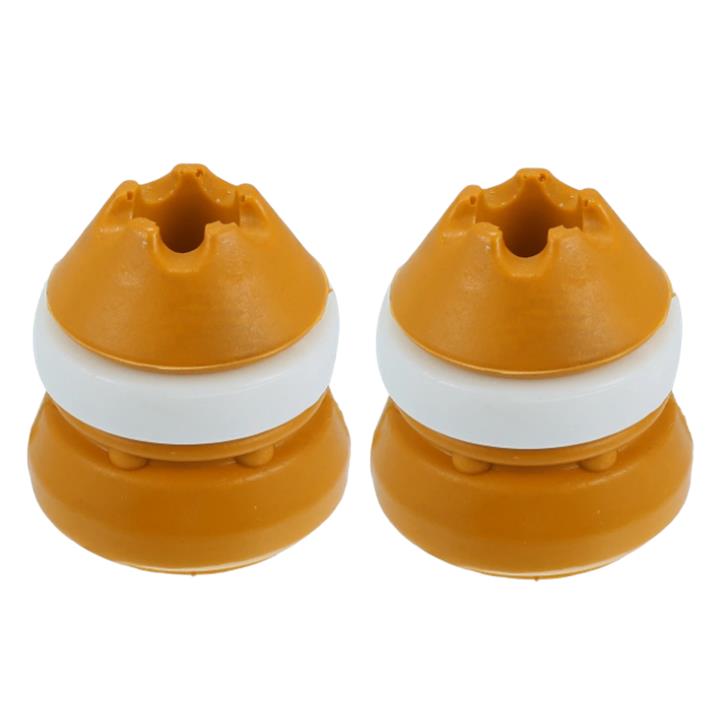
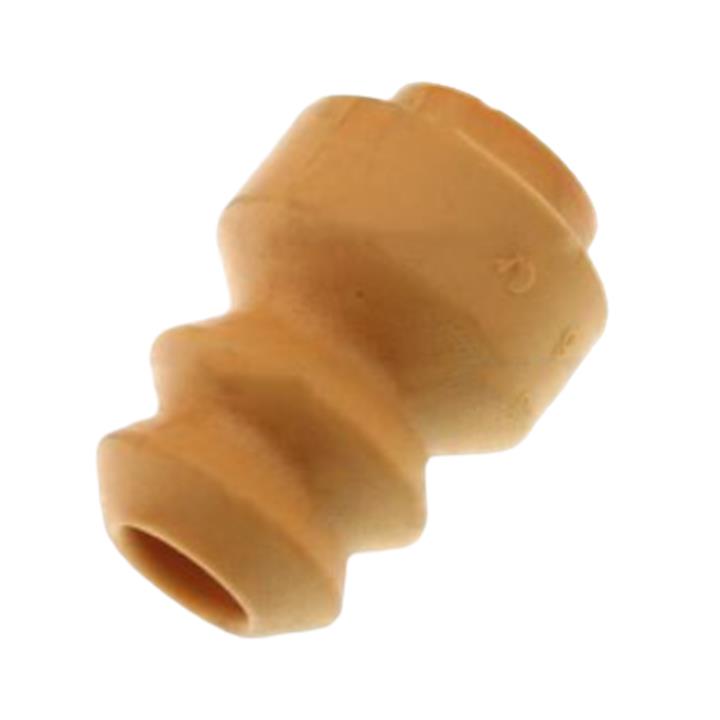
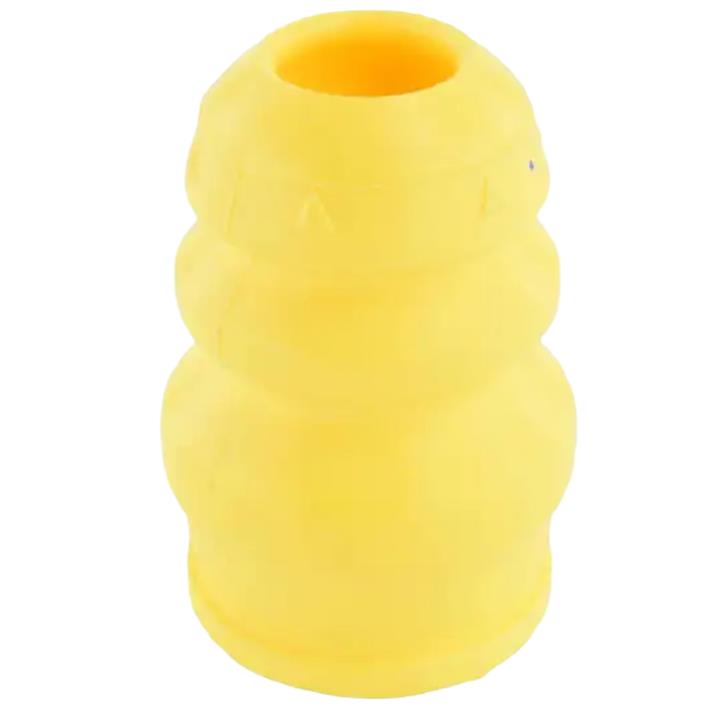
Volkswagen Caddy strut bump stop 2K0511153B is the rear suspension buffer of the Caddy van family, the compact panel van and estate that Volkswagen builds on the 2K platform. Bonpora manufactures the replacement as number 4110113 in micro-cellular polyurethane, following the drawing data of 20 mm bore, 86 mm outer diameter and 120 mm free height. European catalogues also list the buffer under the base reference 2K0511153, at about 122 mm thickness and 0.45 kg per piece. This page explains what the buffer does, how the catalogue data compares, and how trade buyers order it.
The Caddy carries loads that a passenger car never sees: parcel racks, trade tools, palletised freight and, in the estate versions, a family with their luggage. Under normal running the rear springs carry that weight and the dampers control the oscillations. When the rear suspension reaches the end of its travel, on a loaded kerb strike or a deep pothole, the polyurethane buffer between axle and body compresses progressively: the final stage of the movement feels firm rather than harsh, and the metal components never meet in a direct impact.
A collapsed or missing buffer shows itself quickly on a working van. Drivers hear a hard knock from the rear over rough ground, the tail sits visibly lower when the load area is full, and rear dampers and spring seats wear out faster than they should. The buffer costs a fraction of the parts it protects, so workshops renew both sides whenever rear springs or dampers are replaced.
This buffer differs from the slim rod-mounted cushions on Caddy front struts. Catalogue cross-reference data for the 2K0511153 group lists the rear leaf springs of the 2K0511151 series alongside the buffer, and the required quantity of two reflects a beam axle layout: on most Caddy versions the rear suspension is a leaf-sprung solid axle, and the buffer works as a large-diameter compression stop between axle and body. An 86 mm outer diameter gives a broad seating face, while the 20 mm bore accepts a locating spigot instead of riding on a damper rod. Buyers who know the slim strut type should expect a shorter, wider and heavier part here.
The published parameters of the replacement are summarised below.
| Parameter | Value |
|---|---|
| Product Name | Strut bump stop (rear axle suspension buffer) |
| OE Number | 2K0511153B (base reference 2K0511153) |
| Bonpora Nos | 4110113 |
| Fitment | Volkswagen Caddy, rear axle |
| Nominal Size (Bonpora drawing data) | Φ20 × Φ86 × 120 mm |
| Catalogue reference figures | Thickness about 122 mm, weight about 0.45 kg per piece |
| Position | Rear axle, left and right, quantity 2 |
| Material | Polyurethane (micro-cellular) |
| Country of Origin | China |
| Warranty | 1 year |
| Delivery Time | 15-30 days |
| Packaging | Neutral export packaging |
| Custom Service | OEM & custom design support |
Bonpora supplies this buffer inside a wider polyurethane bump stop programme that covers European, American, Korean and Japanese references, and every batch is checked for size and hardness before packing.
The Bonpora drawing lists a free height of 120 mm, while several European catalogues print a thickness of 122 mm for the same reference. The difference is small and comes from measurement practice: drawing data states the nominal free height of a new part, and catalogue values are rounded or taken at different reference points. Treat both figures as describing the same tall cushion, confirm the height against a new sample where the application is critical, and never measure a flattened used buffer, because years of compression leave a permanent set.
Catalogues list 2K0511153 and 2K0511153B for the rear axle of the Caddy III range, the box body and estate versions built from March 2004 to May 2015 with body codes 2KA, 2KH, 2CA, 2CH, 2KB, 2KJ, 2CB and 2CJ, and with engines from 1.2 TSI and 1.6 petrol units through 1.9 and 2.0 TDI diesels to the 2.0 EcoFuel gas variant. Many listings extend the reference to the Caddy IV generation from 2015 onwards and to the South American and South African builds of the same years, so coverage differs between catalogues. The wide engine list is normal: the part depends on the axle and spring layout, not on the fuel. The B suffix marks a revision of the base number, and aftermarket suppliers quote either reference.
Two checks keep a Caddy order clean. First, confirm the rear layout in the catalogue entry for the VIN, because special versions and all-wheel-drive derivatives can carry a different rear suspension. Second, compare the removed buffer with the drawing data: a broad cylinder of about 86 mm across and 120 mm tall with a 20 mm bore is the expected shape. If the removed part is slim and rod-mounted, the enquiry belongs to a front strut reference instead. Where doubt remains, send photographs with the three measurements, and the factory confirms the match before production.
A delivery van spends its life closer to its gross weight than a passenger car ever does. City routes add frequent kerb contacts, potholes and speed bumps, and the rear suspension travel is used up much sooner at these loads. The buffers therefore work in their upper compression stages every day, heat builds up in the cellular material, and a design with stable progressive behaviour and good shape retention pays off over the life of the vehicle. Fleet operators notice the difference at inspection: intact rear buffers keep the ride height under load and protect the dampers and spring seats around them.
Wholesalers building mixed containers often order buffers by dimension, because one geometry can serve several references across brands. For this line the checklist is short: measure the bore over the locating spigot, the outer diameter of the seating face, and the free height on a new part. Compare the three figures with the drawing data above and confirm the material is micro-cellular polyurethane.
Two precautions keep the measurement honest. Never take the height of a flattened used cushion as the reference value, because years of compression leave a permanent set; use the catalogue height or a new sample instead. Also check the location: the 20 mm bore suits a specific spigot diameter, and a loose fit wears the cushion off-centre and shortens its life. If the original marking has worn away, send all three measurements before the order is placed.
Ordering by the OE reference removes the ambiguity of model year ranges and body versions and is the fastest route for most trade buyers.
The buffers fitted at the factory were cellular rubber, and much of the aftermarket supply for this reference is listed in PU. Both materials do the same job with different behaviour along the compression curve.
| Property | Cellular Rubber | Micro-cellular Polyurethane |
|---|---|---|
| Compression behaviour | Progressive, softer initial stage | Progressive, firmer late-stage support |
| Shape retention | Permanent set possible over time | Holds shape through repeated cycles |
| Ageing and ozone resistance | Cracking possible at high mileage | Generally strong |
| Oil and grease contact | Swelling possible | Better resistance |
| Typical market role | Original equipment material | Common replacement material |
Neither material is automatically better. Rubber remains fully serviceable, while polyurethane is chosen where firmer late-stage support and longer shape retention are wanted, and several aftermarket catalogues already list this reference in PU. Buyers who need a defined hardness receive the data sheet with the batch, and the shock absorber parts catalogue lists matching buffers, dust covers and mounts for consolidated shipments.
Beyond catalogue supply, Bonpora runs a custom service for buyers who need their own part number, a modified geometry or branded packaging. Engineering starts from a dimensioned drawing, a physical sample or an existing reference such as this one, and adjusts bore, outer diameter, height and hardness to the application. Tooling is produced in-house, so sampling and revision cycles stay short. Options include part number marking, private label bags and cartons, and consolidated loading with other suspension lines; the custom parts page describes the process and what a quotation needs.
Suspension buffers on commercial vehicles work amid wide temperature swings, continuous compression cycles and contact with dirt, water and road salt, so batch control concentrates on the properties that decide service life. Incoming polyurethane is checked against specification, dimensions are sampled with calibrated tools, hardness is measured on every batch, and visual inspection covers pores, cracks and flash. Goods are packed only after the batch record is complete.
Standard packing is a poly bag per piece in export cartons sized for pallet loading, and the piece weight of about 0.45 kg keeps freight predictable. Neutral export packaging is the default, which lets distributors sell under their own brand where regulations allow. Lead time is 15 to 30 days from order confirmation and samples usually ship sooner. Bonpora quotes ex-works, FOB and CIF terms and can consolidate these buffers with other Caddy and Volkswagen references.
Catalogues list it for the rear axle of the Caddy III range built from 2004 to 2015, the box body and estate versions with engines from 1.2 TSI to 2.0 TDI and the EcoFuel gas variant, and many listings extend the coverage to the Caddy IV generation and the South American and South African builds of the same years. Coverage differs between catalogues, so confirm against the VIN or the removed part before ordering in volume.
The nominal drawing data is a 20 mm bore, an 86 mm outer diameter and a 120 mm free height; several European catalogues print a thickness of about 122 mm and a piece weight near 0.45 kg. Measure the removed part at the same points and request a sample where the figures are critical.
Yes. 2K0511153 is the base reference and 2K0511153B is a revised form of the same buffer. Suppliers quote either number, and both lead to the same cushion geometry, so offers and carton labels can carry the two references side by side.
Catalogues list a required quantity of two for the rear axle, one for each side, and workshops normally renew both sides together so the axle behaves evenly. Trial orders stay small: samples and mixed shipments are accepted, production completes within 15 to 30 days, and the parts carry a 1 year warranty with OEM and custom support.
For prices, drawing data and samples for the 2K0511153B rear axle buffer, send the reference, the quantity and the destination port to the Bonpora sales team. Quotations for stock items usually go out within one working day, and this line can be combined with other suspension references.