sales@bonporaparts.com
0086-10-64988621
English
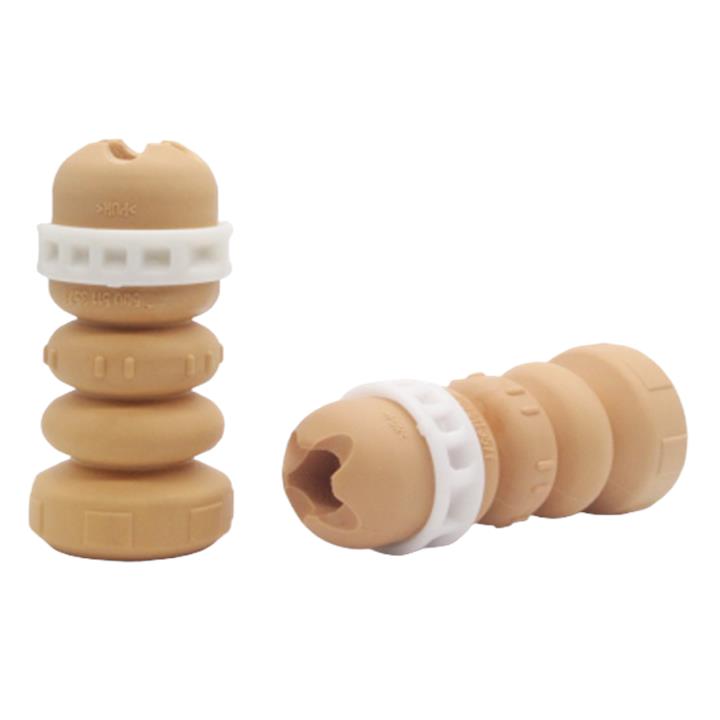
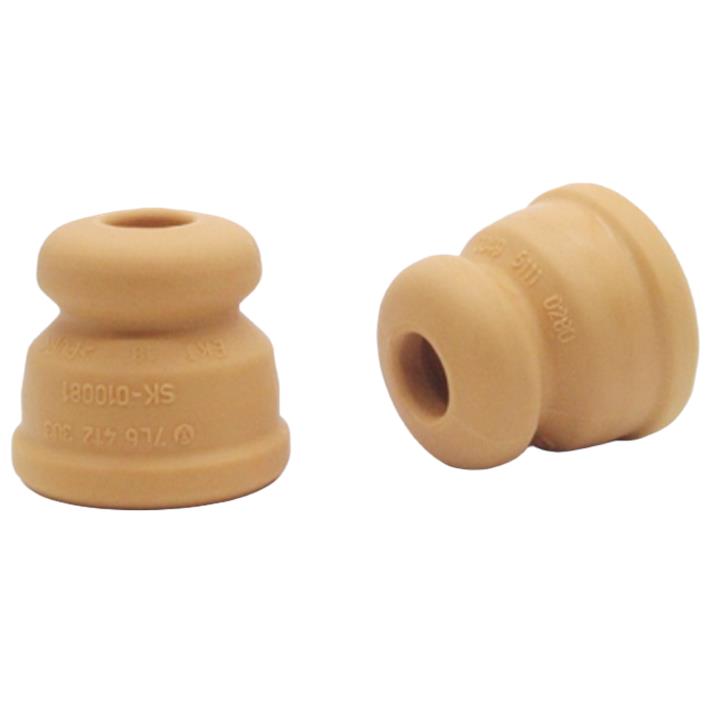
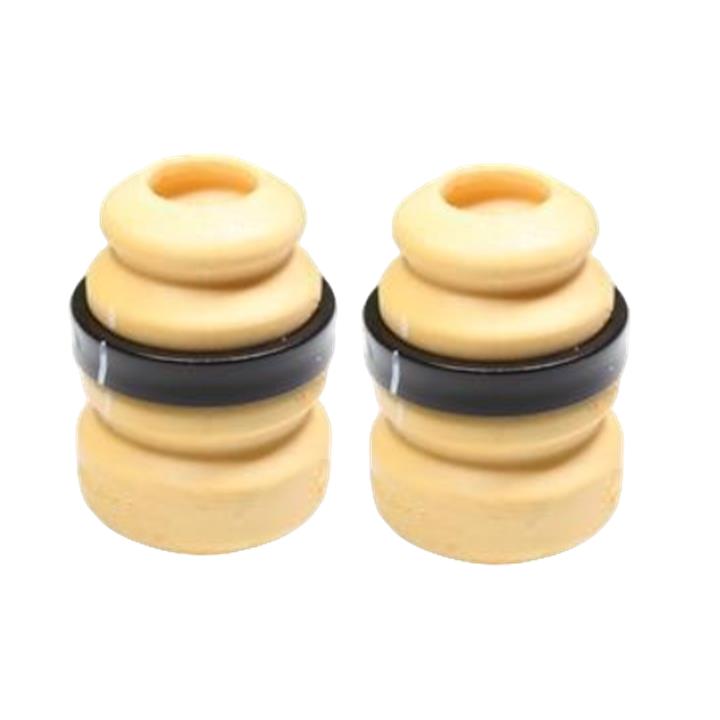
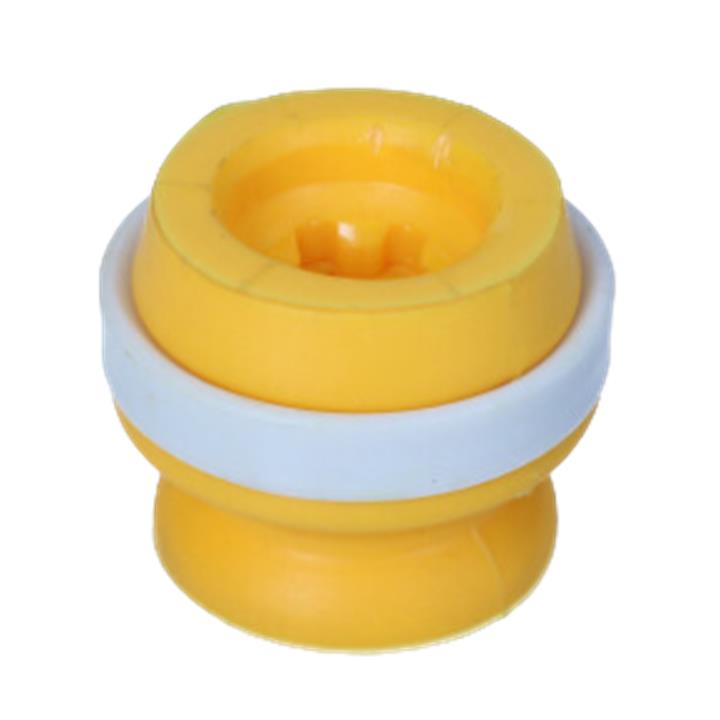
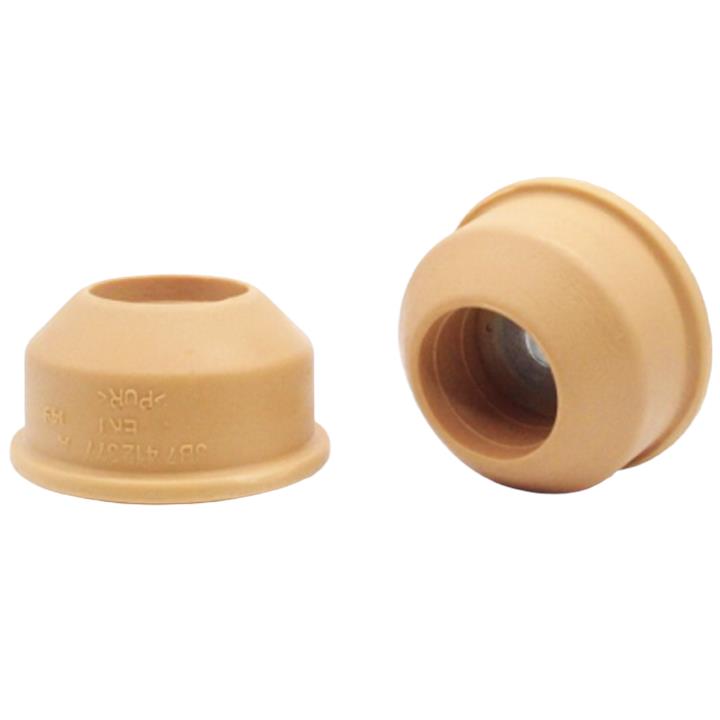
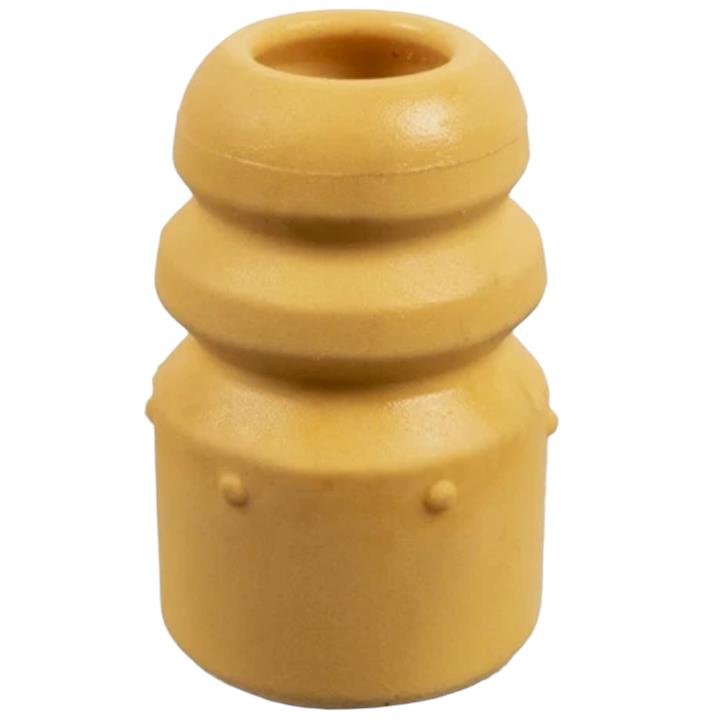
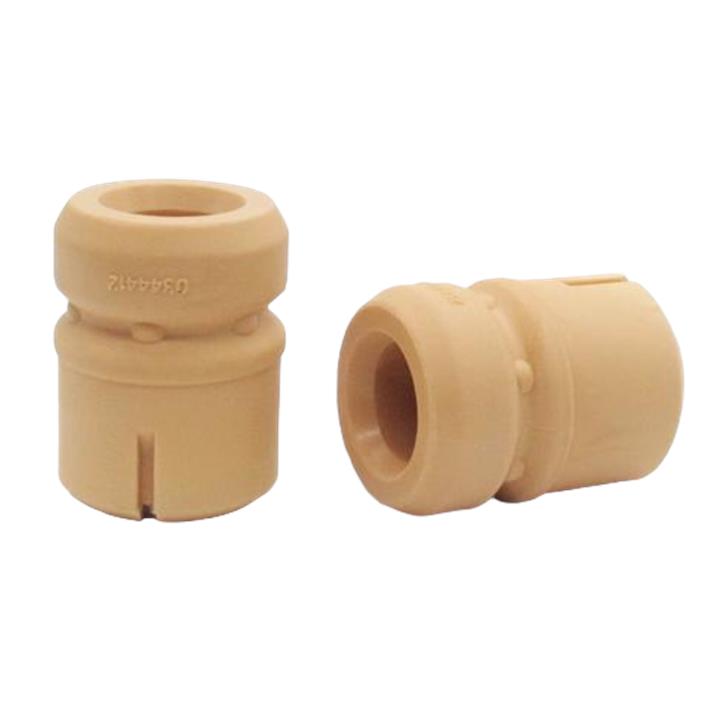
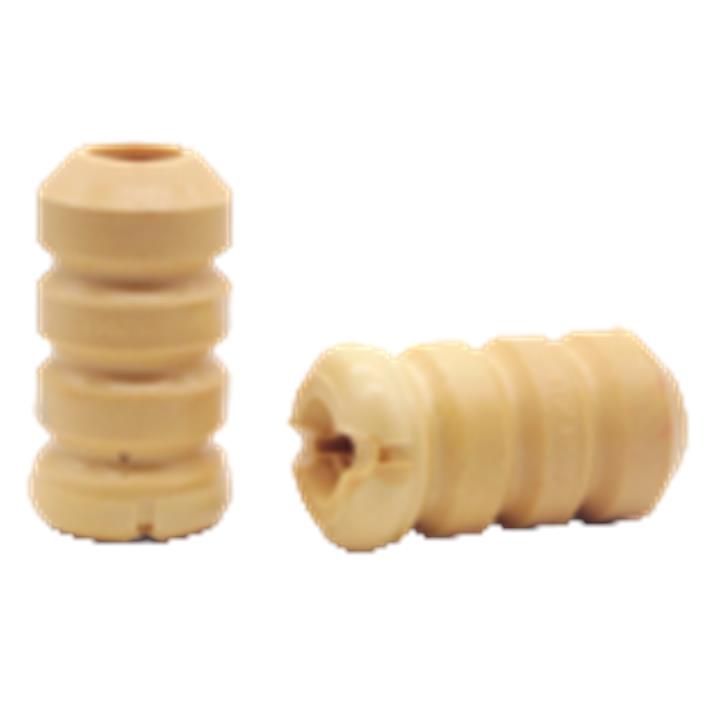
If you service aging Mazda compacts, the C100-28-111 strut bump stop is a part you will meet again and again. It is the rear-axle jounce bumper used on the Mazda 323 / Familia BJ generation (1998-2003), a platform that also lives on in Chinese-market derivatives. Bonpora produces this part in microcellular polyurethane under Bonpora No. 4110091 and supplies it to parts wholesalers, importers and workshop chains worldwide.
Most buyers arrive with an OE number taken from a dealer catalogue, a torn packaging label or an old purchase order. This article explains what the part does, which vehicles it serves, how Mazda separates front and rear suspension numbers, and what a wholesale buyer should verify before committing to a container.
The bump stop is a progressive-rate cushion mounted on the damper piston rod, above or inside the dust cover. When the rear suspension compresses beyond normal travel - a fully loaded cabin, a sharp pothole, an unloaded rear axle over a speed bump - the coil spring alone cannot absorb the last part of the stroke. The bump stop compresses instead, converting the remaining energy into controlled, rising resistance. It is the final barrier that keeps the piston rod from bottoming out against the internal end plate of the strut.
Because the part works at the extreme end of the travel range, its condition directly affects how the car behaves when it is working hardest: heavy loads, rough roads and emergency maneuvers.
An aged bump stop rarely fails silently. Typical field symptoms include:
When technicians replace rear struts on a BJ-platform car, inspecting the bump stop at the same time is standard practice; reusing a brittle one shortens the life of the new damper.
Mazda assigned the C100 part-number prefix to suspension components shared across its late-1990s compact platforms. In Chinese aftermarket stock lists, C100-28-111 is registered as a rear-axle buffer for BJ-series models, including locally produced versions. Representative applications are listed below.
| Brand / Market | Model | Chassis Series | Years (approx.) | Position |
|---|---|---|---|---|
| Mazda | 323 / 323F | BJ | 1998-2003 | Rear axle |
| Mazda | Familia | BJ | 1998-2003 | Rear axle |
| Mazda | Protege / Protege5 | BJ | 1999-2003 | Rear axle |
| Haima (China) | 323 / Familia, locally produced | BJ-derived | 2002 onward | Rear axle |
Fitment tables are a guide, not a substitute for verification. Where the same platform was assembled in several markets, small running changes are common, so the OE number on the removed part remains the final reference.
Mazda’s suffix structure helps buyers avoid a classic ordering mistake. Components in the 34-xxx series belong to the front suspension group, while 28-xxx parts belong to the rear suspension group. The same C100 prefix therefore covers both ends of the car: European aftermarket catalogues cross-reference C100-34-111A as a front-axle suspension buffer for the 323 F BJ and Premacy CP, while C100-28-111 serves the rear axle. A buyer who quotes only the trailing digits without the series digits can easily receive the buffer for the wrong end of the car.
For a platform of this age, three checks are worth the time. First, match the full OE number, including the series digits. Second, confirm the chassis code of the donor vehicle - BJ-series 323, Familia and Protege models share the family, but the later Mazda3 (BK) uses a different prefix family such as BP4K. Third, if the vehicle has already been serviced with non-original dampers, measure the removed stop and compare it against a sample rather than relying on the model year alone.
| Item | Specification |
|---|---|
| Product Name | Strut Bump Stop (rear jounce bumper) |
| OE Number | C100-28-111 |
| Bonpora No. | 4110091 |
| Fitment | Mazda 323 / Familia BJ platform, rear axle |
| Material | Polyurethane (microcellular PU foam) |
| Size | Produced to the OE drawing; confirm drawing or sample when quoting |
| Country of Origin | China |
| Warranty | 1 Year |
| Delivery Time | 15-30 Days |
| Packaging | Neutral Export Packaging |
| Custom Service | OEM & Custom Design Support |
Because the source record for this part does not carry a certified dimension set, the size line above is deliberately kept as a drawing-controlled value. Some Chinese stockist databases list an installation bore of roughly 25 mm for this number; treat such figures as indicative references and verify against the drawing or the removed part before release to production.
Bump stops of this era left the factory mostly in cellular rubber, which hardens and crumbles under heat cycles and ozone exposure. Microcellular polyurethane is what most aftermarket suppliers have moved to, for practical reasons:
| Property | Microcellular PU | Conventional rubber |
|---|---|---|
| Compression curve | Progressive and repeatable across batches | Varies more with compound and cure |
| Aging behavior | Resists ozone and heat cycling comparatively well | Hardens, cracks and powders with age |
| Low-temperature response | Stays workable in cold climates | Stiffens noticeably below freezing |
| Lot consistency | Cast from metered mixes, easy to trace | More sensitive to cure conditions |
In our production experience, a well-formulated PU stop keeps its progressive rate noticeably longer on high-mileage fleet vehicles, although real service life always depends on load, road quality and climate. The comparison is directional, not a promise of specific service intervals.
Bonpora supplies suspension buffers mainly to wholesalers, catalog distributors and workshop chains. Orders are typically built as mixed containers: bump stops of several OE numbers, dust covers and related items loaded together against a single invoice. This suits importers serving both passenger-car and light-commercial lines, because a slow-moving SKU never blocks the rest of the container. Quotations scale with quantity, and repeat items can be reserved against rolling forecasts.
Every shipment leaves in neutral export packaging: individual bags with label data, then boxed to export cartons. Distributors who resell under their own brand can specify label artwork, part-number text and carton marks, which keeps the product presentation consistent with the rest of their catalogue.
Beyond catalogue items, the factory supports OEM and custom design work. Buyers can send a drawing, a scanned sketch or simply the removed part; engineering then confirms dimensions, bore, height and density. Compound hardness can be tuned for heavier duty cycles, and colored foam or embossed marks are available where a distributor wants a visible brand signature. The same service extends across the wider range of polyurethane bump stops produced by the factory.
For custom items the sequence is straightforward: drawing review, tooling or sample machining, first-article samples with a dimensional report, customer approval, then volume production. Sampling adds lead time on the first order, but it removes most of the risk of committing a bulk run against an unverified dimension set.
Production lots are checked for density and hardness against the compound specification, and sampled parts are measured for outer diameter, bore, height and flange details. For OE-number items, the comparison drawing is the released production drawing rather than a scan of a used part, which keeps tolerances traceable across repeat orders.
Cartons are counted and sealed against the packing list, and documents travel with the shipment so customs clearance and warehouse intake do not stall. Buyers who need specific marking formats on labels or boxes can agree on the format before the first production run, and the format is then locked for repeat orders.
A fast, accurate quotation needs three things: the full OE number (C100-28-111 in this case), the target quantity, and the destination port. If a sample or drawing is available, attaching it shortens the confirmation step considerably. Inquiries that omit the series digits - quoting 28-111 without the C100 prefix - are the most common source of back-and-forth, so the full string matters.
Standard delivery time is 15 to 30 days depending on order size and production scheduling. The part carries a 1-year warranty against material and manufacturing defects, within the normal scope of suspension rubber and PU components. Warranty claims are handled on a lot basis with photo or sample evidence.
It is listed in Chinese aftermarket stock databases as the rear-axle strut bump stop for the Mazda 323 / Familia BJ generation (approximately 1998-2003), including the Protege series in North American markets and locally produced BJ-derived models in China. Because running changes existed across markets, confirm the number against the removed part before ordering.
Rear. In Mazda’s numbering, 28-xxx suffixes belong to the rear suspension group while 34-xxx suffixes belong to the front group; the same C100 prefix also covers C100-34-111A, a front-axle buffer for the 323 F BJ and Premacy CP. Ordering by the trailing digits alone risks receiving the buffer for the wrong end of the car.
The catalogue item is produced in microcellular polyurethane to the OE drawing. Custom outer diameters, bores, heights and hardness grades can be quoted against a drawing or sample. Buyers who need a matched dust cover or a combined kit can request it as a paired item under the same order.
Bonpora No. 4110091 ships in neutral export packaging within 15 to 30 days, carries a 1-year warranty, and supports OEM and custom design projects. Volume pricing is quoted per inquiry; mixed loading with other suspension items is standard practice for container orders.
Send the OE number, quantity and destination port, and the sales team will return a quotation with packaging options and current production scheduling. Distributors building a BJ-platform line can also request the full list of related Mazda and multi-brand suspension buffers from the same factory base, together with the wider range of shock absorber parts already in production.
Bonpora manufactures and exports chassis and suspension components for Japanese, Korean and European applications, with OEM and custom design support for distributors who need parts outside the standard catalogue. Contact the team to start the conversation with a drawing, a sample or simply an OE number.