sales@bonporaparts.com
0086-10-64988621
English
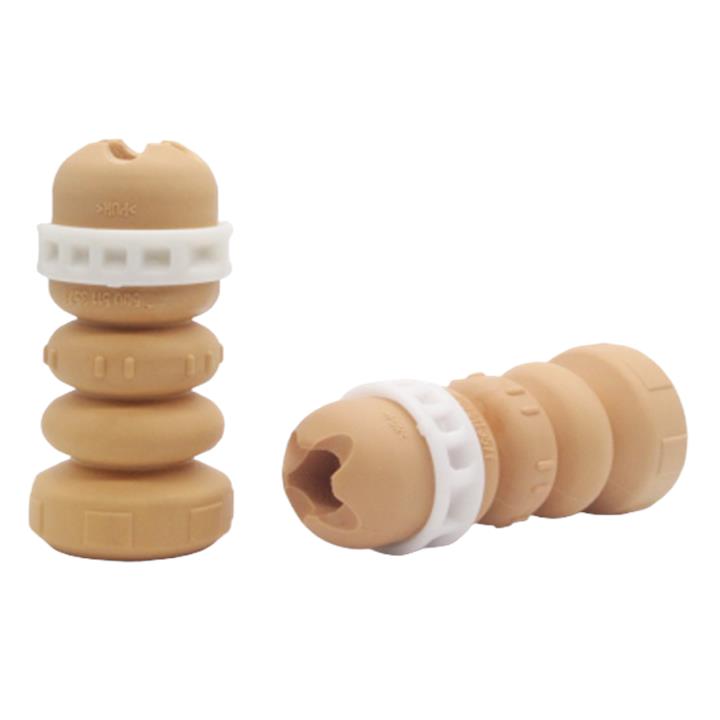
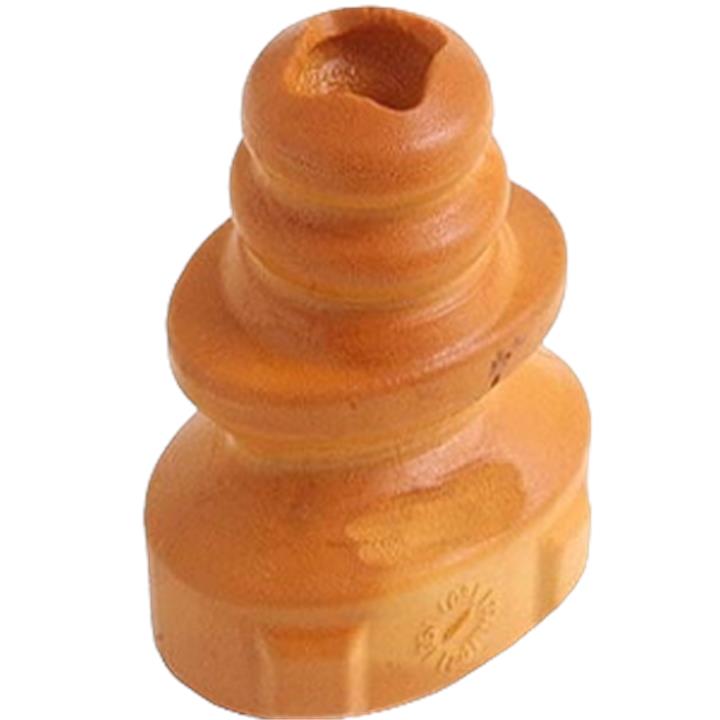
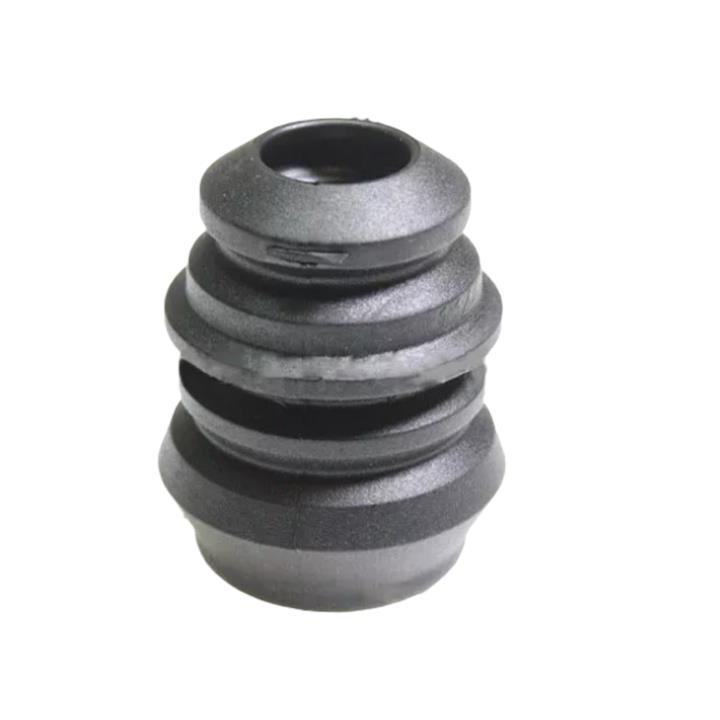
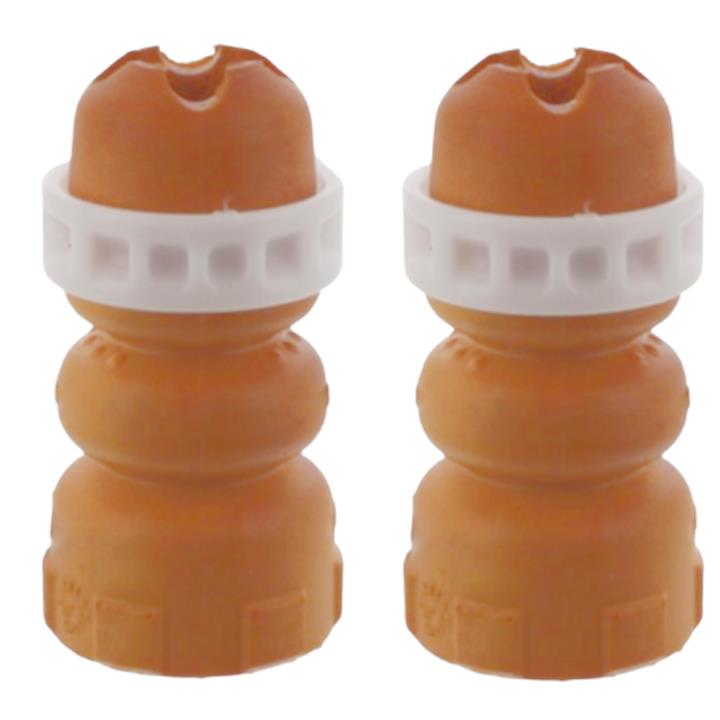
A strut bump stop is a compact component with a decisive role in a Mercedes-Benz suspension: it cushions the final movement of the strut when the suspension reaches full compression and protects the damper, its mounts and the surrounding structure from metal to metal contact. On a classic chassis the part carries extra significance, because elastomer components that have spent decades under the vehicle no longer absorb energy the way they did when the car left the factory. Buyers searching for a Mercedes-Benz strut bump stop 1293230744 supplier usually want three things confirmed before they order: correct dimensions on the damper rod, a compound that survives repeated compression events, and a factory that can repeat the same quality from batch to batch.
Distributors and workshop buyers in this category search in several ways: part type plus specification, such as a polyurethane bump stop with a stated bore and free length; part type plus supplier, such as a Mercedes-Benz bump stop manufacturer in China; part type plus OE reference, such as 1293230744; vehicle plus part, such as a classic Mercedes suspension bump stop; or a custom project matched to a moulding partner. The sections below follow those angles in order, from the role of the part to inspection, packaging and lead time, and the wider auto parts catalogue lists additional suspension references.
The reference 1293230744 follows the Mercedes-Benz numbering format in which the leading three digit block is the model series code. The 129 prefix is associated with the classic SL platform family, a series valued both by collectors and by drivers who use their classic cars regularly. Within that system the middle digits identify the component group, and the same family can cover more than one production year and axle layout. For that reason, confirm the OE reference against a Mercedes-Benz catalogue entry or the original part removed from the vehicle before a bulk order is released.
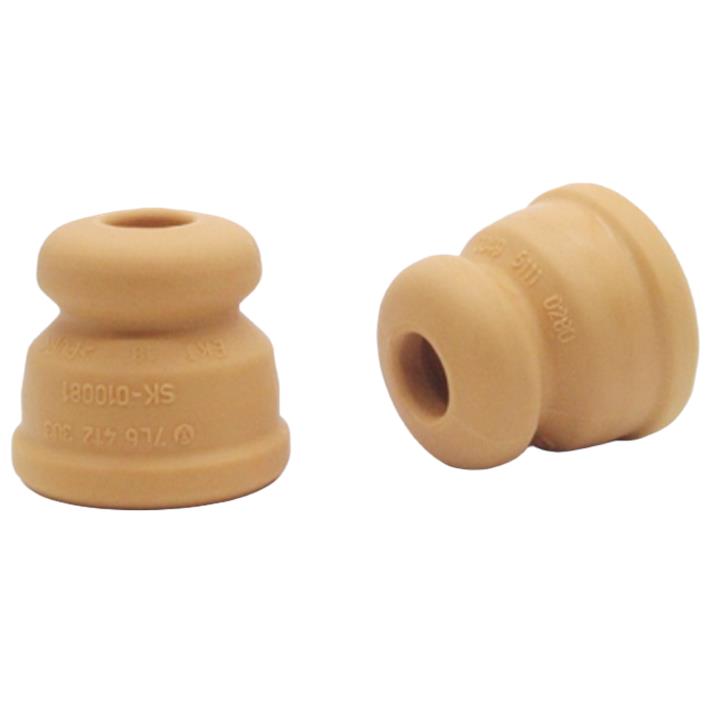
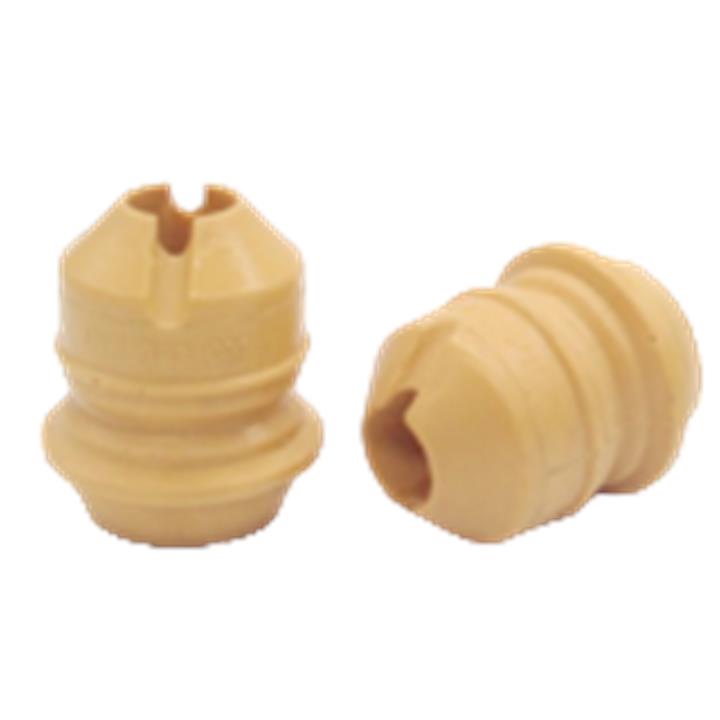
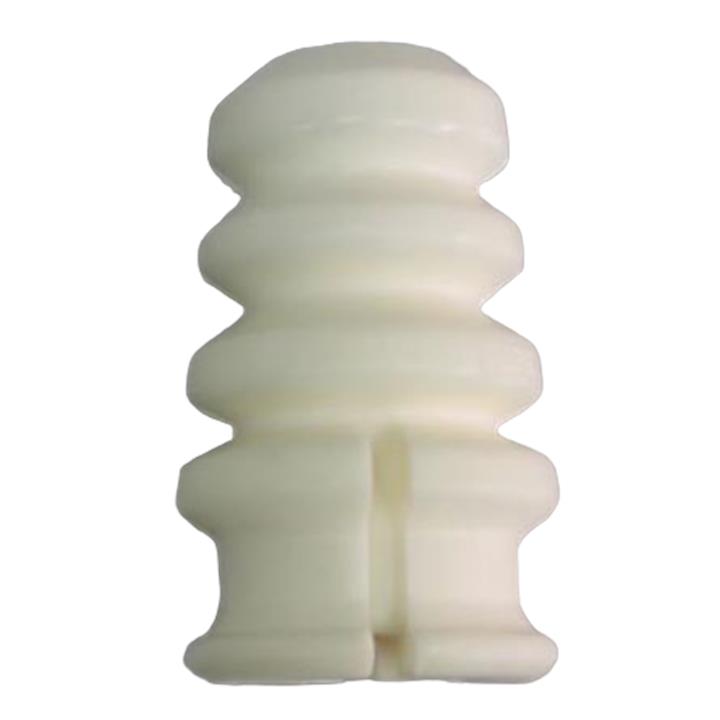
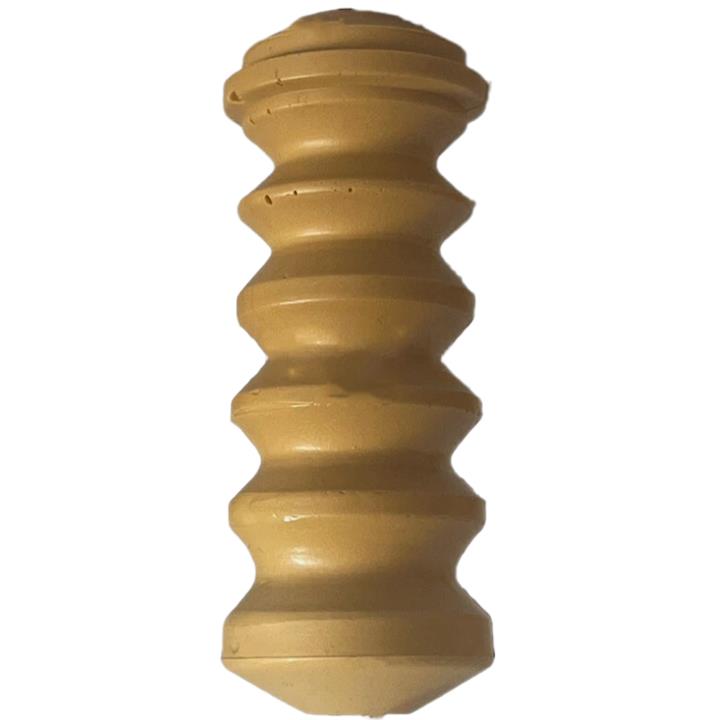
In service the stop slides over the damper rod inside the coil spring. Its job is progressive resistance rather than rigid blocking. During normal movements the spring carries the load alone. As the spring nears full compression, the stop begins to deflect and resistance builds gradually, absorbing energy that would otherwise pass straight into the damper, its mounts and the body structure. A worn or missing stop therefore shows up as harsh bottoming, knocking noises and accelerated wear on shocks and mounts.
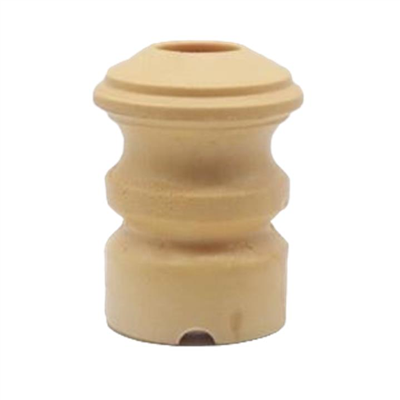
The table below lists the standard specification of this replacement part as supplied from the factory programme.
| Item | Specification |
|---|---|
| Product name | Strut Bump Stop |
| OE reference | 1293230744 |
| Bonpora number | 4110136 |
| Fitment | Mercedes-Benz (confirm by OE number) |
| Material | Polyurethane |
| Size | Φ18.4 x Φ53 x 75 mm |
| Country of origin | China |
| Warranty | 1 Year |
| Delivery time | 15-30 Days |
| Packaging | Neutral export packaging |
| Custom service | OEM and custom design support |
The three dimensions in the size line each control a different part of the fit. The 18.4 mm bore must match the damper rod it slides onto, because a loose bore allows the stop to wander and wear unevenly while an over tight bore cannot be seated fully. The 53 mm outer diameter defines how much surface the spring seat and dust cover can close onto. The 75 mm free length is a compact value and sets the point where engagement begins in the compression stroke, so it is the dimension most sensitive to substitution. Measure the original part at rest with a caliper and compare all three values before ordering; photographs of the old part, including any step or flange, help the factory confirm the match quickly.
Polyurethane is the standard compound for this replacement part because it combines two properties that rubber struggles to hold together: high energy absorption and resistance to permanent set. A stop that takes a permanent squeeze after a few hard compressions loses its free length and engages later in the stroke, which defeats its purpose. Polyurethane also tolerates ozone, road salt, oil mist and wide temperature swings better than conventional rubber compounds, which matters for classic vehicles that are stored for part of the year and then driven on modern treated roads. The dedicated polyurethane bump stop range lists further references moulded from the same compound family.
| Property | Polyurethane | Conventional rubber |
|---|---|---|
| Resistance to permanent set | High, keeps free length | Lower, can take a set |
| Ozone and storage ageing resistance | Strong | Moderate |
| Consistency between batches | Controlled by formulation | Varies with compound |
| Typical service life in this role | Longer | Shorter |
| Hardness tuning range | Wide | Limited |
The aim is not to make the suspension firmer. A correctly specified polyurethane stop feels much the same as a healthy original part in normal driving, and only differs at the end of the travel, where it cushions the final movement instead of letting the chassis land on metal.
Elastomer parts age even when the vehicle stands still. Ozone in the air, heat cycles and long storage periods harden the material surface and eventually produce fine cracks, so on a classic chassis the bump stop may have hardened, taken a permanent set or crumbled long before the owner notices any symptom. Restoration workshops therefore replace bump stops as a matter of course whenever struts are rebuilt or springs are renewed, rather than refitting components of unknown age. Vehicles that carry regular loads, tow trailers, or travel on rough roads compress their stops far more often, so inspection intervals should be shortened for those duty cycles. Because the stop shares its working space with the damper, worn shock absorber parts and tired stops are often found during the same inspection.
The earliest driver reported signs are usually a knocking or thud from one corner over sharp bumps, followed by a harsher ride as the stop loses height. Because the same symptom can also point to a worn damper or a broken spring seat, confirm the condition of the stop during a physical inspection rather than replacing parts on guesswork.
The parts are moulded from polyurethane formulations selected for the load range of the application, then finished and checked before packing. Dimensional checks confirm bore, outer diameter and free length against the specification. Hardness checks confirm the compound sits within its target band. Sample parts from each batch are compression tested to verify recovery after repeated full stroke events, and visual inspection removes parts with flow marks, splits or flash that could seed a tear in service.
Standard references such as 1293230744 are supplied from existing tooling, which keeps unit cost and lead time low. For programmes where an OE reference is unavailable or the original part is discontinued, the factory supports OEM and custom design through its custom parts service: the original part or a sample can be measured, a drawing confirmed, and a new mould produced. Custom projects can adjust compound hardness, dimensions, colour and marking to the requirement of the buyer, subject to minimum order quantities that are agreed per project. This route is often used for classic vehicle programmes where original suppliers no longer list the reference.
Orders are packed in neutral export packaging, which allows distributors to place the parts under their own brand without repacking. Standard delivery time is 15 to 30 days depending on order volume and the production schedule. The parts carry a 1 year warranty against material and manufacturing defects, and batch records are kept so that any field claim can be traced back to its production batch. Mixed containers and consolidated shipments with other suspension parts are routine and help buyers fill a container economically.
The reference covers one stop. Struts are usually serviced in pairs so that both corners of an axle behave in the same way, and bulk orders are commonly placed in even quantities. Carton quantities can be confirmed with the factory before shipment so the count matches warehouse preferences.
In normal driving a correctly specified stop is not felt, because it only works in the last part of the compression stroke. The compound engages progressively and cushions the final movement. Differences in ride character usually trace back to dampers, springs or tyres rather than to the stop itself.
The catalogue covers a range of Mercedes-Benz suspension references, and additional numbers can be checked against existing tooling. Where a reference is not yet in the range, the custom design service can develop it from a sample or drawing, subject to agreed minimum order quantities.
Dimensional measurement, hardness checks, batch compression sampling and visual inspection are applied to every production batch. Buyers can request inspection reports with the shipment, or arrange third party inspection before the goods leave the factory.
The OE reference, the quantity required, the destination port and any marking or packaging preference. A photograph of the original part helps when the reference is uncertain. The factory replies with availability, unit price at the stated quantity and the earliest production slot.
Buyers searching for a Mercedes-Benz strut bump stop under reference 1293230744, or planning a wider programme of polyurethane and rubber suspension components for classic and modern vehicles, can contact the factory with the reference, quantity and destination. The sales team will confirm availability, quotation and production time, and can arrange samples for fitment verification before a bulk order is placed.