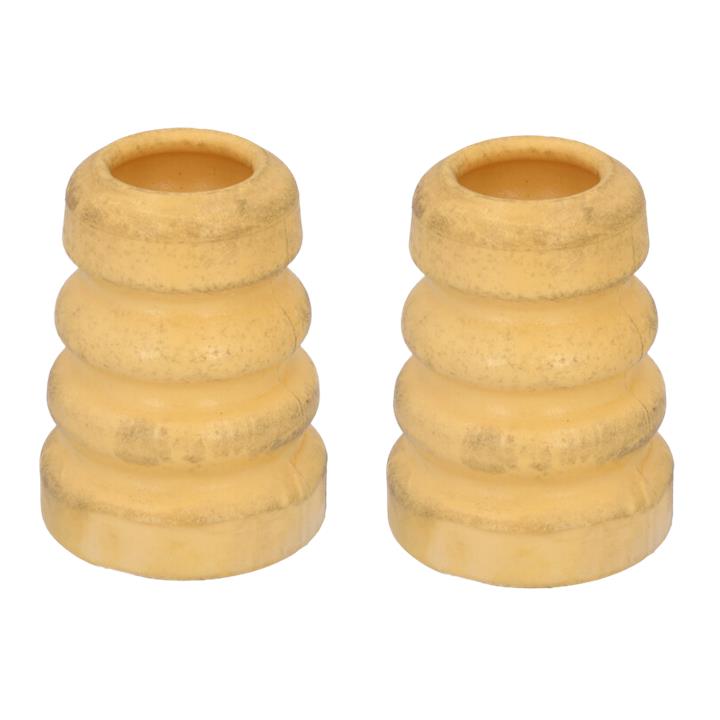
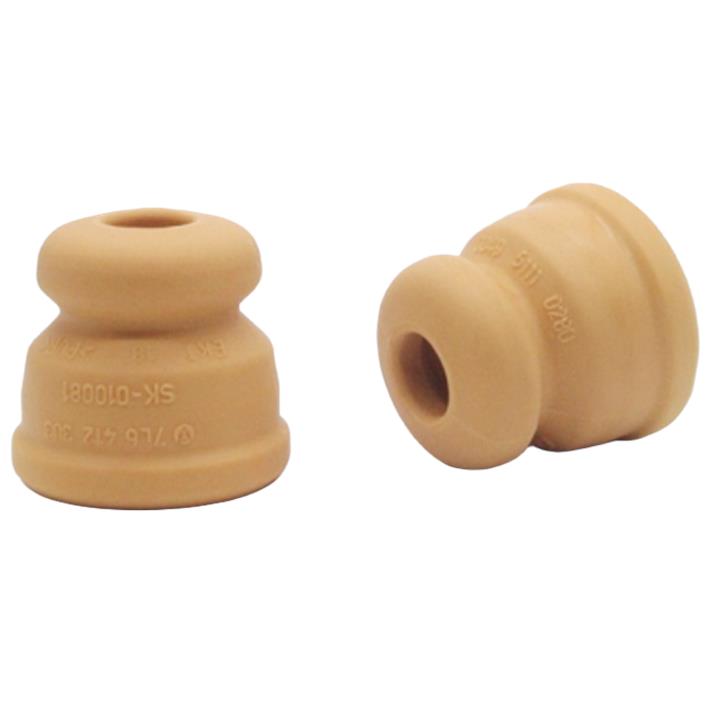
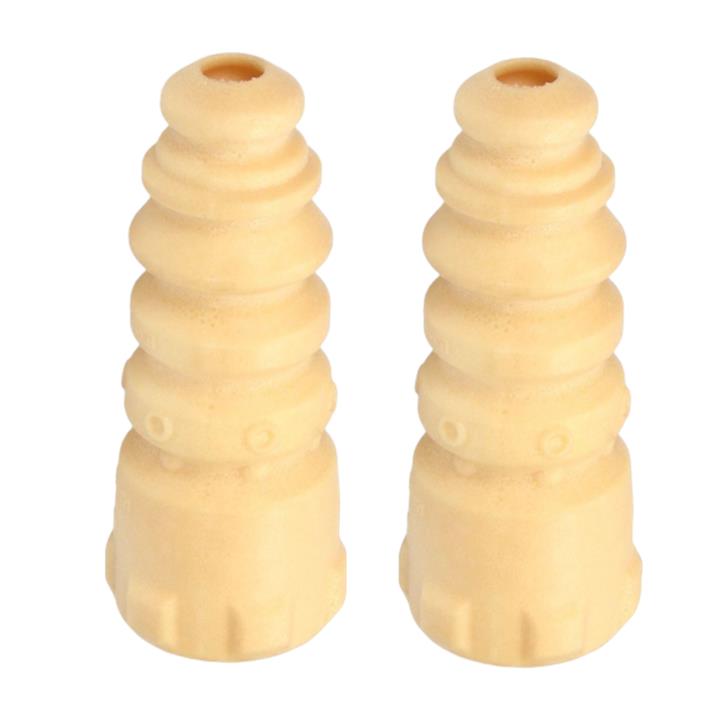
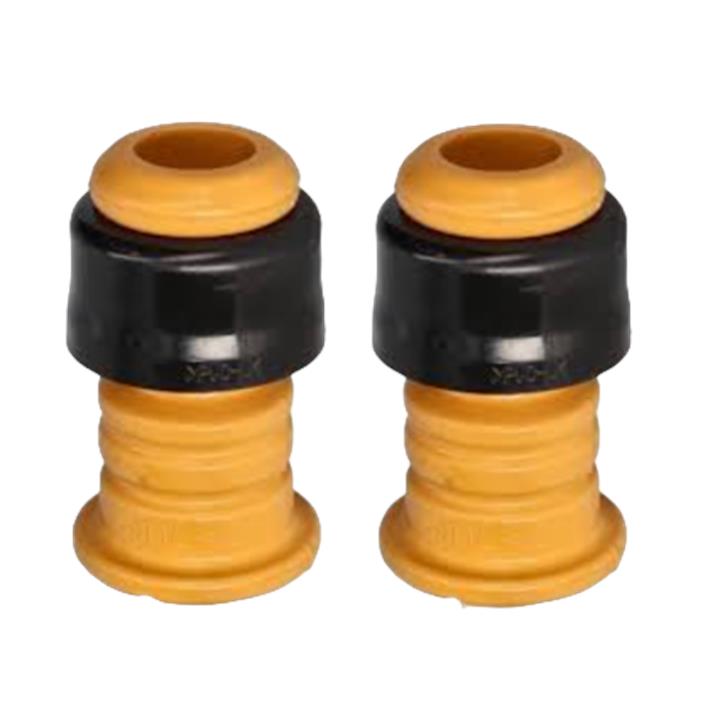
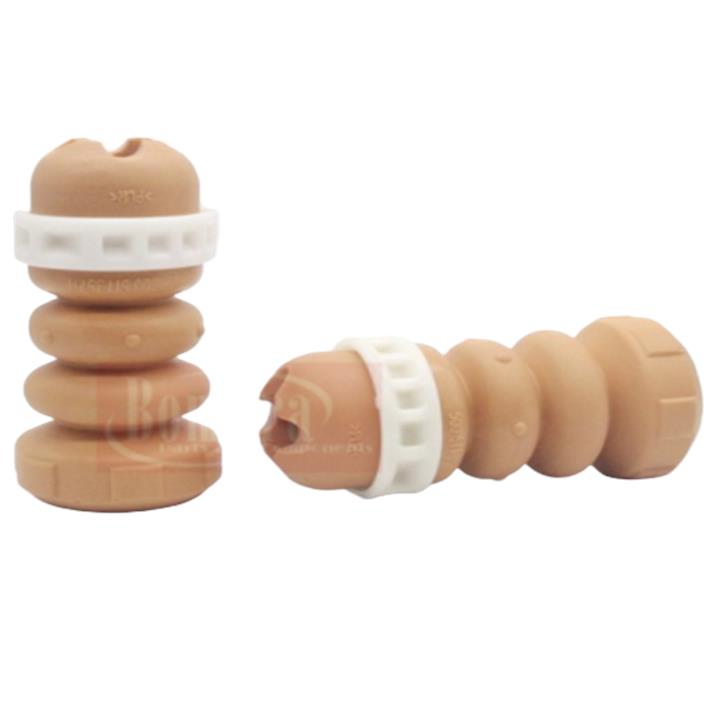
SEAT Skoda Volkswagen Strut Bump Stop 6Q0412301 Supplier OEM and Replacement Factory
- 1Product NameStrut Bump Stop
- 2Country of OriginChina
- 3Bonpora Nos4110017
- 4OE6Q0412301
- 5FitmentSeat/Skoda/Volkswagen
- 6SizeΦ21.4x56.3Φx73.7
- 7MaterialPolyurethane
- 8Warranty1 Year
- 9Delivery Time15-30 Days
- 10PackagingNeutral Export Packaging
- 11Custom ServiceOEM & Custom Design Support
Description
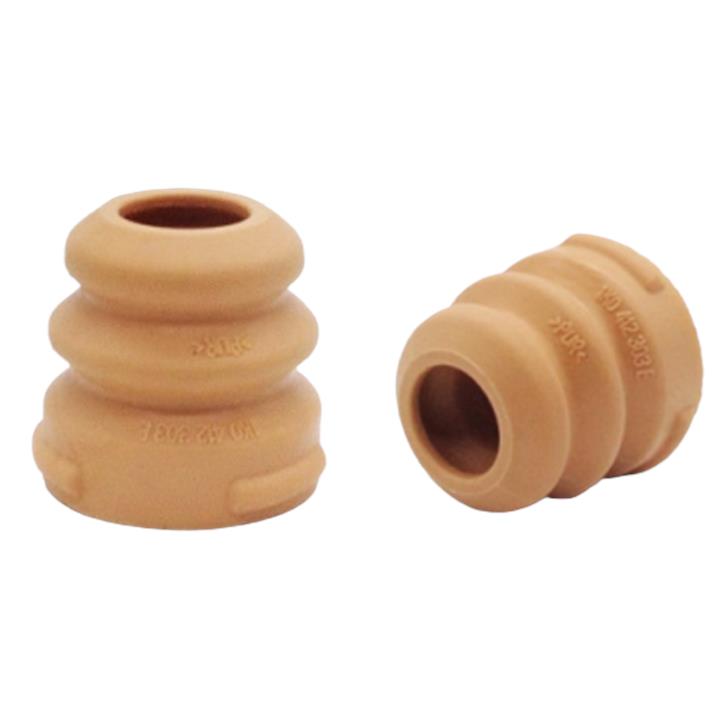
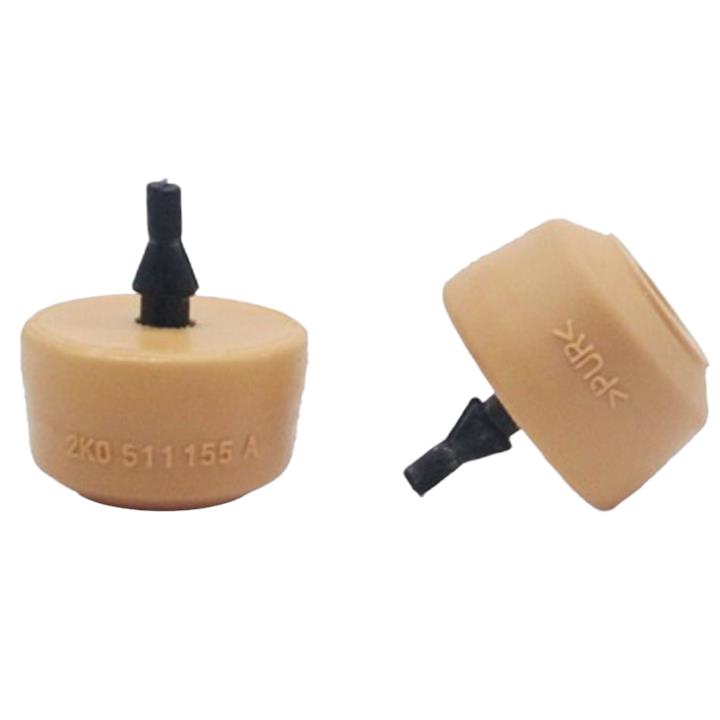
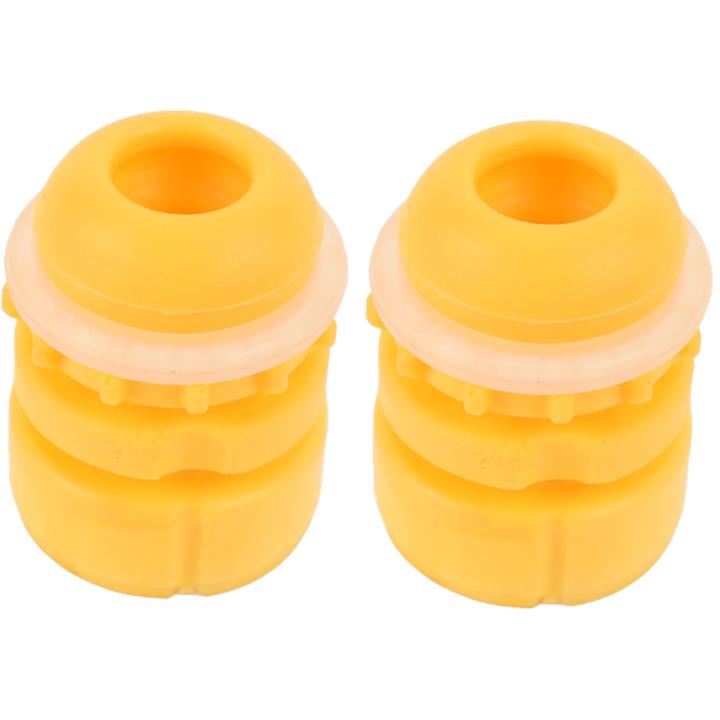
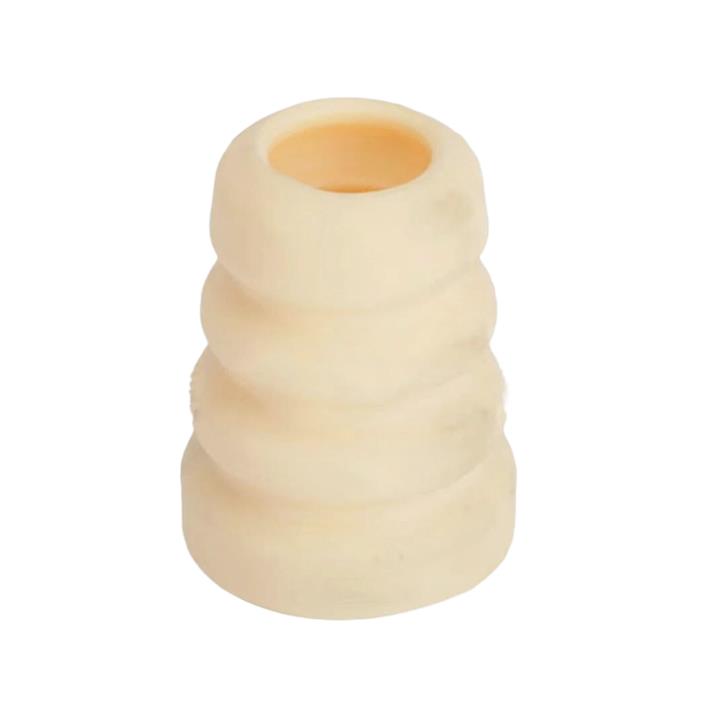
A strut bump stop is a small elastomer component fitted over the damper rod of a MacPherson strut, and it only works in the final part of the suspension stroke. When the coil spring is compressed beyond its normal range, the stop engages against its seat and adds progressive resistance, which prevents the damper from reaching its internal end of travel. This page sets out the specification of the 6Q0412301 strut bump stop, explains the platform family it belongs to and describes how overseas buyers verify, order and import it. It is written for purchasing staff, distributors and workshops.
What the 6Q0412301 Strut Bump Stop Does
Engineers describe the bump stop as a progressive auxiliary spring. During ordinary driving the stop sits on the damper rod without touching anything, and the coil spring carries the full load. Once the suspension compresses far enough, the stop contacts its seat and the resistance rises steeply. That rising resistance limits the load transferred into the strut mount, protects the damper valve from bottoming damage and keeps the tyre in contact with the road surface. A worn or missing stop removes this protection and passes the full impact straight into the body structure.
The number 6Q0412301 follows the Volkswagen parts numbering format, where the leading group identifies the platform. The 6Q sequence is associated with the small car platform used by the VW Polo 9N generation and the closely related SEAT and Skoda models built on the same floorpan. Because parts within one platform family are often shared across brands and model years, fitment for this number should always be confirmed against the vehicle identification data before ordering. A stop that looks similar but belongs to a different axle or a different suspension option can change the working travel and affect ride height.
Why the Bump Stop Matters on Small Platform Cars
Cars on this platform family are used heavily in urban traffic, where speed humps, drain covers and potholes create frequent full compression events. The same cars also carry widely varying loads, from a single driver to a full complement of passengers with luggage in the boot, and both factors make the stop work harder than it would on open roads. A stop that has lost its resilience allows hard contacts that drivers feel as a knock through the floor, and repeated hard contacts accelerate wear in the strut mount and the top bearing.
Signs That the Stop Needs Replacing
- The stop is cracked, split or has lost part of its rib section.
- The stop has collapsed and does not return to its original free length.
- Surface dust has bonded into the material, leaving it hard and shiny.
- The stop has separated from its dust boot or support plate.
- The car produces a hard knock over humps or potholes that it used to absorb.
Replacing both stops on the same axle together is standard workshop practice. A pair that has covered the same distance ages in a similar way, and matching the two sides keeps the suspension balanced and the ride height even.
Technical Specification at a Glance
| Parameter | Value |
|---|---|
| Product Name | Strut Bump Stop |
| OE Number | 6Q0412301 |
| Bonpora Nos | 4110017 |
| Fitment | SEAT / Skoda / Volkswagen |
| Size | Φ21.4 x Φ56.3 x 73.7 mm |
| Material | Polyurethane (PU) |
| Country of Origin | China |
| Warranty | 1 Year |
| Delivery Time | 15-30 Days |
| Packaging | Neutral Export Packaging |
| Custom Service | OEM and Custom Design Support |
The three dimensions are the first items to check when cross referencing. 21.4 mm is the bore that fits over the damper rod, 56.3 mm is the maximum outside diameter of the rib section, and 73.7 mm is the free length measured from the mounting face to the tip. The free length determines where in the stroke the stop begins to work, and the outside diameter affects how the stop is located by the spring. Buyers comparing a replacement against the part removed from the car should measure all three with a caliper rather than trusting a catalogue listing alone.
Material and Hardness
Polyurethane is used because it resists oils, ozone and repeated compression cycles better than most natural rubber compounds. It holds its shape over a longer service interval, keeps a more predictable spring curve and resists tearing at the ribs. Hardness sits in the range normally specified for road car strut stops: firm enough to control the final travel, soft enough to absorb the first contact without a sudden spike in load. Because polyurethane can be formulated at different hardness levels, a supplier who quotes only a generic material name cannot guarantee the original feel. Ask for the hardness value and the batch test record before the first order.
How Buyers Search for This Part
Purchasing staff reach this part through a small number of repeatable search patterns. Recognising the pattern behind an enquiry makes sourcing faster on both sides.
- Part type plus specification: for example "strut bump stop 21.4mm bore 73.7mm polyurethane". Specification led searches suit engineers and workshops that already hold the dimensions.
- Part type plus supplier: for example "strut bump stop supplier China". These buyers want catalogue depth, production capacity and export experience rather than one single number.
- Part type plus OEM number: for example "6Q0412301 bump stop". The number driven search is the fastest route to an exact match and the simplest way to confirm a cross reference.
- Model plus part: for example "VW Polo suspension bump stop" or "Skoda Fabia strut bump stop". Model led searches usually come from workshops working with a vehicle on the lift.
- Custom plus supplier: for example "custom polyurethane bump stop manufacturer". These enquiries cover private label programmes, low volume builds and special hardness requirements.
All five routes are supported here. The complete range is listed in the polyurethane bump stops category, related components in the same assembly are grouped under shock absorber parts, and buyers working from a drawing should review the custom parts service page.
How to Verify a Cross Reference
A cross reference is only as good as the checks behind it. The sequence below is applied to every enquiry before a quotation is issued.
- Read the number from the original part itself, not from a workshop note or a photograph of a label.
- Compare the three dimensions, not only the OE number.
- Confirm the mounting arrangement: bore diameter, support washer position and whether the stop carries an integrated dust boot.
- Check the axle position against the fitment data for the specific model and model year.
- Request a sample for any first order of a number that has not been supplied before.
This sequence avoids the most common failure in aftermarket sourcing, which is a part that arrives with the correct number on the box and the wrong geometry inside it.
Original Equipment and Aftermarket Compared
| Aspect | OE Style Stop | Quality Aftermarket Stop |
|---|---|---|
| Material | Elastomer to manufacturer specification | Polyurethane, grade declared by the supplier |
| Dimensions | Per original drawing | Matched within stated tolerance |
| Hardness record | Held by the vehicle maker | Available on request from the factory |
| Cost per unit | Highest | Lower, particularly at volume |
| Lead time | Depends on maker stock | 15-30 days, longer for custom tooling |
| Custom marking | Not offered | Private label and neutral options |
An aftermarket stop is a sound choice when the material grade is declared, the dimensions are measured against the original part and the supplier can show test data. It is a weak choice when the only information on offer is a picture and a price. The table above is a checklist rather than a claim that one route always wins.
Custom and OEM Programmes
Not every enquiry is for a catalogue number. Three types of custom work come up regularly for this product family.
Private Label Programmes
Distributors selling under their own brand need neutral packaging, printed boxes and a part numbering scheme of their own. Tooling for common sizes in this family normally already exists, so the additional cost is mainly packaging artwork and a first article approval.
Motorsport and Low Volume Builds
Track cars and modified road cars often need a stop with a shorter free length or a firmer compound to work with lowered springs. Small runs can be produced from an existing mould when the profile matches, or from a new mould when the drawing differs. The correct hardness is normally settled by testing rather than by calculation.
Hardness and Geometry Variants
The same outer profile can be supplied at two hardness levels, which lets a distributor stock one part number family while offering a firmer option for loaded vehicles. Dimensional changes such as bore or free length can be quoted from a drawing or a sample.
Custom enquiries move fastest when they include the drawing or sample, the target quantity, the required hardness and the intended use. A complete enquiry can usually be quoted within one working day.
Quality Control and Export Packing
Every production batch is checked against the agreed drawing. Dimensional checks cover bore, outside diameter and free length; material checks cover hardness and appearance. Where a customer requests it, batches are held for visual comparison against a golden sample before packing.
Neutral export packaging is the default. Stops are bagged, boxed and palletised so that cartons arrive in saleable condition after sea or air freight. Carton marks can carry the buyer brand or a neutral reference, and mixed cartons can be arranged for orders that combine several numbers. A 1 year warranty applies to the parts supplied, covering material and manufacturing defects under normal road use.
Ordering and Delivery
Standard catalogue numbers normally ship in 15 to 30 days from order confirmation, depending on order size and stock position at the time of booking. Custom tooling adds a development stage, which is quoted separately. Air freight suits urgent and sample orders, and sea freight is the usual choice for pallet quantities.
To place an enquiry, send the OE number, the quantity required and the destination port. If the number is unfamiliar, send the three dimensions together with a clear photo of the original part. A quotation with lead time and packing details follows, and no payment is requested until the specification is confirmed in writing.
FAQ
Is the 6Q0412301 bump stop used on the front or rear axle?
The axle position should be confirmed against the fitment data for the specific model, because related numbers within the same platform family are often listed for one position only. Check the OE number together with the three dimensions and match the replacement to the position of the part removed from the car.
Can polyurethane replace the original rubber stop?
Yes, when the dimensions match and the hardness falls within the normal range for road use. Polyurethane is widely used for strut stops. A supplier should state the hardness value, and a firmer compound should only be selected for a defined reason such as heavy loading or track use.
What is the minimum order quantity?
Stocked numbers can be supplied in small trial quantities so a buyer can inspect and test before committing to a full order. Private label programmes and custom tooling carry higher minimums because of setup cost. The exact figure is confirmed in the quotation.
How long does delivery take?
Catalogue items normally ship in 15 to 30 days, and air freight is available for urgent orders. Custom parts require an additional development period, which depends on whether a new mould is needed.
Request a Quotation
If you are sourcing the 6Q0412301 strut bump stop for SEAT, Skoda or Volkswagen applications, send the OE number, quantity and destination port and a quotation will be prepared with lead time and packing details. Buyers who need a different number matched from a drawing or a sample are welcome to send the details as well. Samples are available for first time orders, and every enquiry receives the same dimension and material data before shipment.
Find Similar Products