sales@bonporaparts.com
0086-10-64988621
English
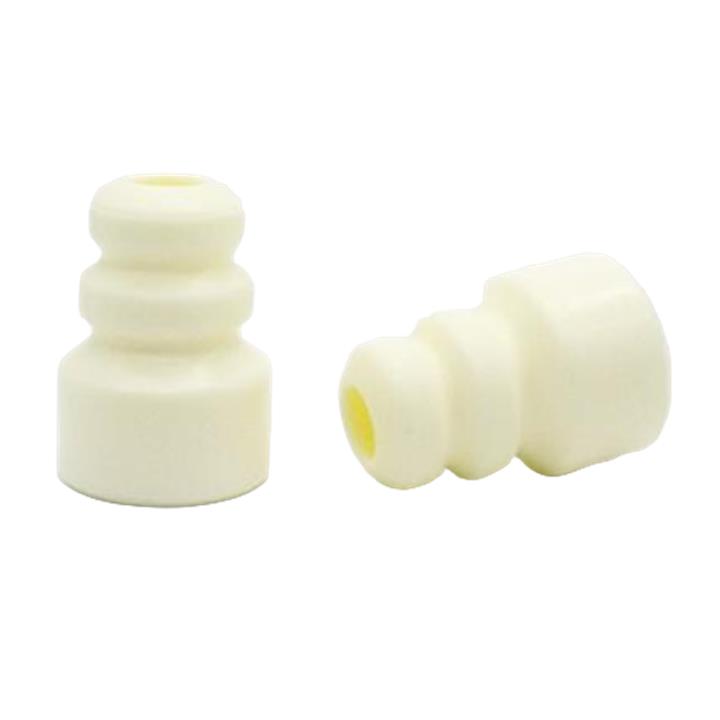
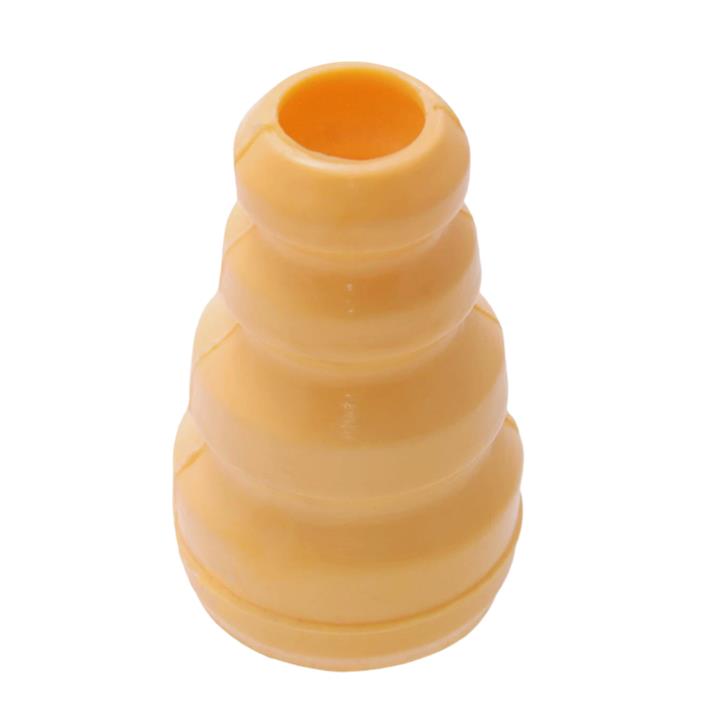
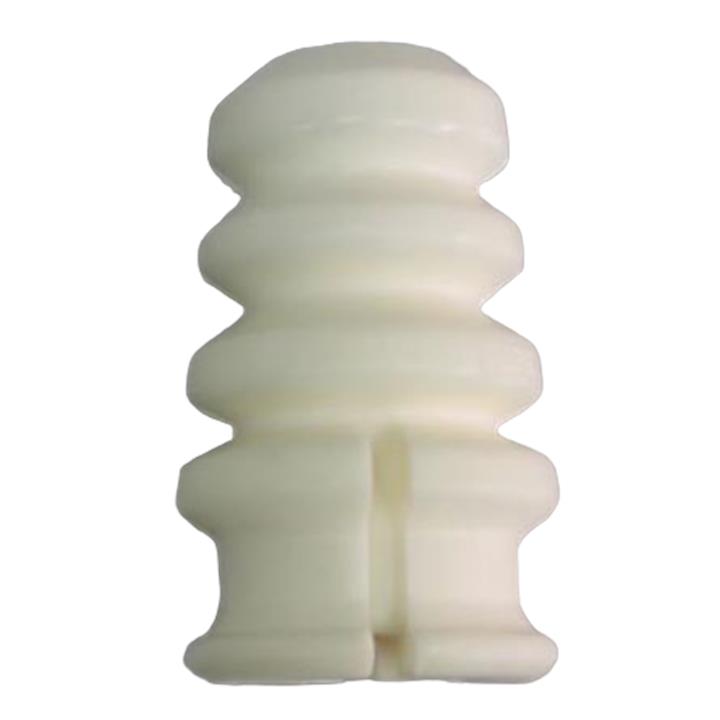
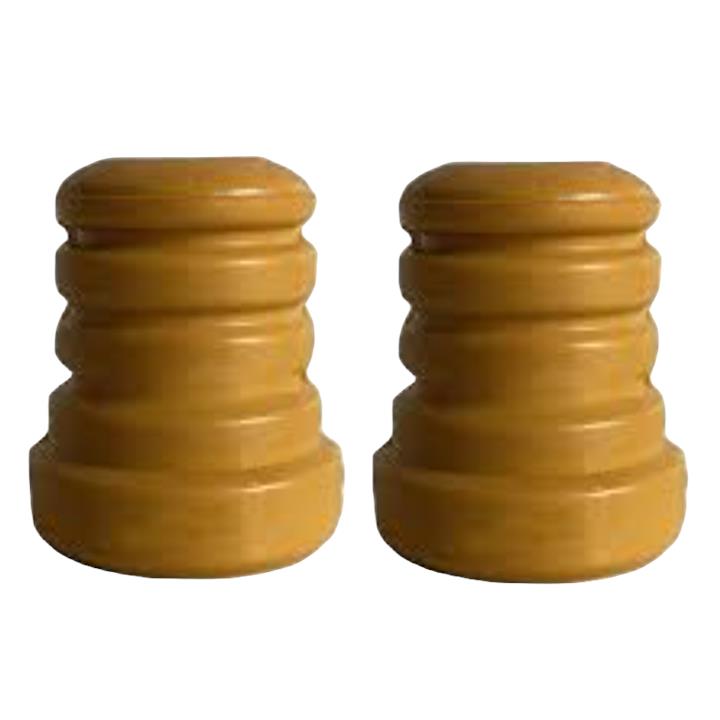
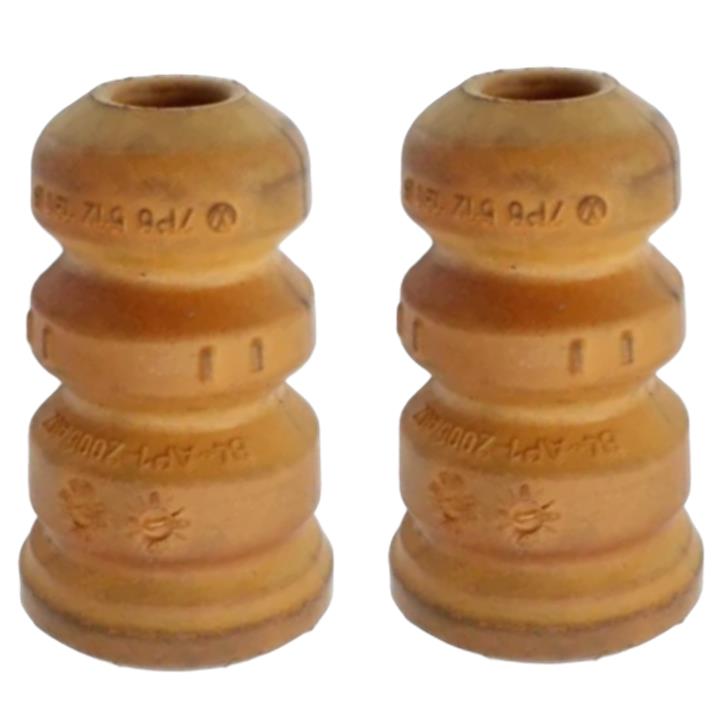
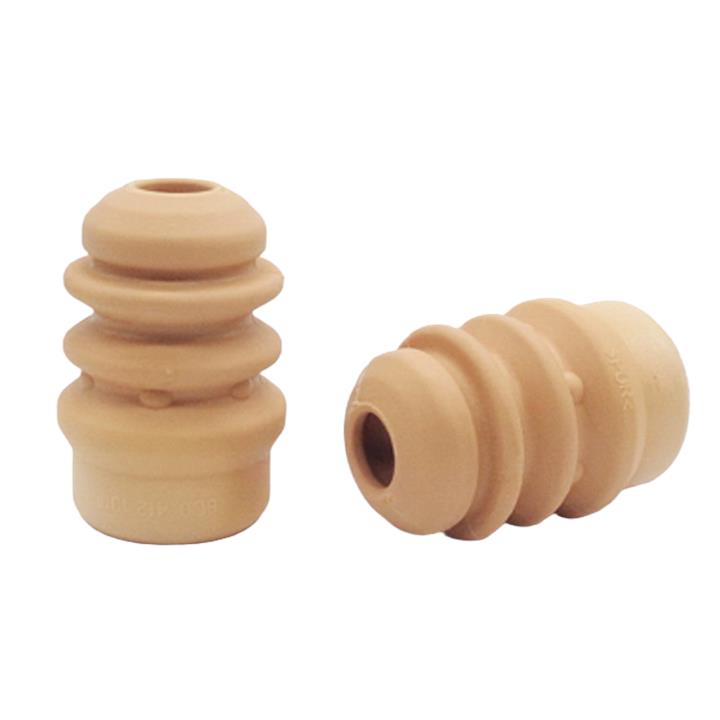
Strut bump stop 7N0511359 is a polyurethane suspension cushion produced in China by Bonpora for Volkswagen and Seat strut assemblies, and supplied to wholesale buyers, importers and independent workshops worldwide. The part carries Bonpora reference 4110184 and cross-references OE number 7N0511359 from the Volkswagen Group suspension catalogue. This page explains what the component does inside a strut, lists the complete technical data for the reference, and sets out the commercial terms that matter to trade buyers - volume pricing, OEM support, packaging, warranty and lead time - so a first inquiry can be prepared accurately and answered without lengthy correspondence.
A strut bump stop, also described as a jounce bumper, bump rubber or auxiliary spring, is the progressive elastomer element mounted on the piston rod of a strut. It becomes active in the final part of the suspension stroke: when a wheel drops into a pothole, crosses a sharp ridge or the vehicle carries more load than usual, the stop compresses and stiffens progressively, absorbing the remaining travel before the damper reaches metal-to-metal bottoming. The part therefore protects the damper, the top mount and the surrounding body structure from shock loads. Once it has flattened, cracked or crumbled away, comfort at full compression deteriorates and the damper wears faster, which is why professional workshops treat this inexpensive component as a routine consumable rather than an optional extra.
The bump stop slides over the damper piston rod between the top mount and the dust boot, working alongside the protective sleeve on most assemblies. The 7N0511359 reference reproduces the original geometry: a bore of roughly 15 mm seats closely over the damper rod, the 64 mm outer diameter forms the contact surface inside the strut housing or the spring seat area, and the 153 mm free height provides a long progressive compression stroke. Those proportions describe a narrow-bore cushion with a tall travel envelope - a layout typically specified for larger or heavier vehicles, where the suspension needs a generous cushioning distance before bottoming out. When cross-referencing between related numbers it is safer to confirm all three dimensions against the removed part than to rely on outward appearance alone, because a similar-looking stop with a shorter free height will behave quite differently in service.
Polyurethane bump stops tend to fail gradually rather than without warning. Recognised workshop symptoms include knocking or thudding over sharp impacts, a noticeably harsher ride whenever the suspension reaches full compression, and visible cracking, powdering or permanent flattening discovered once the strut is opened for service. Because the part is hidden inside the assembly, most workshops inspect or renew it whenever a strut, top mount or dust boot is being replaced anyway. Fitting stops in pairs on the same axle keeps both sides of the suspension balanced, and the low unit cost makes renewal the simplest way to protect a new damper from repeated bottoming damage.
The published parameters for Bonpora reference 4110184 are summarised in the table below.
| Parameter | Value |
|---|---|
| Product Name | Strut Bump Stop |
| OE Number | 7N0511359 |
| Bonpora Nos | 4110184 |
| Fitment | Volkswagen / Seat |
| Size | Φ15 × Φ64 × 153 mm |
| Material | Polyurethane (micro-cellular) |
| Country of Origin | China |
| Warranty | 1 year |
| Delivery Time | 15-30 days |
| Packaging | Neutral export packaging |
| Custom Service | OEM & custom design support |
The table also shows why this reference is easy to confuse with shorter bump stops from the same family: at 153 mm the free height is roughly twice that of a typical compact-car cushion, so the part should always be matched on measurement as well as on number.
In the Volkswagen Group part numbering system the leading characters identify the component family, and the first digit group that follows is tied to a vehicle platform. The 7N0 prefix is widely associated with the Group multi-purpose vehicle platform generation, a base shared across several large MPV and van-derived models in the Volkswagen and Seat ranges. Because one platform often carries one set of suspension hardware, references beginning 7N0 appear in catalogues for more than one badge, which explains why the fitment for this part is listed as Volkswagen and Seat together. The 511 digit group sits within the suspension and spring hardware range of the system, near the coil spring and cushioning components, while the trailing digits identify the individual variant. Applications still vary between model years, engines, seating layouts and suspension options, so the complete number printed on the original part remains the decisive identification detail. When the markings on a removed sample have worn away, send the three measurements together with any surviving partial digits, or a photograph of the strut, so the correct reference can be verified before production is scheduled.
A large share of professional buyers source suspension elastomer parts by type and measurement rather than by vehicle model - for example a strut bump stop with a 15 mm bore and a 64 mm outer diameter, or a polyurethane cushion with a free height near 150 mm. Specification-based sourcing suits bump stops well, because the three dimensions largely decide whether a replacement seats on the rod and engages at the intended point of travel. Measure the inner diameter, outer diameter and free height of the removed component, record the material and Shore hardness where a datasheet is available, then compare the values with catalogue data. The polyurethane bump stop catalogue lists references together with dimensions and OE numbers, so a cross-check can be completed in a few minutes before an inquiry is sent.
Tall cushions such as this reference are normally specified on vehicles that regularly run close to their design weight - vans, people carriers and load-carrying variants. A long free height allows the suspension to absorb a deep compression event progressively rather than in a short, harsh step, which matters when the vehicle is fully loaded or when the road surface is poor. Buyers restocking for fleet customers therefore often order these references together with the equivalent shorter cushions for lighter models on the same platform, keeping one assortment line for each travel length. Matching the free height to the original specification preserves the intended engagement point; fitting an over-long stop reduces usable travel, while an over-short one lets the damper bottom out earlier than designed.
For buyers who work from vehicle data rather than measurements, a simple three-step workflow keeps enquiries accurate:
This workflow applies equally to single-reference orders and to mixed containers that combine bump stops with other suspension components.
Bump stops look simple, but their behaviour depends on details that are easy to get wrong. Production at the Bonpora factory follows a control plan that trade buyers can audit at any time. Incoming polyurethane raw material is checked per batch for density and viscosity before it enters the mixing line. During foaming, cell structure and density are monitored so the progressive spring rate stays inside the agreed band. Finished parts pass first-article and in-line dimensional inspection against the drawing - bore, outer diameter and free height are measured on every production lot, and Shore hardness is sampled at defined intervals. Compression set and fatigue tests are run on a scheduled cycle to confirm the cushion keeps its rebound behaviour after repeated strokes. Finally, packaging is checked so parts leave the factory clean, dry and protected against deformation during transit - a particular concern for tall cushions, which need adequate support in the carton to arrive straight.
Bonpora manufactures polyurethane suspension components in China and exports them to distributors, chain stores and workshops in Europe, North America, South America, the Middle East and Southeast Asia. Buying factory-direct removes intermediary margins and puts the buyer in direct contact with the people who control tooling, material and inspection. Standard references such as 7N0511359 are produced on existing tooling, which keeps minimum order quantities moderate and lead times predictable at 15-30 days depending on volume. Every order ships in neutral export packaging, so distributors can retail the parts under their own brand, and OEM or custom design support is available for buyers who need a derivative geometry, a different hardness or private-labelled packaging. The wider shock absorber parts programme covers companion components, allowing mixed orders to be consolidated into one shipment and one set of export documents.
Around every bump stop sit the parts that age with it: top mounts, dust boots, rebound buffers and strut accessories. Workshops that service a strut normally renew the elastomer set together, and distributors therefore stock these references side by side. Buyers who plan an assortment for Volkswagen and Seat applications can combine this reference with related suspension items in one purchase order, and the custom parts service extends the same supply model to references that are not yet in the standard catalogue - drawings or samples in, quotation and prototype out. Consolidating the assortment with one factory simplifies quality management, because material behaviour and inspection standards remain identical across the range.
The 7N0 prefix in the reference is associated with the shared Group multi-purpose and van-derived platform generation used across several large models in the Volkswagen and Seat ranges. Because suspension variants changed across production years and equipment lines, always confirm the application against the chassis number, an electronic parts catalogue or the removed part before ordering. The sales team can assist with application checks when buyers send the VIN together with the enquiry.
The reference is moulded in micro-cellular polyurethane, a closed-cell elastomer foam that compresses progressively instead of bottoming abruptly. Compared with conventional rubber, polyurethane offers better resistance to compression set, ozone and aging, and it holds its density and hardness more consistently across production batches. In practice this means the cushion keeps its rebound behaviour for longer, and replacement intervals become more predictable for workshops and fleet operators.
It is longer than average because the fitment covers larger, load-carrying vehicles with a deeper suspension stroke. Long cushions distribute the final part of the compression over a greater distance, which reduces peak loads on the damper and body structure when the vehicle is fully loaded. When ordering a replacement, keep the original free height: an over-long stop limits usable travel, while an over-short one allows earlier bottoming.
Yes. Sample orders are the recommended first step for new buyers. A sample of reference 4110184 can be shipped quickly for dimensional verification against the removed part, and the sample cost is normally credited against the first bulk order. Checking bore, outer diameter and free height on a physical sample takes minutes and removes almost all of the risk from the first container order.
Every order ships in neutral export packaging suitable for onward distribution under the own brand of the buyer. Standard production lead time is 15-30 days depending on order volume, and OEM or custom design projects are quoted separately with a dedicated timeline. The reference carries a 1-year warranty covering material and manufacturing defects. Payment terms, freight options and volume price breaks are confirmed in writing with every quotation.
Ready to source 7N0511359? Send the OE number, the three dimensions and the target quantity through the contact page, and the Bonpora sales team will reply with unit pricing, sample arrangements and a delivery schedule - typically within one working day. Wholesale buyers, importers and workshop chains are all welcome, and OEM enquiries are handled directly by the engineering team.