sales@bonporaparts.com
0086-10-64988621
English
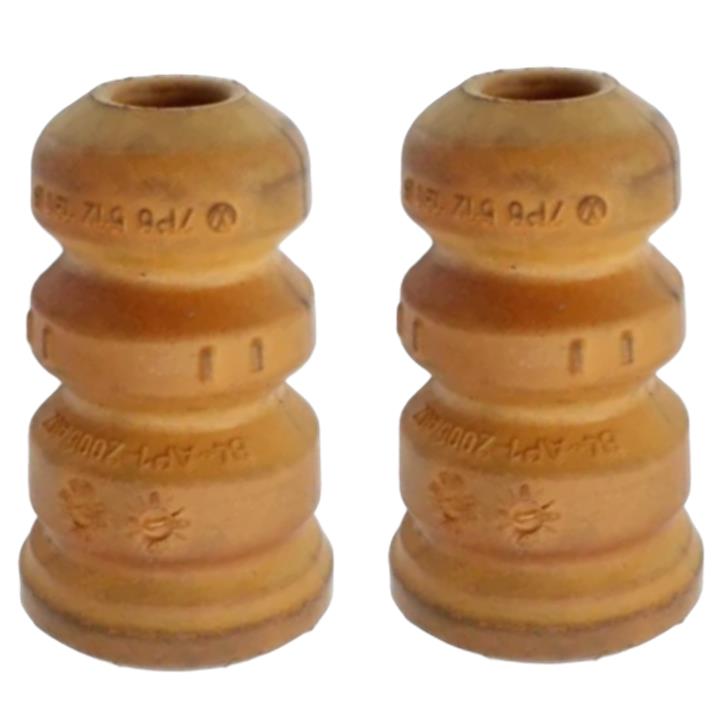
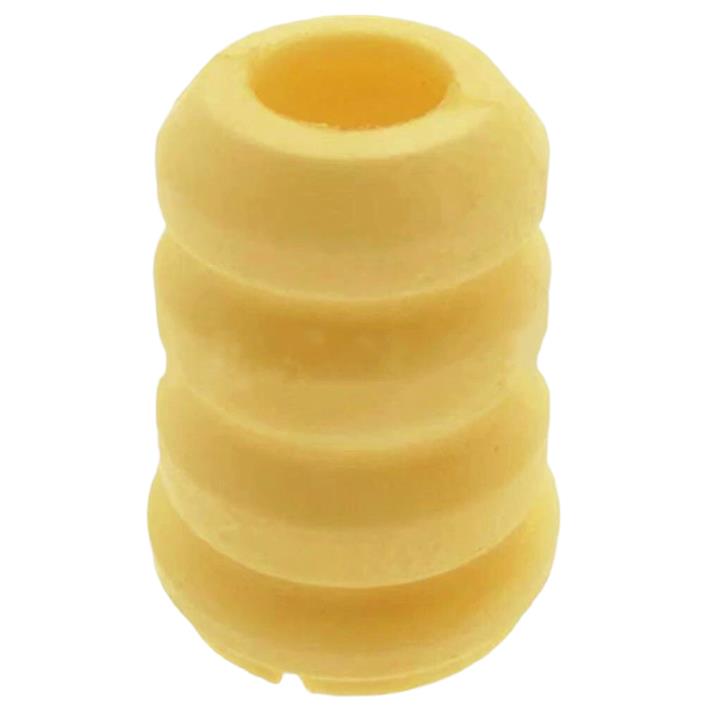
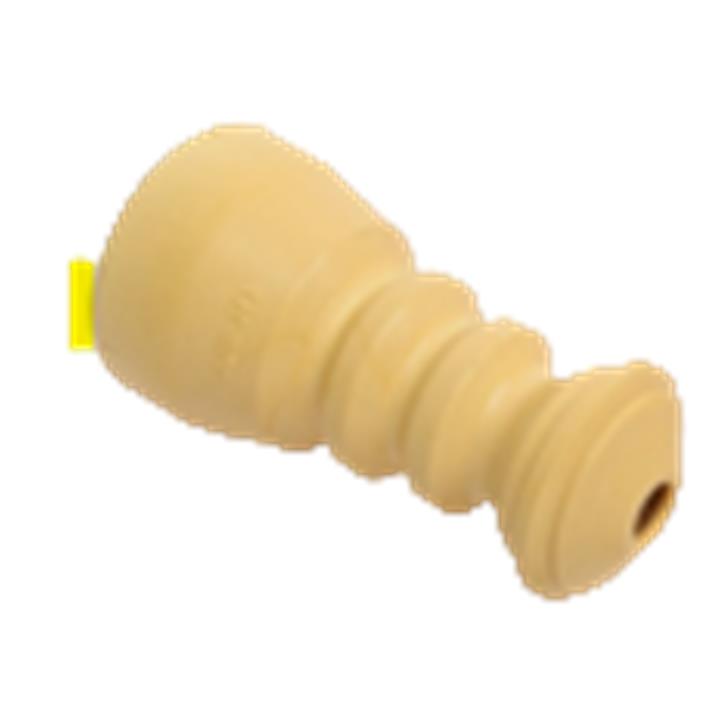
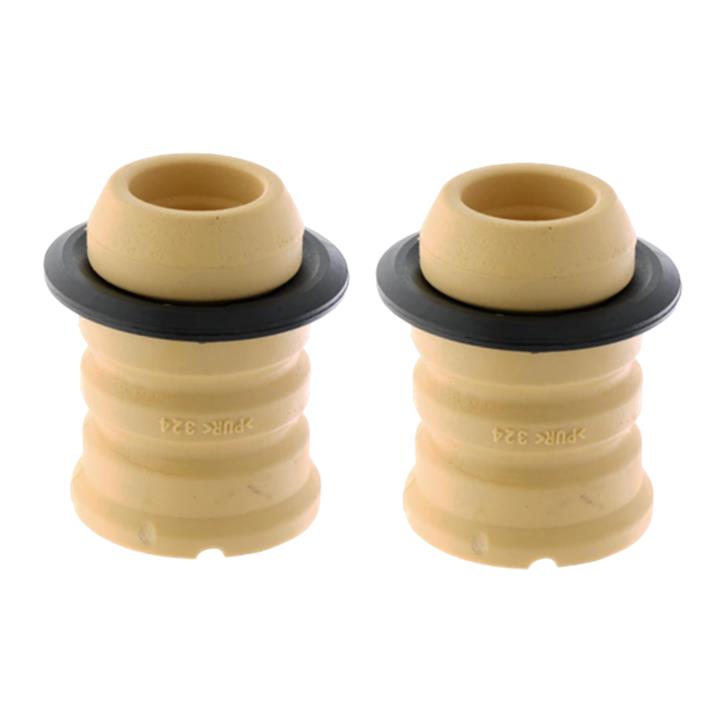
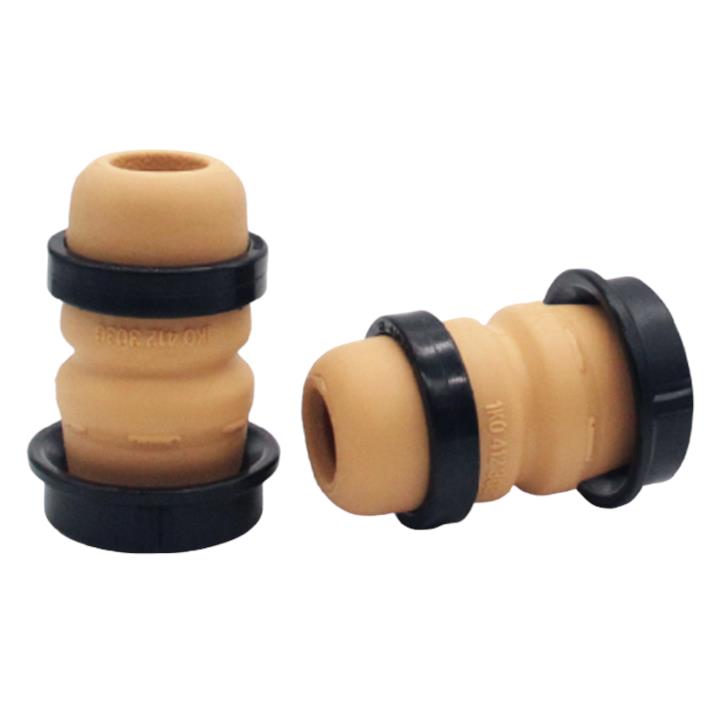
The 20371-FJ000 strut bump stop is a progressive suspension buffer produced for Subaru applications. It sits on the shock absorber piston rod, hidden inside the dust cover, and works only in the last stage of compression: as the wheel meets a deep pothole or a sharp ramp, the buffer converts the remaining travel into a controlled elastic stop, prevents the damper from slamming into its internal end stop, and spreads the impact load across the strut mount and spring seat instead of the body structure. Because the part is out of sight, workshops and fleet operators often discover it only after mounts and boots begin to fail. Suspension importers therefore treat it as a standard service item, sourced by OE number plus a measured dimension check.
| Item | Specification |
|---|---|
| Product Name | Strut Bump Stop |
| OE Number | 20371-FJ000 |
| Bonpora Nos | 4110146 |
| Fitment | Subaru |
| Size | Φ19 mm x Φ49.9 mm x 67.4 mm (inner bore x base outer diameter x free height) |
| Material | Polyurethane (PU) |
| Country of Origin | China |
| Warranty | 1 Year |
| Delivery Time | 15-30 Days |
| Packaging | Neutral Export Packaging |
| Custom Service | OEM & Custom Design Support |
A Subaru model name covers many production years, trim levels and regional versions, and a suspension refresh in the middle of a generation can change buffer geometry without any visible change on the outside of the car. The OE number 20371-FJ000 identifies one defined buffer: a specific bore, a specific base diameter, a specific free height and a defined compound. Professional buyers treat the number as the first filter, the measured dimensions as the second filter, and the model name only as a final cross-check before the order is released.
Subaru structures its suspension numbers in blocks. The leading group (20371) belongs to the bump stopper family within the suspension section: in Subaru catalogues the 20321 group is the family most often listed for front strut positions, while the 2037x group is commonly associated with rear suspension buffers. The middle block (FJ) is an application or model-family code shared within a platform generation, and the trailing block (000) is the individual part and revision index. Because a later revision can alter height, hardness or compound without changing the family code, a quote request should always carry the complete number rather than the family code alone.
Measure all three on the removed buffer rather than on a catalogue photograph, and compare them with the specification table above before confirming the purchase order.
Original-equipment buffers are frequently cellular foam or microcellular rubber. The material is inexpensive and comfortable at first contact, but age and heat work against it: foam oxidises, powders and takes a permanent set, and after years of cyclic compression many buffers are found reduced to crumbs on the piston rod. Cast polyurethane behaves differently. It keeps its profile under repeated full compression, tolerates oil mist, road salt and ozone, and its hardness can be tuned across a wide band, so the compression curve can be matched to the vehicle instead of accepted as-is.
| Property | Polyurethane (this part) | OEM foam / soft rubber |
|---|---|---|
| Shape retention after repeated full compression | Low permanent set | Prone to crushing |
| Oil mist, salt and ozone resistance | Good | Moderate |
| Hardness range for programme tuning | Wide | Limited |
| Behaviour in mixed hot and cold climates | Stable | Crumbles with age |
Buyers consolidating a mixed suspension order can select further references from the polyurethane bump stops range in the same material grade, which reduces freight cost and simplifies incoming inspection.
A failed buffer rarely announces itself directly. Workshops usually detect it through secondary damage, so the following signs justify an immediate inspection of the rod and the dust cover:
Because dampers and buffers age together, evaluate the complete set of shock absorber parts on the axle before ordering; fitting a new buffer onto a worn strut shortens the life of the new part.
Bonpora produces this reference under No. 4110146 in China and ships it in neutral export packaging, so the cartons arrive unbranded and can be relabelled under your own programme. Standard lead time is 15-30 days depending on order volume and production scheduling, and a 1-year warranty covers the buffer under normal installation and service conditions.
Programmes that need a private-label buffer, a different hardness band, a modified flange or a replacement for a discontinued reference can go through the custom parts channel. The workflow is sample-driven: send a drawing or a removed buffer, we measure it and confirm the target compression curve, produce first-off samples for fitment approval, and only then release batch production. This route is regularly used for Subaru platforms where the original foam buffer is no longer listed but the vehicle population still supports steady replacement demand.
Every batch passes three gates before packing. Dimensional inspection verifies bore, base diameter and free height against the approved master sample. Visual inspection screens for flash, voids, cracks and bonding defects around the flange. A sampled compression and rebound test confirms the hardness grade and that the buffer recovers to free height without measurable permanent set. Batch records are retained, so each shipment can be traced back to its production lot if documentation is ever required.
In Subaru catalogues the 20321 group is the family most often listed for front strut bump stoppers, while the 2037x group is commonly associated with rear suspension positions. Position can still vary by platform and model year, so treat this as a guideline rather than a guarantee: confirm the number in your parts catalogue and verify the bore, base diameter and free height against the buffer removed from the vehicle. Where doubt remains, the VIN will settle the application.
The middle block of a Subaru suspension number is an application code that ties the part to a platform family or generation. It is not a material description and it does not by itself confirm every vehicle inside that family, so catalogue cross-references and a measured dimension check remain the decisive steps before a bulk purchase.
No. The free height of 67.4 mm sets the point at which the buffer starts to engage, and the bore and base diameter control how it mounts and loads. A shorter block leaves the damper exposed to full-speed bottoming, a taller one engages too early and stiffens the ride, and a mismatched flange concentrates stress on the mount. Always fit the matching reference or a dimensionally verified equivalent.
Standard production lead time is 15-30 days depending on volume, and goods leave the factory in neutral export packaging suitable for relabelling. Samples of reference 4110146 can be arranged before a production order so your workshop can verify fitment on an actual vehicle, and a 1-year warranty applies under normal installation and service conditions.
Send the OE number, your measured dimensions and the target model year, and our sales team will confirm availability, hardness grade, packaging and lead time for reference 4110146. Samples can be shipped before a production order so fitment can be verified on a real vehicle first.