sales@bonporaparts.com
0086-10-64988621
English
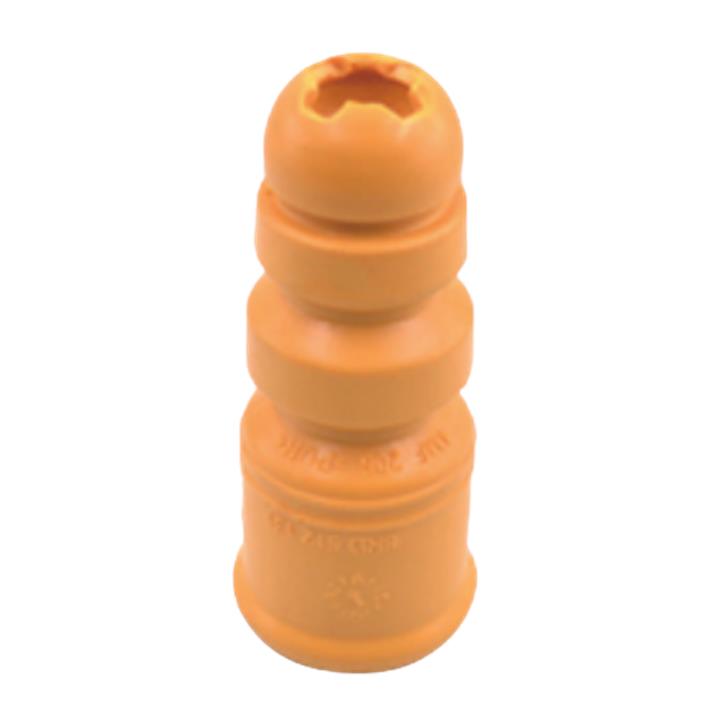
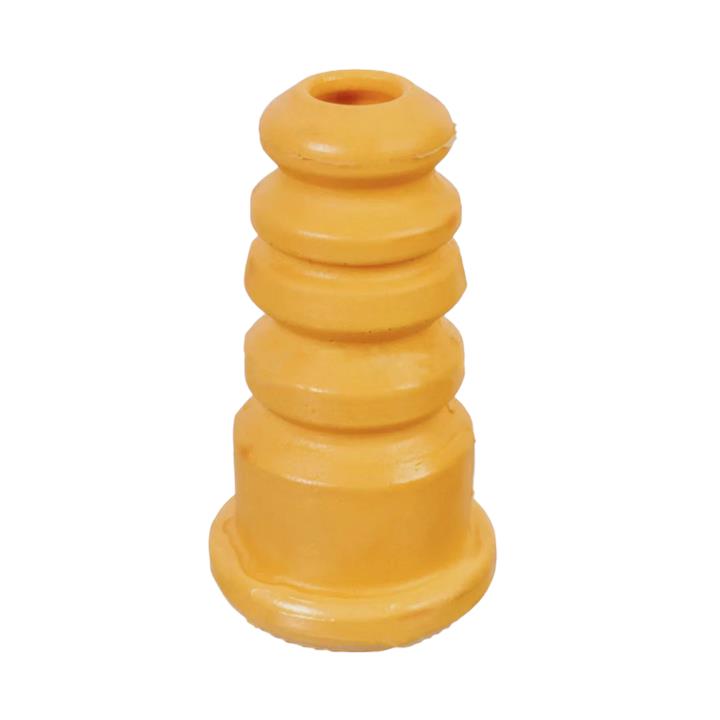
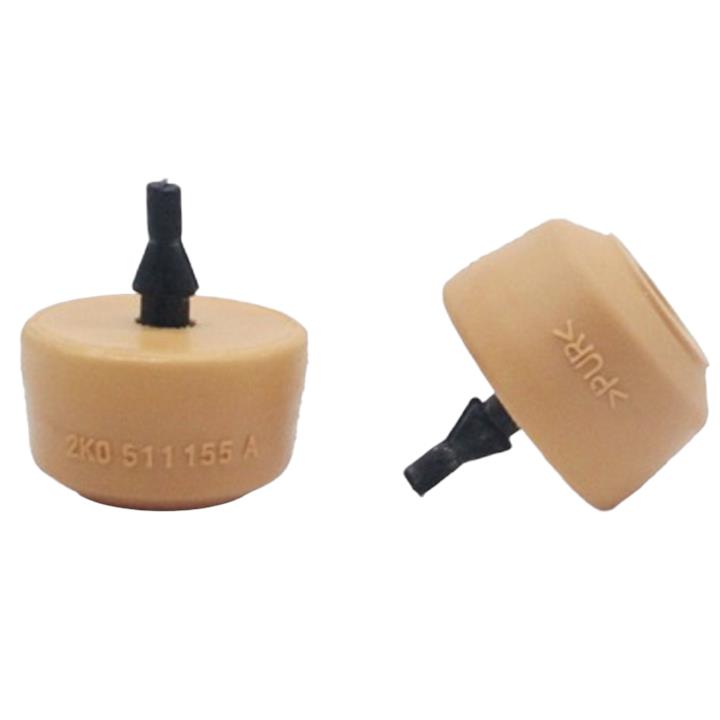
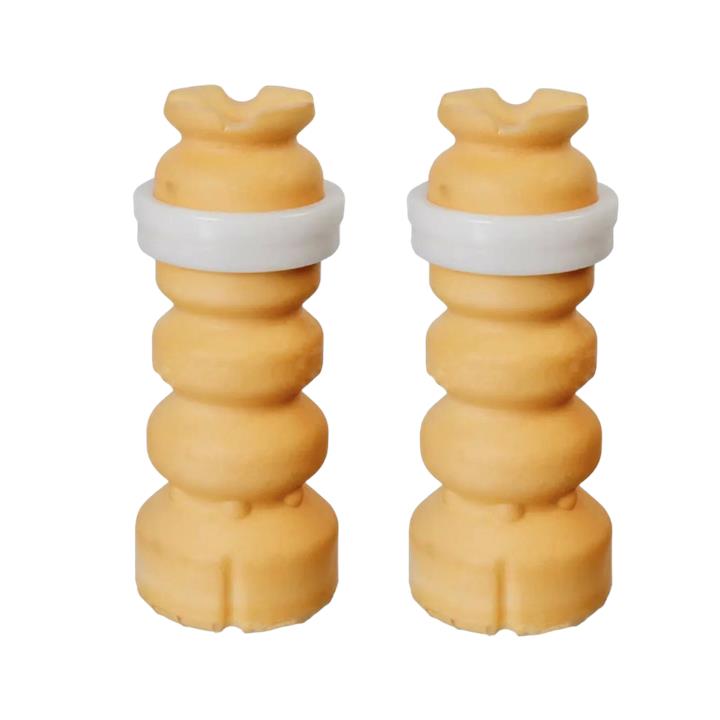
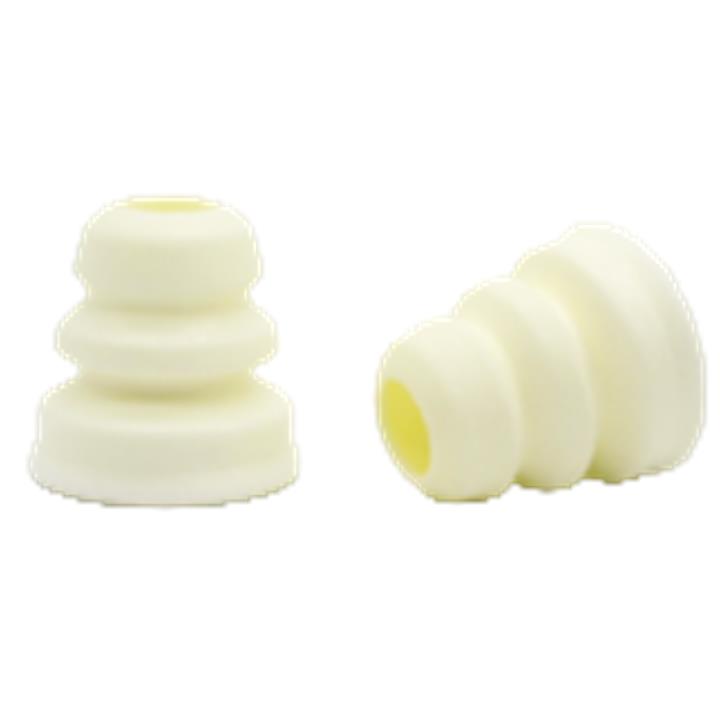
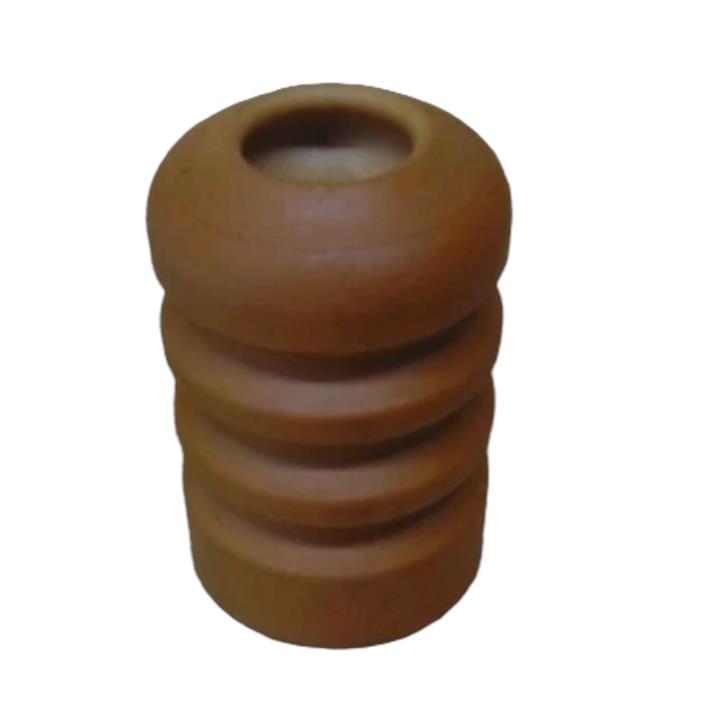
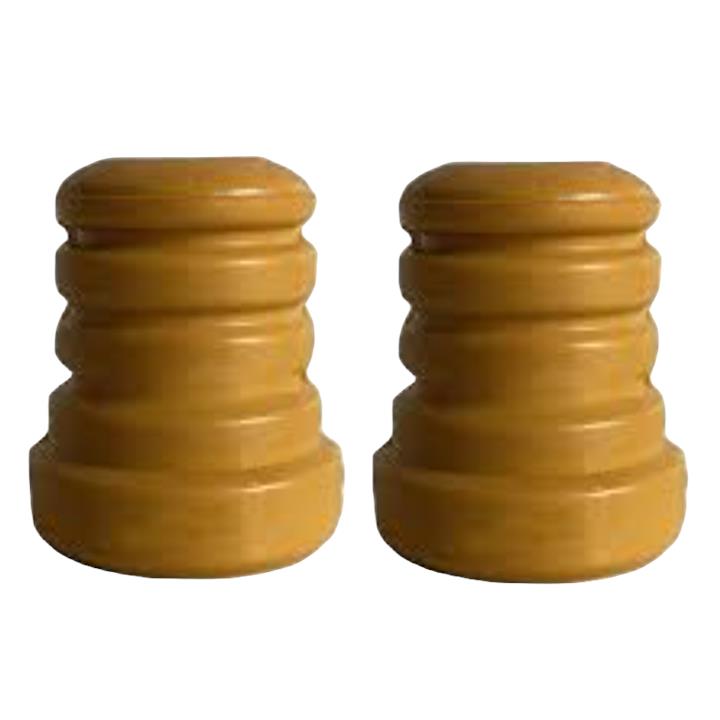
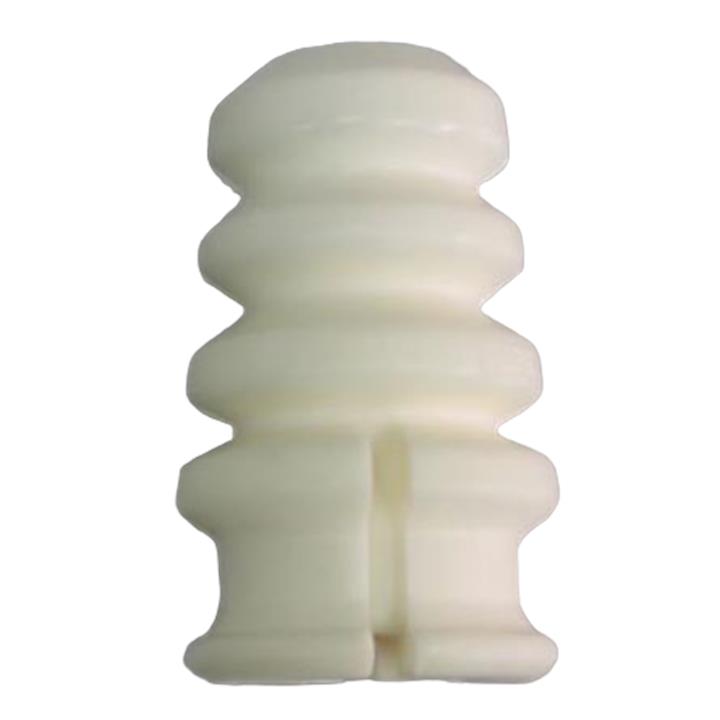
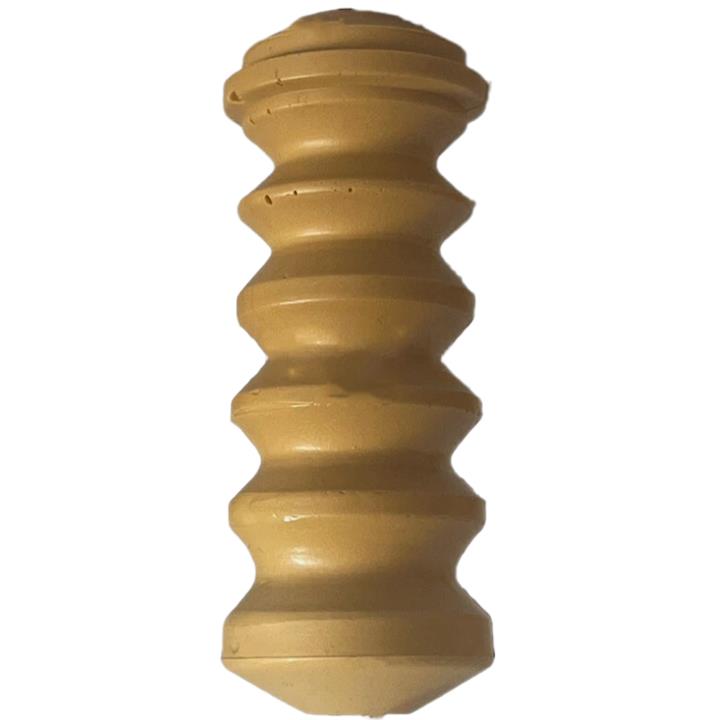
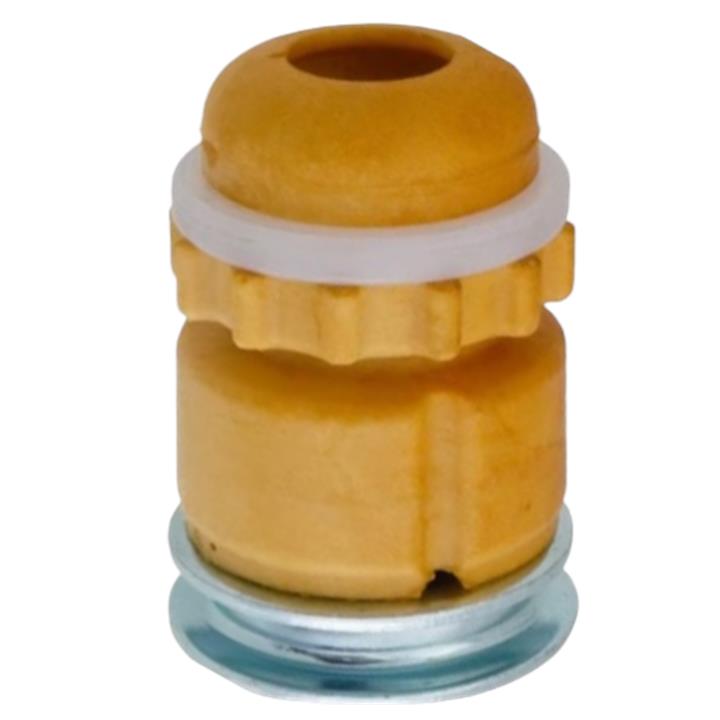
Strut bump stop OE 4B0512131N is the rear-axle jounce bumper used across the Volkswagen Group B-platform family that includes the VW Passat B5 and the Audi A6 C5. It is a polyurethane buffer that fits over the rear damper piston rod and takes the final part of the suspension travel before the rod reaches the top mount. This page covers the technical specification of Bonpora No. 4110014, the numbering logic behind the 4B0 512 131 group, the vehicle applications confirmed by European catalogue data, and the buying options for workshops, importers and private-label programmes.
The coil spring carries the vehicle weight and the rear damper controls the speed of body movement. Neither part is designed to absorb a hard end-of-stroke impact. That job belongs to the bump stop. When the rear suspension compresses quickly over a pothole, a speed bump or a fully loaded boot, the buffer is squeezed between the piston rod and the upper mounting. Polyurethane compresses progressively: soft at first contact, then noticeably firmer as travel runs out. This staged curve works like a secondary spring and protects the damper rod, the top mount and the surrounding body structure from metal-to-metal contact.
On the Passat B5 and A6 C5 the rear dampers sit inside the coil spring, so the buffer is hidden behind the dust boot and is easy to overlook during a service. A worn example typically crushes down, splits at the bore or turns brittle. Drivers then report a dull thud from the rear over sharp bumps, a harsher ride when the car is loaded and, in advanced cases, a knocking sound near the rear turret. Because the part costs very little compared with the damper, renewing it while the rear strut is already dismantled is standard workshop practice.
| Parameter | Value |
|---|---|
| Product name | Strut Bump Stop (rear jounce bumper) |
| Bonpora No. | 4110014 |
| OE reference | 4B0512131N |
| Fitment | Volkswagen / Audi / Seat (B-platform) |
| Dimensions | Φ13.7 mm bore × Φ61.6 mm outer × 136.8 mm free length |
| Material | Polyurethane (MDI/NDI grade) |
| Country of origin | China |
| Warranty | 1 year |
| Delivery time | 15-30 days |
| Packaging | Neutral export packaging |
| Custom service | OEM & custom design support |
The three dimensions are the ones that decide whether the part works. The bore must slide onto the damper rod without play, the outer diameter has to clear the inside of the dust boot and the coil, and the free length sets the point at which the buffer begins to take load. Independent aftermarket catalogues list this reference with a 134 mm thickness, which sits within normal production tolerance of our 136.8 mm free length measurement; the small spread comes from measuring an unloaded part against a fitted one. Weight is around 0.14 kg per piece.
Volkswagen Group numbers are built from blocks, and each block carries information that helps a buyer identify the right part quickly.
The first three characters identify the model line. 4B0 belongs to the Audi A6 C5 / Volkswagen Passat B5 generation, so a 4B0 number tells you the part was engineered for that era of the B-platform. The next group, 512, is the rear suspension damper group: parts beginning 407 and 412 usually sit at the front axle, while 512 and 513 are rear-axle suspension items. The final block, 131, is the component code for a rubber or elastomer buffer, which is why so many bump stops from different model lines end in 131.
The trailing letter is a revision or variant marker and it is not interchangeable by habit. Within this family, 4B0512131N covers the standard rear damper application, while 4B0512131B is catalogued for cars built with the factory sports suspension and 4B0512131P is used on vehicles with level control or self-levelling rear suspension. They look similar and share the same platform, but the load curve and length differ. Ordering by the number stamped on the old part is the safest route; where the marking has worn away, quoting the model, model year and suspension code settles the question.
European parts catalogues link 4B0512131N to the rear axle of the following vehicles. The list is a research aid, not a fitment guarantee, so always confirm against the vehicle before committing a production order.
| Marque | Model / Platforms | Approx. Years |
|---|---|---|
| Volkswagen | Passat B5 saloon (3B2), B5 Variant (3B5), B5 facelift (3B6 / 3BG) | 1997-2005 |
| Volkswagen | Passat B5 4Motion | 1998-2005 |
| Audi | A6 C5 saloon (4B2), Avant (4B4 / 4B5 / 4B6) | 1997-2005 |
| Audi | A4 B5, A4 B6, A4 B7, A6 C6 Avant, A8 D2 | 1995-2011 |
| Seat | Exeo saloon (3R2), Exeo ST (3R5) | 2009-2013 |
| Skoda | Superb B5-generation models sharing the B-platform rear suspension | 2001-2008 |
Engine coverage is broad because the rear damper is not engine-specific: 1.6, 1.8 and 1.8 T petrol, 2.0 and 2.0 TFSI, 2.3 VR5, 2.4, 2.7 T, 2.8 V6 and 3.0 V6 petrol units, plus 1.9 TDI, 2.0 TDI, 2.5 TDI and 2.7 TDI diesels. Saloon, Variant and quattro body styles appear in the same lists. One factor does split the reference: cars with factory sports suspension or with level control normally take the B or P variant instead, so check the suspension code as well as the model year.
Purchasing teams usually arrive at this page through one of five searches, and each one points to a different level of service.
If you already hold the number 4B0512131N, 4B0 512 131 N, or a trade reference such as FEBI 18378, MEYLE 100 512 0012, TOPRAN 107 653, VIKA 45120003501, VAICO V10-1444 or ORIGINAL IMPERIUM 32426, send the list with the quantity and target market. Cross-referencing against several trade numbers at once removes the variation in how suppliers write the same part.
For distributors, workshops and e-commerce sellers the practical questions are unit price at volume, packing format and lead time. Bonpora supplies this buffer in neutral export packaging from a 15-30 day production and delivery window, with 1 year warranty and lot traceability. Mixed containers combining several bump stop references from the same family are a normal request and reduce freight cost per part.
Where a standard reference does not exist, or where a customer wants a different stiffness curve, a modified length or a branded box, custom tooling and OEM design support are available. Send a drawing, a sample or the original part plus the target performance window, and the engineering team will confirm material grade, hardness and tooling lead time before quoting. Additional background on the buffer range is available in our polyurethane bump stops section, and the wider damper accessory range is described under shock absorber parts.
The original parts in this family were produced in rubber. Polyurethane has become the common aftermarket choice because it holds its shape longer under repeated compression.
| Property | Polyurethane (MDI/NDI) | Conventional Rubber |
|---|---|---|
| Compression set after long service | Low; recovers well after repeated loading | Higher; tends to sag and flatten |
| Resistance to oil, ozone and UV | Good | Moderate; surface cracking over time |
| Load curve | Tunable across a wide hardness range | Narrower range, harder to tune |
| Service temperature | Approximately -40 °C to +90 °C | Comparable for standard grades |
| Typical role | Replacement and performance applications | Original equipment and budget replacements |
Neither material is universally better. Rubber remains a sound choice for original-specification restoration, while polyurethane is usually preferred where the vehicle runs loaded, on poor roads or with uprated dampers, because the progressive curve can be tuned to the load case. Buyers sourcing a mixed programme can specify material per reference rather than applying one rule to the whole catalogue.
This reference is a rear-axle part. Do not assume the same buffer serves the front strut: the front of a Passat B5 or A6 C5 uses a shorter buffer with a different number, and the two will not interchange. Quantities differ as well: a car carries two rear bump stops, one per side, and they are supplied and priced individually.
Both sides of a rear axle see similar mileage and load, so if one buffer is crushed or split, its counterpart is usually close behind. Replacing the pair keeps the rear axle response symmetrical. While the strut is apart, inspect the dust boot, the top mount bearing and the damper for oil loss, since the labour to reach this area is the same.
Elastomer buffers age faster under direct sunlight, ozone sources such as electric motors, and contact with mineral oil. Store them in their packaging in a cool, dry place and keep them clear of solvents on the workshop bench.
It is a rear-axle bump stop. Catalogue data from several independent European suppliers lists it under rear axle for the Passat B5 and A6 C5 families. Front axle positions on the same cars use different references, so confirm the position before ordering.
No. All three belong to the same 4B0 512 131 family and will appear next to each other in a catalogue, but they are not interchangeable. The B suffix is used for cars with factory sports suspension and the P suffix for level control or self-levelling rear suspension. The standard application is the N suffix.
Send the OE number together with the vehicle model, model year, body style and, ideally, the VIN. The supplier can then match the reference against the catalogue entry and the suspension code. Measuring the bore, outer diameter and free length of the removed part is a useful secondary check.
Yes. Custom design and OEM support cover altered length or stiffness, specific hardness grades, and branded packaging. Provide a drawing, a sample or the original part together with the target load window and expected annual volume, and a quotation with tooling lead time will follow.
Bonpora manufactures and exports strut bump stops and related suspension buffers from China, with reference-based supply, neutral or branded packaging and custom development for programmes that need it. Send the OE number 4B0512131N, the quantity per reference, the packaging requirement and the destination port through our custom parts enquiry page, and the sales team will return pricing and lead time. Samples for evaluation are available on request so that fitment and material can be verified before a full order is placed.