sales@bonporaparts.com
0086-10-64988621
English
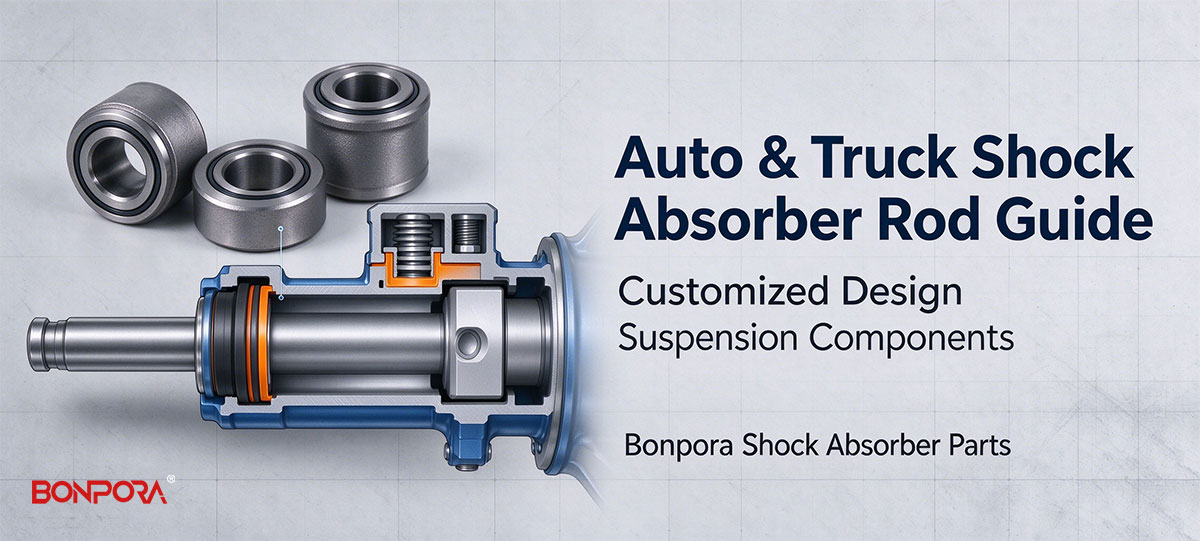
Global aftermarket purchasers often search for auto truck suspension shock absorber parts rod guide customized design when sourcing precision shock absorber internal components. The rod guide is a core part fitted at the top of shock absorber cylinder. It supports the piston rod, maintains rod alignment, holds the oil seal, and prevents oil leakage and side wear during reciprocating movement.
Many importers, shock absorber manufacturers and repair distributors have key concerns: what does a rod guide do? What are typical failure symptoms? Can we get custom dimension and material rod guides? Which light vehicle and heavy truck models use these parts? This buying guide answers these questions to help overseas buyers select reliable suppliers.
The rod guide is an internal machined component of hydraulic shock absorbers. It is assembled at the upper end of shock absorber tube. Main functions include guiding piston rod linear motion, supporting radial load, fixing oil seal assembly, keeping hydraulic oil inside the shock absorber, and blocking dust and contaminants from entering the cylinder.
Material options include sintered metal, PTFE composite, cast iron and engineered plastic. Different material selections depend on working pressure, load, temperature and service life requirement for passenger cars, light commercial vehicles and heavy duty trucks.
Rod guides are widely used for both light passenger vehicles and commercial trucks. Customized rod guides can be produced to match different shock absorber assemblies for:
Passenger cars, SUVs, MPVs
Light commercial vans, pickup trucks
Medium & heavy duty trucks, trailers
Bus and coach suspension shock absorbers
Note: Rod guides are not universal parts. Dimensions, bore diameter, outer diameter, sealing groove structure must match the shock absorber assembly drawing. Custom manufacturing is available according to samples or technical drawings.
Poor quality or worn rod guides will trigger a series of shock absorber faults:
Piston rod offset, side friction, accelerated rod surface scratch
Oil seal damage, hydraulic oil leakage from shock absorber top
Abnormal friction noise during shock absorber compression and rebound
Unstable damping force, shortened shock absorber service life
Excessive wear leads to complete shock absorber failure
For truck fleets and aftermarket distributors, rod guide failure is one of the hidden reasons for premature shock absorber warranty claims. High precision rod guides reduce after-sales risk.
Bonpora supports customized rod guide production based on customer drawings or physical samples. Available customization items:
Material selection: sintered metal, PTFE composite, cast iron
Dimension customization: inner diameter, outer diameter, total height, groove size
Surface treatment: anti-friction coating, rust prevention treatment
Custom packaging and marking for wholesale orders
Our factory controls tight machining tolerance to ensure stable fit with piston rod and sealing components. View our full shock absorber parts product page: https://www.bonporaparts.com/en/shock-absorber-parts/. Contact us for sample test and wholesale quotation.
A: The rod guide guides piston rod movement, bears radial side load, fixes oil seal, prevents oil leakage and dust ingress. It keeps the piston rod moving straight without deflection inside shock absorber.
A: Yes. Bonpora accepts customized rod guide orders. We can produce parts following your technical drawings or physical samples, including different material and dimension requirements for passenger car and heavy truck shock absorbers.
A: Worn rod guide causes piston rod deflection, scratches on rod surface, oil seal damage and oil leakage. It creates friction noise and reduces damping performance, eventually making shock absorber fail early.
A: Main material options include sintered metal, PTFE composite material and cast iron. We will recommend suitable material according to your shock absorber working load, temperature and lifespan requirement.
