
Suspension Characteristics by Region: China, Japan, Germany, USA
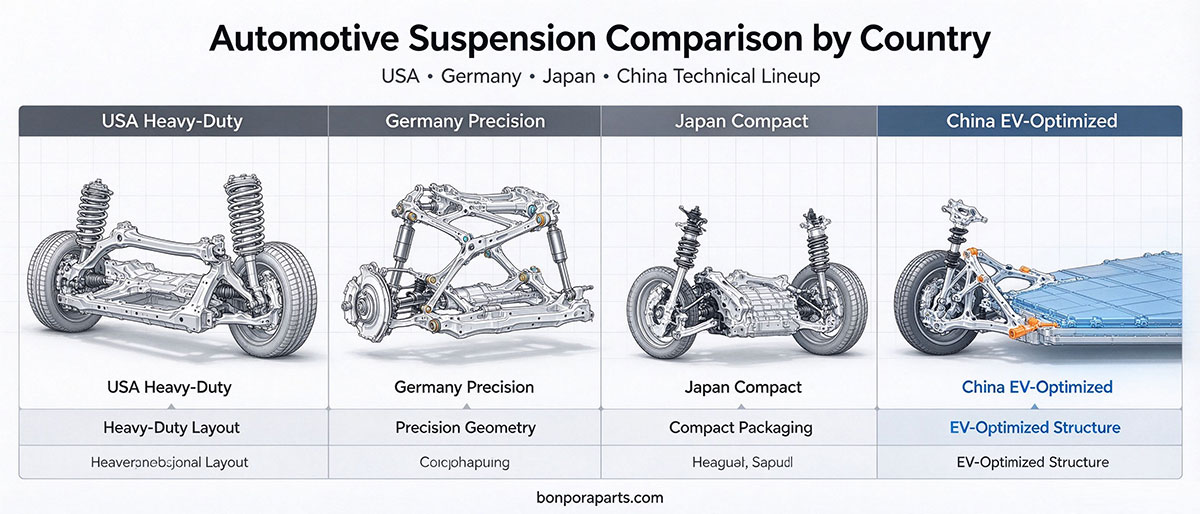
Quick Summary
German: Stable, rigid, high-speed oriented, firm damping feel
Japanese: Light, smooth, durable, city-road optimized
American: Soft, long-travel, excellent for long-distance highway cruising, heavy-duty pickup friendly
Chinese EV: Generous hardware, powerful electronic control, wide adjustability for both comfort and body posture control
🇩🇪 Germany|Five-link suspension
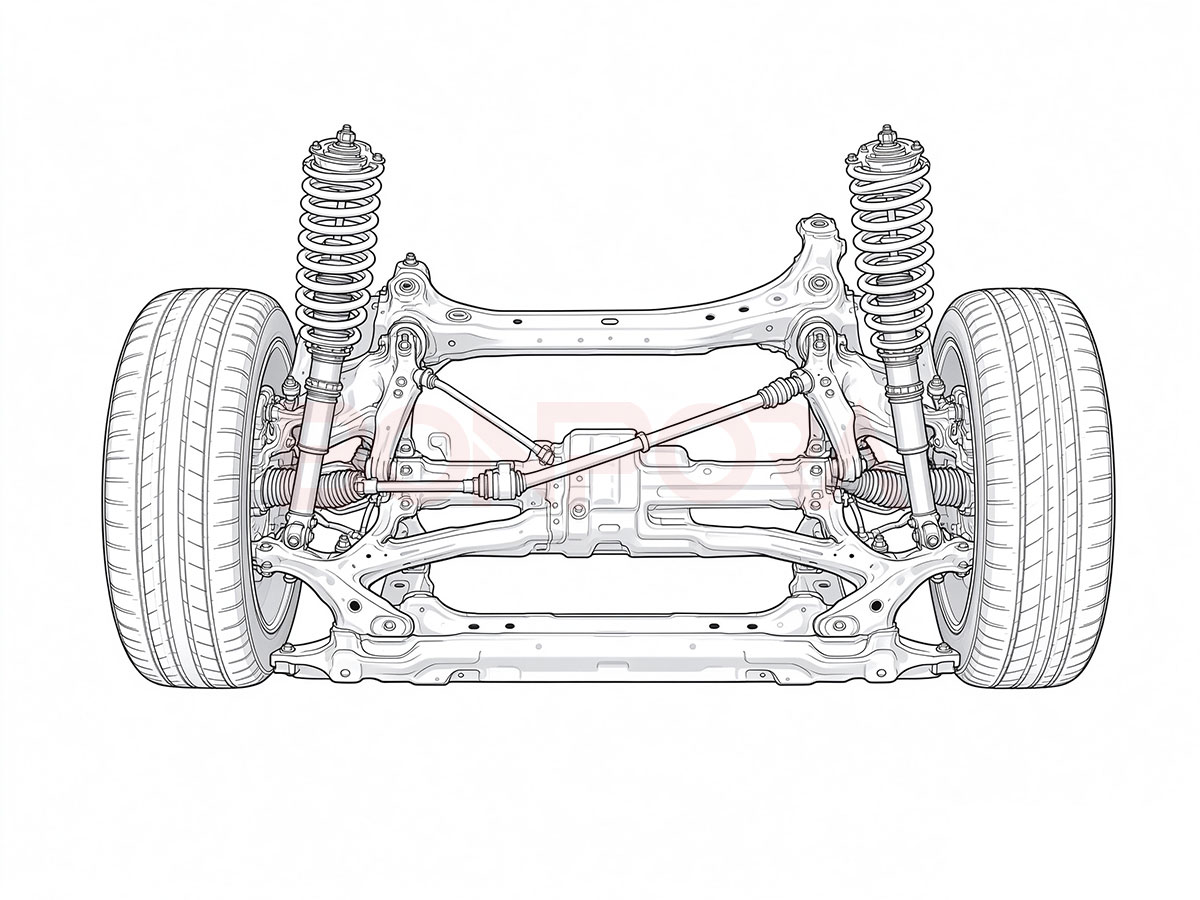
Main layout: Front MacPherson / Double Wishbone; Rear 5-link. Premium models widely adopt air suspension and CDC adaptive dampers.
Advantages: Precise wheel alignment control, strong high-speed stability, firm lateral support and clear road feedback. Progressive damping delivers a tight, connected chassis feel. Body roll and pitch are well controlled during lane changes and hard braking. Electronically controlled chassis systems offer a wide range between comfort and sport modes.
Weaknesses: Complex linkage and bushing assemblies may develop noise after long-term aging. Air suspension brings higher maintenance cost. The chassis feels stiffer at low speeds and is less forgiving on small, frequent road bumps.
🇯🇵 Japan|Torsion beam / Multi-link suspension
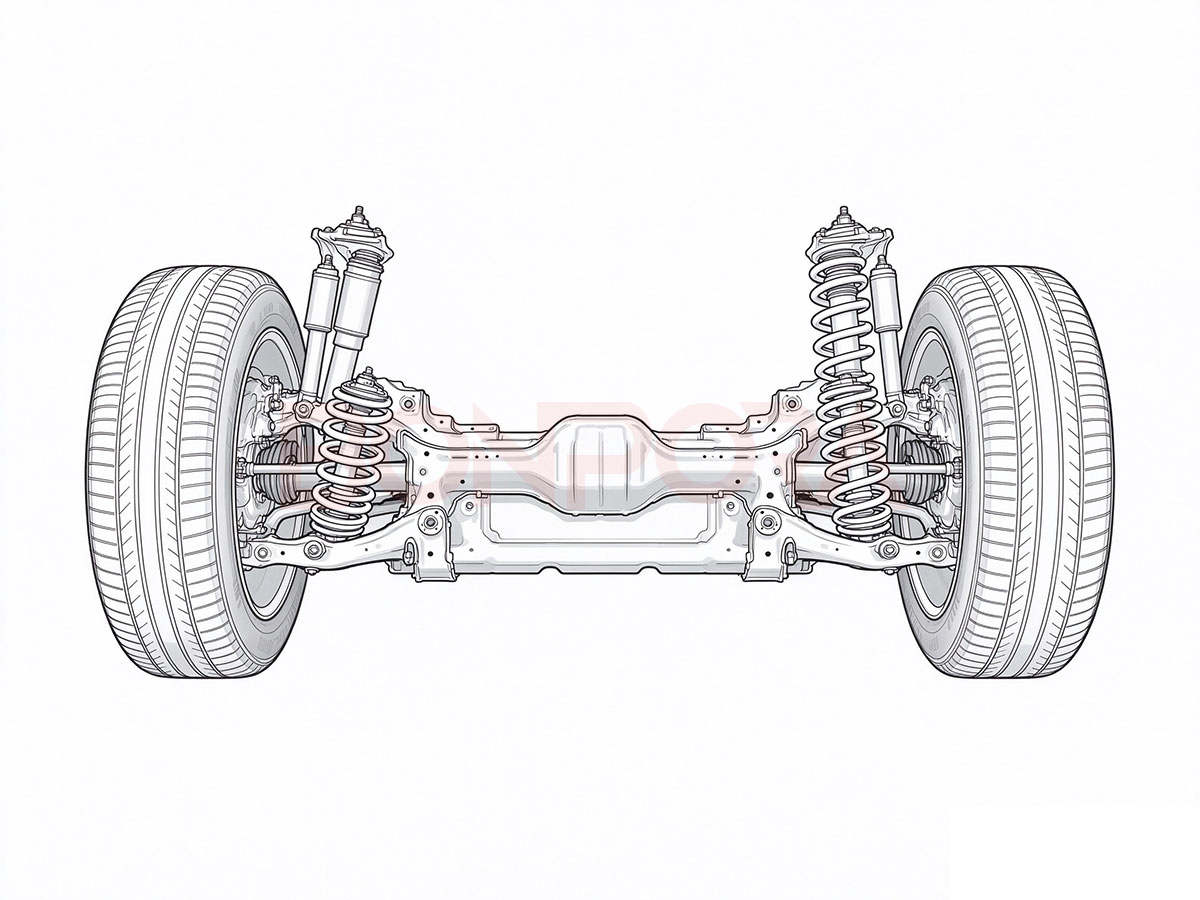
Main layout: Front MacPherson; Rear Torsion Beam / Multi-link. Lightweight and compact packaging is prioritized.
Advantages: Low unsprung mass saves space and benefits fuel economy and battery packaging. Durable rubber bushings reduce long-term failure rate and repair expense. Soft initial damping effectively absorbs small urban road imperfections, with light steering suited for crowded city roads. Mechanical amplitude-sensitive dampers provide adaptive performance without complex electronics.
Weaknesses: Limited lateral support at handling limits with obvious body roll. High-speed stability under crosswinds falls behind German setups. Torsion beam versions have low performance ceilings.
🇺🇸 United States|Solid axle + leaf spring suspension
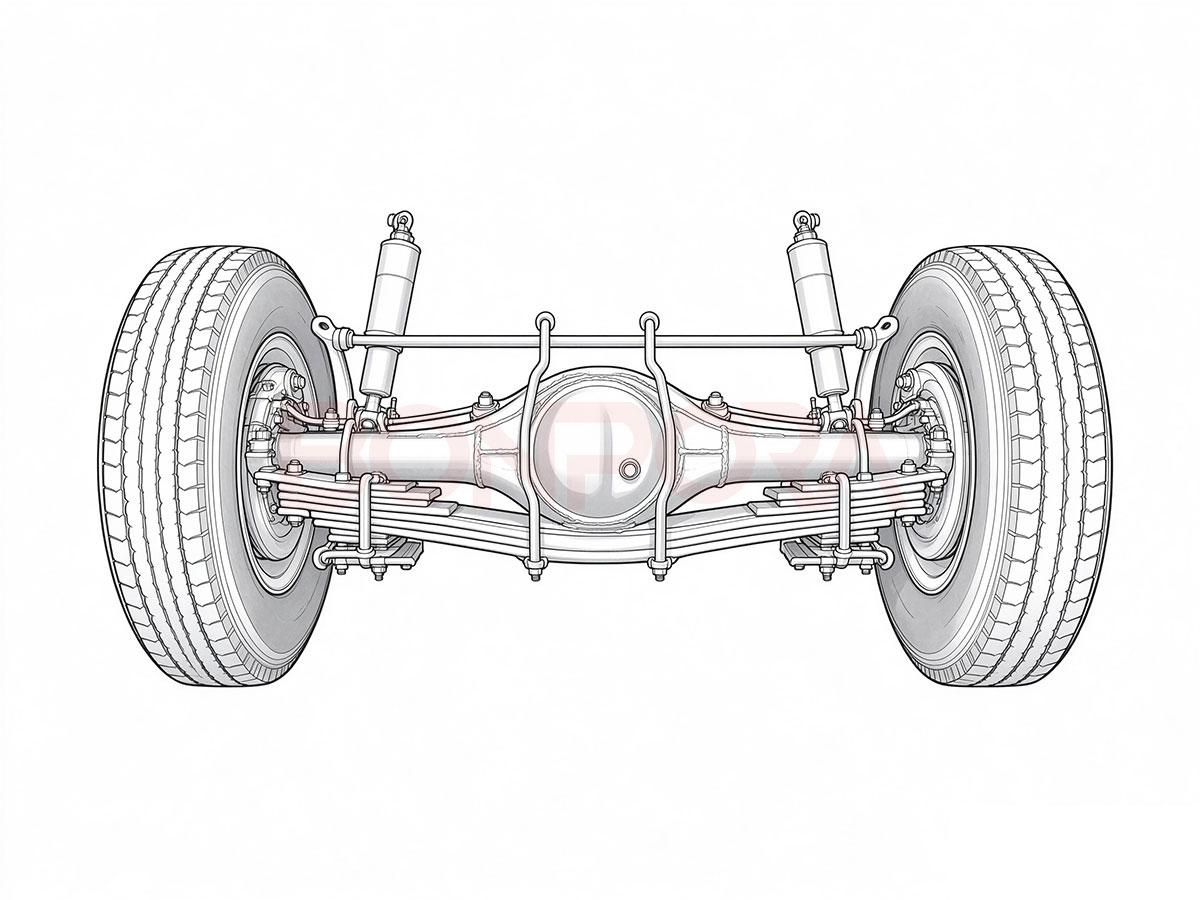
Main layout: Cars & SUVs: Front Double Wishbone / MacPherson + Rear Multi-link. Pickups & off-road vehicles: Solid axle with leaf springs.
Advantages: Long suspension travel and soft damping excel at smoothing long-wave undulations on intercontinental highways, delivering a relaxed cruising ride. Leaf-sprung solid axles carry heavy loads reliably, simple in structure and low-cost to service. Premium MRC magnetorheological dampers provide ultra-fast response for high-performance variants.
Weaknesses: Standard family setups generate noticeable body roll. Chassis tends to feel loose once bushings degrade. Leaf-sprung trucks bounce easily when unloaded.
🇨🇳 China|Double wishbone + 5-link air suspension
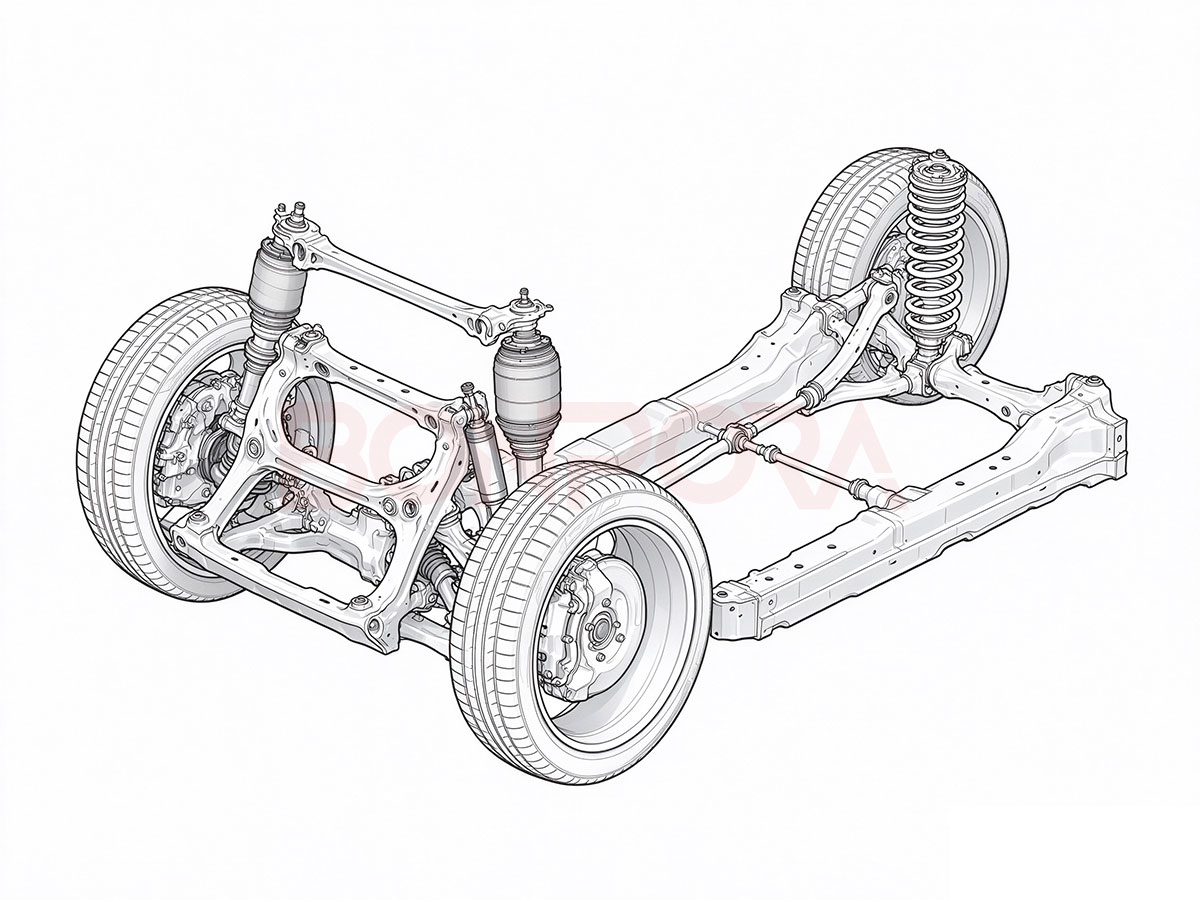
Main layout: Budget ICE & PHEV: MacPherson + Torsion Beam / Basic Multi-link. High-end EV: Double Wishbone + 5-link, air suspension, CDC, full-active suspension systems.
Advantages: High-end chassis hardware is rapidly democratized. Dual-chamber / tri-chamber air suspension, CDC and rear-wheel steering are widely available on mid-range premium EVs. Fast iteration of chassis control algorithms. Full-active suspension systems actively suppress pitch, roll and wheel hop. Tuning balances Japanese bump absorption, German high-speed stability and American cruising comfort, optimized for mixed Chinese road conditions including rough county roads and highways.
Weaknesses: Shorter mechanical chassis heritage; many models rely heavily on electronic controls to compensate for mechanical limits. Air and active suspension systems carry higher repair costs. Tuning consistency varies greatly between brands.