sales@bonporaparts.com
0086-10-64988621
English
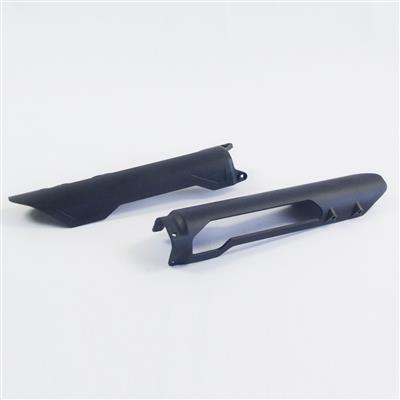
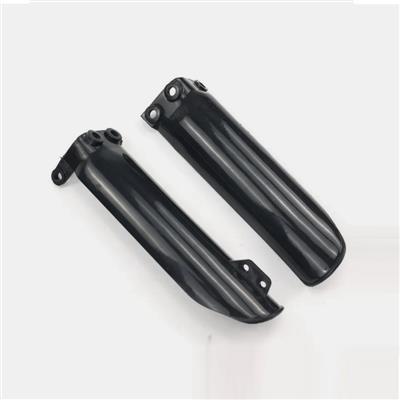
The shock absorber guard is mainly to protect the shock absorber and prevent dirt, mud, fine sand, flying stones and similar debris from entering the shock absorber and damaging the piston rod and causing oil leakage.
Main features:
Protects the shock absorber piston rod from rocks and debris.
Clears the shock absorber during compression.
Made of durable, wear resistant, impact resistant and UV resistant materials such as HDPE or nylon.
Cost effective and easy to install.
Material: HDPE, NYLON
A shock guard does its job only when the geometry matches the damper it protects. A guard that is too short leaves the upper part of the piston rod exposed to flying stones and grit. A guard that is too tight rubs the rod or the coil spring and can wear through in a short period. A guard that is too long may be crushed on full compression and can push the coil spring or the bump stop out of position. For a purchasing officer, the difference between a smooth replenishment order and a container of claims usually comes down to four numbers taken from a caliper and a tape measure: inside diameter, mounted length, travel overlap and mounting style.
Measure the rod with a caliper in at least three positions, because a plated or slightly worn rod rarely keeps one single value along its length. Rods on passenger car shock absorbers commonly measure 12.4 mm, 12.5 mm, 14 mm, 15.8 mm, 16 mm, 18 mm and 20 mm, while passenger car front struts often run from 20 mm to 25 mm. Heavy duty, off road and industrial dampers can reach 22 mm to 30 mm. The guard inside diameter should be larger than the rod by roughly 1.5 mm to 4 mm. This clearance lets the guard slide without binding while still blocking particles larger than the gap. Record the smallest reading on the SKU sheet, since rod wear reduces the diameter over the service life.
Measure the damper fully extended from eye centre to eye centre, then compress it to the working length. The guard body length normally covers 55 percent to 80 percent of the free rod length. The remaining exposed rod keeps the guard away from the top mount and lets the dust lip or the bellows fold cleanly instead of jamming against a shoulder.
A coil over unit adds a second constraint. The outside diameter of the guard, including any corrugation, must stay clear of the inner face of the coil spring through the full stroke. A minimum radial clearance of 4 mm to 6 mm is a practical target for most passenger applications. On strut designs with an offset spring, check clearance at the point of shortest distance rather than along the centre line, and repeat the check with the spring seated.
Guards mount either on the rod above the dust seal, on the damper body with a clip, or on the top mount with an integrated collar. Identify the mounting point on a sample unit before choosing the part, because a guard designed for a body clip will not fit a top mount collar, and a collar type guard is not suitable for a bare rod application.
| Parameter | How to Measure | Practical Target | Risk When Out of Range |
|---|---|---|---|
| Guard inside diameter | Caliper across the rod at three points | Rod diameter plus 1.5 mm to 4 mm | Too small: rubbing and early wear. Too large: grit and water leakage |
| Guard body length | Tape measure on the free rod length | 55 percent to 80 percent of the rod length | Too short: exposed rod. Too long: crush on full compression |
| Outside diameter against the spring | Feeler gauge at the closest point | 4 mm to 6 mm radial clearance | Contact marks, noise and spring coating damage |
| Wall thickness | Micrometer on a cut section | 1.5 mm to 3.0 mm depending on duty | Thin: cracking and folding. Thick: stiff, heavy and harder to fit |
| Mounting interface | Compare with the sample damper | Same clip, collar or bracket type | Part cannot be fitted on the assembly line |
The table below is a starting point for quotation work. Treat every line as a range to be confirmed against a real sample rather than a fixed rule.
| Application Group | Typical Rod Diameter | Guard Length Range | Common Material |
|---|---|---|---|
| Passenger car front strut | 20 mm to 25 mm | 120 mm to 200 mm | HDPE or nylon |
| Passenger car rear shock | 12.4 mm to 16 mm | 90 mm to 160 mm | HDPE or TPE |
| Light commercial van and pickup | 16 mm to 20 mm | 140 mm to 220 mm | Nylon PA6 |
| Heavy truck and trailer | 22 mm to 30 mm | 200 mm to 320 mm | Nylon PA66 or polyurethane |
| Off road and lifted damper | 20 mm to 28 mm | 180 mm to 300 mm | Polyurethane or reinforced nylon |
| Motorcycle and ATV | 10 mm to 18 mm | 60 mm to 140 mm | HDPE or TPE |
| Industrial and trailer suspension | 20 mm to 40 mm | 150 mm to 350 mm | Polyurethane or HDPE |
HDPE is light, low in cost and resistant to most road chemicals, and it works well in moderate temperature ranges. Nylon PA6 and PA66 offer higher stiffness and better resistance to abrasion and to higher temperatures near the exhaust side. Polyurethane brings high tear strength and rebound, which suits off road and heavy duty dampers where stone impacts are frequent. Whichever compound is selected, UV stabilisers and carbon black masterbatch matter for parts exposed to direct sunlight, because a polymer without stabilisation can chalk and crack within one or two strong sunlight seasons.
| Wall Thickness | Suitable Duty | Notes |
|---|---|---|
| 1.2 mm to 1.6 mm | Light passenger use | Lower weight, moderate stone impact |
| 1.8 mm to 2.2 mm | Standard passenger and van | General replacement market |
| 2.5 mm to 3.0 mm | Heavy duty and off road | Higher stiffness, recheck spring clearance |
| Over 3.0 mm | Industrial and mining | Confirm weight, fitment and mould cost |
For a wider view of the range, see the shock guard category, and for background reading on the part itself see the shock guard overview. Related suspension components such as piston rods and the full shock absorber parts line are usually quoted together with guards.
| Mistake | Field Symptom | Correction |
|---|---|---|
| Guard chosen by vehicle model only | Returns for poor fit | Size by rod diameter, free rod length and mounting style |
| Inside diameter too small | Rod scoring and guard wear | Increase clearance to the 1.5 mm to 4 mm band |
| Length too long for the travel | Cracks or buckling at full bump | Shorten the body or add a relief zone at the top |
| Excessive outside diameter | Marks from coil spring contact | Reduce corrugation height and confirm clearance |
| Missing UV stabiliser | Surface chalking and cracking | Specify the UV package on the drawing |
| No size marking on the part | Mixed parts in the bin | Add a moulded size code or a laser print |
Because a shock guard carries a low unit value, stock control is often managed by bin rather than by part number. Mark each bag with inside diameter, body length and material code so that a picker does not confuse a 12.5 mm guard with a 16 mm guard that shares a similar outline. A simple bin code built from the inside diameter followed by a two digit length code keeps the warehouse tidy and shortens the counting cycle. Where demand is steady, a rolling forecast covering eight to twelve weeks of consumption helps the factory plan moulding runs and keeps small sizes available. Purchasing teams that also handle chassis and suspension items and custom parts can group guards into the same replenishment cycle to reduce freight cost.
Sometimes it can, when rod diameter, free rod length and mounting style all fall inside the same range. Treat such cases as a cross reference rather than a rule, and confirm with a sample fit before committing volume.
Compress the dust cover by hand and measure the visible rod with a caliper, or measure close to the dust seal where the rod enters the body. Record the smallest reading and note that plating wear reduces the diameter over time.
Polyurethane or reinforced nylon generally holds up better where stone impact is frequent. For lower cost fleets on paved roads, HDPE with a UV package is often sufficient.
Most guards are open at the bottom so that water and fine dust can escape. On a design that encloses the rod, check that it does not trap water against the seal.
Bonpora Parts produces shock guards in HDPE, nylon and polyurethane, with inside diameters, body lengths and wall thicknesses set to your measurement sheet. Send us the rod diameter, free rod length, spring clearance and mounting style, and our engineers will confirm the closest existing mould or quote a new one. A photo of a sample damper with a caliper reading is usually enough for a first fitment recommendation, which keeps a trial order small while the release specification stays precise. Start with the shock guard range or contact our team with your sizing data.