sales@bonporaparts.com
0086-10-64988621
English
A front strut bump stop is one of the least expensive parts on a Mazda 2, yet it decides how the front strut behaves at the end of its travel. When a buyer searches by part number rather than by description, the number they usually type is D651-34-111A — the Mazda 2 front bound bumper used on the DE and DH generation. This page covers what the part is, what it fits, the reference numbers used to cross-check it, and the ordering details that matter when you buy it in volume from a factory-direct supplier.
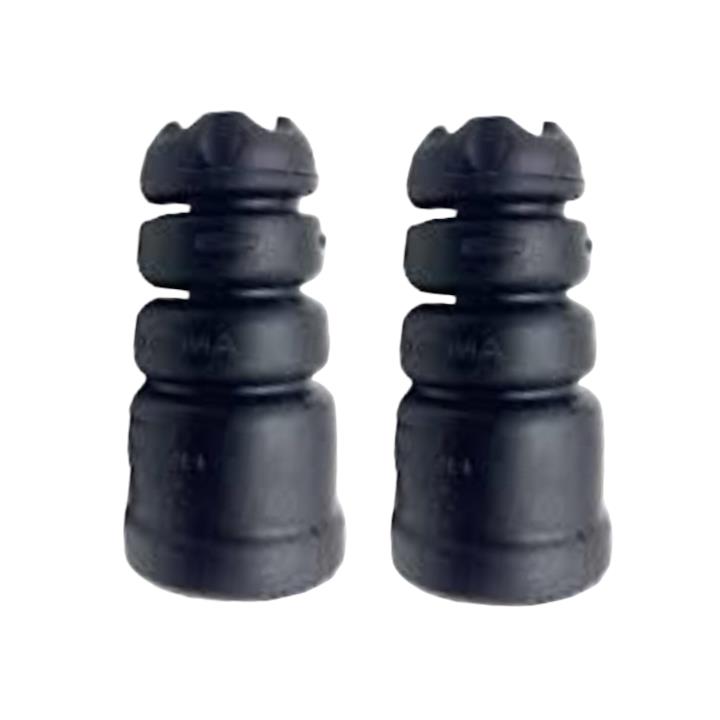
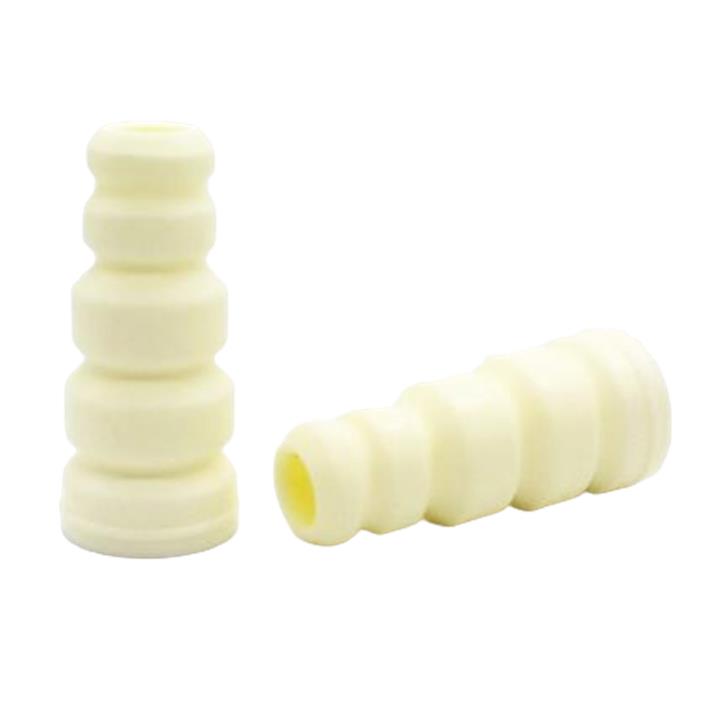
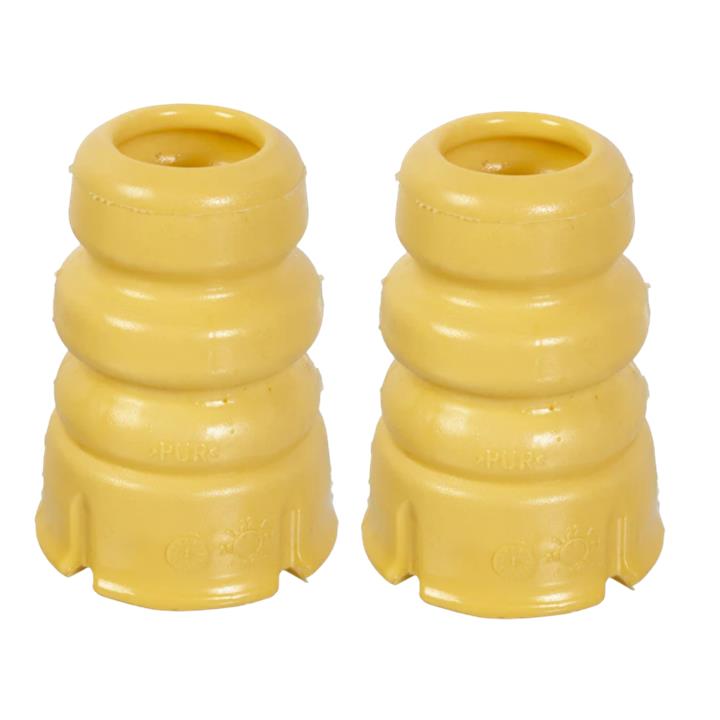
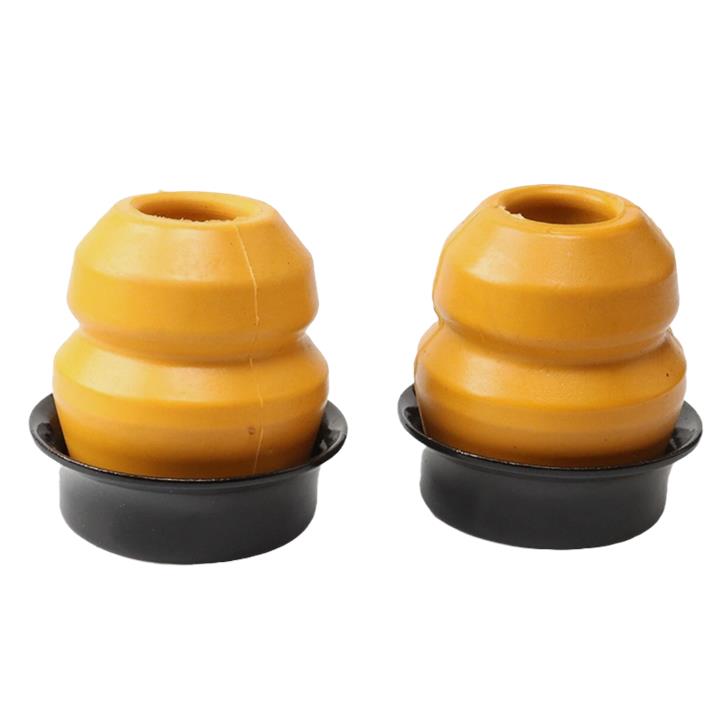
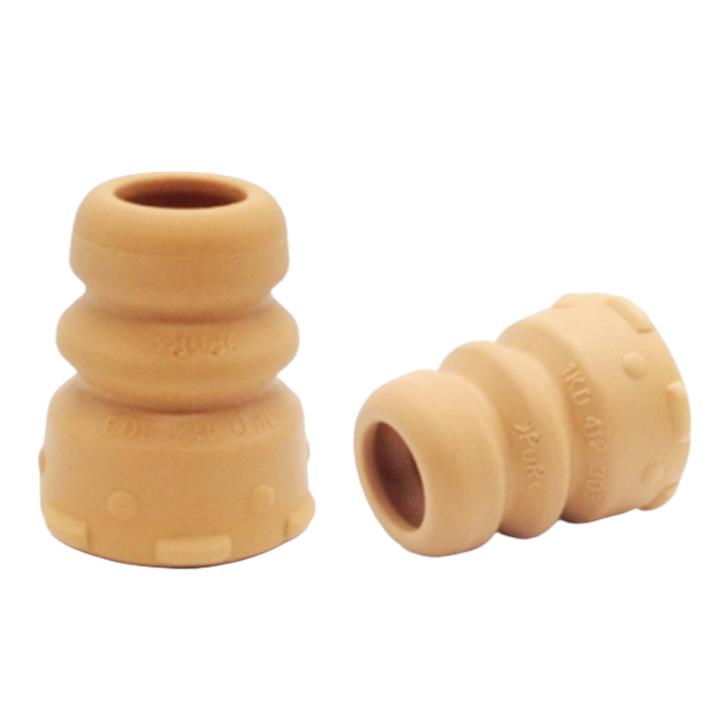
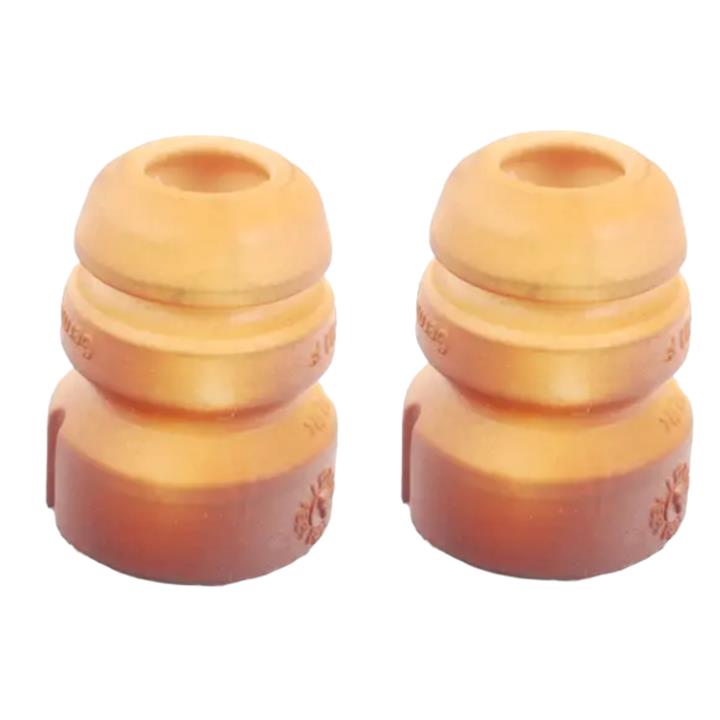
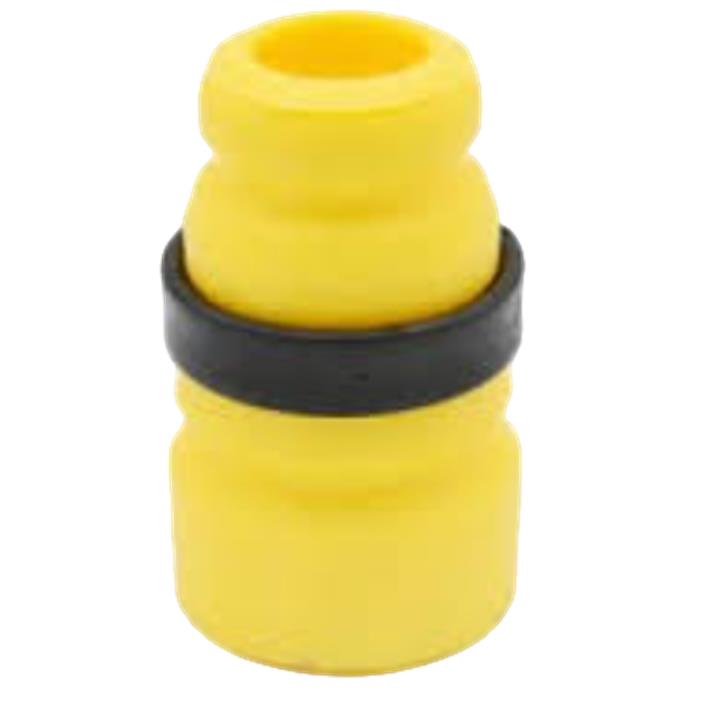
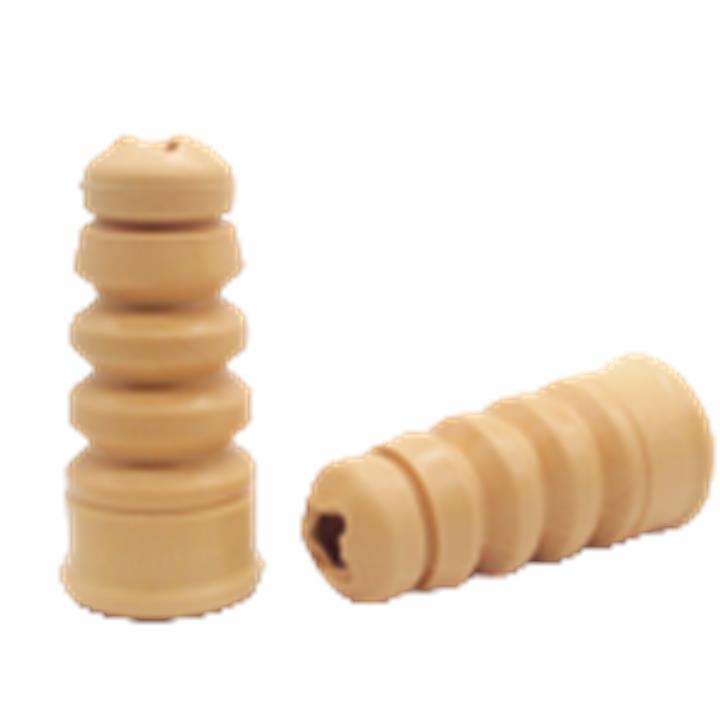
A strut bump stop — also written as jounce bumper, bound bumper, or suspension rubber buffer — is the progressive rubber or polyurethane cushion mounted on the front shock absorber rod. It is not a spring and it is not a mount. It sits between the strut top and the damper body and compresses only in the last part of suspension travel.
Its job is to absorb the energy of a hard compression instead of passing it straight into the strut mount, the spring seat, and the body shell. On a light platform such as the Mazda 2 DE, front travel is short, so the bumper works more often than drivers expect — speed bumps, potholes, and kerb strikes all bring it into play. A collapsed bumper changes how the front end feels and, over time, loads parts that cost considerably more than the bumper itself.
The bumper slides onto the strut piston rod, above the dust boot and below the upper spring seat, inside the coil spring. Because it is hidden inside the spring, it is rarely inspected during routine servicing — it is usually found only when the strut is removed. That is one reason replacement demand is steady: workshops that already have the strut on the bench replace the bumper at the same time rather than paying the labour twice.
The table below lists the production data for this bumper as supplied by Bonpora. Dimensions are given as inner diameter x outer diameter x height, measured on the finished moulding.
| Item | Specification |
|---|---|
| Product name | Strut Bump Stop (front bound bumper / jounce bumper) |
| Bonpora No. | 4110081 |
| OE reference | D651-34-111A |
| Fitment | Mazda |
| Size | Φ19.19 x Φ54.6 x 71 mm |
| Material | Polyurethane (PU) |
| Country of origin | China |
| Warranty | 1 year |
| Delivery time | 15–30 days |
| Packaging | Neutral export packaging |
| Custom service | OEM & custom design support |
The Φ19.19 mm bore is sized to the piston rod diameter of the front strut, so it is the dimension worth quoting first when comparing offers. A bumper with the correct outer diameter but the wrong bore will either not seat on the rod or will be loose on it.
This bumper belongs to the second-generation Mazda 2, the DE platform introduced in 2007 and produced through roughly 2014. The same body is sold as Mazda 2, Mazda 2 Saloon (four-door, from 2010), and Mazda Demio in the Japanese domestic market. All three use the front bumper under the same OE reference.
Fitting position is the front axle, and the part is symmetrical — the same number covers left and right. Quantity required is two per vehicle.
Cross-reference data covers the petrol and diesel engines used across the DE range, spanning roughly 68–113 hp / 50–83 kW. Representative engine codes include the 1.3 MZR (ZJ-VE, ZJ-VEM), the 1.5 MZR (ZY-VE), the 1.5 ZL-VE, the 1.6 ZM-DE, and the 1.6 MZ-CD and 1.4 MZR-CD diesels. Front-wheel drive and four-wheel drive DE3AS variants are both listed.
Market coverage matters more than it first appears. Mazda built the DE for Europe, Japan, North America, Australia, and Russia, and the front bumper is shared across all of them, so a single stock item can serve orders from several regions. Buyers who need to confirm a specific build date, trim, or market should verify against the old part number or the VIN rather than relying on the model year alone.
The suffix letter on this part number is where most mis-orders start. Mazda catalogue data lists both D651-34-111 and D651-34-111A against the same function, and aftermarket catalogues treat the two as OEM reference numbers for one bumper. On this platform the earlier number is written without a suffix and the later one carries the A revision; they are not two different components with different sizes.
| Type | Number | Notes |
|---|---|---|
| OE reference (current) | D651-34-111A | Suffix A revision, as listed by Mazda |
| OE reference (earlier) | D651-34-111 | Same function, no suffix |
| Aftermarket cross-reference | FEBEST MZD-DE | EAN 4056111072654 |
| Cross-brand reference | FORD 1750640 | Shared B2 platform, see below |
| Aftermarket (Russia/CIS catalogue) | Masuma MAD-4006 | Listed as 27 x 72 x 51 mm, see note |
Two points deserve a note. First, the FORD 1750640 reference appears because the Mazda 2 DE and the sixth-generation Ford Fiesta share the B2/B2E platform. The two cars are not the same vehicle and share only a limited number of parts, so a Ford number is a research lead — not proof that the part fits a Fiesta. Second, some aftermarket listings publish a height of about 51 mm for this position while our moulding is 71 mm. Different suppliers measure different features (compressed working height versus free length, or the bumper body versus the assembled bumper and sleeve), so the dimensional figure should be confirmed against the drawing or a sample rather than copied from a catalogue line.
Front bumpers for small hatchbacks are frequently quoted by price alone, and that is where quality disappears. A moulding can hit the right outer diameter and still be wrong in the ways that matter on the road.
The bore must match the piston rod so the bumper stays located under compression and does not migrate up the rod. Wall thickness and the internal profile set the spring rate of the bumper itself. Too soft, and it compresses fully on the first hard bump, passing the shock into the mount. Too hard, and it acts as a solid stop, which is worse for the mount than no bumper at all.
| Property | Polyurethane (PU) | Conventional rubber |
|---|---|---|
| Oil and grease contact | Generally resistant | Swelling and softening over time |
| Ozone and UV exposure | Stable for longer periods | Surface cracking is common |
| Rebound behaviour | Progressive, holds shape after repeated cycles | Softens and takes a set |
| Load capacity for a given size | Higher | Lower |
| Typical failure mode in service | Slow wear, retains form | Crumbling, splitting, flattening |
Polyurethane is the practical choice for a part that is rarely inspected and expensive to reach. It holds its shape through repeated compression and resists the oil and road contaminants that reach the strut area.
Purchasing teams reach this page through several different routes, and the content above is organised so that all of them resolve to the same number.
Searches such as “strut bump stop 19 mm bore 54.6 mm OD,” or “front jounce bumper Mazda 2 DE 71 mm” are dimensional. Quote the drawing values, since catalogue diameters are often rounded.
“Strut bump stop manufacturer,” “polyurethane jounce bumper supplier,” and similar phrases are used by importers building a supplier list. The relevant questions here are mould ownership, batch consistency, and whether the supplier can hold tolerance across repeat orders rather than produce a single good sample.
“Mazda 2 front strut bumper,” “Mazda Demio front bound bumper,” and “Mazda 2 DE suspension buffer” are the most common vehicle-first searches. All three resolve to D651-34-111A on the DE and DH generation.
Buyers who already have the old part in hand search the number directly, including variants such as “D65134111A” written without separators. Both formats represent the same bumper.
Distributors who want to sell the part under their own brand, or need a dimension that is not in any catalogue, come through the custom route. Tooling, compound selection, hardness, and packaging artwork can all be specified. See our custom parts service for how a made-to-drawing order is handled.
Bumpers are bought as part of a group. The usual companion items on the front corner are the dust boot that shields the piston rod, the upper strut mount and its bearing, and the coil spring seat. If you are sourcing a batch of front suspension rubber for this platform, our polyurethane bump stop range lists the sizes we mould, and our shock absorber parts section covers the parts that sit alongside them.
The Mazda 2 DE and the sixth-generation Ford Fiesta share the B2/B2E platform, which is why a Ford reference number (1750640) appears in cross-reference tables for this bumper. However, the two vehicles share only a limited number of parts, and platform sharing is not the same as part interchangeability. Confirm by matching the OE number for the specific vehicle and build rather than by assuming the platform relationship carries the number across.
They refer to the same front bound bumper. The unsuffixed number is the earlier form and the A-suffixed number is the revision currently listed by Mazda in its catalogues. Aftermarket databases list both as OEM reference numbers for one component, so either can be used as a search term when tracing stock.
No, and mixing them up is a common error on quotes. The bumper is the compressible cushion on the piston rod. The strut mount is the rubber-and-steel assembly that attaches the top of the strut to the body, and the strut bearing is a separate item again. They are reached in the same teardown, but they are three different part numbers.
Yes. The normal supply is polyurethane in neutral export packaging, with OEM and custom design support available from Bonpora. Compound, hardness, dimensions, and brand marking can be set against a drawing or a physical sample, and tooling can be held for repeat orders when a buyer needs consistency across shipments.
Bonpora moulds this front strut bump stop in polyurethane under reference 4110081, packed for export and shipped within 15–30 days, with a one-year warranty. If you are buying by part number, quotation is straightforward: send the OE reference, the quantity you need, and the destination port. If you are buying by drawing, send the dimensions or a sample and we will confirm feasibility before quoting.
Buyers who want a factory-direct source for a mixed container of suspension parts can browse the full product catalogue or send the specification to our sales team. Include the axle position, the model generation, and the quantity per vehicle in your enquiry — those three details remove most of the back-and-forth before a quote is issued.