sales@bonporaparts.com
0086-10-64988621
English
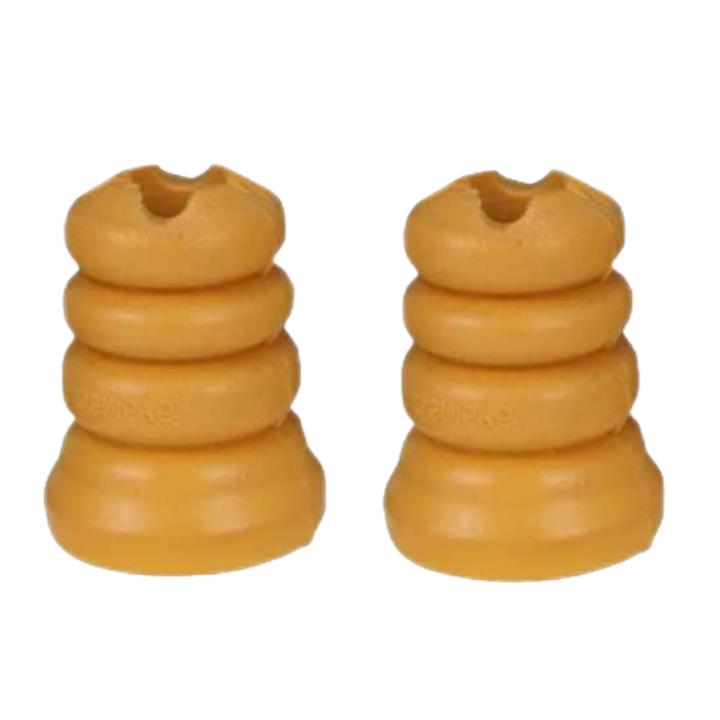
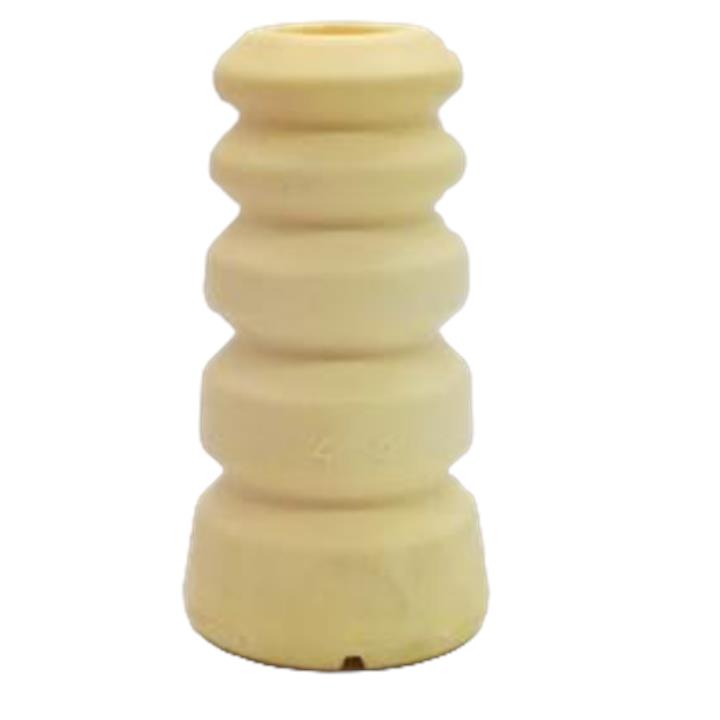
The strut bump stop referenced under OE number 191512131B is one of the most widely used suspension buffers in the classic Seat and Volkswagen range, and it is still in steady demand decades after the vehicles left the production line. This page describes the part as supplied by Bonpora (number 4110036), a China-based auto parts factory producing polyurethane bump stops as original-quality replacement parts for the independent aftermarket. It explains what the component does, the specification data buyers check first, the Seat and Volkswagen applications it is catalogued for, and what importers, wholesalers, and classic-car parts distributors should confirm before committing to an order.
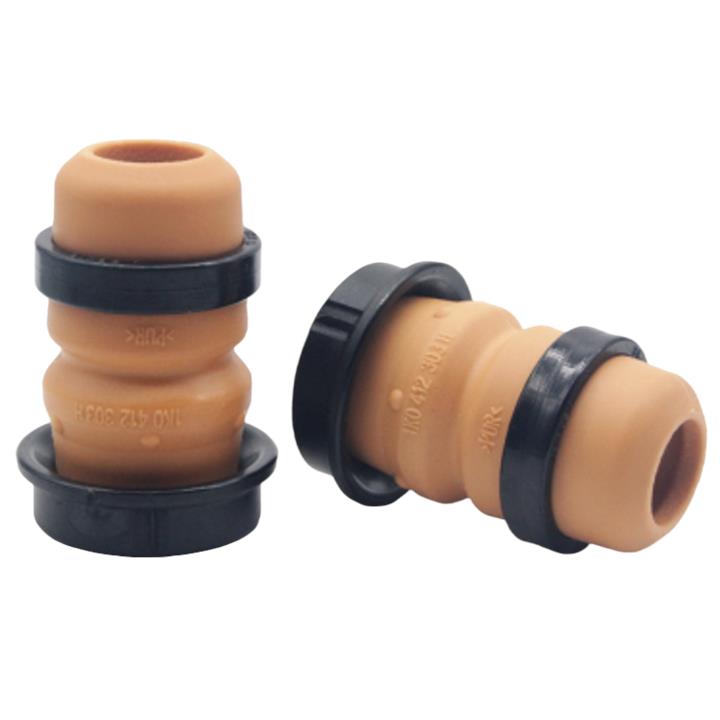
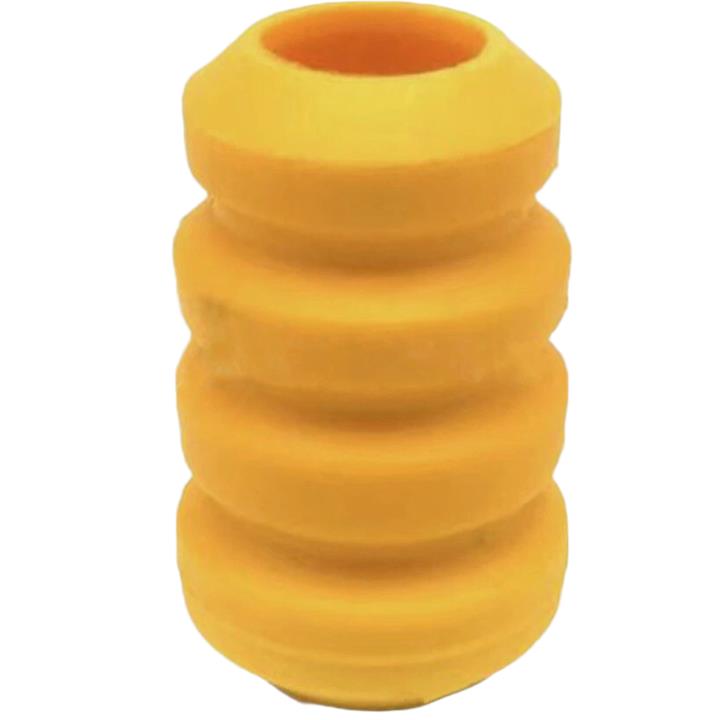
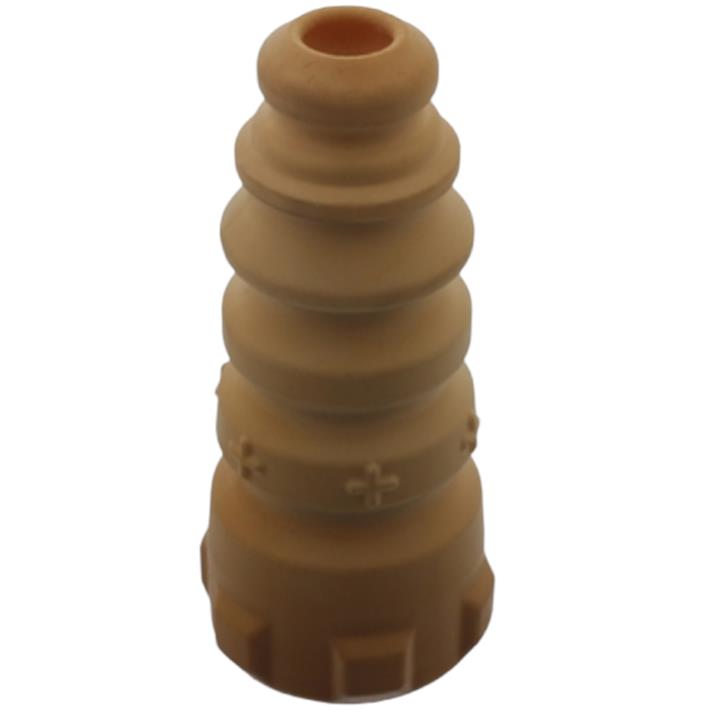
Also sold under the names jounce bumper, bump stopper, and suspension buffer, the part is a moulded elastomer sleeve that fits over the damper piston rod. During normal driving it hangs clear of the top mount. Under a hard compression event — a pothole, a speed bump, a fully loaded vehicle — it engages progressively and converts what would otherwise be a metal-to-metal impact into controlled resistance.
Elastomer parts age whether the car is driven or parked. Heat, ozone, road salt, and repeated compression cycles harden the material until it cracks and loses its progressive response. From that point the damper begins to bottom out and the damage spreads to the mount and the shock absorber. On vehicles of this age the original stops have usually hardened long ago, so the component belongs in every classic Volkswagen service job. For the wider suspension range, see our auto parts catalogue.
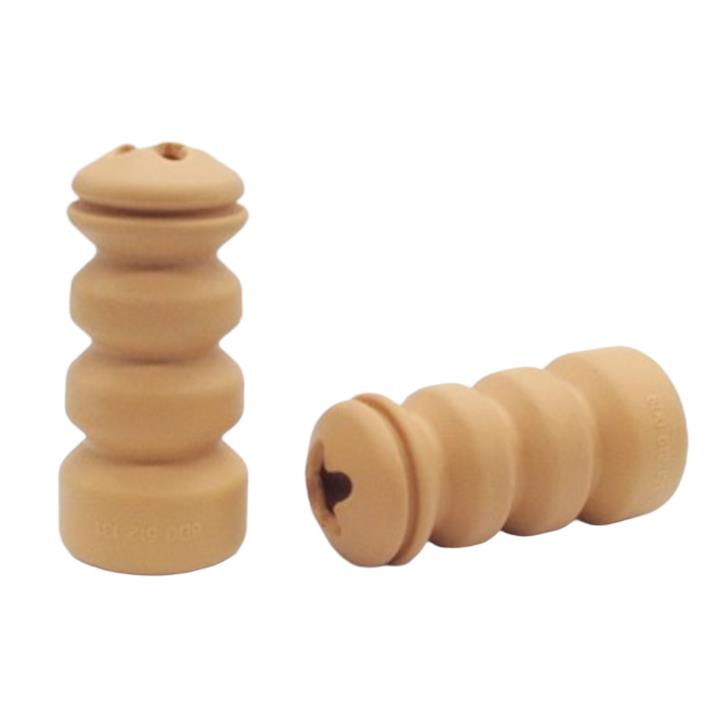
The item described here is a suspension bump stop for Seat and Volkswagen applications, produced in a dedicated auto parts factory in China and referenced under OE number 191512131B and Bonpora number 4110036. The table below lists the data buyers normally request before asking for a quotation.
| Parameter | Value |
|---|---|
| Product name | Strut Bump Stop |
| OE number | 191512131B |
| Bonpora no. | 4110036 |
| Fitment | Seat / Volkswagen |
| Dimensions | Φ10.5 x Φ54.2 x 145.5 mm |
| Material | Polyurethane |
| Country of origin | China |
| Warranty | 1 year |
| Delivery time | 15–30 days |
| Packaging | Neutral export packaging |
| Custom service | OEM & custom design support |
Φ10.5 mm is the inner bore that slides over the damper rod, Φ54.2 mm is the outer diameter of the elastomer body, and 145.5 mm is the free length. The bore decides whether the part can be assembled at all; the free length decides where in the stroke it starts to work. The roughly 146 mm free length and 54 mm outer diameter match the dimensions published for the same reference by major European aftermarket brands, which is a useful cross-check when comparing quotations. A longer stop engages early and makes the ride firm, while a shorter one engages too late and lets the suspension knock, so compare all three values against the part removed from the vehicle before approving any substitution.
Polyurethane suits this duty cycle well. Compared with conventional rubber it resists tearing and oil exposure better, holds its mechanical properties across a wider temperature range, and can be moulded to a controlled hardness so the compression curve stays progressive rather than abrupt. The material also matters for vehicles that stand still for months at a time, because parked elastomer is attacked by ozone and goes brittle first at the surface. A stable polyurethane grade keeps the stop serviceable through seasonal use, which is exactly the pattern of classic and weekend vehicles in this segment.
In Volkswagen part numbering, 512 131 identifies a suspension bump stop, and the 191 prefix places the reference in the Golf Mk2 era. Aftermarket catalogues list OE 191512131B across the Golf Mk2 (1984–1992), the Golf Mk3 and Mk3 Cabriolet (1992–2002), the Jetta II and Vento, and the Corrado (1989–1995), with several catalogues extending the reference to the Seat Toledo I. Most European listings place the part on the rear axle, one per side over the rear shock absorber rod, and note that two are required per vehicle. The supplier catalogue name is strut bump stop, a naming overlap that is common in this category, so axle position should always be taken from the catalogue entry and confirmed against the removed part. The OE reference itself is recorded as discontinued without replacement by the vehicle maker in several markets, which is why consistent aftermarket supply matters for keeping these vehicles serviced.
Demand behind this reference comes from two buyer groups: classic Volkswagen specialists who need the vehicle to stay authentic in dimensions and behaviour, and general wholesalers covering the independent aftermarket in regions where Golf Mk2, Mk3, Jetta, and Corrado vehicles still run in daily service. Both are served from the same tooling and quality system, which is what makes factory-direct supply attractive in this category.
An original-quality replacement reproduces the reference part where it counts: the same bore and free length, an equivalent material grade and hardness, and a compression curve close to the OE component. It does not carry the vehicle maker brand name, and it should not be presented as such — it is a replacement part manufactured to the original specification. For buyers servicing classic vehicles this is the practical route once the OE reference is no longer available from the vehicle maker network.
Buying directly from the producing factory removes trading layers, which shows up in quotation stability at volume and in the ability to answer technical questions quickly: Shore hardness values, cure process, and dimensional inspection reports. It also makes private-label packaging and carton marking straightforward, which matters to distributors building their own suspension range under their own brand. If you are comparing suppliers, our auto parts sourcing team can review drawings, samples, and cross-reference lists alongside catalogue items.
Bump stops are a low-unit-value, high-turnover line that supports higher-margin suspension sales. Sourcing them well is mostly about batch consistency and documentation rather than the lowest quotation on the first order.
A factory with OEM and custom design capability can produce stops to a customer drawing or sample, including non-standard bore sizes, alternative hardness grades, and application-specific profiles. This suits distributors building a private-label range as well as specialists servicing vehicles with modified ride heights, a common step on lowered Golf and Corrado builds. Send the drawing together with the target annual volume so the quotation reflects tooling, material, and order size realistically.
For catalogue items held in stock, 15–30 days covers production and export preparation. Wholesale orders are packed in neutral export packaging by default, ready for relabelling or private-label cartons on request. New tooling adds development time, so plan the first order of a private-label line well ahead of the selling season, and confirm the shipping method and destination port when requesting the quotation.
A worn bump stop is often discovered during damper replacement, but it can also be diagnosed from the driver seat before the car goes on the lift.
On the catalogued applications the stop sits on the rear axle, one per side, two per vehicle. Bump stops are normally replaced together with the related dust caps, since all share the same access procedure and a similar service life, and the work is naturally done while the rear dampers are off. Replace both sides of the axle at the same time, support the suspension correctly before releasing fasteners, and torque the components with the vehicle at normal ride height. Compare the old elastomer part against the new item before installation to confirm that bore, diameter, and free length match the application.
Aftermarket catalogues list the reference for the Golf Mk2, Golf Mk3 and Mk3 Cabriolet, Jetta II, Vento, and Corrado, with several catalogues extending it to the Seat Toledo I, generally on the rear axle. Because running changes and regional naming vary, confirm the application with the vehicle identification number or the OE number on the removed part before ordering, and ask the factory for a written cross-reference list covering the models you service.
A replacement manufactured to the original specification — matching bore, free length, material grade, and hardness — performs the same function as the OE part. Ask the factory for dimensional inspection data and material details so the comparison is documented rather than assumed.
Minimum order quantities depend on whether the item is a stocked catalogue reference or a custom moulding. Stocked references ship in wholesale quantities from current stock; private-label or custom profiles are quoted against tooling and an annual volume agreed with the factory. Send the target models and annual quantity to receive terms that match your programme.
Quoted delivery is 15–30 days for stock-referenced items, with neutral export packaging prepared for sea or air freight. Confirm the shipping method and destination port when requesting the quotation so the terms match your planning.
If you are sourcing strut bump stops for Seat and Volkswagen applications in wholesale quantities, or planning a private-label suspension programme under your own brand, send the OE number, target models, and annual volume. The factory can confirm availability, provide dimensional and material data, and quote on neutral export packaging or private-label terms.