sales@bonporaparts.com
0086-10-64988621
English
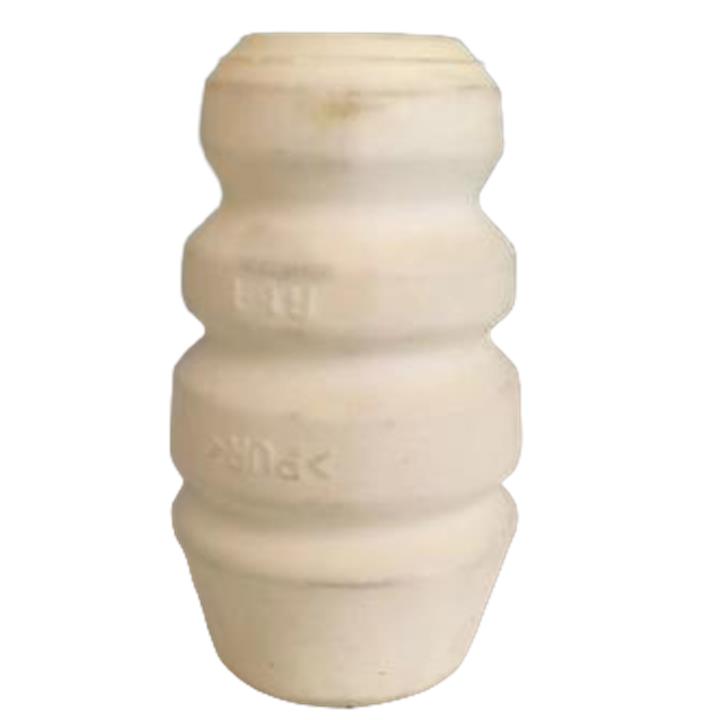
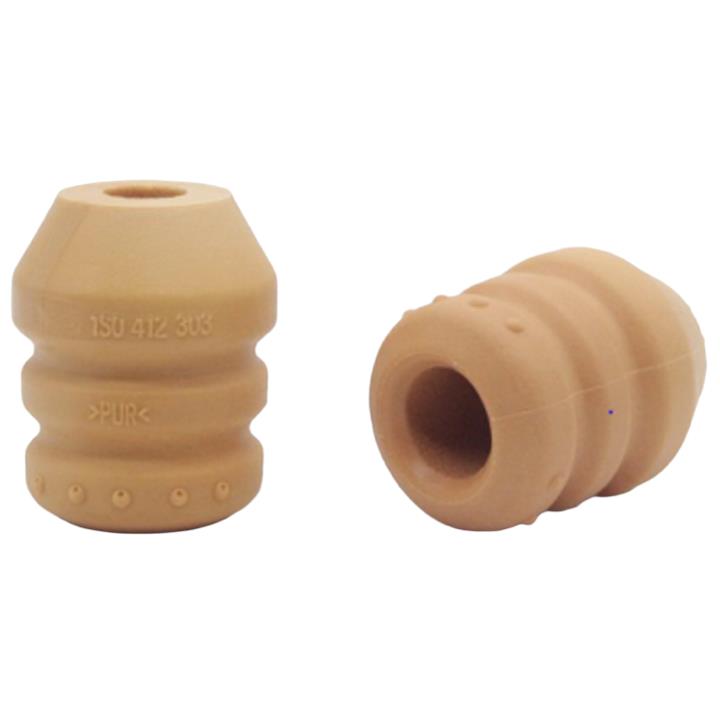
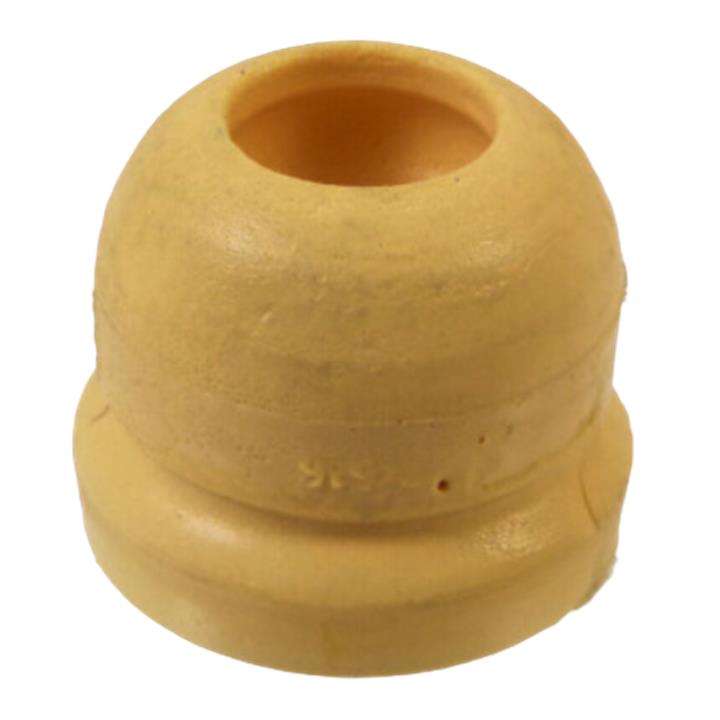
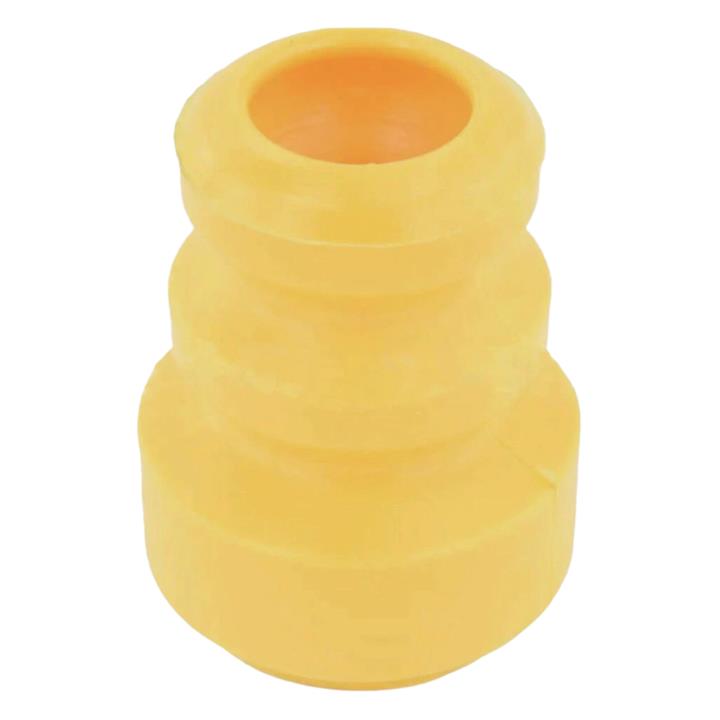
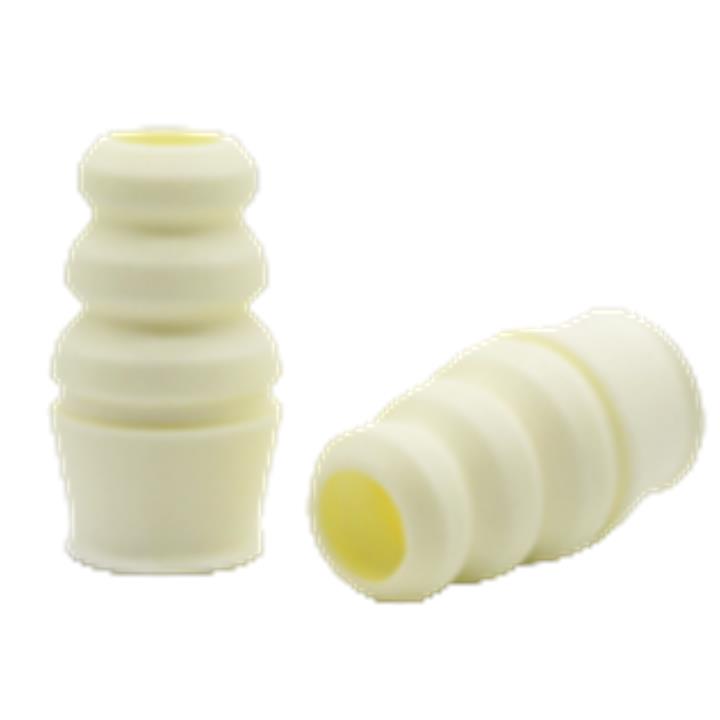
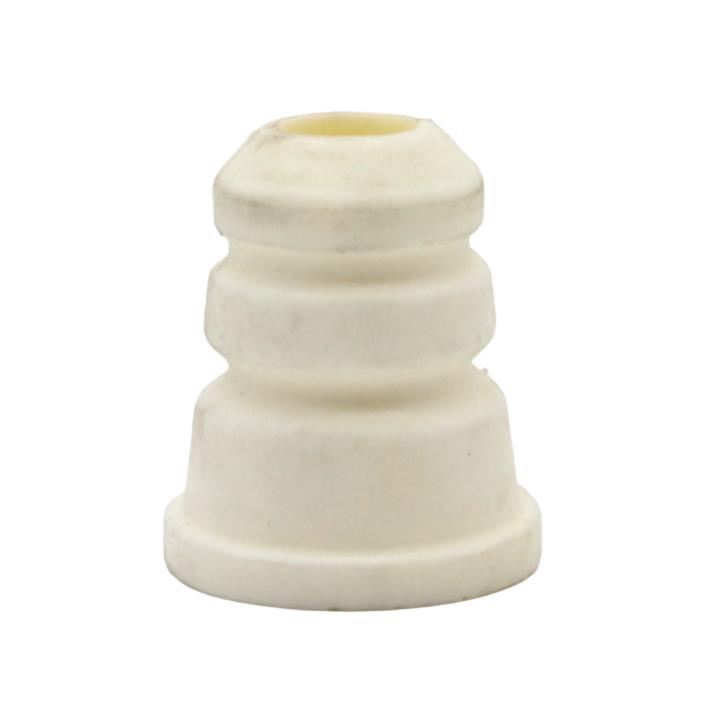
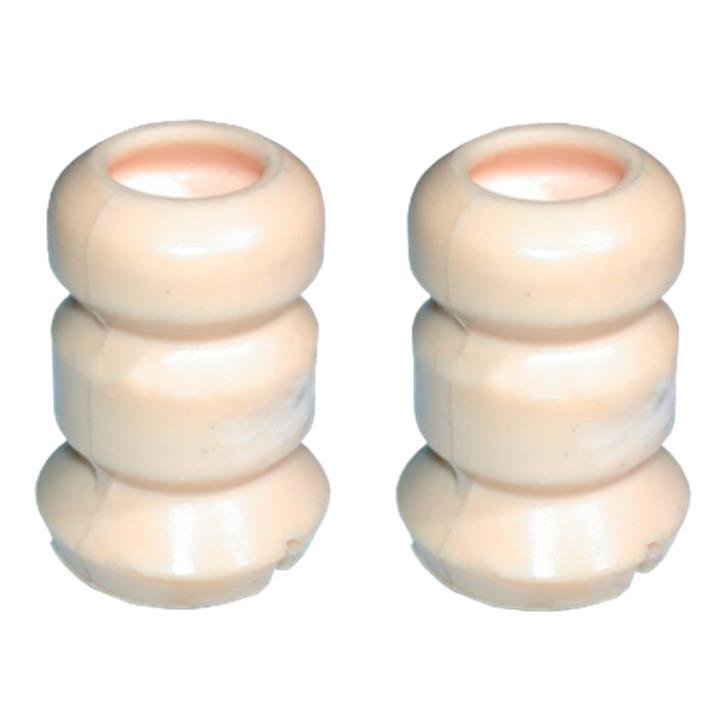
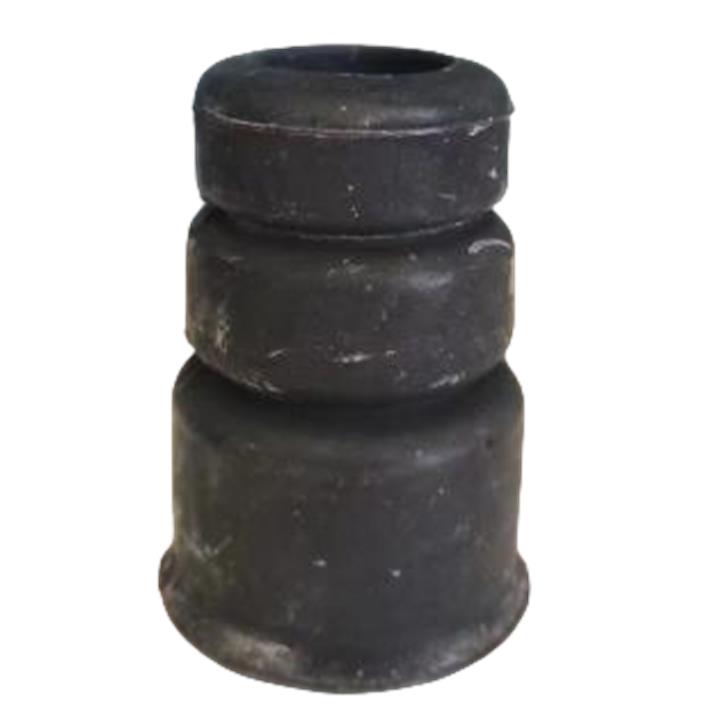
The OE 48331-12210 is the front coil spring bumper fitted over the piston rod of the front strut on Japan-built Toyota Corolla sedans and on early Scion tC coupes. Toyota dealer catalogs list it as Bumper, Front Spring, with Suspension Strut Bumper and Coil Spring Damper recorded as alternate names. Bonpora molds this profile as part number 4110042 in micro-cellular polyurethane, with a 19 mm bore, a 54.5 mm outer diameter and an 89.8 mm free height. The part is produced in China, covered by a 1 year warranty, shipped in neutral export packaging within 15 to 30 days, and supported with OEM and custom design service for distributors. Catalogs in different markets also file it under the descriptions jounce bumper and bumper stopper.
| Item | Detail |
|---|---|
| Part description | Front spring bumper (suspension strut bumper) |
| OE number | 48331-12210, one number for RH and LH |
| Bonpora part number | 4110042 |
| Bore | 19 mm |
| Outer diameter | 54.5 mm |
| Free height | 89.8 mm |
| Material | Polyurethane |
| Country of origin | China |
| Warranty | 1 year |
| Delivery time | 15-30 days |
| Packaging | Neutral export packaging |
| Custom service | OEM and custom design support |
Note: catalogs from different brands measure the bore at different sections of the tapered column, which is why some listings quote a larger inner diameter. Confirm by sample or drawing when the numbers look close.
The bumper slides onto the shock absorber rod inside the front strut assembly, sitting between the upper mount area and the dust tube collar above the coil spring seat. During normal travel the coil spring carries the load and the bumper hangs clear. When the suspension compresses to the end of its stroke, on a sharp pothole or under a heavy load, the bumper is crushed and takes the remaining travel before metal parts can meet.
A healthy bumper therefore works as a progressive end-of-stroke cushion. As the polyurethane compresses, resistance rises smoothly instead of stopping the travel abruptly. When the part hardens with age, collapses or crumbles, the strut reaches its internal limit directly. The driver notices sharp clunks over potholes and harshness at full compression, and in the longer term the strut rod seal wears faster. The same cushioning role continues through the life of the vehicle, which is why the bumper appears in the front spring and shock absorber illustration of every Corolla parts diagram.
Genuine Toyota and Scion dealer catalogs agree on the core applications for 48331-12210: the front axle of the Corolla sedans sold in the United States between 2003 and 2013, and the Scion tC coupe at the start of its production run. Toyota electronic parts catalog records tag these applications as Japan built, with the tC noted to 02/2006 production. Each side of the car uses one piece, and the same number covers both the right and the left strut.
| Vehicle | Chassis code and window | Engine | Position |
|---|---|---|---|
| Toyota Corolla, Japan built | ZZE130, 04/2002 to 05/2004 | 1ZZ-FE 1.8 L | Front axle, one per side |
| Toyota Corolla, Japan built | ZRE142, 12/2007 to 08/2013 | 2ZR-FE 1.8 L; 2AZ-FE 2.4 L on S and XRS 2009-2010 | Front axle, one per side |
| Scion tC | ANT10, 2005 model year to 02/2006 production | 2AZ-FE 2.4 L | Front axle, one per side |
Trade catalogs often compress this into a single line reading Toyota Corolla 2004-2013. The electronic parts data behind that line is more precise: within the E120 generation the Japan-built supply window closes in mid 2004, and within the E140 generation it opens in December 2007. Vehicles assembled in North America in the intervening years are not listed under this number in the Toyota EPC. When the build plant is unclear, match the old part or the VIN rather than the model year alone.
Beyond the North American listings, aftermarket catalogs such as FEBEST extend 48331-12210 across the global Corolla E120 and E140 families. Their charts cover the Corolla Sedan and Wagon built in Japan for European and general export markets, the Fielder, Runx and Allex estates and hatchbacks, the Spacio compact MPV, the Will VS, the Caldina wagons, the first Corolla Verso, and the Corolla Altis ranges sold across Asia, India and China.
Coverage claims in aftermarket charts are wider than the fitment records of any single Toyota market. They are best read as search guidance, not as a guarantee. The FEBEST chart even lists the E170 Corolla Altis generation from late 2013, which shows how far one profile travels in trade data and how important number-based verification remains. Distributors serving mixed markets should treat the OE number on the removed part, or an EPC lookup by chassis code, as the deciding reference before quoting 48331-12210 for a specific vehicle.
The Corolla and tC numbers around 48331-12210 form a clear sequence, and quoting the wrong one is the most common sourcing error in this family. The table below places the subject number next to its closest neighbours, with the relationship spelled out.
| OE number | Application | Relation to 48331-12210 |
|---|---|---|
| 48331-12210 | Corolla ZZE130 and ZRE142, Japan built; Scion tC to 02/2006 | Subject of this page |
| 48331-68010 | Scion tC 2006 to 2010 | Follow-on tC bumper after the February 2006 split |
| 48331-21030 | Scion tC 2011 to 2016 | Second-generation tC bumper; supersedes 48331-75010 |
| 48331-12120B | Earlier Corolla-family sedans of the E100 era | Previous-generation sibling in the same number series |
One rule keeps the series readable. Numbers beginning 48331 are front spring bumpers, while numbers beginning 48341 are their rear-axle counterparts, as in the rear bumper 48341-32052 used on the Camry and ES300. A single changed digit moves the buyer from the front of the car to the rear, so part numbers should always be copied in full, including suffix letters such as the B in 48331-12120B.
Front bump stops rarely fail without warning. Typical signs reported by workshops include a hollow knocking from the front suspension over sharp bumps, a harsh final thud when the strut reaches full compression, and visible powder or fragments of aged foam collected inside the dust boot during servicing. A bumper that has taken a permanent set can often be spotted by eye: the once-tapered column looks squashed, split or shorter than the replacement.
Inspection is straightforward because the part sits under the dust cover on the strut rod. With the spring unloaded on a strut spring compressor, the dust tube slides back to expose the bumper. Since the part is inexpensive relative to the strut it protects, many distributors now stock it as a routine wear item alongside mounts and boots for high-mileage Corolla fleets.
One car uses two bumpers, one on each front strut, and the same number serves both sides. Catalogs list the quantity per vehicle as two, and replacing the pair keeps the two struts responding identically at full compression. Workshops normally fit new bumpers whenever a strut is replaced, since the old foam has already taken a set.
Handle the polyurethane column dry and clean, slide it fully onto the rod, and confirm that the dust tube seats over it without pinching. A light silicone-based lubricant on the rod helps the column slide without twisting the foam. The bumper itself needs no fasteners, and no special tools beyond a spring compressor are required for this step.
The original Toyota part is a foam column, and most aftermarket suppliers offer it in conventional rubber or in micro-cellular polyurethane. Both materials cushion the same stroke, but they age differently. The comparison below summarizes the practical differences that distributors weigh when deciding what to stock for this application, alongside the rest of the polyurethane bump stop program.
| Property | Polyurethane bumper | Conventional rubber bumper |
|---|---|---|
| Compression behavior | Progressive and stable through repeated strokes | Softens and takes a set sooner |
| Ageing and ozone | Resists cracking and powdering | Prone to surface cracks over time |
| Dimensional consistency | Molded to tight bore and height tolerances | More variation between batches |
| Cost position | Competitive at export volumes | Lower unit cost on short runs |
Aftermarket suppliers index 48331-12210 under their own reference codes, and brand codes differ between regions, with some suppliers listing more than one code for the same molding. The following numbers appear repeatedly in European and Asian trade listings, and quoting them alongside the OE number widens the range of offers a buyer can compare.
| Brand | Reference |
|---|---|
| FEBEST | TD-120F |
| KYB | 910283 |
| GSP | 517226 |
| RBI | T14ZE121F |
| FARE SA | 28159 |
| Metalcaucho | 56064 |
| NTY | AB-TY-019 |
| Optimal | AK-735296 |
| Original Imperium | 48642 |
| STC | T456064 |
| TEDGUM | 00671155 |
Procurement teams find this profile through several standard search routes. The routes below mirror the queries that importers actually type into search engines and B2B platforms, and each leads to the same Bonpora catalog entry.
Buyers who lack the OE number search terms such as front spring bumper 19 x 54.5 x 89.8 or strut bump stop 89.8 mm height for Toyota compacts. Keep the bore, outer diameter and free height in the query, since those three dimensions identify the profile faster than any model list.
The fastest route remains the number itself: 48331-12210, its no-space variant 4833112210, or a cross reference such as FEBEST TD-120F and KYB 910283. Supplier catalogs index all of these spellings, so a single quote request should list the OE number and the cross codes together.
Model-based searches such as Corolla ZZE130 front bump stop, Corolla Axio front spring bumper or Scion tC 2AZ-FE jounce bumper bring up the same family. Always confirm the hit against the chassis code and production window, because several Corolla generations share engines and body styles but not this part.
Bonpora also molds bump stops to sample or drawing under its custom polyurethane parts service. Typical requests cover a changed bore for a tuning application, a different free height for a lowered suspension, or private-label packaging for a national distributor. Tooling quotes normally follow drawings that state the three key dimensions and the target hardness.
Two. Each front strut carries one bumper, the same number serves both the right and the left side, and the pair should be replaced together so both struts reach their end stop with equal resistance.
Not automatically. Dealer catalogs list the number across those model years, but the Toyota EPC tags the underlying applications as Japan built, with the E120 window closing in mid 2004 and the E140 window opening in December 2007. Confirm the build plant or match the removed part before ordering.
Where the seating dimensions match, yes. The polyurethane column uses the same bore, outer diameter and free height as the catalog profile, and it engages the same stop. Buyers should compare a worn sample against the drawing values rather than expecting aged rubber to measure like new stock.
The production date. Toyota records 48331-12210 for tC units built to February 2006 and 48331-68010 for later first-generation cars. The two columns differ in profile, so the model year alone does not decide the part; the build date or the old number does.
Bonpora supplies the 48331-12210 front spring bumper as part number 4110042, together with the wider shock absorber parts range and the chassis and suspension components catalog. Request a quotation with the OE number, the required quantity and the destination port, and the export team will confirm a delivery schedule of 15 to 30 days with neutral export packing.