sales@bonporaparts.com
0086-10-64988621
English
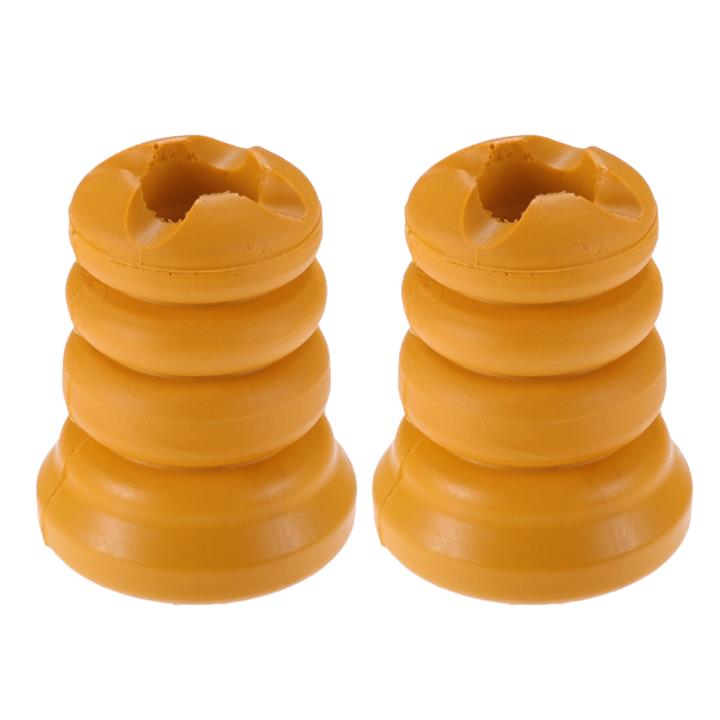
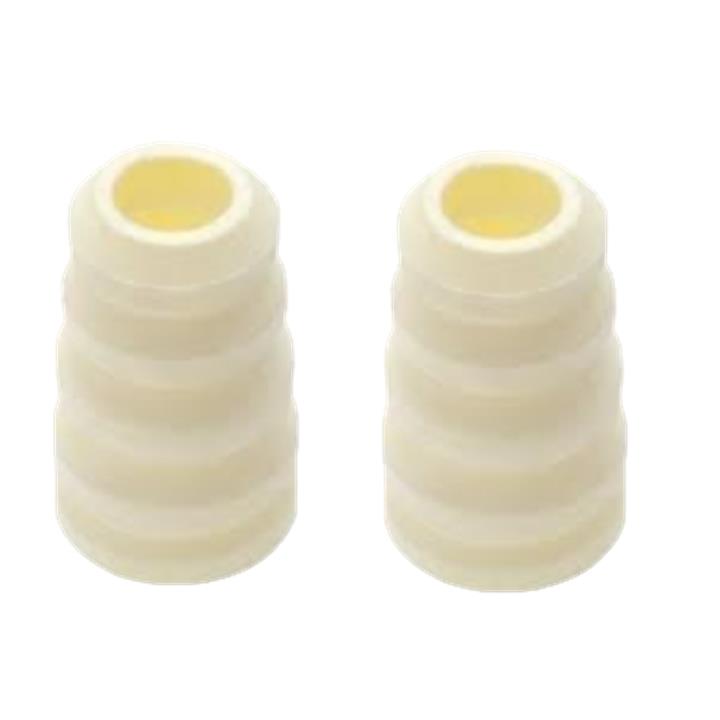
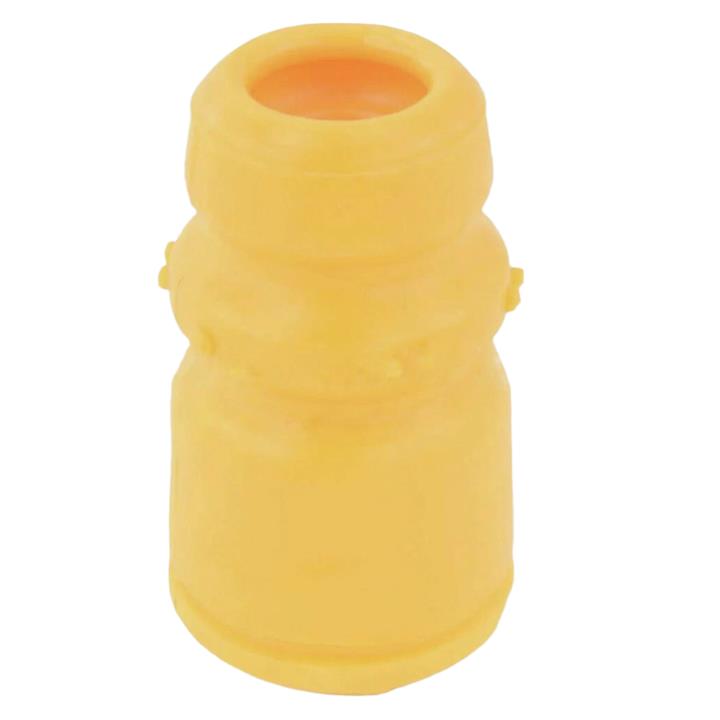
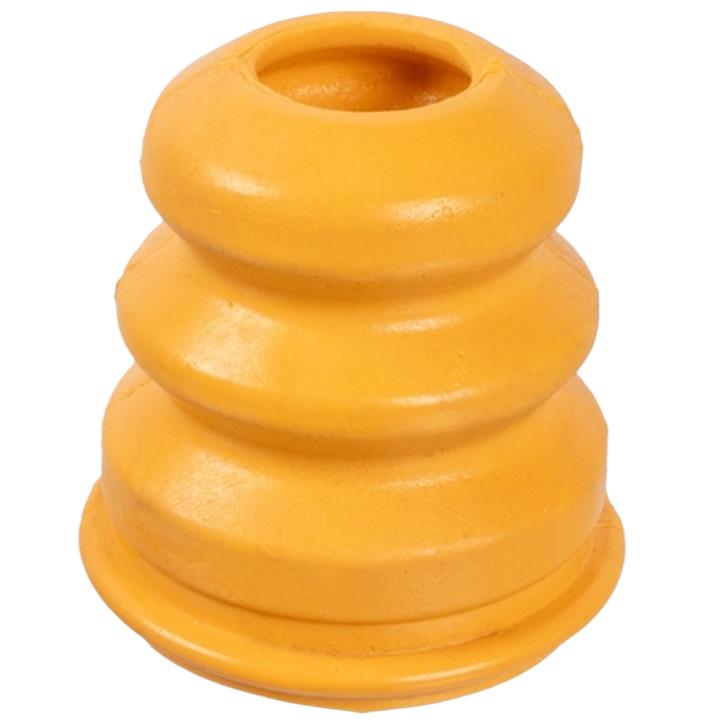
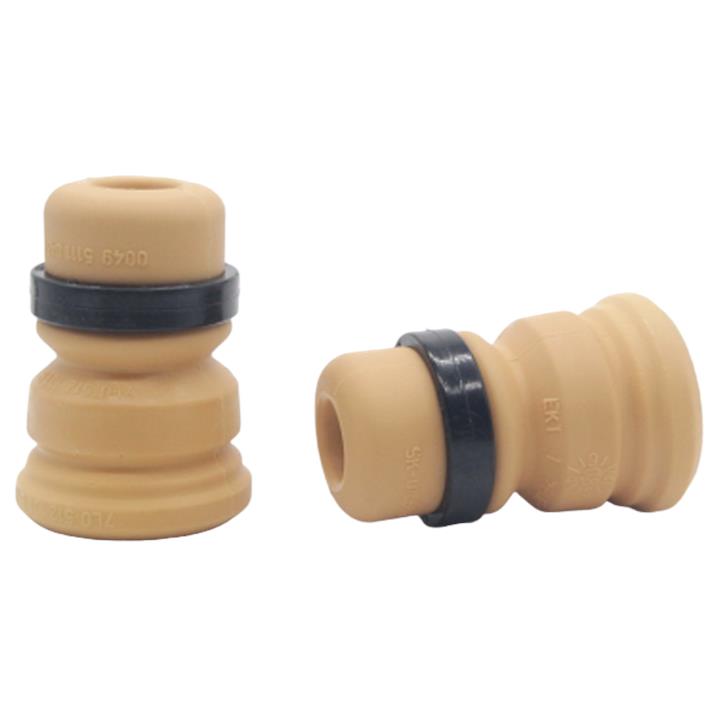
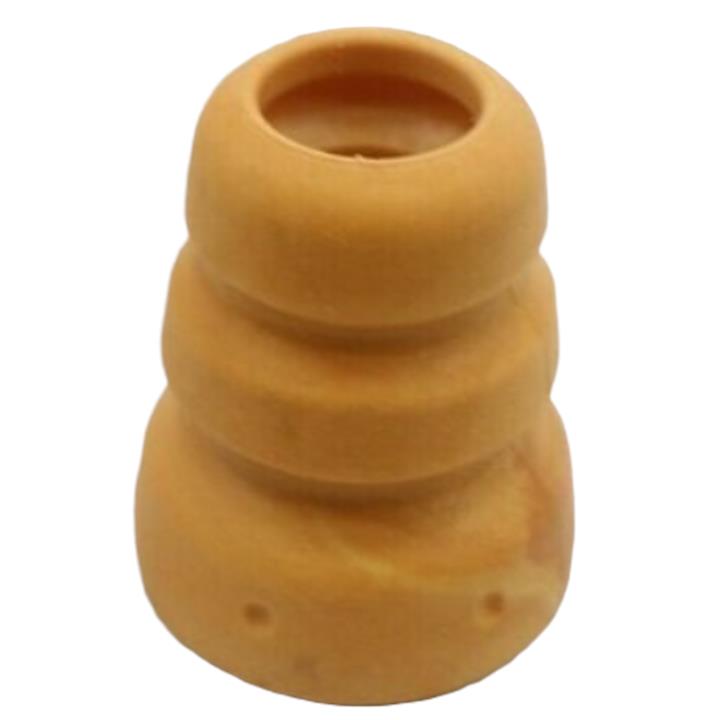
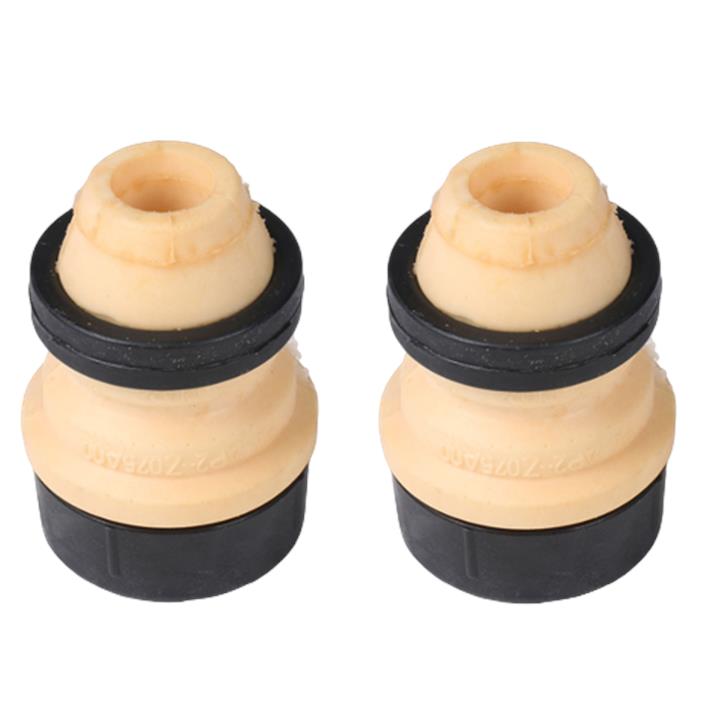
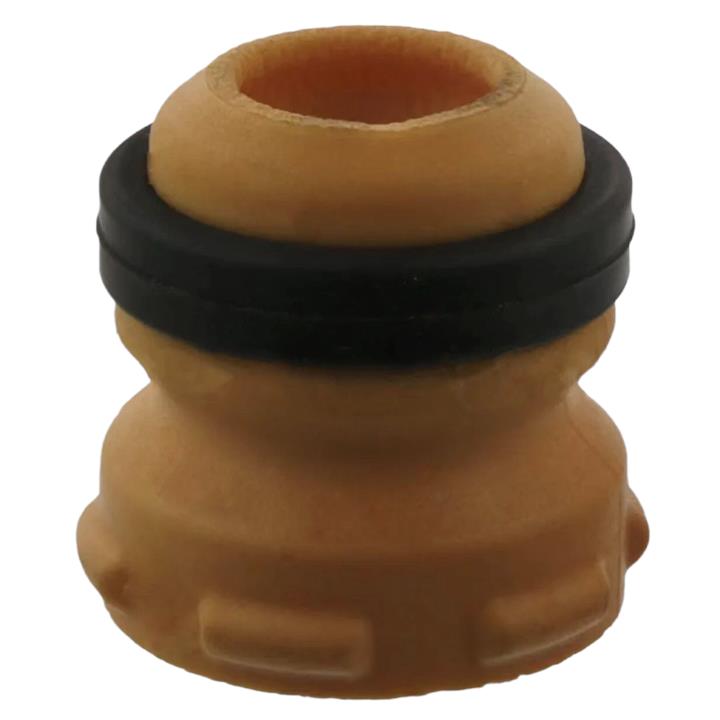
If you are sourcing a front spring bumper for Toyota Alphard, Vellfire, Estima or Previa, the reference that keeps appearing on wholesale enquiry sheets is 48331-28050. It is a small polyurethane component that sits on the front strut rod, carrying the load of the coil spring at full rebound. Buyers searching for it usually arrive with one of three things: a used part number, a chassis code such as ANH20 or GSR50, or a photo of a perished rubber block. This page explains what the number covers, which vehicles it serves, how it differs from neighbouring references, and what to check before placing a container order.
Bonpora Parts supplies this reference as Bonpora No 4110074, moulded in polyurethane to the original profile and measured at Φ20.67 × Φ56.5 × 96.9 mm. It is produced in China and shipped under neutral export packaging with a 1-year warranty, with a normal production lead time of 15–30 days depending on quantity and whether the moulding runs on a standard or customer-specific drawing.
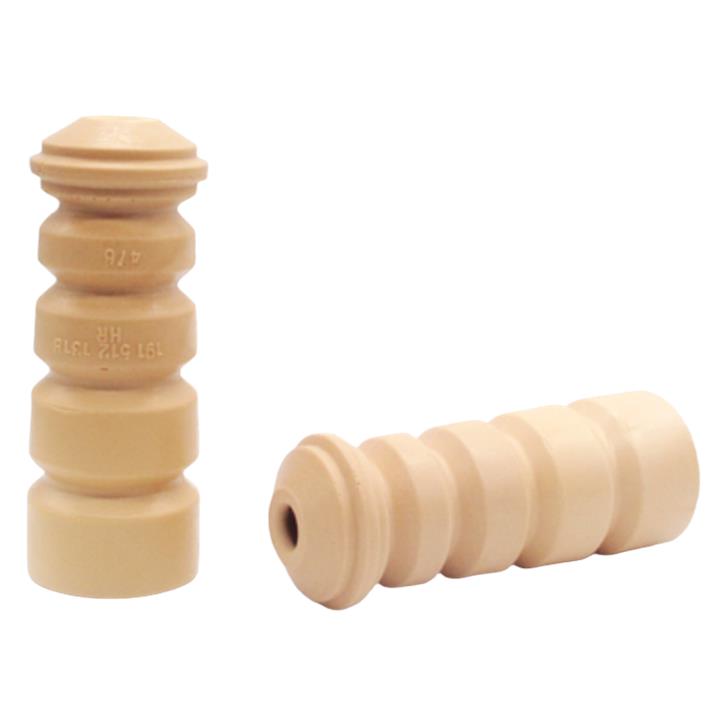
In the Toyota numbering system, the five-digit prefix 48331 identifies a front spring bumper — the rebound buffer that sits inside the front strut assembly. The rear equivalent is 48341, and the two differ by a single digit. That one digit is a frequent source of mis-ordered stock, because the rear bumper for the same vehicle family is a genuinely different shape and does not fit the front strut.
Mechanically, the bumper has a simple job. When the front suspension extends fully — over a speed bump, a pothole edge or a kerb ramp — the coil spring is unloaded and the strut rod travels to the end of its stroke. The bumper absorbs that final movement so the shock absorber never bottoms out internally. On a loaded MPV running near gross vehicle weight, this buffer works noticeably harder than it would on a light sedan.
Because it is a progressive-rate component rather than a simple spacer, its material behaviour matters. Original parts are moulded in a rubber compound; this replacement is produced in polyurethane, which resists compression set and oil contamination better over repeated cycles. For fleet operators buying in volume, that difference is usually why they look beyond the dealer part. The block is not structural and does not affect alignment, but it does influence ride quality and noise: when it collapses, the strut reaches its internal limit on every compression event, producing a hard knock that customers often misdiagnose as a failed shock absorber.
This reference belongs to the large front-wheel-drive Toyota MPV family built on the New MC platform. Coverage concentrates on Japanese domestic and export people-carrier lines rather than on Camry-class sedans.
| Model | Chassis / Platform Codes | Approximate Years | Engine Codes (representative) |
|---|---|---|---|
| Toyota Alphard / Vellfire (2nd gen) | ANH20, ANH25, ATH20, GGH20, GGH25 | 2008–2015 | 2AZ-FE, 2AZ-FXE, 2GR-FE |
| Toyota Alphard (later 2nd gen variants) | ACR50, ACR55, GSR50, GSR55 | 2008–2015 | 2AZ-FE, 2GR-FE |
| Toyota Estima / Previa III | ACR50, ACR55, GSR50, GSR55 | 2006–2019 | 2AZ-FE, 2GR-FE |
| Toyota Estima Hybrid / Alphard HV | AHR20, ATH20 | 2006–2018 | 2AZ-FXE |
| Toyota Previa (export) | AHR20, ACR50, GSR50 | 2006–2016 | 2AZ-FXE, 2GR-FE |
Two naming notes are worth keeping on the enquiry sheet. First, the same vehicle is sold as Alphard in most markets, Vellfire for the sportier trim, Estima in Japan and Previa or Tarago in export markets — a buyer asking for a Previa front bumper and one asking for an Estima front bumper may well be after the same component. Second, hybrid variants use the same buffer even though the chassis code carries the ATH or AHR prefix, because the front strut layout is unchanged.
If your enquiry is built around a chassis code rather than a part number, the platform codes above are the fastest way to confirm coverage. A VIN check remains the most reliable method, and we recommend confirming against the old part before releasing a bulk order.
Buyers sourcing this part generally follow one of the following routes. Each one works, but each has a failure mode worth knowing about.
The most direct path. If the workshop has the number from a previous invoice or from the old component, quote 48331-28050 and the match is unambiguous. Watch for formatting variations: some catalogues print 4833128050 without the dash, and others display it as 48331-2805 when the last character is truncated. Both refer to the same reference.
Common enquiries look like "front spring bumper ANH20" or "bump stop GSR50". This works well when the buyer does not have the number, but it can over-reach: the ACR50 and GSR50 codes also appear on other Toyota models, so a chassis-code search should always be cross-checked against the model name as well.
Long-tail queries such as "Toyota Alphard front shock absorber rubber buffer" or "Toyota Estima front coil spring damper" are common on English-language sourcing platforms. Our polyurethane bump stop range is organised so that these descriptive names map back to the correct reference.
Cross-reference lists are useful for finding a starting point but should never be treated as a fitment promise. A cross-reference tells you which numbers the aftermarket considers analogous; it does not tell you that the dimensions, hardness or strut-rod bore match. Verify against drawings or a sample before committing to a container.
For older or grey-import vehicles the safest route is to send us three measurements from the old part: bore diameter, outer diameter, and free length. For this reference the drawing values are Φ20.67 mm, Φ56.5 mm and 96.9 mm. Anyone quoting a different free length is likely describing a different member of the same family.
The 48331-280xx group is closely packed, and confusion between members is the single most common cause of wrong stock arriving at a workshop. The table below sets out the practical differences.
| Reference | Typical Application | Notes for Buyers |
|---|---|---|
| 48331-28050 (this part) | Alphard / Vellfire ANH20, ATH20, GGH20; Estima / Previa ACR50, GSR50, AHR20 | Front strut position; one number serves both sides |
| 48331-28060 | Listed by several catalogues as a matching number for the same application | Treat as a cross-reference lead; confirm against drawing before ordering |
| 48331-28040 | Alphard H1 (ANH10, ANH15, MNH10); Estima ACR30 / ACR40; Previa II | Previous generation. Different profile — not an upgrade or replacement for the 28050 |
| 48331-28090 | Other Toyota applications in the same 280xx group | Listed with a different predecessor number; do not assume interchangeability |
| 48341-xxxxx | Rear spring bumper family | Different digit, different position, different shape |
Two conclusions follow. The first is that 28040 and 28050 are separate generations, not a supersession chain — the earlier Alphard H1 uses a different buffer profile from the H2 generation. If a supplier offers to substitute one for the other, ask for dimensions rather than accepting the swap. The second is that the rear spring bumper group, identified by the prefix 48341, is a different shape and must be ordered against its own reference.
For buyers who need both positions in one shipment, our chassis and suspension components section covers front and rear buffers together, which simplifies consolidation.
Replacement buffers for this application are produced in two material families, and the choice affects how the part behaves over its service life.
| Property | Original-Type Rubber | Polyurethane (this part) |
|---|---|---|
| Compression set after long service | Tends to take a permanent set, reducing effective travel | Generally recovers better across repeated cycles |
| Resistance to oil and road chemicals | Softens with prolonged exposure to petroleum products | More tolerant of incidental oil and grease contact |
| Behaviour in low temperatures | Hardens, affecting the initial rate of compression | Retains more consistent flex behaviour when cold |
| Typical visible failure | Cracking, crumbling, splitting at the bore | Slow wear at the bore and outer diameter |
| Practical effect on the vehicle | Hard knock over bumps once collapsed | Extended service interval before replacement is due |
The honest summary is that polyurethane is not automatically superior in every respect — a very hard compound can transmit more road noise than the original would. The correct specification is one that matches the original rate closely enough that the vehicle character is unchanged while the service interval improves. If you are building a private-label programme, we can discuss compound options and hardness ranges rather than offering a single fixed formulation.
For workshops, a single-piece order is normal and there is no minimum quantity. For distributors and importers, this reference is normally bought in cartons, with moulding runs scheduled against confirmed quantities.
For buyers assembling a matched front-end kit, the front bumper is often ordered alongside the strut mount and dust boot, since all three are accessible in a single strip-down. Our custom parts and moulding service exists precisely for cases where the catalogue reference is unclear and the enquiry has to start from a drawing.
A short verification routine avoids the most expensive mistakes in this category.
Yes. Toyota lists this reference as a front spring bumper covering both sides, and the original catalogue description reads RH/LH. Some resellers list a left and a right version separately, which creates unnecessary complexity — for this reference one number covers both positions, so a full front-end service requires two pieces.
No. These are two different generations of Toyota MPV front spring bumper. 48331-28040 serves the earlier Alphard H1 and Estima ACR30-era vehicles, while 48331-28050 serves the H2-generation Alphard, Vellfire, Estima and Previa with ANH20, GGH20, ACR50 and GSR50 chassis codes. They differ in profile and should not be substituted.
Yes. The part is moulded rather than cut, so bore size, outer diameter, free length and compound hardness can all be adjusted to a customer drawing or a physical sample. This is the usual route for distributors who need a profile not covered by the standard catalogue reference. Send the drawing or the old part and we will confirm feasibility.
The most common indication is a hard knock from the front suspension over speed bumps and broken road surfaces, which customers frequently mistake for a worn shock absorber. On inspection the buffer typically shows cracking, crumbling or a split at the central bore. Because access requires stripping the front strut, most workshops replace the bumper and the strut mount at the same time.
If you are sourcing front spring bumpers for Toyota Alphard, Vellfire, Estima or Previa, send us the quantity you need, the destination market and — if you have it — a photo of the old part with the three key measurements. We will confirm the reference, the material option and the delivery schedule.
For buyers developing their own branded range, we also handle private-label cartons and dedicated moulding runs. Tell us whether you are buying for a workshop, a distribution network or an own-brand programme, and we will structure the quotation accordingly. Our broader shock absorber and strut components range covers the surrounding parts you will likely need in the same order.