sales@bonporaparts.com
0086-10-64988621
English
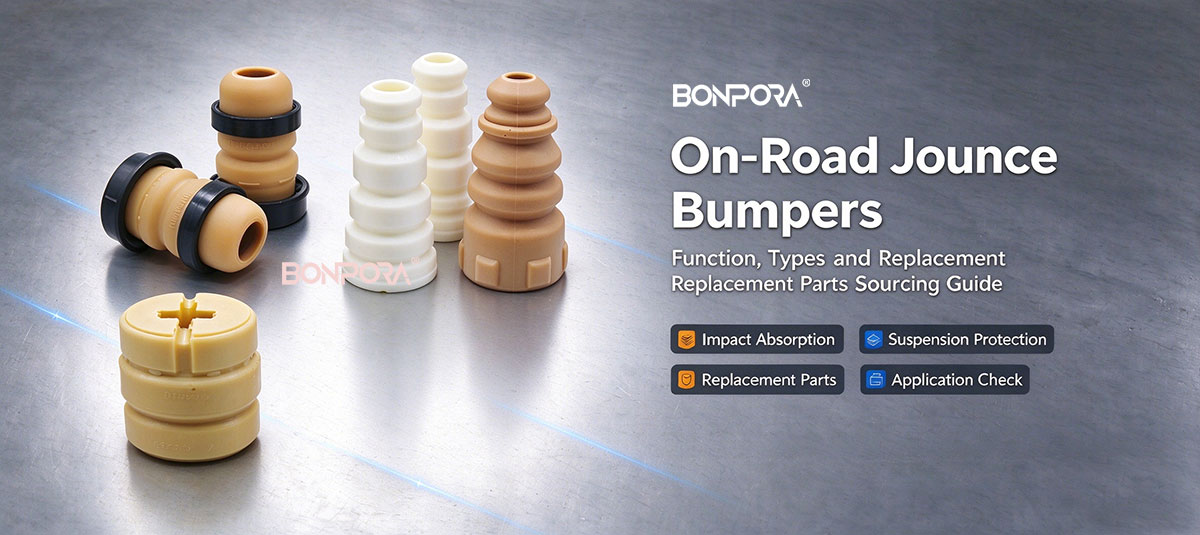
Global aftermarket buyers, repair suppliers and suspension part distributors searching for on-road jounce bumpers are usually looking for clear product information, vehicle application guidance, material durability, compatibility checking and stable replacement supply. Jounce bumpers play a practical role in suspension compression management and chassis protection.
This guide explains jounce bumpers in practical terms, without unsupported performance claims. It helps buyers understand function, common types, replacement criteria and how to evaluate compatible on-road jounce bumper parts.
An on-road jounce bumper is a suspension protection component designed to absorb energy when the suspension reaches near-bottom or full-compression positions. It is typically installed in the load path between the suspension and the vehicle structure.
Common terms for similar or related components include:
Jounce bumper
Bump stop
Compression bumper
Suspension stopper
Rubber buffer or rubber bumper
Actual naming varies by region, vehicle manufacturer and application.
The main functions of an on-road jounce bumper include:
Absorbing impact energy during severe compression
Protecting suspension components and chassis structure
Reducing shock load transferred to the vehicle body
Limiting excessive suspension travel in certain conditions
Providing progressive damping in the final compression stage
Jounce bumpers are not the same as coil springs or shock absorbers, but they work in the same suspension system to manage compression behavior.
On-road jounce bumpers can be grouped by material, shape and mounting method.
Rubber jounce bumpers are common in passenger vehicles and light commercial vehicles. They are often used where noise control, impact absorption and durability are required.
Some applications use foam or microcellular materials for progressive compression behavior. These can provide a soft initial contact and controlled stiffness increase.
Certain vehicles use hydraulic jounce bumpers or hydraulic bump stops. These are more complex and may provide additional damping during compression.
Common mounting methods include:
Bolt-on
Press-fit
Clip-on
Integrated with boots or seats
Replacement may be considered when one or more conditions are present:
Cracking, splitting or permanent deformation
Hardening, crumbling or material degradation
Missing or damaged mounting points
Abnormal noise during compression
Visible damage after impact or overload
Vehicle inspection or maintenance schedule requires replacement
These symptoms should be checked together with related suspension parts such as springs, shock absorbers, mounts and boots.
When selecting on-road jounce bumper replacement parts, buyers should evaluate:
Vehicle application and OE reference compatibility
Overall height, outer diameter and inner diameter
Mounting style and installation position
Material type and hardness
Operating temperature and environmental conditions
Compatibility with springs, boots and seats
Batch-to-batch consistency
Jounce bumpers are often confused with other components, but their roles are different.
| Component | Primary Role |
|---|---|
| Coil spring | Supports vehicle weight and controls suspension travel |
| Shock absorber | Controls spring oscillation and damping |
| Jounce bumper | Absorbs impact near full compression and protects components |
| Bushing | Provides flexible connection and vibration control |
| Boot | Protects rods and joints from contamination |
Bonpora supplies on-road jounce bumpers and related suspension protection parts for passenger vehicles and light commercial vehicles. Our product range includes jounce bumpers, bump stops, rubber buffers, mounting seats and related replacement components.
Buyers evaluating Bonpora may consider the following points:
Supply of on-road jounce bumpers and replacement suspension protection parts
Focus on material durability, dimensional accuracy and installation compatibility
Support for vehicle application checking and sample validation
Technical communication on material, mounting and operating conditions
Supply for aftermarket service and replacement programs
You can view our on-road product page here: https://www.bonporaparts.com/en/on-road/
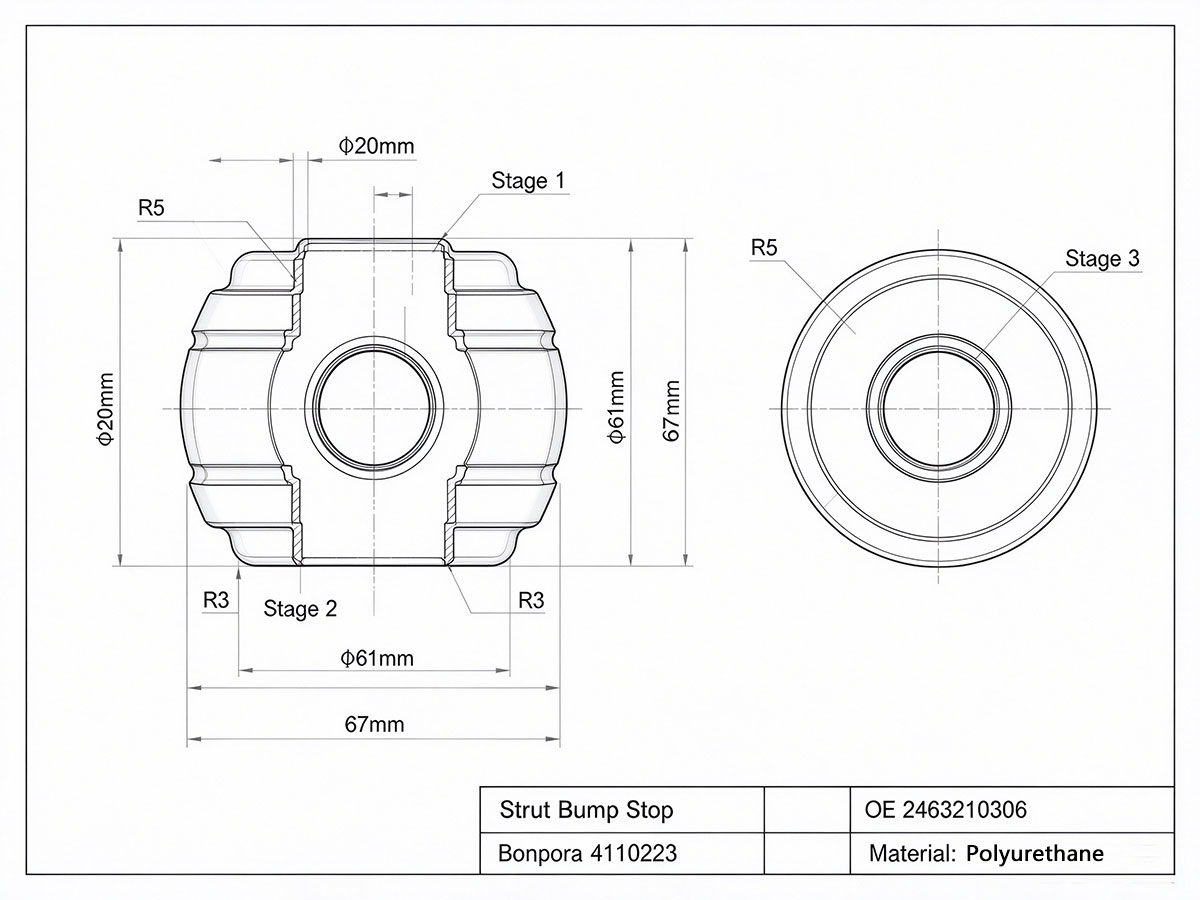
A: An on-road jounce bumper absorbs impact energy when the suspension approaches full compression, helps protect suspension components and reduces shock transfer to the vehicle body.
A: In many cases they refer to similar components. “Jounce bumper” and “bump stop” are often used interchangeably, but exact terminology depends on the vehicle manufacturer and market.
A: Common materials include natural or synthetic rubber, foam or microcellular materials, and in some cases hydraulic designs. Material choice depends on application, load, temperature and noise requirements.
A: Replacement should be considered when there is cracking, splitting, permanent deformation, hardening, crumbling, missing mounting points, abnormal noise or visible damage.
A: Select by vehicle application, OE reference, dimensions, mounting style, material, hardness and compatibility with surrounding parts. Sample validation is recommended before volume ordering.
A: No. Jounce bumpers are application-specific. Shape, dimensions, mounting method and material must match the vehicle and suspension design.
For technical inquiry, sample request or volume production discussion, please contact our sales team: sales@bonporaparts.com.
