sales@bonporaparts.com
0086-10-64988621
English
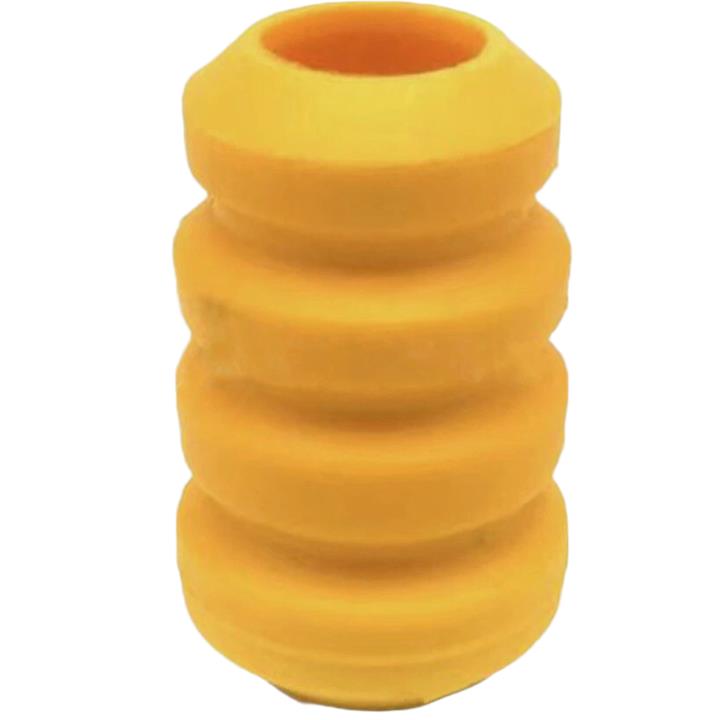
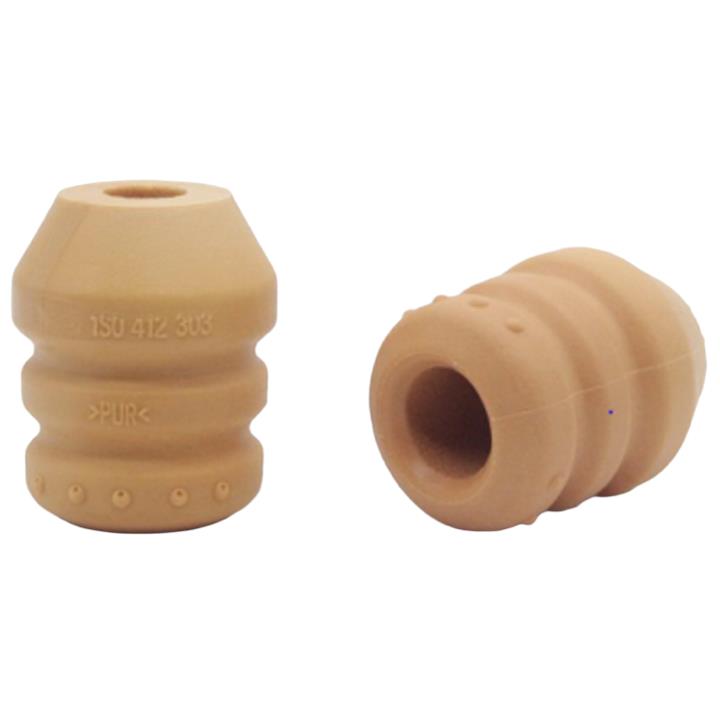
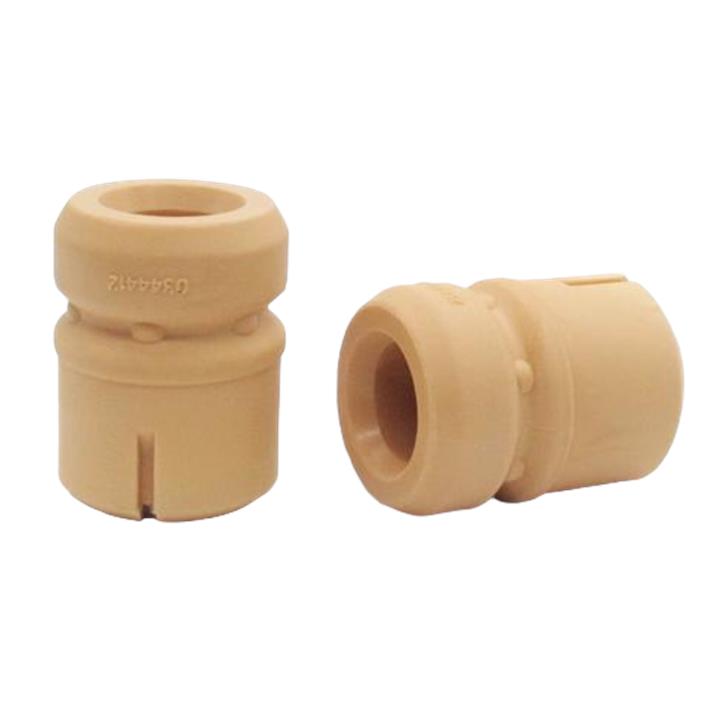
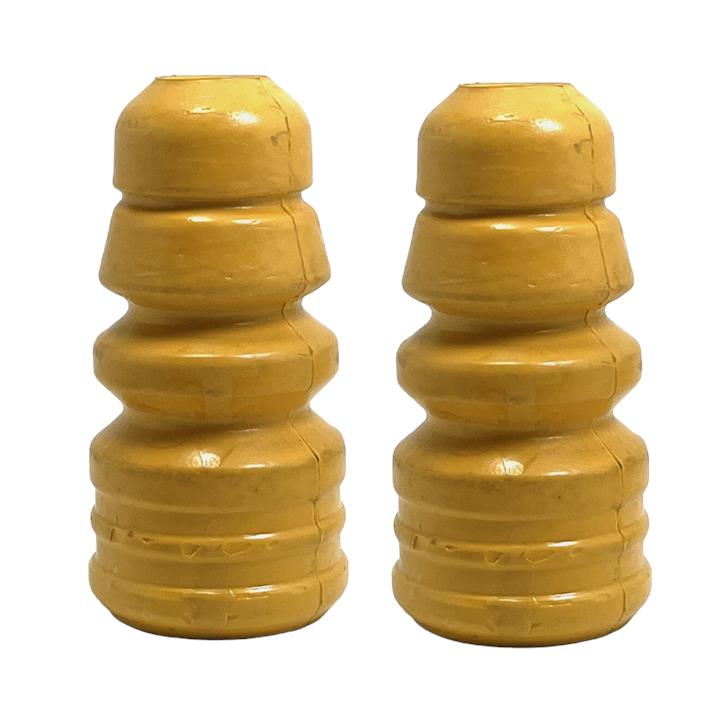
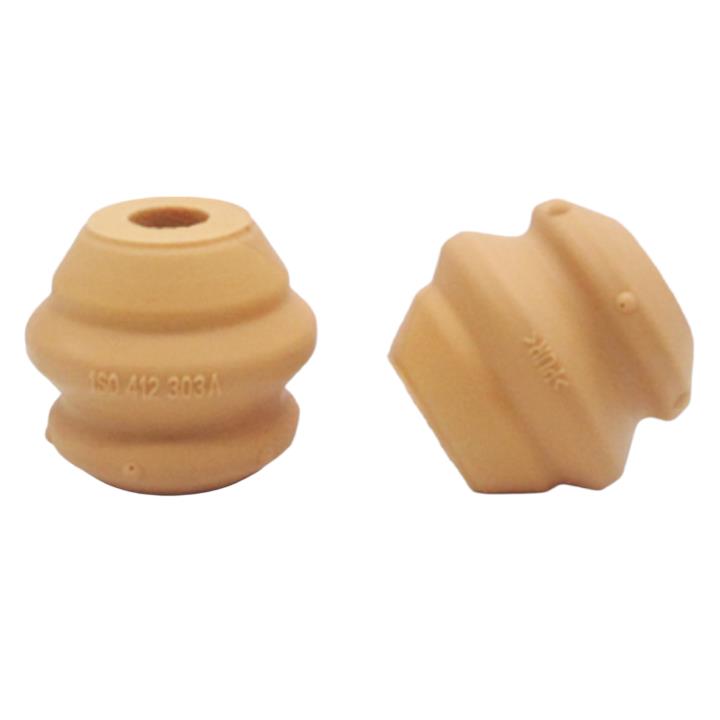
The OE 7L8412303 front bump stop is the rubber buffer that Audi fits to the front spring strut of the Q7 type 4L built from 2007 to 2015 on standard or comfort suspension. It sits on the damper rod inside the front coil spring and takes over at the end of suspension travel: when the strut compresses far enough, the buffer is squeezed and absorbs the final part of the stroke so the damper body cannot bottom out against the mount. This page presents Bonpora No. 4110178, a reinforced polyurethane replacement produced in China for wholesale distribution, matching the Audi reference 7L8 412 303, also written 7L8-412-303 or 7L8412303, with a 78 mm height and the size listing Φ20 x Φ61 x 78.8 mm. The sections below explain where the buffer sits in the front strut, confirm which Q7 4L variants use it, list the dimensions and material, show how to source by OEM number, describe wholesale supply and custom manufacturing, and close with fitting notes and answers to the questions buyers ask most often.
The front suspension of the Q7 4L is a spring strut layout built on an aluminium double track control arm axle. The coil spring wraps around the damper, and the bump stop slides onto the damper rod at the top of the spring, protected by a dust boot. Under normal driving the buffer is idle and the spring and damper do the work. Under a heavy compression event, such as a deep pothole, a speed hump taken quickly, or a fully loaded vehicle crossing a rough road, the suspension runs out of usable travel and the buffer is progressively compressed. It absorbs the last part of the energy, prevents metal to metal contact, and removes the harsh bang that would otherwise travel through the body structure.
Because it stands in the load path, the buffer is a wear item. Rubber and foam buffers harden with age, take a permanent set, crack at the shoulder, or crumble away in pieces. Once the material has flattened, the effective travel of the strut is reduced, so the suspension reaches its limit earlier and more of the road shock passes into the body. Typical symptoms are a clunk or heavy thud over sharp bumps, a front end that feels harsher than it did when the vehicle was newer, and in bad cases a knocking noise when the vehicle is driven over a dip. On a vehicle as heavy as the Q7, running on a collapsed buffer also puts additional load into the strut mount and the damper itself, which is why workshops treat the bump stop, the dust boot, and the top mount as a set to be renewed during any front strut overhaul.
In genuine Audi catalogues the number 7L8 412 303 appears as a stopper, stop, buffer, or jounce bumper. Audi describes it as fitting the front position, left and right, on the Q7 without sport suspension and without air ride suspension. The 412 group in the part number confirms the front axle; the 7L8 prefix identifies the platform shared with the Volkswagen Touareg 7L and the Porsche Cayenne 955 and 957. The buffer is listed as a separate service item, so it can be replaced without buying the complete shock assembly, and one part is required for each side of the axle.
The single most common ordering mistake on this platform is confusing two buffers that look similar but belong to different suspension systems. The 7L8412303 covered here belongs to steel spring cars. The air suspension version is 7L0412303A, and the two are not interchangeable. Confirm the suspension type before committing to a bulk order.
| Parameter | Value |
|---|---|
| Product Name | Strut Bump Stop |
| Country of Origin | China |
| Bonpora Nos | 4110178 |
| OE | 7L8412303 |
| Fitment | Audi |
| Size | Φ20xΦ61x78.8 |
| Material | Polyurethane |
| Warranty | 1 Year |
| Delivery Time | 15-30 Days |
| Packaging | Neutral Export Packaging |
| Custom Service | OEM & Custom Design Support |
The size listing Φ20 x Φ61 x 78.8 mm describes a slim, tall buffer: roughly 20 mm at the internal bore that rides on the damper rod, about 61 mm at the widest point, and 78.8 mm in overall height. The height is the dimension that matters most on a replacement. The declared height matches the 78 mm figure quoted by aftermarket catalogues for genuine 7L8412303 front buffers, so a sample can be checked against this number before a container is booked. A buffer that is too short allows the strut to run deeper into its travel and bottom out earlier, sending shock loads into the damper and the body; a buffer that is too tall reduces usable suspension travel and makes the ride harsh in normal use. Bore, outer diameter, and height should all be verified against the removed original.
Polyurethane is specified ahead of plain rubber or soft foam because it keeps its shape under repeated impact, resists oil, ozone, road salt, and temperature cycling, and does not take a permanent set as quickly. That matters on a heavy SUV, where the front buffer works harder than on a lighter car. For a distributor supplying the premium SUV aftermarket, where a suspension refresh is expected to last for several years, the longer service life of a correctly specced polyurethane buffer also means fewer warranty claims and steadier repeat demand on the same part number.
When the original marking is still readable, ordering by OEM number is the most reliable route. Audi prints the reference in the form 7L8 412 303, and the same part appears across catalogues and price lists as 7L8412303, 7L8-412-303, and 7L8.412.303. All of these identify one Bonpora No. 4110178, which lets distributors and repeat buyers reorder a known specification without re-checking drawings on every purchase. For mixed orders that span several vehicle systems, the polyurethane bump stops range groups references by system and by vehicle model, which shortens the quotation workflow considerably.
If the number has worn away, identify the buffer from vehicle data instead: model, model year, engine, axle position, and above all the suspension type. On the Q7 4L the steel spring and air suspension versions use different front buffers, so a photograph of the removed part beside a steel rule, together with the VIN as a cross check, is the safest way to confirm the match. Independent Audi and Volkswagen Group specialists that service several Q7 4L, Touareg 7L, and Cayenne 955 or 957 vehicles can consolidate their buffer stock under Bonpora numbers, keeping one code per application and simplifying reordering across a mixed fleet.
This buffer is manufactured in China for wholesale distribution. It runs as a catalogue item, so the tooling already exists, dimensions stay stable between production batches, and pricing is structured for carton, pallet, and container quantities rather than single piece retail. Typical buyers include independent Volkswagen Group specialists and workshops, European and North American importers of suspension and rubber components, distributors serving the premium SUV aftermarket, and online sellers who need a dependable source for a fast moving reference. The chassis and suspension parts range from the same production site covers the companion items normally renewed at the same time, such as dust boots, strut mounts, coil springs, and control arm bushes, so a container can be built around complete front axle refresh kits instead of single references.
Orders ship in neutral export packaging by default, so goods arrive ready for relabelling under the own brand of the distributor. Delivery time is 15 to 30 days depending on order volume and production scheduling, and the warranty period is 1 year. For first time customers, sample quantities can be arranged before a bulk commitment, so fitment and hardness can be verified on a real vehicle before a container is booked.
Each production batch is checked for bore, outer diameter, overall height, and material hardness. Visual inspection covers flash, voids, and surface defects that could lead to early cracking in service. Dimensional records are kept per batch, so repeat orders match the approved sample rather than drifting over time. That batch level traceability supports the 1 year warranty offered for export markets and lets a distributor answer technical questions from workshops with confidence.
Beyond the catalogue part, the same production line supports OEM and custom design work. Available options include tailored polyurethane hardness, adjusted bore, outer diameter, or height, coloured material for brand recognition, branded packaging, and private label marking. Importers building a front axle kit usually combine several references in one shipment to reduce freight cost per unit, while workshops that service lifted or heavily loaded Q7 vehicles sometimes ask for a firmer compound matched to a specific damper and spring combination. For a custom project, send a drawing or a physical sample together with the expected annual volume. Tooling and sampling lead times are quoted separately from mass production, and a first article sample is normally supplied for fitment confirmation before the production run starts.
Replace the front buffers in pairs and inspect the dust boot, the strut mount and its bearing, and the damper for oil misting at the same time. The front strut has to be removed and the coil spring compressed with a proper spring compressor, so the work fits naturally into a front damper or spring replacement. Clean the damper rod before sliding the new buffer into place, and check that the buffer is fully seated against its shoulder with the boot correctly located. Torque the fasteners to the figures given by Audi for the specific model year, and have a wheel alignment carried out after reassembly, since the front geometry is disturbed when the strut is released.
A correctly fitted polyurethane buffer should sit square on the rod with no twisting or pinching. If it does not seat evenly, it will wear on one side and can generate noise within a short mileage. On vehicles that regularly carry a heavy load or tow a trailer, the buffers should be inspected at every damper service, since sustained high load accelerates the ageing of any elastomer.
Audi lists this buffer for the Q7 type 4L built from model year 2007 to 2015, covering the 3.6 V6 and 4.2 V8 petrol, the 3.0 V6 TDI diesel, and the later 3.0 TDI and 3.0 TFSI variants, in Base, Premium, Premium Plus, and Prestige trim. It is the front buffer for vehicles on standard or comfort suspension, one per side. Always confirm the application by model year, engine, axle position, and suspension type, or send the VIN for a precise match before ordering.
They are two different front buffers for two different suspension systems. 7L8412303 is the front buffer for the Q7 4L on steel springs, the part covered on this page. 7L0412303A is the front buffer used with the factory air ride suspension, and Audi notes that it is supplied as part of the shock assembly. The two references are not interchangeable, and fitting the wrong one changes the available travel and the behaviour of the front end. Confirm the suspension type from the vehicle data before ordering in bulk.
Typical signs are a heavy thud or clunk from the front over sharp bumps, a front end that feels noticeably harsher than when the vehicle was newer, and a knocking noise when driving over dips. Because the buffer sits inside the coil spring under the dust boot, it should be inspected whenever a front strut is removed. Visible flattening, cracking at the shoulder, crumbling material, or a buffer that has broken away from the damper rod all indicate that replacement is due, and the dust boot should be renewed at the same time if it is split.
Yes. OEM and custom design support is available, including adjusted polyurethane hardness, modified bore, outer diameter, or height, coloured material, and private label packaging. Delivery time is typically 15 to 30 days depending on quantity, packaging is neutral export packaging with branded options on request, and the warranty period is 1 year. Send a drawing or a sample together with the target annual volume to receive a quotation and a sampling schedule.
Send the OEM number 7L8412303, the Bonpora number 4110178, the quantity, and the destination port, and the sales team will confirm specification, packing, and delivery schedule. Buyers comparing several sources can review the full auto parts line, which covers suspension, steering, and rubber components from the same factory under one catalogue.