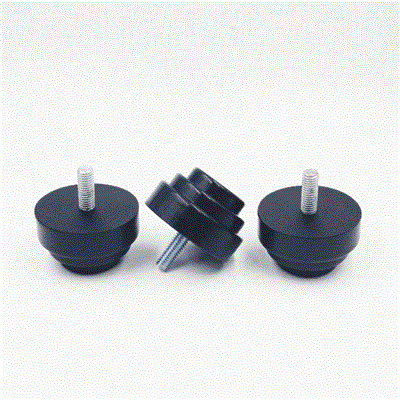
Bushing
Description
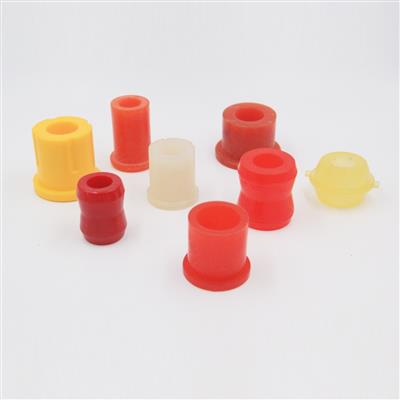
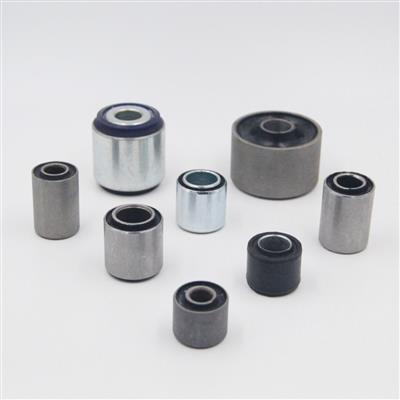
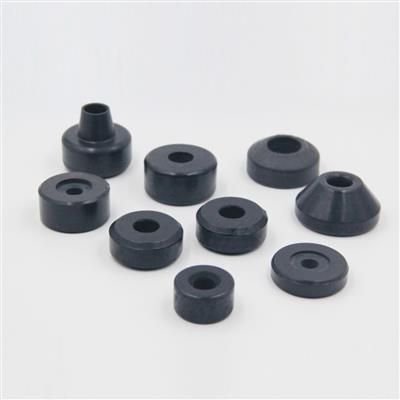
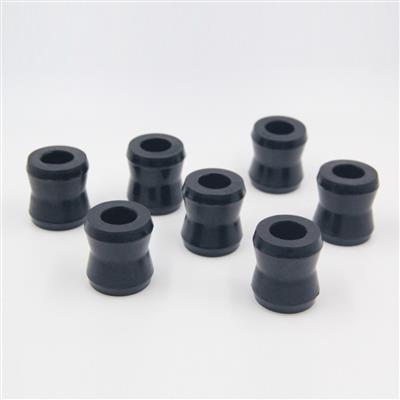
A bushing, also called a suspension bushing or control arm bushing, is installed at suspension control arms, stabilizer bar connection points, subframe to body attachment points and similar locations, positioned between two metal components.
Functions.
- Provides an elastic connection allowing relative motion, whether articulation or torsion, between the two components.
- Absorbs road impacts and vibrations, reducing the noise transmitted to the vehicle body.
- Limits radial and axial displacement of the suspension kinematic pairs, so that positioning accuracy is maintained.
Material. Inner tube and outer tube are made of carbon steel or aluminium alloy, and the elastomer is made of natural rubber (NR) or polyurethane (PU).
Customization. Customization of inner and outer diameters, length, rubber hardness and stiffness curve is supported based on customer drawings or samples, and different material formulations such as oil resistant or low temperature resistant grades are available.
What a Suspension Bushing Actually Does
A bushing is a controlled compromise. It has to hold the suspension geometry closely enough that the wheel stays where the alignment specification expects it, while still allowing the articulation and torsion that a moving linkage needs, and while insulating the body from the small amplitude vibration that travels up from the road. Those three jobs pull in different directions, which is why a bushing is specified by stiffness rather than by size alone. A buyer who receives only an inner diameter and an outer diameter has half the information needed, because two parts that measure the same can feel completely different on the road.
Types of Bushing Construction
| Construction | How It Works | Typical Use |
|---|---|---|
| Bonded rubber to metal | Rubber vulcanised between an inner and an outer tube | Control arms, trailing arms, subframe mounts |
| Rubber with voids or slots | Bonded bush with cavities tuned in one or more directions | Where comfort and control must be balanced |
| Hydro bushing | Fluid chambers connected by a channel inside the bush | Large amplitude damping on premium platforms |
| Polyurethane bush | Cast or machined PU, usually in a sleeve | Performance, heavy duty and off road applications |
| Spherical bearing | Ball and race instead of an elastomer | Motorsport and precision alignment arms |
| Plain sleeve or flanged bush | Metal or composite bearing surface | Anti roll bar links and pivot points |
The bonded rubber to metal bush remains the most common design because it combines load carrying, articulation and vibration isolation in a single low cost part. The sections below concentrate on that family, since it covers the majority of replacement demand.
Tube Material and Elastomer Selection
Inner and outer tubes
Carbon steel is the standard choice for both tubes and is normally finished with a coating to survive road salt. Aluminium alloy is used where weight matters, particularly on the outer shell of a large subframe bush, and where a light alloy housing would otherwise suffer from galvanic corrosion against a steel shell. Whichever material is used, the bond between the tube and the elastomer depends on the surface preparation of the metal, so the drawing should name the preparation method rather than only the grade.
Natural rubber against polyurethane
| Property | Natural Rubber (NR) | Polyurethane (PU) |
|---|---|---|
| Vibration isolation | Excellent, the usual choice for comfort | Lower, transfers more road noise |
| Load capacity for a given size | Moderate | Higher |
| Hardness range, Shore A | About 45 to 75 | About 70 to 95 |
| Resistance to oil and grease | Poor without a protective grade | Good |
| Resistance to abrasion | Good | Very good |
| Resistance to ozone and weathering | Needs an antiozonant package | Good |
| Temperature range, typical | About -40 C to +80 C | About -30 C to +90 C |
| Effect of a harder grade | Sharper response, more noise | Sharper again, but tough under load |
The practical rule is that natural rubber is chosen when the vehicle is judged on comfort and noise, and polyurethane is chosen when the vehicle is judged on control, durability or resistance to contamination. Where a bushing is exposed to oil or to a cleaning chemical, the compound has to be selected for that exposure, because a standard natural rubber grade will swell and soften.
Specifications to Fix on the Drawing
| Specification | Typical Basis | Why It Matters |
|---|---|---|
| Inner tube bore and length | Bolt or pin size, plus tolerance | Controls the press fit and the pivot clearance |
| Outer tube diameter and length | Housing bore and tolerance | Sets the interference for the press fit |
| Elastomer wall thickness | Derived from the two tubes | Sets the stiffness for a given hardness |
| Shore A hardness | A range with tolerance, not a single number | Drives the stiffness and the noise level |
| Radial stiffness | Measured rate, not inferred | Controls lateral location under cornering load |
| Axial and torsional stiffness | Measured rates where they matter | Controls braking and articulation behaviour |
| Bond strength | Peel or push out test value | Prevents the tubes separating from the rubber |
| Void position and area | Shown on the drawing | Makes the bush soft in one direction and stiff in another |
| Coating and salt spray hours | Specified finish and test duration | Resists corrosion on the tubes |
| Marking | Part number and batch code | Supports identification and traceability |
Stiffness, Comfort and Control
Radial and axial rates are set separately
A bush is rarely required to behave the same way in every direction. A control arm bush usually needs to be stiff radially so the arm does not move sideways under cornering load, and softer in torsion so the arm can swing with the suspension. That is achieved by the shape of the elastomer, by the position of voids and by the ratio of length to wall thickness rather than by the hardness alone.
Voiding is the tuning tool
Removing material from two opposite sides of the elastomer makes the bush much softer along that axis while leaving the perpendicular axis largely unchanged. Changing the void area is therefore the normal way to adjust ride quality without changing the outside envelope, which is why the void layout has to appear on the drawing and be checked on the first article.
Harder is not automatically better
A harder compound reduces deflection and sharpens the steering response, but it also passes more road noise into the body and increases the load on the surrounding mounts. Where a customer asks for a harder bush to fix a handling complaint, the deflection of the other bushes in the same link should be checked first, because the softest part of the chain usually governs the behaviour.
Identifying a Bushing from the Part
Replacement demand often arrives without a usable part number, so the dimensions below are the ones that separate similar bushes.
| Measurement | How to Take It |
|---|---|
| Inner tube bore | Measure the bore at both ends and record the smaller reading |
| Outer tube diameter | Measure across the shell, not over the rubber |
| Overall length and flange height | Confirm whether a flange or shoulder is present |
| Rubber overhang | Note any rubber that extends past the shell |
| Void layout | Note the number, position and approximate area of voids |
| Tube material | Check with a magnet to separate steel from aluminium |
Two bushes that share a bore and a shell diameter can still differ in length, flange and void layout, and any of those differences can prevent the part from pressing in correctly or change the vehicle behaviour. A photograph alongside the measurements shortens the identification process considerably.
Fitting Notes
- Clean the housing bore and remove any corrosion or old compound before pressing in a new bush.
- Check the interference between the shell and the bore against the drawing, because an undersized shell will rotate in service.
- Press on the shell or on the correct shoulder, using a driver that matches the outer tube diameter.
- Never press on the rubber or on the inner tube, since that loads the bond directly and can tear it.
- Use only a lubricant that is compatible with the elastomer, and avoid petroleum based products on natural rubber.
- Align the bush to the marked position before final tightening so that the void orientation matches the drawing.
- Tighten the pivot bolt at normal ride height rather than with the suspension hanging, so that the rubber is not preloaded in torsion.
Failure Modes and Diagnosis
| Symptom | Likely Cause | Suggested Action |
|---|---|---|
| Clunk over bumps | Bond separation or a worn bore | Remove and inspect the bond and the shell fit |
| Vague steering and uneven tyre wear | Excessive radial deflection | Check all bushes in the link, not only one |
| Rubber cracked and hard | Ageing, ozone and heat exposure | Replace as a set on the same link |
| Bush rotating in the housing | Insufficient press fit or a damaged bore | Replace the bush and assess the housing |
| Excessive torsional wind up | Pivot tightened at full droop | Retighten at ride height |
| Rubber swollen and soft | Oil or chemical exposure | Specify an oil resistant compound |
| Noise only on one side of the vehicle | Local damage or a contaminated bush | Inspect both sides before ordering |
Sourcing Notes for Trade Buyers
| Item | What to Confirm with the Supplier |
|---|---|
| Range fit | Which existing tools match the bore, shell and length on your list |
| Stiffness data | Radial and axial rates measured on a sample, not estimated |
| Compound | Named grade with hardness range and any oil or low temperature variant |
| Bond test | Peel or push out results for the production batch |
| Corrosion | Coating type and salt spray hours on the tubes |
| Packing | Carton data, labelling and whether bushes are packed to stop shell damage |
| Documents | Certificate of conformance, dimensional report and first article report |
Bushes are normally ordered as a set for a given link, so a range plan that groups references by link and by platform keeps the catalogue usable. Buyers who also handle polyurethane bump stops and other shock absorber parts can often consolidate the whole suspension rubber package with one supplier, and new dimensions are quoted from drawings or samples under custom moulded and bonded parts.
Frequently Asked Questions
Should bushes be replaced in pairs or as a set?
Where two bushes share a link, replacing them as a set is the usual recommendation, because a new bush next to a soft aged one changes the load sharing and can produce new noises or uneven deflection. On a vehicle with similar mileage across both sides, doing both sides together is normally the better decision.
Is polyurethane always better than natural rubber?
No. Polyurethane offers higher load capacity and better abrasion and oil resistance, but it isolates vibration less effectively, so it usually increases the noise and harshness reaching the body. The right choice depends on whether the application is judged on comfort or on durability.
Can a bushing be identified without a part number?
In most cases yes. The inner bore, the outer shell diameter, the overall length, any flange and the void layout together are enough to narrow the range to a small number of candidates, and a photograph of the bush in position helps confirm the orientation.
Why does a new bushing fail within a short time?
The most common reasons are a press fit that is too loose so the shell rotates, pressing on the rubber or the inner tube during fitting and damaging the bond, tightening the pivot bolt with the suspension at full droop, or specifying a compound that is not resistant to the oil or chemicals present at that location.
Source Suspension Bushes to Your Drawing
Bonpora Parts supplies suspension bushes and control arm bushes with carbon steel or aluminium tubes and natural rubber or polyurethane elastomer, moulded and bonded to the bore, shell, length, flange and void layout shown on your drawing, with hardness, stiffness and bond test results available for the batch. If you are replacing an obsolete reference, send the bore, the shell diameter, the length and a photograph and our engineers will match the closest existing tool or quote a new one. A trial batch with a radial stiffness and bond report keeps the first release decision straightforward. Start from the mounting bush range, review the wider chassis and suspension programme, or contact our team with your specification and annual volume. Further references are listed on the products page.
Find Similar Products