sales@bonporaparts.com
0086-10-64988621
English
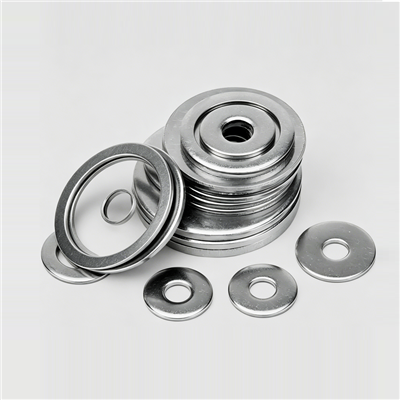
A washer or spacer is installed between two connecting components, typically at the mating surfaces of bolts, nuts or flanges. It adjusts assembly clearance and compensates dimensional chain tolerances, helps prevent loosening of connections, increases friction or provides a sealing effect when a sealing washer is used, and protects surfaces from scratches or stress concentration. All of that is delivered by a part that costs very little per piece, which is exactly why it is easy to source badly. A washer that arrives half a tenth of a millimetre under thickness, or with a burr on one face, can stop a line, damage a machined housing or appear as a warranty claim long after the invoice has been paid.
This guide is written for the buyer who has to keep the joint working and the price sensible at the same time. It covers how to build the enquiry so that quotations can be compared, which specification fields actually change the price, how to read a sample before releasing a volume order, and what to check on the incoming delivery.
Suppliers quote what the enquiry says, not what the drawing means. Four data groups turn a loose request into a comparable quotation.
State the inside diameter, the outside diameter and the thickness, each with its tolerance band, plus flatness and any concentricity requirement. For punched washers, quote the burr height allowance as well. A generous tolerance on thickness can reduce cost substantially; a tight one has to be ground or fine blanked instead of punched.
Name the base material explicitly: low carbon steel to a stated grade, stainless steel, copper, aluminium, or a non metallic composite such as PTFE or nylon. Where a specific grade is not available, ask the supplier to propose an equivalent and to say which properties differ.
Zinc plating, zinc nickel, phosphate and oil, plain, or a barrier coating for mixed metal assemblies. Finish is often the field where two quotations differ most, so require the treatment and the coating thickness class to be stated rather than implied.
Annual volume, first order volume, call off pattern, and the packing format the line needs: bulk bag, small box, strip, or a fitted kit packed with the fasteners. Packaging is part of the price of a low value part because counting and bagging can cost more than the washer itself.
When two suppliers are far apart on price, the difference is usually in one of the process steps below rather than in raw material. Ask the lower quotation to confirm each one before treating the saving as real.
| Process choice | Cost effect | What the buyer gives up |
|---|---|---|
| Punching from coil stock | Lowest unit cost at volume | Wider tolerance band, slight burr, more die related edge variation |
| Fine blanking | Moderate | Nothing significant, but tool cost is higher and volume must justify it |
| Ground flat faces | Higher | Prepaying for thickness and flatness control that a loose drawing may not need |
| Tight thickness tolerance | Higher | More scrap and more sorting at the supplier, which is passed back as price |
| Non metallic material | Higher material cost | Lower stiffness, so torque and preload must be reviewed |
| Fitted or counted packaging | Adds a per piece handling charge | Some of the labour saving on the line has to be paid to the supplier |
For a part this inexpensive, the cheapest risk control is still a physical sample. Ask for a sample with a dimensional report that lists the measured value of each critical dimension and the tolerance it was measured against, not simply a pass mark.
Measure thickness at four points around the ring, both diameters in two directions, and place the washer on a surface plate to check flatness. Check the bore for a rolled lip and the outside edge for a tear that would crack during tightening.
Fit the sample into the real joint at the real torque, then inspect it. A bright ring on the face, a cupped profile or a distorted bore after tightening tells you more about the washer than any certificate. Note the torque used, because the same washer can behave differently as the torque changes, and share that figure with the supplier when the sample is discussed.
A supplier who is ten percent cheaper and cannot hold a delivery window will cost more than the difference. The scorecard below is a workable screening tool; score each supplier out of five on every line and compare totals only after the technical column has been satisfied.
| Assessment area | Question to ask | Evidence to request |
|---|---|---|
| Material control | Can the mill certificate be traced to the batch shipped? | Incoming inspection record, mill certificate with heat number |
| Process capability | What is the capability on thickness and outer diameter? | Capability study or a sample of inspection data from the last three lots |
| Surface treatment | Is plating done in house or subcontracted? | Coating thickness test report, salt spray result if corrosion matters |
| Inspection plan | Which dimensions are checked on every lot, and how often? | Control plan, lot inspection sheet |
| Packaging and counting | How is the count verified before dispatch? | Weigh count procedure and packing specification |
| Lead time and flexibility | What is the standard lead time and the minimum order quantity? | Recent delivery performance, sample of past orders |
The unit price on the quotation is only the first line of the real cost. Add the freight, the import duties, the inland transport, the cost of the incoming inspection, the cost of the safety stock needed to cover the lead time, and the cost of any rework caused by a rejected lot. For a part that weighs a few grams, freight is often calculated on volume rather than weight, so packing density directly affects the landed figure. Two suppliers with the same unit price can end differently once cartons per pallet and pallet per container are compared. Ask for the carton dimensions and the quantity per carton with the quotation so the comparison can be done before the order is placed.
Full inspection of every washer is not economic, so use an attribute sampling plan that matches the risk of the joint. Critical joints, safety related fasteners and any washer that sets a dimensional chain deserve a dimensional check on each lot. For general purpose washers, checking thickness, both diameters and a visual pass for burrs, cracks and corrosion on a sample is usually sufficient, provided that the sample size and the accept and reject numbers are written down rather than left to the inspector. Record the lot number so that a problem found on the line can be traced back to the whole delivery, and keep one sample from each lot until the next delivery arrives.
Washers do not deteriorate on the shelf the way rubber parts do, but they do pick up corrosion and contamination. Store them in the original packing, off a concrete floor, and keep non metallic washers away from direct sunlight and from solvents. Where a washer has a bonded elastomer, observe the shelf life given by the supplier and rotate stock. Once a specification has been approved, keep one reference sample signed by both parties so that later deliveries can be compared against something physical rather than against a memory of the original part.
Most serious sourcing projects end in a custom shape rather than a catalogue washer. Bonpora supports customisation of any shape, size and thickness, works from samples or drawings, and produces single pieces or batch runs to meet assembly requirements, which suits both prototype builds and scheduled production. That flexibility is only useful if the enquiry carries the data the factory needs, so include the dimensional tolerances, the material, the surface treatment, the annual quantity and the packing format on the first approach. Buyers rebuilding an obsolete joint usually begin with a custom parts enquiry and then move the agreed drawing into a repeat order. Related purchasing guidance for machined and formed components is collected under metal components.
It depends on the process. A punched washer from existing tooling can run in small batches, while a new die requires a tooling cost that only makes sense at a larger annual volume. Batch production is available alongside single piece supply, so the practical approach is to send the drawing and the expected annual quantity and let the factory state the break even point.
No. Specify the tolerance the joint actually needs. Tightening thickness or diameter tolerance adds grinding, sorting and scrap to the process, and the price rises far more than the precision is usually worth. Reserve the tight bands for washers that set a gap or seat against a rotating face.
Request the mill certificate with the heat number on each delivery, keep it with the lot record, and cross check the grade against the approved specification. For critical joints, a simple hardness or thickness check on an incoming sample gives a fast indication that the correct material was used.
Usually because the surface condition or the thickness distribution differs. Burr height, flatness, coating thickness and the actual thickness of each piece all change how the washer settles under load, even when both parts sit inside the same drawing window. Approving one reference sample and holding both suppliers to it is the simplest way to remove the variation.
Send Bonpora Parts and Components Co.,Ltd. the drawing or sample, the material, the surface treatment, the dimensional tolerances, the annual quantity and the packing format. The factory will confirm feasibility, propose the process route and quote single pieces or batch production for assembly line use. The full washer and spacer range covers flat washers, spacers and sealing types, and further guidance on fitting and on manufacturing control is available in the installation guide and the manufacturing guide. To discuss a specific project, contact the team.