sales@bonporaparts.com
0086-10-64988621
English
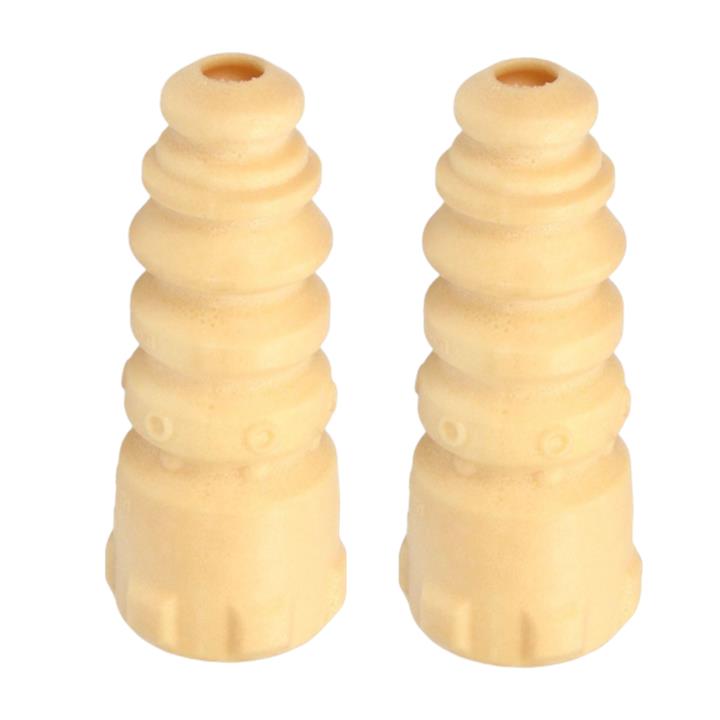
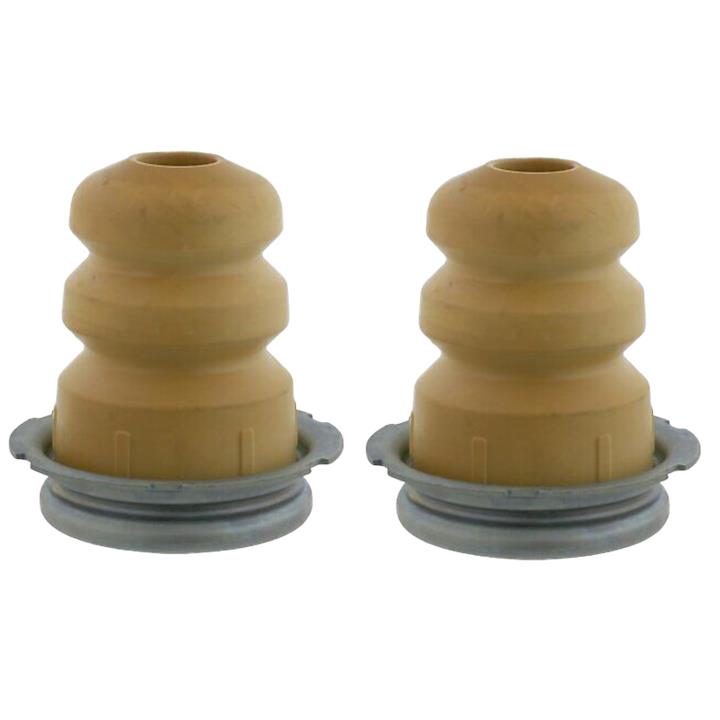
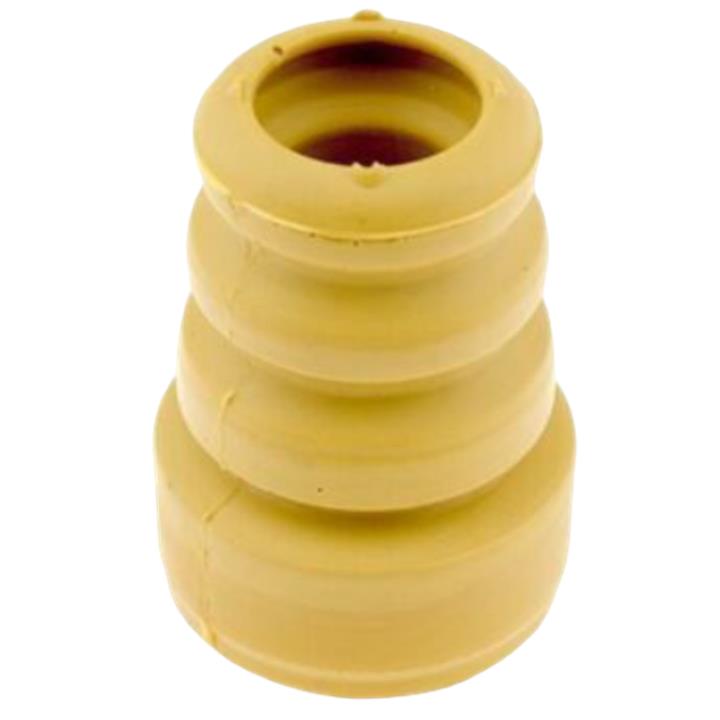
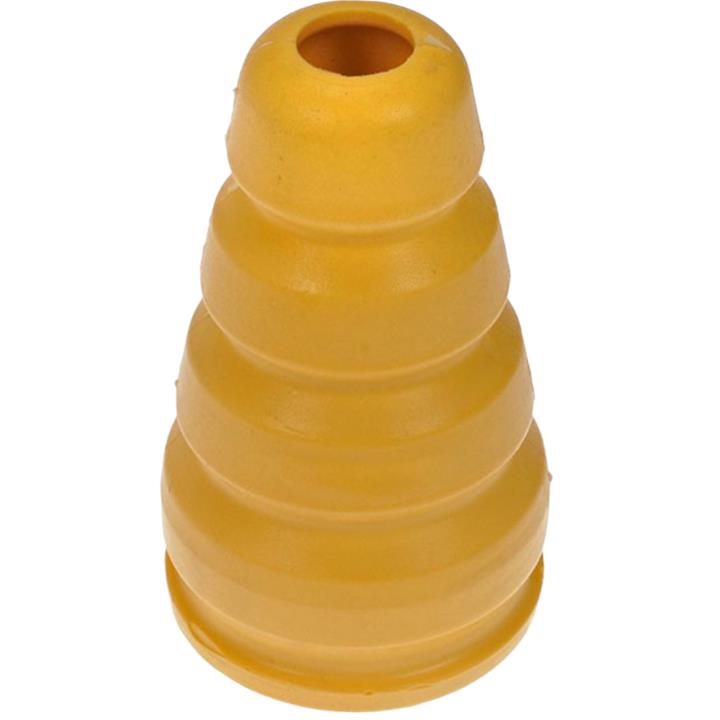
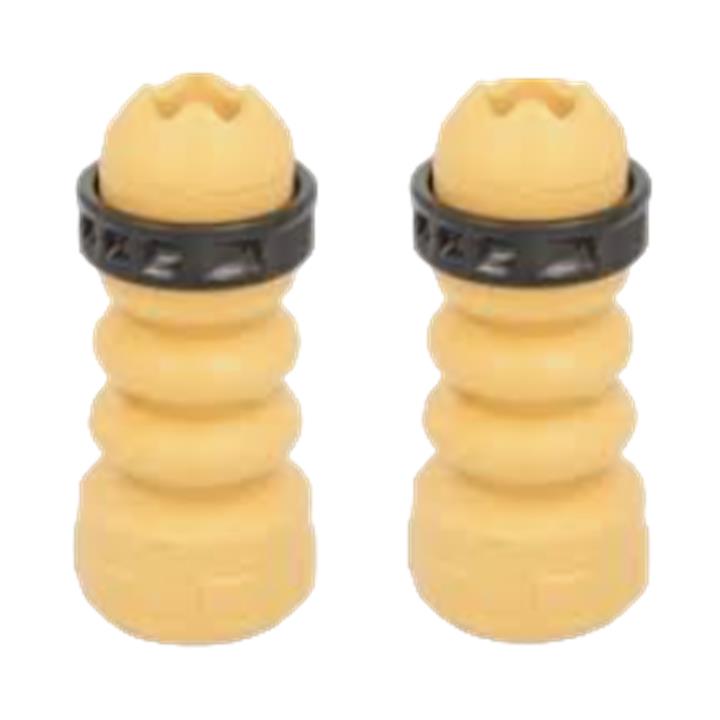
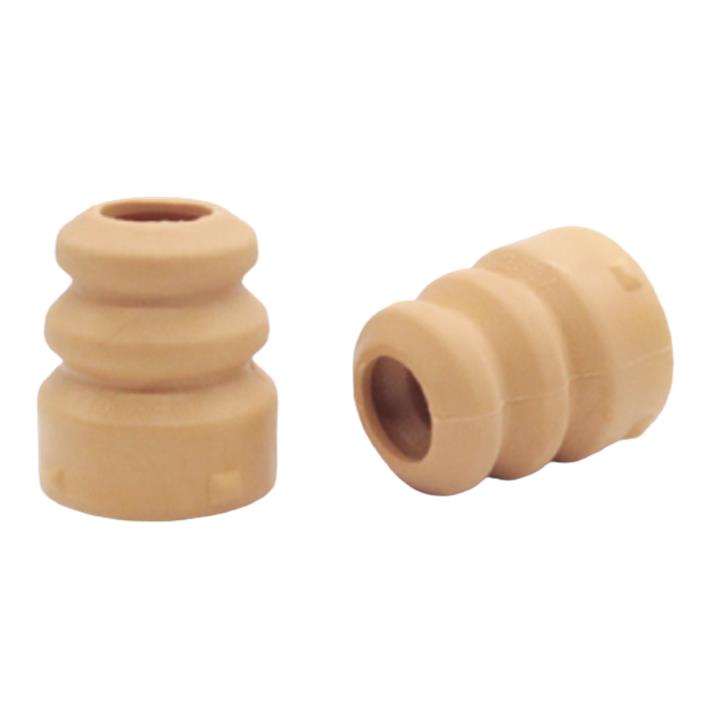
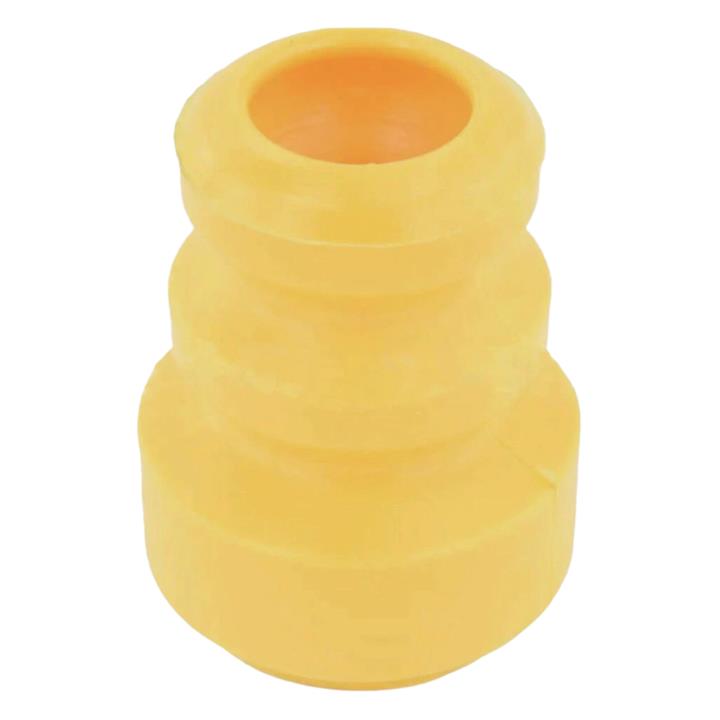
The OE 3C0511359A is the rear suspension bump stop of several Volkswagen Group model families: the Passat B6, B7 and B8, the Sharan 7N and Seat Alhambra MPVs, and the Skoda Superb III on the 3V platform. Genuine catalogues list it as a stop buffer for the rear axle, one piece per damper, two per vehicle. The aftermarket publishes it under Febi 37323, SWAG 30 93 7323, Metalcaucho 40601 and further equivalents. This page presents Bonpora No. 4110116, a polyurethane replacement manufactured in China for wholesale export, nominal size Φ17 x Φ55.5 x 98 mm.
Across these models the rear axle carries coil springs and separate dampers, and the bump stop sits on the damper rod, above the dust bellow and below the upper spring seat. As the rear suspension compresses over a pothole or a fully loaded descent, the stop is progressively crushed and absorbs the last part of the travel. It cushions the contact between the damper rod, the spring seat and the body structure, prevents a harsh metal to metal knock, and protects the dampers from overload peaks. European catalogue data ties the reference to rear shock absorption PR codes 1JH and 1JI, the latter covering Nivomat self levelling dampers, on front wheel drive and 4Motion builds alike.
The buffer works in every full compression event, so it ages with mileage: polyurethane hardens with time and heat, takes a permanent set under load and can crumble at the edges. A flattened stop shortens the working travel of the rear suspension, and the symptoms follow: a hollow knock from the rear axle over sharp bumps, a ride that turns harsh when loaded, and faster wear on the rear dampers and top mounts. Workshops inspect the buffer whenever a rear damper, spring or dust bellow is removed, and replace in pairs so both sides keep the same working height.
The reference spans three Passat generations and the large MPV and saloon models built alongside them. The table below summarises the application lists of the genuine catalogues and the main aftermarket suppliers; build date, market and PR code shift coverage, so the number on the removed part or a VIN check remains the final word.
| Model | Body | Chassis Code | Production Years |
|---|---|---|---|
| VW Passat B6 | Saloon, Estate | 3C2, 3C5 | 2006 - 2010 |
| VW Passat B7 | Saloon, Estate, Alltrack | 365 | 2011 - 2015 |
| VW Passat B8 | Saloon, Estate | 3G2, 3G5 | 2018 - 2024 (catalogue coverage) |
| VW Sharan | MPV | 7N | 2011 - 2023 |
| Seat Alhambra | MPV | 710, 711 | 2011 - 2023 |
| Skoda Superb III | Saloon, Estate | 3V | 2015 - 2024 |
Petrol and diesel engines from 1.4 to the 3.6 V6 appear in the application tables, because the stop depends on the rear suspension layout rather than the engine. Some aftermarket tables start the MPV coverage at the 2010 launch year; the VIN settles borderline cases. For the B8 Passat, catalogue coverage starts at 2018, so earlier builds should be confirmed against the removed part.
Five boundaries keep this reference clean. First, the axle: 3C0511359A belongs to the rear axle; the front struts of the same cars take separate references. Second, the index: 3C0511359 without the A suffix appears in older entries and the A revision is the current supersession, so match the marking on the removed part. Third, the PR code: the reference is published for rear shock absorption builds marked 1JH or 1JI, so confirm the code on the vehicle data sticker for borderline cases. Fourth, some catalogue databases carry the number under additional group models such as Audi A1, while the application lists above stay consistent across sources; the OE number on the removed part settles any doubt. Fifth, the dust cover: Febi and SWAG kit references bundle two buffers with two bellows that cross to OE 7N0513425, separate items stocked differently.
| Parameter | Value |
|---|---|
| Product Name | Strut Bump Stop |
| Country of Origin | China |
| Bonpora Nos | 4110116 |
| OE | 3C0511359A |
| Fitment | VW Passat B6 B7 B8, Sharan 7N, Seat Alhambra, Skoda Superb III |
| Size | Φ17xΦ55.5x98 |
| Material | Polyurethane |
| Warranty | 1 Year |
| Delivery Time | 15-30 Days |
| Packaging | Neutral Export Packaging |
| Custom Service | OEM & Custom Design Support |
Febi 37323, the main European equivalent, lists a length of 100 mm, a width of 58 mm and a weight of 0.095 kg. Metalcaucho 40601 and STC T440601 read 99 mm long with inner diameters of 16.5 and 24.5 mm, reflecting a stepped internal bore. Bonpora reads Φ17 x Φ55.5 x 98 mm at its own reference points, and the genuine part ships in a package of about 55 by 100 mm at 0.06 to 0.07 kg. Differences of this scale are normal for elastomer parts, because each brand measures at different points and a stop measured free sits taller than one compressed on the rod. Match the new stop against the removed original before releasing a full batch.
The OE stop and the main aftermarket equivalents are produced in microcellular polyurethane or conventional rubber. The material decides how the stop behaves across years of compression cycles, oil contact and weather.
| Property | Polyurethane | Conventional Rubber |
|---|---|---|
| Compression set | Low; working height is retained after repeated impacts | Higher; flattens with age and load cycles |
| Oil and grease resistance | Good | Limited; swells and softens on exposure |
| Ozone and UV resistance | Good | Limited; surface cracking over time |
| Temperature behaviour | Stable across a wide range | Hardens in cold, softens in heat |
| Load consistency | Nominal rate holds between batches | Varies more with age and temperature |
| Typical role | Primary replacement line for export stock | Standard duty, price driven demand |
Rubber remains serviceable in mild climates and standard duty. Polyurethane keeps its working height longer under repeated compression, which decides how soon a loaded Passat estate or a seven seat Alhambra starts to knock at the rear axle.
European and North American distributors usually restock polyurethane as the primary replacement line because it matches the OE material family. Price driven tenders in some regions still call for rubber versions. Bonpora produces the polyurethane line as standard and can quote rubber on request against the same drawing.
Ordering by OEM number is the most reliable route when the marking is still readable. The number appears as 3C0511359A or 3C0 511 359 A in the Volkswagen Group catalogues, and both forms identify Bonpora reference 4110116. For orders that span more platforms, the polyurethane bump stops range groups references by system and model family and shortens the quotation process.
This bumper is manufactured in China as a catalogue item with existing tooling, priced for carton, pallet and container quantities. Typical buyers include Volkswagen group specialists and suspension parts importers across Europe, the Middle East, Southeast Asia, Latin America and Africa. Because one reference covers the Passat saloons and estates and the Sharan, Alhambra and Superb models, one pallet position serves several model families at the same time. Orders ship in neutral export packaging, delivery takes 15 to 30 days depending on volume, the warranty period is 1 year, and samples can be arranged to verify bore, height and hardness before a bulk commitment.
Each production batch is checked for bore, outer diameter, overall height and material hardness, with visual inspection for flash, voids and surface defects. Dimensional records are kept per batch, so repeat orders match the approved sample and support the 1 year warranty.
Beyond the catalogue part, the same line supports OEM and custom design work: adjusted hardness, modified bore, outer diameter or height, coloured material, branded packaging and private label marking. For a custom project, send a drawing or a sample with the expected annual volume; a first article sample confirms the fitment before series production begins.
The workflow is simple: drawing review, material and hardness proposal, first article sample, fitment check, then batch production with per batch inspection records. Most projects move from drawing to approved sample within a few weeks.
The buffer is renewed with the rear dampers or on its own when flattened. The car is raised and the rear wheel removed, the lower damper bolts are released, the assembly is lowered, and the old buffer is slid off the damper rod. Inspect the dust bellows, the top mounts and the rear dampers at the same visit, because leaking damper oil is the fastest route to a destroyed buffer. A light coating of grease on the rod eases assembly, and a stop seated unevenly wears on one side, so check the seating before refitting the wheel.
The rear axle of the VW Passat B6 (2006-2010), B7 (2011-2015) and B8 generations, the Sharan 7N and Seat Alhambra MPVs, and the Skoda Superb III (3V, 2015-2024). One piece per rear damper, two per vehicle, replace in pairs. A VIN check or the number on the removed part confirms the order.
Rear. Genuine dealer catalogues list the position as rear axle, left and right, and the buffer mounts on the rear damper rod above the shock absorber. The front struts of the same models take separate references with different dimensions, so buyers searching for a front Passat or Sharan bump stop should match the front OE number, not the model alone.
The A revision is the current supersession of the earlier index, and suppliers list the A number as the active reference. Current entries run roughly 98 to 100 mm long while older lines show different heights, so confirm the marking on the removed part. Bonpora supplies the application as reference 4110116 in polyurethane.
Yes. OEM and custom design support covers adjusted hardness, modified dimensions, coloured material and private label packaging. Delivery time is 15 to 30 days depending on quantity, packaging is neutral export with branded options on request, and the warranty period is 1 year. Send a drawing or a sample with the target annual volume to receive a quotation.
Send the OEM number 3C0511359A, the Bonpora number 4110116, the quantity and the destination port, and the sales team will confirm specification, packing and delivery schedule. Buyers building a wider suspension programme can review the chassis and suspension parts range, and the full auto parts line covers rubber, steering and chassis components from the same factory.