sales@bonporaparts.com
0086-10-64988621
English
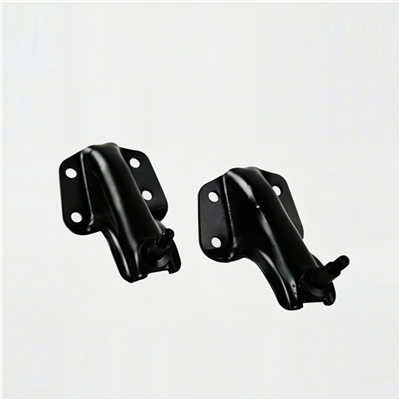
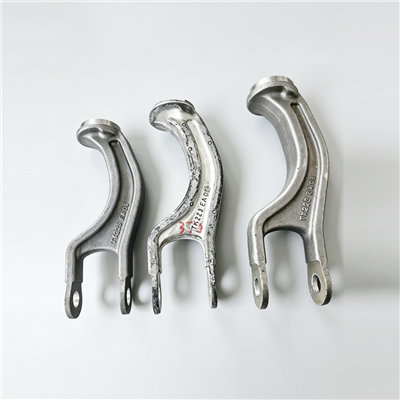
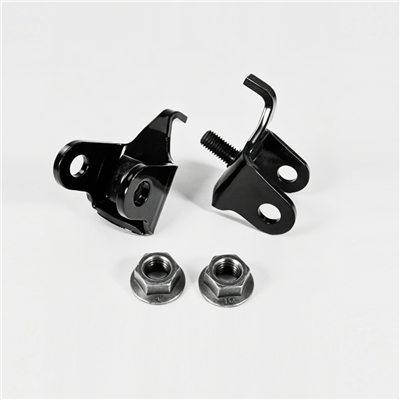
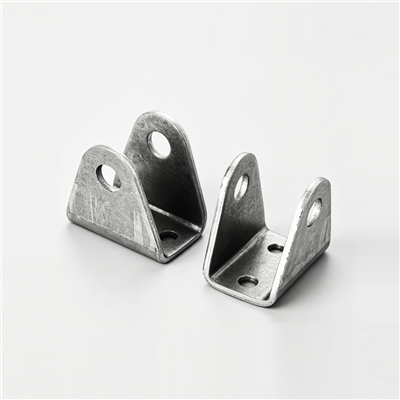
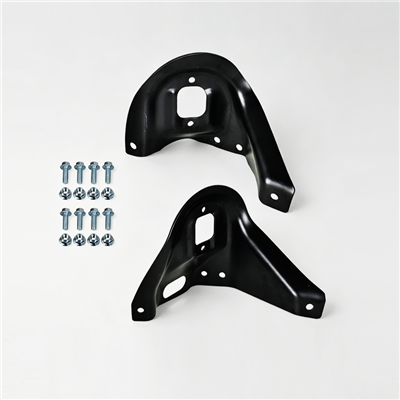
A bracket installed on the equipment body, frame, or panel is used to secure, support, or suspend other components. It provides mounting interfaces for accessories such as pipelines, sensors and motors, enhances structural rigidity to resist vibration and impact, and simplifies assembly through modular design. Bonpora supplies brackets in carbon steel, stainless steel, aluminium alloy and zinc alloy die-casting, including reverse engineered versions produced from customer 3D models or physical samples, with rapid prototyping available where a design change must be proved first.
In a fleet, brackets are the parts nobody plans for. They are cheap, they are everywhere, and they are only noticed when something falls off. That is an expensive way to manage them, because an unplanned bracket failure usually takes a second component with it: a cracked mount drops a sensor, a loosened panel bracket chafes a harness, and a deformed suspension bracket changes the alignment of an entire corner. This guide sets out a maintenance plan that treats brackets as a managed item with an inspection interval, a recording format and a planned replacement trigger.
A single inspection interval applied to the whole fleet is either wasteful or unsafe, depending on which unit it fits. The same bracket position can see completely different conditions across a fleet: a delivery vehicle on smooth roads, a tipper working on unmade ground, a refrigerated unit that is washed down daily, and a yard machine that never leaves a salted site. The starting point is to allocate every unit to a duty band and then set the bracket check frequency within that band.
| Duty band | Typical operating condition | Bracket check interval | Focus of the check |
|---|---|---|---|
| Light | Sealed roads, low load factor, dry climate | At every scheduled service | Coating condition and fastener torque |
| Standard | Mixed roads, normal load, occasional rain | Every service plus one mid-interval walk-around | Torque, coating, visible cracks |
| Heavy | Unmade ground, high load, constant vibration | Monthly plus a documented annual inspection | Cracks, hole elongation, fretting debris |
| Severe | Salt, wash-down chemicals, or continuous impact | Monthly with coating readings each quarter | Corrosion, section loss, galvanic attack |
Write the band on the unit record and let it drive the work order, rather than expecting a technician to remember which vehicle works where. When a unit is reassigned to a different duty, the band changes on the same day.
Most bracket failures announce themselves before they become expensive, and the signals are visible without any tooling. A five minute check built into the daily walk-around catches the majority of them. Look for a component that has moved from its normal position, a pipe or harness that is now touching a bracket edge, a fresh rust streak running down from a fastener, a shiny wear mark on a bolt head, or fine debris trapped under a mounting face.
Two observations are particularly worth training drivers and operators to report. The first is a new rattle or knock over rough ground, because it usually means a joint has lost clamp load. The second is a component that appears to sit lower or further to one side than its counterpart on the other side of the machine, which points to permanent deformation rather than a loose fastener. Neither observation requires mechanical knowledge, and both arrive before the part breaks.
Bracket maintenance is only worth doing if the records are usable. A sheet with the fields below takes a few minutes per unit and turns a series of repairs into a trend. Keep the fields identical across the fleet so the data can be compared.
| Field | Why it is recorded |
|---|---|
| Unit number, date, running hours or mileage | Places the inspection on a service life curve |
| Bracket position and part number | Identifies repeat trouble spots per position, not per vehicle |
| Failure mode observed | Distinguishes cracking from corrosion, loosening or deformation |
| Fastener condition and re-torque result | Separates a joint problem from a bracket problem |
| Coating condition and any section loss | Drives the corrosion treatment decision |
| Deviation from drawing where measurable | Confirms permanent set before the part is reused |
| Action taken and parts consumed | Feeds spares planning and cost per position |
| Photograph reference before cleaning | The only reliable evidence in a later warranty discussion |
The failure mode vocabulary should match the six patterns used in the bracket failure analysis guide: fatigue cracking, permanent deformation, corrosion and galvanic attack, loosening and hole elongation, fretting wear, and thread stripping. Consistent naming is what makes the monthly summary meaningful.
Every time a bracket is loosened for another repair, the joint has to be re-torqued to the published value. Bracket fasteners are frequently disturbed by unrelated work: a hose change, a sensor replacement, a harness repair. Add a line to the work order that requires the bracket fasteners to be re-torqued and recorded after any task that disturbed them, and recheck the torque once more after the first operating period if the unit works in heavy vibration.
Before the salt season, inspect the bracket positions that sit in pockets and behind panels, repair any coating damage and confirm that drain paths are clear. After the season, check the same positions again, clean accumulated salt and debris, and record any section loss found. This cycle is the cheapest way to extend the life of carbon steel brackets on winter-service units, and it also gives an early warning when a coating system is not performing as specified.
Touch-up is often treated as cosmetic work and deferred. In practice, a repaired coating stops a corrosion cell early, and the cost difference between touch-up and replacement is large. Stock the matching coating system, keep surfaces clean and dry before application, and record the repair so the next inspection can confirm that it held.
The most useful outcome of good records is a planned replacement list. Once a bracket position has failed twice, or once a defined condition appears, the part goes on a scheduled change rather than waiting to break. The triggers below are practical starting points for a fleet policy.
| Trigger condition | Action | Timing |
|---|---|---|
| Coating damage with visible surface rust | Clean and recoat, record for review | At the inspection |
| Section loss beyond about 10 percent at a load transfer point | Replace and improve drainage or coating | Next planned workshop visit |
| Any crack found at a weld toe or hole edge | Replace immediately, do not weld repair structural brackets | Before the unit returns to service |
| Permanent set beyond drawing tolerance | Replace without straightening | Before the unit returns to service |
| Elongated holes or stripped threads | Replace and add a positive location feature | Next planned workshop visit |
| Same position failed twice within the service life | Replace with a design change, not an identical part | At the next batch order |
| Fretting debris under a clamped face | Replace the bracket, check washer and torque | At the inspection |
Fleet spares are usually planned by vehicle type, which is the wrong unit for brackets. Because bracket failures cluster at a few positions on a few duty bands, the stocking decision should be made by position. A simple method is to build a table of positions, list the failures recorded over the last twelve months, and set the stock level from the consumption rate plus a margin for the lead time.
Two practical rules apply. First, keep at least one spare of every position that has failed in the last year, because a bracket is a low value item and a missing one grounds the unit. Second, keep the correct fasteners and washers alongside the bracket, since a replacement with the wrong washer or a reused stretched bolt is a common cause of a second failure within weeks. Where a joint uses a barrier or hardened washer, store the parts as a kit so the installer cannot substitute the wrong item. The relevant washer families are listed in the metal components range.
After two or three seasons, the work order data will show whether failures are concentrated in one duty band, one position or one production batch. All three answers lead somewhere useful. A concentration in one duty band means the part is under-specified for that duty and the next order should change material, thickness or coating. A concentration at one position means the load path or the mounting face needs attention. A concentration in one batch points to a manufacturing variation, and the batch code recorded on the carton is what allows a supplier conversation to be factual rather than anecdotal.
Feed the results back into purchasing. The bracket wholesale guide describes how to convert that feedback into a revised specification, and the installation guide covers the assembly controls that stop a good part from failing because of the way it was fitted.
The best bracket programme in a fleet fails if the people closest to the machine do not report what they see. Two habits make the difference. Give drivers a short, plain-language prompt at the start of each shift: any new noise, any component that looks out of place, any fresh rust mark or stain. And close the loop, by telling the operator when a report led to a repair. The second habit is what keeps the first one alive, because people report what they believe is acted upon.
For workshops, the equivalent discipline is to record the bracket fields even when the answer is nothing found. A blank line that says inspected and satisfactory is evidence; a missing line is not. Over a year, the record of inspections builds the baseline against which a single abnormal reading makes sense.
After any task that disturbs them, and then once more after the first operating period. Beyond that, a torque check at each scheduled service is sufficient for most duty bands, with a shorter interval for units working in continuous vibration or on unmade ground.
Yes, while there is no section loss, no crack and no permanent set. Coating repair on a sound bracket is much cheaper than replacement, and it is the single most cost-effective action on winter-service units. Once section loss reaches the load transfer areas, replacement is the correct decision.
At least one for every position that has failed in the last twelve months, plus fasteners and washers stored as a kit with the bracket. For severe duty bands, hold enough for the expected repairs between order cycles rather than ordering single parts urgently.
No. An annual inspection is too infrequent for brackets on heavy and severe duty, and it also misses the early corrosion stage, which is the moment when intervention is cheapest. Band the units and set the interval from the duty, then use the annual inspection as a documented deep check.
Send the bracket positions you want to manage, the duty bands in the fleet and the failure history from the last twelve months. The factory can review whether the current material, coating and section are appropriate for the duty, supply replacements to the original specification, or produce a reverse engineered version with a design change where a position keeps failing. Rapid prototyping is available where the change needs proving on the machine first. Start from the bracket range or the selection and specification guide, or reach the team through the contact page.