sales@bonporaparts.com
0086-10-64988621
English
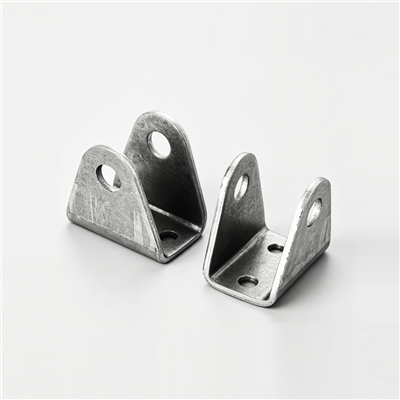
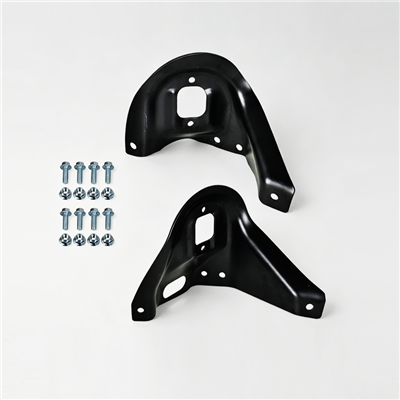
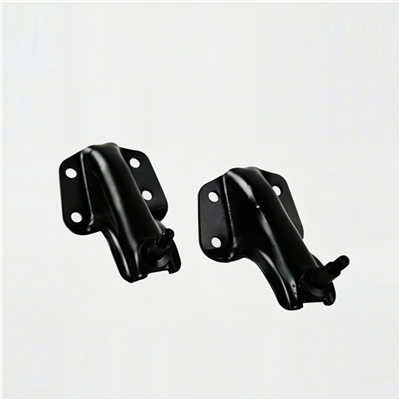
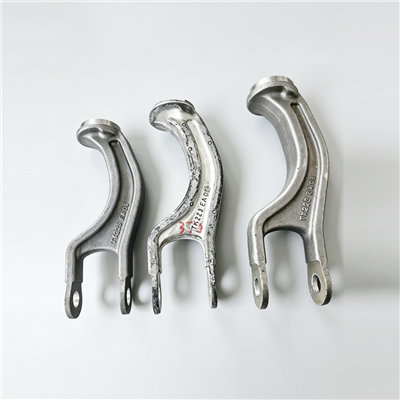
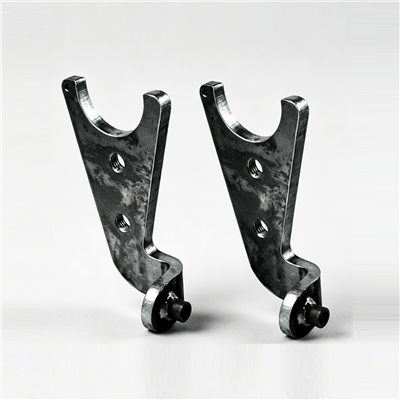
A bracket installed on the equipment body, frame, or panel is used to secure, support, or suspend other components. It provides mounting interfaces for accessories such as pipelines, sensors and motors, enhances structural rigidity to resist vibration and impact, and simplifies assembly through modular design. Bonpora produces brackets in carbon steel, stainless steel, aluminium alloy and zinc alloy die-casting, and accepts reverse engineering from customer 3D models or physical samples to optimise structural strength and lightweight design, with rapid prototyping supported.
For an importer or a distributor, the difficulty is rarely finding a supplier that can bend a piece of steel. It is finding a supplier whose batch eight will match batch one, whose coating thickness is what the drawing says, and whose paperwork will still be on file when a customer complains two years later. This guide is written for purchasing teams that buy brackets in volume and need a repeatable way to specify, quote, approve and audit them.
The most expensive mistake in bracket sourcing is a specification that is only a drawing outline. Two suppliers can quote against the same outline and deliver parts that are not interchangeable. Before sending a request for quotation, define the scope at seven points: material with a standard grade designation, section thickness with tolerance, the manufacturing route, the forming or casting tolerance on hole positions, the surface treatment with a coating thickness range, the inspection documents required per batch, and the packaging and marking standard.
A useful discipline is to write the scope so that a competitor could read it and quote the identical part. If the scope cannot be restated that way, it is not yet a specification.
Brackets are made by four main routes, and each one carries its own tooling, tolerance and volume economics. Choosing the route is the first commercial decision because it drives both unit price and the cost of changing the design later.
| Route | Best volume band | Tooling | Typical tolerance | Design change cost |
|---|---|---|---|---|
| Laser cut and folded steel | Low to medium, many variants | Low, program only | Good on hole position, springback on bends | Low |
| Welded fabrication | Low to medium, large parts | Low, jig and fixture | Dependent on fixture, distortion risk | Low |
| Aluminium extrusion with machining | Medium to high, constant section | Medium, die | Very good along the extrusion | Medium |
| Zinc or aluminium die-casting | High, complex shape | High, mould | Good, but limited thread depth | High |
A frequent error is to tool up for die-casting before the design has settled. Where the part is still evolving, laser cut and folded steel or a welded fabrication keeps the change cost low, and the custom parts service can move to a casting once the geometry and the volumes are stable.
A quotation is only as good as the data behind it. Supplying a full pack removes the assumptions that later become price disputes, and it usually shortens the quotation cycle because the supplier does not have to ask questions. A complete pack contains the following items.
The 2D drawing with the material grade, thickness, general tolerance block and hole position tolerance. The 3D model in a neutral format where the shape is complex. The annual volume with a call-off pattern, since a single annual figure hides whether the supplier must hold stock or can run continuously. The surface treatment specification with a coating thickness range and a colour reference. The marking requirement, which may be a part number, a batch code or a customer logo. The packaging requirement, including carton size, pallet pattern and unit load limit. The inspection documents expected per batch. Finally, the required first article approval process and the delivery point with Incoterms.
Trade buyers who understand the cost structure negotiate more effectively than those who simply ask for a discount. In bracket supply, five factors explain most of the variation between quotations.
Material utilisation is the largest single item on a fabricated or punched steel bracket, because the nesting pattern on the coil or sheet decides how much scrap is produced. Coating method is next: a batch galvanised or powder coated part carries a different cost and a different lead time from an electroplated one. Tooling amortisation matters most in die-casting, where the mould may be quoted separately or absorbed into the unit price. Inspection level changes cost when it moves from a dimensional check on the first article to a documented inspection on every batch. Finally, packaging and marking can add more than buyers expect when the part is large, is easily damaged or needs a customer-specific label.
Ask for the tooling cost stated separately from the unit price, and ask how many pieces the amortisation assumes. A quotation that hides tooling inside a low unit price usually relies on a volume that may never be reached.
A quotation that omits tooling, inspection or packaging is not cheaper, it is incomplete. Convert every offer to cost per usable piece delivered to the warehouse before comparing, and treat any offer that cannot be restated on that basis as unverified rather than attractive.
Never release a production order on the strength of a catalogue photograph. Ask for a pre-production sample and approve it against a written list of characteristics. The list should include the material certificate or the grade marking, the section thickness at three points, the hole diameter and hole centre distance, the mounting face flatness, the coating thickness at a minimum of three locations, and the appearance of edges and weld areas where applicable.
Keep the approved sample under the batch code and, where the part is used on a safety-related item, keep a photograph record with the measurement sheet. When a dispute arises months later, the approved sample is the only objective reference. The reasons a bracket fails in service are frequently traceable to a characteristic that was never measured at approval, which is exactly what the failure analysis guide describes.
Price is one line on a scorecard, and rarely the deciding one over a multi-year relationship. The table below is a practical weighting for bracket supply, based on what actually causes problems after the order is placed.
| Category | What to verify | Suggested weight |
|---|---|---|
| Process capability | Equipment list, in-house forming, welding and coating or sub-supplier control | 20 percent |
| Dimensional consistency | Capability data or historical first article reports, gauge control | 20 percent |
| Material traceability | Mill certificate linked to batch, material identification on the shop floor | 15 percent |
| Coating control | Thickness measurement records, salt spray evidence, adhesion test | 10 percent |
| Response and lead time | Quotation turnaround, engineering reply time, quoted and historical lead time | 15 percent |
| Commercial terms | Unit price, tooling treatment, MOQ, payment terms, packaging cost | 10 percent |
| Documentation | Inspection reports, packing list accuracy, complaint handling records | 10 percent |
Score the same categories for every candidate and keep the worksheets. The comparison is what turns a purchasing decision into something that can be explained internally and reviewed at the next order cycle.
Most importers do not have a metrology lab, but a bracket can still be checked properly with inexpensive equipment. A digital calliper and a micrometer cover hole diameter, hole centre distance and section thickness. A granite plate or a straight edge with a feeler gauge covers mounting face flatness. A coating thickness gauge covers the coating requirement at several points. A visual check under good light covers burrs, weld appearance, coating runs and marking.
Decide the sampling plan before the first shipment arrives. A workable and common approach is zero defects on a sample of the first batch, then a reduced sample once three consecutive batches pass. Record the results against the batch code so that a trend becomes visible: a hole diameter drifting towards the upper limit over four shipments is a warning even while every individual part is inside tolerance.
Brackets are usually a light, bulky item, so freight is charged on volume rather than weight. That makes the carton design a commercial variable, not a warehouse detail. Adding 20 percent more parts per pallet can reduce the landed cost per piece more than a small unit price concession.
Specify the carton dimensions, the unit load limit, the pallet pattern, and whether parts need edge protection or an interleaf. Brackets with a powder coat need separators to avoid scuffing that will later be read as a quality defect. Mark every carton with the part number, the quantity, the batch code and the production date, and require the packing list to match the carton markings. Then work out the landed cost properly: unit price, tooling amortisation, freight by volume, duty, insurance, inland transport and the cost of any incoming inspection or rework, expressed per usable piece.
| Mistake | Consequence | Prevention |
|---|---|---|
| Specification is a drawing outline only | Quotes are not comparable, parts are not interchangeable | Define material grade, thickness, coating and tolerances in writing |
| No approved first article retained | Disputes cannot be resolved objectively | Approve against a written characteristic list and keep the sample |
| Tooling included in unit price | Switching supplier later means paying again | Quote tooling separately and agree ownership in writing |
| Coating measured only visually | Corrosion failures within a season | Require thickness readings and adhesion evidence per batch |
| Single source for a critical bracket | Line stop if the supplier is late | Qualify a second source in advance with the same first article process |
| Freight ignored in the comparison | Lowest unit price is not lowest landed cost | Compare cost per usable piece landed at the warehouse |
Three habits keep an offshore bracket supply running. Share the demand forecast, even if it is approximate, so the supplier can buy material on the right cycle instead of quoting you urgent air freight. Give engineering feedback on the parts that caused trouble in assembly, since a small drawing change at the bracket often removes a much larger cost at the assembly line. And review the scorecard once a year with the supplier, using the incoming inspection records and the complaint history rather than impressions.
Where the design has changed in service, bring the failed parts back into the discussion. A bracket that cracked at the weld toe is far more useful to a supplier than a discount request, because it points to a change in material, heat input or section that can be fixed in the next revision. The selection and specification guide covers the design variables in detail, and the metal components range shows the adjacent part families that are commonly ordered together.
It depends on the route. A laser cut and folded bracket can often be produced in small batches because the tooling is a program rather than a mould. A die-cast bracket needs a mould, so the economic order quantity is driven by the tooling amortisation and is usually measured in thousands of pieces.
Both are workable. A drawing is preferred because it defines tolerances and materials that a sample cannot show. Where only a sample exists, the supplier should produce a drawing for approval before production, which is part of the standard reverse engineering process.
Convert them to a common basis: state the coating type, the thickness range and the corrosion test evidence required, then ask each supplier to quote against that same statement. Without a common coating specification, the price difference usually reflects a different level of corrosion protection.
At minimum a packing list that matches the carton markings, a batch code or production date, and an inspection report for the characteristics agreed at first article approval. Where the part is structural or safety related, add the material certificate for the batch.
Send the drawing or sample, the annual volume with the call-off pattern, the coating requirement, the packaging standard and the delivery point. The factory will confirm the recommended manufacturing route, the tooling position and the inspection plan before quoting. Reach the team through the contact page, or browse the bracket range and the product index to confirm the part families you need.