sales@bonporaparts.com
0086-10-64988621
English
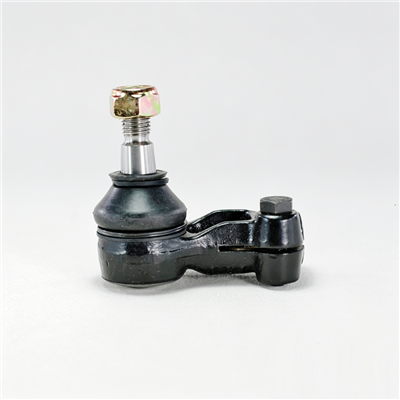
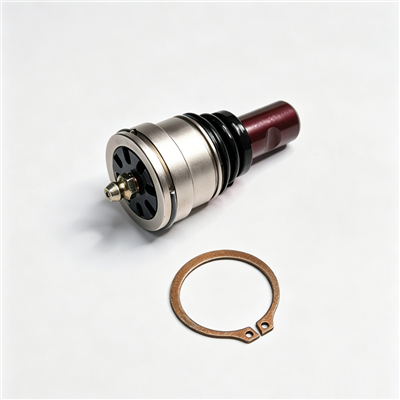
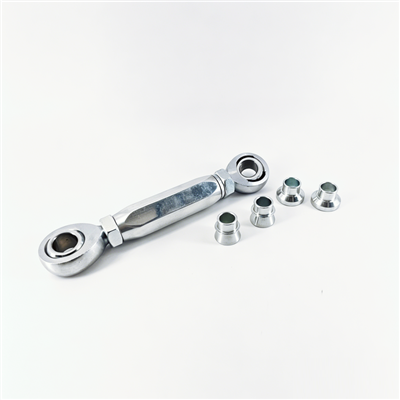
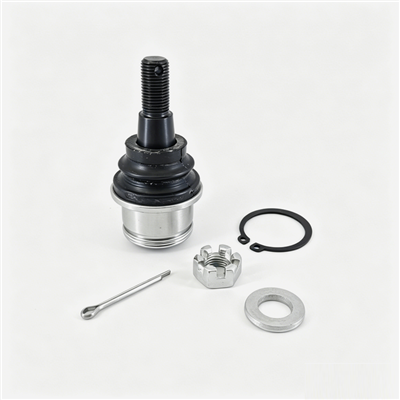
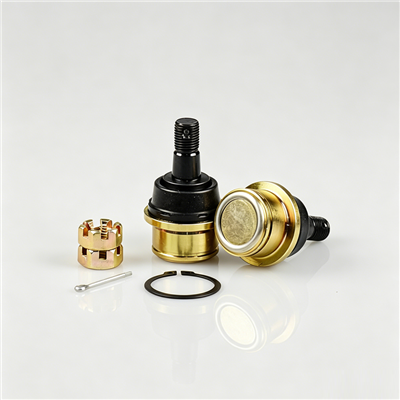
Links and ball joints connect the various moving parts of the suspension system. A ball joint is installed at the end of a control arm, a tie rod or a similar member, and it forms a spherical hinge. Bonpora lists two duties for the group. A link transmits force and motion while allowing a certain range of swing, and a ball joint enables multi-directional rotational movement while withstanding both axial and radial loads. The materials used are carbon steel or aluminium alloy for the link, polyoxymethylene or nylon for the ball joint housing, and quenched alloy steel for the ball stud. Quality control inspects ball joint starting torque, swing torque, axial play and dust cover durability, and the warranty is one year or 30,000 km for ball joint looseness or abnormal noise. Customisation covers link length, ball stud diameter and dust cover material, with batch and small batch production supported from samples or drawings. This guide sets out how to specify a link or a joint so that the inspection values arrive inside the window the application needs.
Both parts do the same job in principle, which is to allow movement in some directions while resisting it in others. The difference is the number of directions.
A ball joint is a spherical pair. The stud can rotate about its own axis and swing through a cone, which allows the wheel to steer and to travel at the same time without binding the arm or the tie rod. That freedom is what lets a suspension move through bump, rebound and steering angle while the mounting points stay rigid on the body.
A link is a member with a joint at each end, used where force and motion have to cross between two parts that move relative to each other. A stabiliser link transfers roll load between the bar and the suspension arm, and a suspension link transfers load between two moving members. The link body carries the load, and the joints at its ends allow the relative movement.
A joint that rotates freely but cannot carry load, or carries load but seizes, is a failure in either direction. The specification has to hold both at the same time.
The stud swings through the working cone while the vehicle steers and the suspension travels. If the joint becomes stiff, the steering effort rises and the arm or the tie rod is loaded in a way the design did not intend. Swing torque is therefore measured on the finished assembly rather than assumed from the components.
Axial load travels along the stud axis, which is the direction produced by wheel forces along the arm or the rod. Radial load acts across the joint. The ball stud is quenched alloy steel and the housing is a polymer bearing surface, so the load capacity comes from the combination: a hardened sphere running in a polymer seat that is held in a housing with the correct preload.
Each material in the assembly has a specific job, and changing one changes the behaviour of the whole joint.
Carbon steel is the standard choice for a load-carrying link, because it combines strength with a cost that suits volume production, and it accepts the coatings used on underbody parts. Aluminium alloy reduces mass, which matters where a link is long or where it is fitted to a lightweight axle, and it needs attention to the joint between the aluminium body and the steel stud to avoid galvanic effects.
The housing carries the spherical bearing surface, so the polymer has to hold its dimensions, resist compression set and run against a hardened steel sphere without excessive wear. Polyoxymethylene offers good stiffness and low friction, while nylon variants can be chosen for different strength or temperature characteristics. Both are used for the housing or for the bearing insert inside a metal housing, depending on the design.
The stud is quenched alloy steel, then usually ground and coated. Hardness, surface finish and the diameter of the spherical head decide the load capacity and the starting torque. Because the stud is the part that wears, its hardness and its surface condition are worth stating explicitly in the specification rather than leaving them to the drawing tolerance alone.
The dust cover is the only barrier between the bearing surface and the road environment, so its material and its fit decide how long the joint keeps its torque values. Cover durability is one of the four inspections for this part, which reflects how much of the service life depends on it. Custom dust cover materials are available where the application demands resistance to a particular condition.
| Component | Material | What it decides | Specification point |
|---|---|---|---|
| Link body | Carbon steel or aluminium alloy | Load capacity, mass and coating route | Grade, mass target, coating |
| Joint housing | Polyoxymethylene or nylon | Bearing surface, friction and compression set | Polymer type, insert design, housing material |
| Ball stud | Quenched alloy steel | Wear resistance and load capacity | Hardness, sphere diameter, surface finish |
| Dust cover | Polymer or elastomer selected for the duty | Retention of grease and torque values | Material, retention method, durability test |
Bonpora inspects starting torque, swing torque, axial play and dust cover durability. Each one describes a different part of the joint behaviour, and a buyer who understands them can read a report without a translator.
Starting torque, also called breakaway torque, is the effort needed to move the stud out of rest. It reflects the preload and the condition of the bearing surface. Swing torque is measured while the stud is turning, so it describes the friction the joint offers once movement has begun. The two are related but not identical: a joint can break away heavily and then turn smoothly, or break away lightly and feel loose.
Axial play is the end float of the stud along its own axis. It is the value that most directly relates to the knock a driver reports, because a joint with excessive float moves when the load direction reverses. Dust cover durability records how the cover behaves under the conditions it will meet, which is the property that protects the other three values over time.
| Inspection value | What it describes | Reading outside the window suggests |
|---|---|---|
| Starting torque | Preload and bearing condition at rest | Low value: loose joint. High value: excessive preload |
| Swing torque | Friction during movement | High value: stiff steering or joint binding |
| Axial play | End float along the stud axis | Excess float links to noise on load reversal |
| Dust cover durability | Protection of the bearing surface | Early cover failure shortens the life of every other value |
Customisation covers link length, ball stud diameter and dust cover material, and batch or small batch production is supported. The values below are the ones that decide whether the finished part fits and performs.
State the link length between the joint centres and the tolerance on it, the swing cone required at the installed position, and the angular relationship between the two ends. For a ball joint alone, state the stud taper or thread, the stud length, and the position of the sphere relative to the mounting face. These values decide fitment, and a small error at this stage appears as a part that cannot be aligned.
State the stud diameter or taper, the nut or clamp arrangement, the dust cover material required for the environment, and the coating for the link body where one is used. Add the operating temperature range and the presence of salt, grit or cleaning chemicals, because the dust cover and the housing polymer both respond to those conditions. Finally state the expected volume and the batch pattern, since the batch size influences how the tooling is set up.
| Specification data | Why it decides performance | How it is confirmed |
|---|---|---|
| Link length and tolerance | Sets the geometry of the assembly | Measurement between joint centres |
| Swing cone and angular relation | Prevents binding through suspension travel | Articulation check on a fixture |
| Ball stud diameter and taper | Decides clamp load and seat engagement | Gauge check and assembly trial |
| Dust cover material | Protects the bearing surface for the service life | Durability result per the stated test |
| Coating on the link body | Corrosion resistance in road salt | Coating thickness and salt spray record |
| Volume and batch pattern | Matches tooling and production setup | Order confirmation against quoted band |
The same joint design is used in several positions, and each position loads it differently.
At the end of a control arm the joint carries the wheel loads and follows the full suspension travel, so load capacity and swing range are both demanding. The dust cover sees grit and water directly from the road, which is why cover durability matters most here.
On a tie rod the joint transmits steering motion and must move smoothly through small angles while the driver feels the road. Friction that is too high in this position is felt through the steering wheel, so swing torque is the value to watch.
On a stabiliser or suspension link, the joint works through a smaller angular range but with a high number of cycles. Wear rate matters more than peak strength, and axial play is the value that eventually produces the noise that brings the vehicle into the workshop. Specifying the right link length and stud diameter for the position is the part of the order that most often decides whether the customer is satisfied.
Bonpora gives one year or 30,000 km for ball joint looseness or abnormal noise. That wording is worth noting, because it focuses on the two conditions that a joint produces in service rather than on a general claim. For a buyer, the warranty sets the period during which the inspection values should still hold, and it also explains why the assembly records matter: a joint assessed on looseness or noise is judged on the condition of the bearing surface and the dust cover, both of which depend on how the joint was made and how it was fitted.
The mistakes below are the ones that return from the workshop, and each has a straightforward prevention.
Confirm the position, the required swing cone and the stud interface rather than matching on overall appearance. Confirm the dust cover material against the environment, and confirm the coating on the link body where the vehicle operates in salt. A five minute comparison against the removed part, using the drawing values, removes most of the risk.
| Error | Result at the vehicle | Prevention |
|---|---|---|
| Matching a joint on appearance only | Stud does not seat or the cone is too small | Check the taper, thread and swing cone against the drawing |
| Dust cover chosen without the environment | Early cover failure and grease loss | State temperature, salt and grit exposure in the request |
| Link length tolerance left open | Assembly cannot be aligned | State the length between joint centres with its tolerance |
| Stud hardness not specified | Faster wear and earlier axial play | State hardness and sphere diameter |
| Volume not shared with the supplier | Tooling set up for the wrong batch size | State the annual volume and the batch pattern |
Starting torque is the effort needed to move the stud from rest and reflects the preload. Swing torque is the friction while the stud is turning. Both are inspected because a joint can be tight to break away and then turn freely, or the reverse.
Because it relates most directly to the complaint a driver reports. End float along the stud axis allows movement when the load direction reverses, which is what produces a knock, so it is inspected as its own value.
Yes. Links and ball joints are supplied as assemblies and as separate joints, and customisation covers link length, ball stud diameter and dust cover material. Batch and small batch production from samples or drawings is supported, which suits both production programmes and aftermarket ranges.
Bonpora gives one year or 30,000 km for looseness or abnormal noise. Actual life depends on road conditions, dust cover condition and the angular range the joint works through, so the practical measure is the inspection values at each service rather than the period alone.
A sample, a drawing or a set of dimensional values is enough to start a review of link length, stud diameter and dust cover material. Send the data to the technical team at Bonpora Parts and Components Co.,Ltd., or review the link and ball joint range and the custom development service. The joints used in the same assemblies are described in the control arm and tie rod ranges.