sales@bonporaparts.com
0086-10-64988621
English
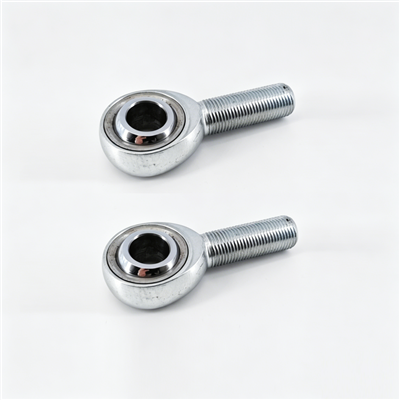
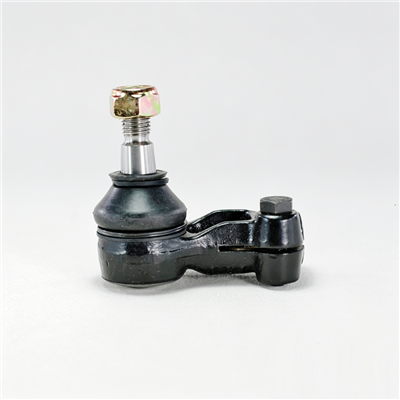
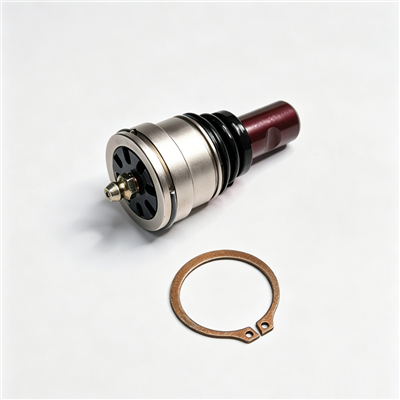
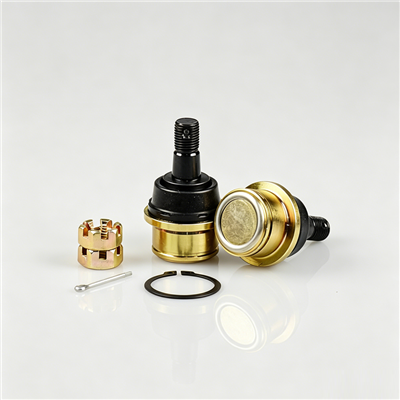
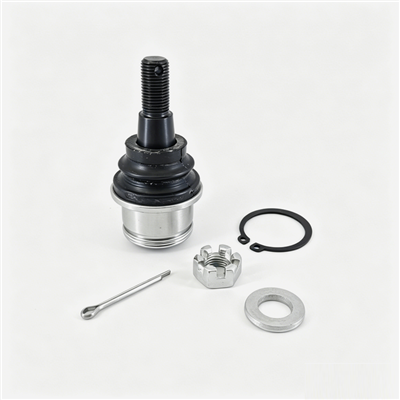
A link and ball joint assembly connects moving parts of a suspension system. Common examples are the stabilizer link and the suspension link. Ball joints are installed at the ends of control arms, tie rods and similar components, where they form a spherical hinge. The link transmits force and motion and allows a certain range of swing. The ball joint adds multi-directional rotational movement and carries both axial and radial loads at the same time. Those two jobs are why the part appears on almost every passenger car platform, and why a purchasing list for a suspension programme usually contains several link variants in the same box.
Bonpora lists a one year or 30,000 km quality guarantee on the ball joint itself, applied to looseness or abnormal noise. For a trade buyer this matters in a practical way: the warranty wording names two failure symptoms and one limited period, so the purchase order should also name the inspection values that keep those symptoms away. The rest of this guide sets out what to put in a request, how to compare offers and how to decide between suppliers.
Search behaviour around this component is narrow and technical. Buyers rarely start from a generic phrase such as suspension parts. They start from a reference number, a vehicle platform or a measured dimension, then filter by supplier capability.
The strongest search pattern is part type plus an original equipment reference number, for example stabilizer link for a named platform. Reference numbers are short, unique and hard to mistype, which is why they produce the fewest wrong results. Ask the factory to return the crossing list with each quotation so the reference number, the platform and the dimensional drawing all appear in one row.
Other patterns worth covering on a product page are part type plus specification, such as ball joint with a stated stud diameter or a stated link length, and part type plus supplier capability, such as suspension link factory or ball joint manufacturer with an IATF 16949 system. Buyers also search by intended market, because a repair-grade part for an independent workshop is specified differently from a service part for a franchised dealer network.
The source data names four material groups. Knowing which group a quotation uses is the fastest way to compare two prices that look similar.
| Position | Material named in the source data | What it governs |
|---|---|---|
| Link body | Carbon steel or aluminium alloy | Bending stiffness, weight, corrosion strategy |
| Ball joint housing | Polyoxymethylene (POM) or nylon | Bearing surface, friction level, service life |
| Ball stud | Alloy steel, quenched | Wear resistance, torque retention |
| Dust cover | Elastomer, material open to customisation | Contamination control, grease retention |
A steel link is the default for high-volume passenger car programmes because it is stiff, weldable and inexpensive at scale. An aluminium alloy link lowers unsprung mass and suits performance or light commercial applications, but it changes the corrosion strategy: an aluminium body needs isolation from a steel mating face to avoid galvanic attack, and the fixings usually need a coating specification as well. Both options are available, so the buyer should state the intended mass target and the corrosion class rather than assume a material.
POM and nylon are both engineering polymers that can run against a quenched alloy steel stud with a low friction coefficient. POM generally holds tighter dimensional stability in humid conditions, while nylon offers good toughness at low temperature. The dust cover is the part that decides field life in most fleets, because a torn cover allows water and road grit into the bearing surface. The source data confirms that dust cover material can be customised, which is worth using when a programme runs in a region with heavy road salt.
Bonpora states that starting torque, swing torque, axial play and dust cover durability are inspected. A wholesale buyer should treat those four values as the technical core of the purchase order, because they translate directly into the two warranty symptoms: looseness and abnormal noise.
| Inspection value | What it describes | Buyer action |
|---|---|---|
| Starting torque | Effort needed to begin rotation of the stud in the housing | Ask for the nominal band and the measuring method |
| Swing torque | Effort to keep the stud moving through its swing angle | Confirm the value after a set number of cycles |
| Axial play | End float along the stud axis | Fix an upper limit, since play is heard as a knock |
| Dust cover durability | Ability to survive flexing without splitting or losing grease | Request the ageing and flex test method used |
Starting torque and swing torque move in opposite directions. A tight joint removes axial play and reduces noise, but excessive preload raises steering or roll effort and wears the bearing surface faster. When two quotations state different values, compare the measuring method before comparing the numbers: a value measured at a different swing angle or after a different run-in period is not the same value. Ask each supplier to state the method, the fixture and the sample size in the inspection record.
Axial play is the value most often left vague in a commercial offer, yet it is the one a workshop technician feels by hand during a road test. A buyer who fixes an upper limit for axial play, and asks for it to be checked at the end of the durability run rather than only on a fresh part, removes most of the risk of a warranty claim on abnormal noise.
A link and ball joint catalogue is normally sold as a range rather than as single numbers, because the same workshop orders parts for several platforms in one delivery. Group the range by vehicle family and by axle position, then decide how deep each group should be.
Platform grouping keeps the number of distinct references low while covering more vehicles, since one link often serves several models built on the same floor pan. State the platforms you intend to cover and let the factory propose the crossing. Ask for the number of distinct references the range produces before confirming the order, so that the depth of the inventory stays under your control.
Decide early whether the range is aimed at independent repair shops or at a distribution channel that also supplies franchised dealers. A dealer-facing part usually needs a matching box design, a printed reference list and a documented inspection record, while a repair-grade line can be shorter and lighter on paperwork. Both can come from the same tooling, but the packaging and documentation cost is not the same.
Most delays in this category come from an incomplete request, not from a slow factory. Send the following data set in one file and the technical review can be completed before pricing starts.
| Data item | Detail to include |
|---|---|
| Identification | Row title, category, OE reference numbers and the platform list |
| Geometry | Link length, ball stud diameter, thread size, mounting centres |
| Materials | Link body material, housing polymer, stud steel grade |
| Function values | Starting torque, swing torque, axial play, dust cover material |
| Volume | Annual quantity per reference, first order split, expected growth |
| Market | Destination country, corrosion class, labelling and marking rules |
| Evidence | Inspection report format, sample order quantity, target approval date |
Where a drawing is not available, a worn sample is a useful second best. The source data confirms that link length, ball stud diameter and dust cover material can all be customised to customer requirements, and that both batch and small-batch production are supported, so a reverse-engineered proposal is realistic even for a short run.
Two quotations for the same reference can differ for reasons that have nothing to do with margin. Compare them line by line against the drivers below before negotiating the headline price.
| Cost driver | Effect on the quoted unit price |
|---|---|
| Material grade | Aluminium body, quenched stud and a specified dust cover compound raise cost above the base configuration |
| Tooling and setup | Amortised over the first order when quantities are small, so per-unit cost falls sharply with volume |
| Inspection depth | Cycle testing and documented torque records add cost but reduce claim risk |
| Packaging | Individual bags, branded boxes and a printed reference list change both cost and shipped volume |
| Freight and duty | Volume weight, container fill and destination duty decide the landed number |
Always convert offers to a landed cost per reference at the same quantity. A slightly higher unit price with better container fill can be the cheaper option, because suspension components are bulky relative to their value and shipping volume is often a larger lever than the ex-works price.
Before releasing a full purchase order, run a sample stage and hold it to a written acceptance list. Approve the sample on the four inspection values, on the dust cover, and on the fit of the stud in the intended control arm or link bracket. If the part is intended for a licensed workshop network, use the sample to check the thread form and the coating rather than only the fit. A sample that passes on the bench can still fail in service when the cover material is wrong for the local climate, so keep one sample in stock as the reference of record for later deliveries.
Score candidates on capability and evidence rather than on price alone. A short scorecard keeps the comparison honest when several offers arrive in the same week.
| Criterion | Evidence to look for |
|---|---|
| Quality system | Current certificate, scope covering suspension links and ball joints |
| Process control | Incoming material records, heat treatment traceability, torque test logs |
| Testing | Starting torque, swing torque, axial play and dust cover durability, with sample size |
| Customisation | Record of drawing-based and sample-based development, including small batches |
| Delivery | Committed lead time, packaging method and response time on a revised quantity |
| Warranty handling | Written claim procedure aligned with the one year or 30,000 km terms |
Ask each candidate to translate the four inspection items into a control plan step. A supplier who can show where the value is measured, how often, and what happens when it drifts is a lower risk partner than one who only cites a certificate.
Links and ball joints are exposed surfaces. A quenched alloy steel stud with a machined bearing area will corrode in a humid container unless the protective coating and the inner packing are specified. Confirm the coating system on the stud and the link body, the grease fill in the dust cover, and whether the parts travel in individual bags or nested in trays. Both choices affect the rate of surface rust found at goods-in.
Container loading deserves a plan of its own. Because the parts are bulky, test the carton dimensions against the container and confirm the number of pieces per carton before quoting freight. A carton that stacks badly can add a full extra container load over a year on a high-volume reference.
The published terms for the ball joint are one year or 30,000 km, for looseness or abnormal noise. Read them together with the closing document of the purchase order: claim window, the person who judges the returned part, the credit or replacement route and the evidence a workshop must provide. Suspension claims are frequently disputed because the part was damaged during installation, so a clear claim procedure protects both sides. Ask for the inspection report to travel with each batch as the record of the values that were accepted at dispatch.
Write starting torque, swing torque, axial play and dust cover durability into the order, together with the measuring method and the sample size. Bonpora inspects those four items, and they map directly onto the two warranty symptoms, so they are the natural acceptance values for a wholesale order.
Yes. Bonpora states that link length, ball stud diameter and dust cover material can be customised to customer requirements, and that both batch and small-batch production are supported. Send either a drawing or a sample; a worn sample can be measured and corrected before a drawing is produced.
The link body is carbon steel or aluminium alloy. The ball joint housing uses polyoxymethylene, also called POM, or nylon, and the ball stud is quenched alloy steel. A quotation should name all three, because the combination decides both the price and the expected service life.
Start with a sample order of a few references that cover the mainstream platforms, approve it against the four inspection values, then release the full order in two or three scheduled deliveries rather than one large shipment. That keeps working capital low and confirms process stability before the volume grows.
Share the platform list, the reference numbers and the intended annual volume, and the technical team can return a crossing proposal with the four inspection values and a landed cost estimate. Start from the link and ball joint range, review the ball joint specification outline for the base values, compare the wear patterns in the failure analysis guide before setting your acceptance limits, and read the installation guide to confirm the fixing method on your target platforms. Custom programmes and reverse-engineered parts are handled through custom parts, and the associated control arm range is worth reviewing when a platform order covers both components. Send the data package through the contact page.