sales@bonporaparts.com
0086-10-64988621
English
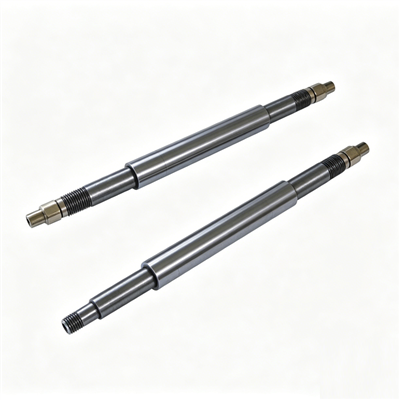
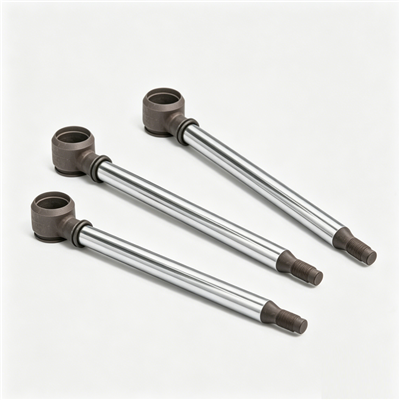
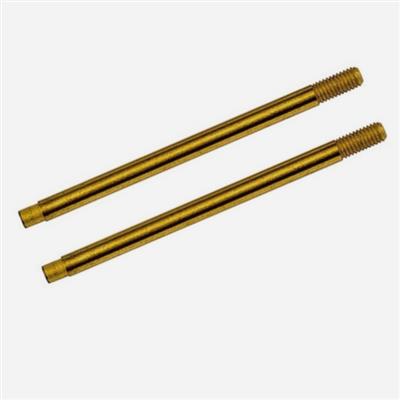
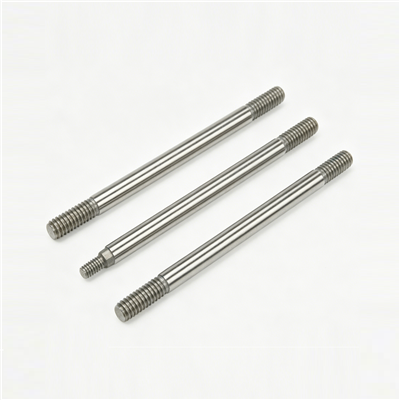
The source row describes the shock piston rod as the core moving component of a shock absorber, connected to the piston assembly inside the working cylinder at one end and passing through the oil seal and guide seat to the vehicle body or suspension at the other. It is made from carbon or alloy steel with induction hardening or carburising, and its stated service life under normal operating conditions is 80,000 km or 5 years, with a warranty of 2 years or 80,000 km whichever comes first.
Because the rod is described in a parts listing, it is easy to treat its dimensions as fixed by the original design. In a rebuild or a modified vehicle they are variables, and each one changes something about how the damper behaves. Understanding the links prevents a rebuild that fits perfectly and drives badly.
As the rod moves into the cylinder it displaces oil, and that displaced volume has to go somewhere, normally into a gas chamber or a reservoir. A larger diameter rod displaces more oil for the same stroke, which raises the pressure needed to accommodate it and changes the balance between the compression and rebound circuits. Fitting a larger rod to a damper whose internal circuits were designed for a smaller one is not a neutral change.
Bending stiffness rises steeply with diameter, so a larger rod resists side load better and holds the piston more accurately in the bore. That is the main reason heavy duty and off-road dampers use larger rods. The benefit is real, and it comes with the volume effect described above and with a slightly heavier unsprung component.
A larger rod presents a longer seal contact circumference, so friction rises with diameter. In most designs the effect is modest, but it becomes visible in a low speed damper where friction is a meaningful share of total force.
| Change | Primary effect | Secondary effect |
|---|---|---|
| Larger rod diameter | Higher bending stiffness, better piston guidance | More displaced oil, more seal friction |
| Smaller rod diameter | Less displaced oil, lower friction | More bending deflection under side load |
| Longer exposed length | More travel available | Greater bending moment for the same side load |
| Shorter exposed length | Stiffer assembly | Travel may be limited before the damper bottoms |
Rod length has to be read together with stroke and with the mounting geometry. Three values matter: the installed length at normal ride height, the length at full compression, and the length at full extension. A rod that is correct at ride height can still bottom the damper or expose an unprotected section at one of the extremes.
On a modified vehicle, the lift or the spring change moves the ride height and therefore moves the working position of the rod inside the cylinder. Reviewing the three lengths is the check that catches the common mistake of a damper that runs out of travel in one direction after a suspension change.
The further the rod extends, the more of it is exposed to stone damage and to contaminants. On off-road and gravel applications, the exposed length should be protected by a boot or guard sized to the travel, not by a generic cover that rubs against the rod at one extreme.
In a gas charged damper, the charge pressure acts on the cross sectional area of the rod, producing a force that pushes the rod outward. That force is proportional to pressure and to rod area, so a rod diameter change alters the gas force even when the pressure is unchanged.
The practical consequence is that a rebuild which changes rod diameter should revisit the charge pressure rather than assuming the original figure still applies. The same reasoning applies in reverse: if a customer reports that a rebuilt damper feels stiffer in extension than before, rod area and charge pressure are the first two values to compare.
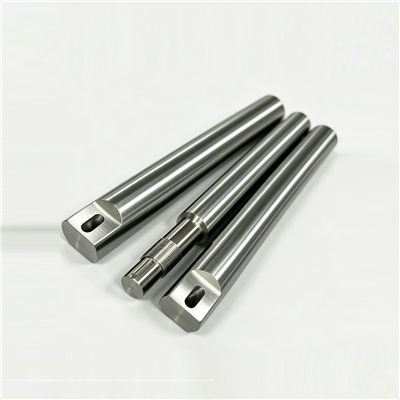
The source row confirms that custom rods are produced to drawing or sample, including custom lengths, diameters, surface treatments and end connection types. That makes a properly specified custom rod realistic, provided the enquiry carries the right data.
Steps one to three are the ones most often missing, and they are the ones that decide whether the custom rod behaves as intended.
| Component | Interaction with the rod |
|---|---|
| Piston and valving | Sets the damping force the rod has to transmit |
| Cylinder bore | Together with rod diameter, sets the displaced volume ratio |
| Guide seat and bushing | Controls rod guidance and side load transfer |
| Oil seal | Runs on the rod surface and is matched to its finish |
| Gas chamber or bladder | Absorbs the volume displaced by the rod |
| Bump stop and dust protection | Protect the rod at the extremes of travel |
Treating these as a system is what makes a rebuild predictable. Changing the rod alone, without considering the valving and the gas charge, is the most common reason a modified damper does not feel as expected.
| Symptom | Possible sizing cause |
|---|---|
| Harsh bottoming on compression | Travel used up, rod or stop too long for the geometry |
| Leak after a short distance | Bending deflection or an exposed section damaged by debris |
| Inconsistent damping when hot | Displaced volume and gas chamber balance not matched |
| Noise at full extension | Insufficient extension travel or a stop not suited to the stroke |
| Firm feel in extension after a rebuild | Higher gas force on a larger rod area |
None of these symptoms identifies a single cause on its own, but each one points at the values worth checking first, which is faster than replacing parts at random.
The source row states a design life of 80,000 km or 5 years under normal operating conditions, with a warranty of 2 years or 80,000 km whichever comes first, under an IATF 16949 quality system. Those figures assume the rod is correctly sized for the duty and that the surface is protected.
Where a vehicle is modified, used competitively or operated in an aggressive environment, the duty changes and the interval between inspections should shorten accordingly. A sensible practice is to inspect the running surface at every service on a modified vehicle for the first year, then move to the standard interval once the setup has proved itself stable.
Only with a review of the damper as a system. A larger rod raises bending stiffness but also displaces more oil and changes the gas force, so the valving and the charge pressure may need to be revisited. Where the original geometry allows, a modest increase with an adjusted setup is usually a better answer than a large jump in diameter.
Length by itself does not change the damping force, but it changes where the rod works and how much of it is exposed. The stroke and the installed lengths are the values that determine whether the damper uses its travel correctly.
Because something in the assembly differs, most often oil volume, gas charge or rod area. Comparing those three values with the original specification resolves most of these cases without dismantling the unit again.
With the full set of travel and load data, the intended surface treatment and a clear statement of the environment. Where possible, ask for a first article and test it before committing to a batch, since competition use exposes any mismatch quickly.
Bonpora Parts and Components produces piston rods to drawing or sample in S45C, S55C and 40Cr with induction hardening, carburising, hard chrome, nitriding and special coatings, including custom lengths, diameters and end connection types. Review the piston rod range, read the selection guide and the assembly guide, or compare the shock absorber component range and the polyurethane bump stop range for the parts that work with the rod at the ends of travel. Send your travel data and drawing through the custom parts service or the contact page for a specification review.