sales@bonporaparts.com
0086-10-64988621
English
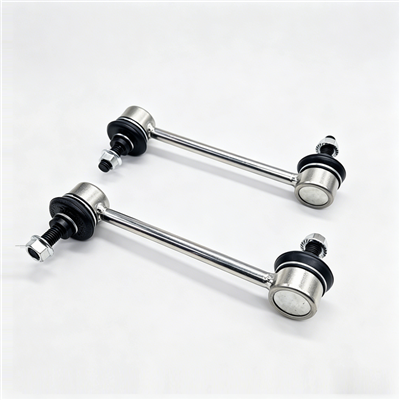
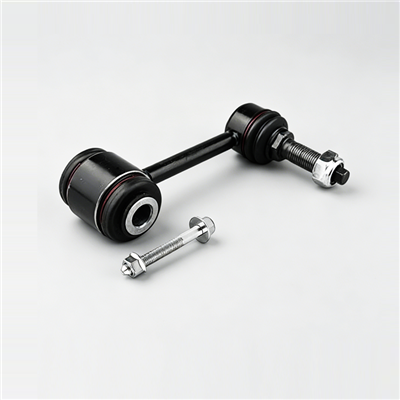
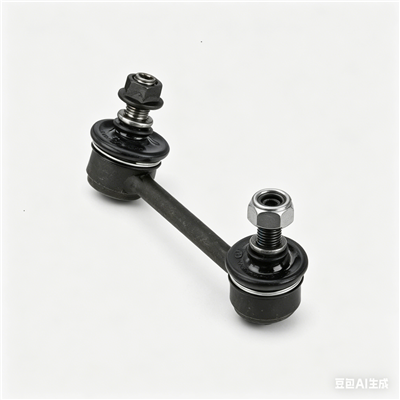
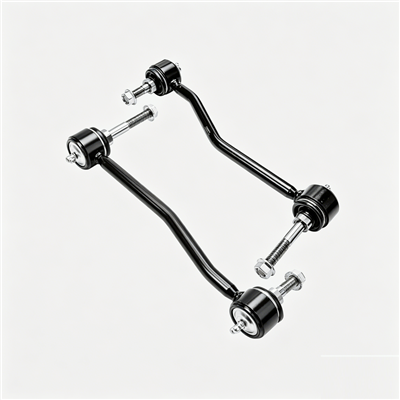
A stabilizer bar, also called a sway bar link assembly point or an anti-roll bar, is mounted on the subframe or the vehicle body, with its two ends connected to the left and right suspension lower control arms or shock absorbers through stabilizer links, which are also known as drop links. It reduces body roll during cornering and improves driving stability by transferring part of the compression deformation from one side of the suspension to the other, which balances wheel load distribution. It is produced from solid or hollow spring steel such as 60Si2Mn or 55Cr3.
In a workshop serving retail customers, the stabilizer bar arrives as a noise complaint and leaves as a repair order. In a fleet, the same part behaves differently: vehicles cover similar routes under similar loads, so failures cluster in time and in place. That pattern is useful, because it turns a random repair into a planned one.
The bar itself is a spring working within its elastic range, so it is not normally a wear item. The parts that wear are the ones around it: the bushings that position it, the links that connect it, and occasionally the mounting points on the subframe. Fleet data usually shows the interfaces failing repeatedly on the same vehicle type at roughly the same mileage, while the bar survives.
Over a typical fleet life, a stabilizer bar may never be replaced while bushings and drop links are replaced more than once on the same vehicle. Planning the parts inventory and the labour time around that reality is more useful than planning around the bar.
| Component | What sets its life | Planning approach |
|---|---|---|
| Bar | Spring steel quality, coating protection and exposure to road salt | Inspect at every service; replace only on cracks, measurable section loss or a set outside tolerance |
| Bushings | Compound, load, and exposure to oil or grit | Replace as a pair on a mileage or inspection trigger, not on failure alone |
| Drop links | Joint design, boot integrity and road surface | Treat as a wear item with a planned change point, checked at each service |
| Brackets and fasteners | Corrosion and correct torque at the last repair | Inspect at bushing changes; replace hardware rather than reusing it |
| Mounting points | Structural condition of the subframe or body | Inspect whenever a bar is disturbed, and after any incident that loads the axle |
Bonpora lists a 2 year or 50,000 km warranty, whichever comes first, covering fracture and excessive permanent deformation on the bar. For a fleet, that term applies to the bar only, which is another reason to separate the bar from the interface parts in the maintenance plan.
| Duty band | Typical use | Practical inspection approach |
|---|---|---|
| Light, urban | Delivery vans on good roads, low payload variation | Check at scheduled services; expect bushings to last well |
| Medium, mixed route | Service vehicles with variable load and some rough surfaces | Add a bar and link check between services, and record what is found |
| Heavy, poor surfaces | Construction, mining support, rural routes | Short interval visual check with a pry bar; treat links as a consumable |
| High salt exposure | Winter routes and coastal areas | Inspect coating condition on every service and treat coating damage immediately |
These bands are a planning framework rather than a fixed schedule. The right interval is the one that catches a worn link before the driver notices it, and that is a number a fleet finds by comparing its own inspection findings with its repair history.
A short code on the work order, for example bar visual pass, link play left, bushing dry, turns an inspection into data. Three months of those codes is usually enough to identify whether a vehicle type consumes links faster than the fleet planned for, and whether that consumption is linked to a route or a driver.
A bar with a visible crack, a bar with a measurable set, a separated link joint or a cracked mounting point should not be returned to service until it is repaired. A dry bushing or a lightly worn link can be scheduled, provided the finding is recorded and the vehicle is rechecked at the next service.
| Part | Reason to hold stock | What drives consumption |
|---|---|---|
| Bushings | Always replaced in pairs when the bar is disturbed | Mileage, oil exposure, ambient temperature |
| Drop links | Wear item, and the most frequent cause of the noise complaint | Road surface, boot condition, link design |
| Bracket hardware | Corrosion makes reuse unreliable | Winter salt exposure |
| Bars | Low consumption but a long lead time for platform specific geometry | Accident damage and corrosion in coastal fleets |
The bar is the part that justifies a small safety stock rather than a large one. It moves slowly, but a platform specific bar can have a long delivery if it is not held, and a vehicle waiting for a bar is a vehicle off the road. Holding one per common platform, identified by a batch code so it can be traced, is usually cheaper than express freight.
Record the vehicle, the axle, the parts replaced, whether the previous repair used the same parts, and the mileage at each visit. Also record the finding that triggered the repair, because a job coded only as suspension noise hides whether the work was a link, a bushing or a bar.
Two patterns are worth acting on. A vehicle type that consumes links at a shorter interval than the fleet average suggests a route effect or a link specification issue. The same vehicle returning for the same corner shortly after a repair usually points to an installation issue, most often a bar tightened with the suspension hanging or a bushing fitted without the correct grease.
Corrosion drives two of the three bar failure modes a fleet is likely to see, and corrosion is seasonal. Vehicles that run on treated roads accumulate salt spray on the bar, the brackets and the link studs, and the coating is the only thing standing between a road surface pit and a crack origin. Two habits pay for themselves: a wash of the underbody area during the salt season, and immediate treatment of any coating damage found during a repair. Coastal fleets should treat the bar as an inspected item every service, because airborne salt reaches the same areas without the winter trigger.
Encouraging drivers to report these early is the cheapest inspection tool a fleet has, because a driver notices a change in noise long before a scheduled service reaches the vehicle.
Bonpora covers fractures and excessive permanent deformation for 2 years or 50,000 km, whichever comes first, and produces stabilizer bars to ISO or GB standards with inspection of bar hardness, fatigue strength, permanent deformation and surface corrosion resistance. In a fleet, the practical requirements are to keep the batch or heat code of every bar fitted, the mileage at fitting, and the inspection findings from the services in between. When a bar fails, that record allows the fleet and the supplier to establish quickly whether the failure is isolated or part of a batch problem, without taking a vehicle out of service for an extended investigation.
There is no single interval that fits every fleet, because bushing life depends on compound, load and exposure. The workable approach is to set an inspection interval by duty band, record the findings, and replace bushings as a pair when wear, hardening or oil contamination is found rather than waiting for a noise complaint.
No. The bar works within its elastic range and normally outlives the bushings and links around it. It is replaced when it is cracked, when corrosion has caused measurable section loss, or when it has taken a set outside the released tolerance.
A pry bar and a loaded suspension. With the vehicle at ride height on ramps, load each link joint with a pry bar in the direction the road loads it and watch and feel for play. This reveals wear that a visual inspection on a lift cannot.
It should be inspected whenever the axle has taken an impact, along with the mounting points and the subframe. If the bar has taken a set, or if the mounting points show elongation or cracking, replacement is the correct outcome, and the inspection should include the opposite side because the load path crosses the axle.
Bonpora produces stabilizer bars in solid or hollow spring steel for fleet and aftermarket programmes, with customization of diameter, length, end shape and mounting points and sample validation before production. Start from the stabilizer bar range, review the specification detail in the anti-roll bar specification guide, follow the fitting sequence in the stabilizer bar installation guide, pair every bar with matching mounting bushings, and send fleet application data through the contact page.