sales@bonporaparts.com
0086-10-64988621
English
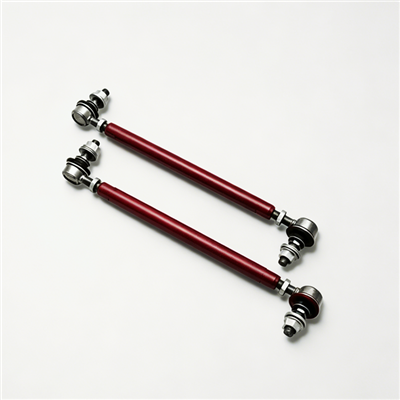
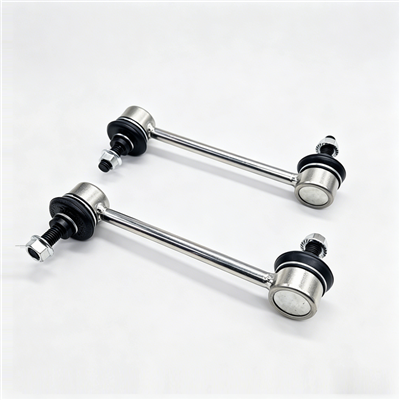
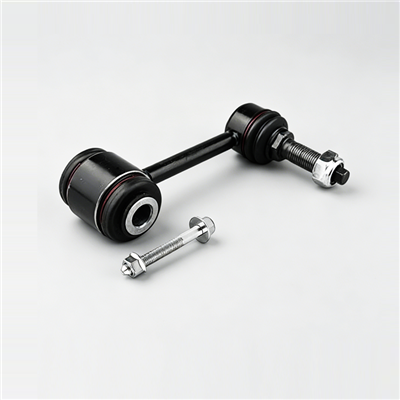
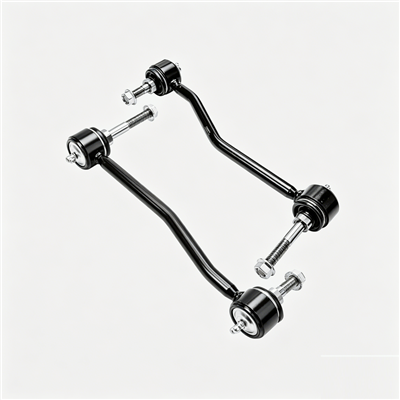
A stabilizer bar, also called a sway bar link assembly point or an anti-roll bar, is mounted on the subframe or the vehicle body, with its two ends connected to the left and right suspension lower control arms or shock absorbers through stabilizer links, which are also known as drop links. It reduces body roll during cornering and improves driving stability by transferring part of the compression deformation from one side of the suspension to the other, which balances wheel load distribution. It is supplied in solid or hollow spring steel such as 60Si2Mn or 55Cr3.
The commercial detail that shapes a range is that the bar is rarely the only part sold at the counter. A customer who replaces a bar usually needs bushings and drop links at the same time, and often a bracket kit. Planning the range around that job, rather than around bar references alone, is what raises the average order value and reduces the number of part orders that arrive incomplete.
| Grouping | Why it helps the counter |
|---|---|
| By vehicle application | The counter starts from the model and the axle, not from a diameter |
| By position | Front and rear bars are different parts and are often quoted together |
| By kit | Bar, bushings, brackets and links as one reference or one line item |
| By construction | Solid and hollow bars for the same application are recorded separately |
| By demand band | Fast movers held in stock in depth, long tail quoted to order |
The practical starting point is the movement history of the bushings and drop links already sold, because those parts reveal which vehicles are being repaired rather than which bars are simply listed.
| Field | What to record |
|---|---|
| Internal and supplier reference | House number, supplier number, packing quantity |
| OE and competitor numbers | All known references, including superseded numbers |
| Vehicle application | Make, model, platform, years and axle position |
| Construction | Solid or hollow, and the wall thickness for a hollow bar |
| Diameter and length | Bar diameter, overall length and end fixing centre distance |
| Arm geometry | Bend angles, offsets, link hole diameter and number of adjustment holes |
| Bushing details | Bore, width, compound and retention method |
| Grade and finish | Spring steel grade, hardness window and coating specification |
| Associated parts | Bushing and link references that belong with this bar |
| Interchange status | Exact, functionally equivalent, or not interchangeable |
Two fields in that list are routinely left blank and routinely cause complaints: the end fixing centre distance, and whether a hollow bar was the original construction. A hollow bar and a solid bar of the same diameter are not interchangeable even when the arm geometry matches, because their stiffness differs.
Most demand is for an exact replacement, matched on diameter, construction and arm geometry, and it should be sold as such. A separate category is the upgrade bar, where a customer wants more roll stiffness on a specific platform. Upgrades are worth holding as a distinct line with clear application notes, because they alter vehicle balance and the customer should be told so at the point of sale rather than after fitting.
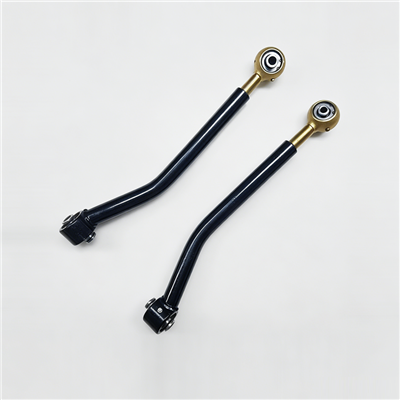
Bars with multiple link holes allow the effective arm length to be changed, which alters stiffness at the link. If an adjustable bar is offered into a market where it will be used on the road, the application notes should state the recommended setting and whether the vehicle manufacturer released an adjustable part for that platform.
Sending this list in one enquiry avoids the common cycle of a quotation that cannot be compared, a sample that does not fit the mounting points, and a second sample that still needs a geometry change.
| Item to compare | What the difference usually means |
|---|---|
| Bar construction | A solid bar quoted against a hollow original is cheaper to make and heavier, and it will not match the released stiffness |
| Grade and hardness window | A wider window is cheaper to produce and less consistent in service |
| Forming route for the ends | Hot forming, cold forming and forging differ in tooling cost and in end properties |
| Inspection scope | Which of hardness, fatigue, permanent deformation and salt spray is included, and how often |
| Coating system | Preparation, film thickness and claimed salt spray hours |
| Supplied accessories | Bushings, brackets and links included or excluded changes the landed cost |
| Packing | Individual protection against bulk bundling, and whether a batch label is applied |
| Warranty terms | Coverage period, mileage limit and the failure modes covered |
The comparison only works if the enquiry is identical for each supplier. Where a supplier proposes a departure from the specification, for example a solid bar where a hollow bar was released, the quotation should be reworked as a separate option with its own landed cost, so the counter knows exactly what it is selling.
Sample validation is where the geometry risk is retired. It is also the point at which the customer can ask for a change that would be impossible later, for example moving a link hole by two millimetres or adding a second adjustment hole.
A stabilizer bar is long, springy and easily marked, so packing is part of the product. Confirm that bars are supported along their length rather than loaded in the middle, that formed ends are protected, that the coating is not scuffed by the bundling, and that each part carries a batch or heat code. For export, add corrosion inhibiting protection in humid conditions, and make sure the packing list identifies each reference by application so a mixed container can be checked at goods inwards without opening every bundle.
Bonpora covers fracture and excessive permanent deformation for 2 years or 50,000 km, whichever comes first. Those two modes are exactly the ones the inspection plan verifies, which makes the terms practical to administer. Two habits make claims efficient: record the batch or heat code of every bar sold, and keep the photographs that arrive from the workshop with the complaint. A fracture face photographed straight on, with the mileage and application written beside it, is normally enough for the factory to trace the part to a heat treatment and coating batch.
| Criterion | What to look at | Why it matters on this part |
|---|---|---|
| Material control | Mill certificates per batch and grade verification | Grade is not visible on a finished bar |
| Heat treatment control | Hardness window, test positions, furnace records | Decides the elastic range and the risk of cracking |
| Forming capability | Bend, upset and forge options for the end geometry required | Determines whether a platform specific bar can be made at all |
| Testing | Fatigue rig with a stated amplitude and cycle count, permanent set measurement | Two of the four inspection items cannot be verified any other way |
| Coating process | Preparation method, film thickness control, salt spray results | Corrosion pits become crack origins |
| Traceability | Batch coding on the part and records retained for the production lot | Field returns cannot be interpreted without it |
| Engineering support | Ability to quote from a drawing or a sample and to propose geometry changes | Most real enquiries need a geometry decision |
| Delivery discipline | Quoted lead time against actual shipments | A stabilizer bar order is usually part of a scheduled job |
It depends on the end geometry and the tooling it needs, because a forged or upset end carries tooling while a simple bend may not. Bonpora supports customization of diameter, length, end shape and mounting points and offers sample validation, so the practical route is to send the drawing or the sample and ask for the tooling position with the quotation.
No. The two constructions have different torsional stiffness and different mass, so a solid bar of the same outer diameter changes the roll stiffness of the axle. Where the original was hollow, the replacement should also be hollow.
Stock the fast movers as kits with bushings and links, because that is how the job is actually sold, and hold the long tail as bare bars with the associated parts listed against them. Recording the accessory references on the same line makes the counter conversation much shorter.
A packing list identifying each reference by application, the batch or heat code applied to the parts, and the inspection records for the production lot covering hardness, permanent deformation and, where specified, fatigue and salt spray results.
Bonpora produces stabilizer bars in solid or hollow spring steel to ISO or GB standards, with inspection of bar hardness, fatigue strength, permanent deformation and surface corrosion resistance, and supports customization of diameter, length, end shape and mounting points with sample validation. Start from the stabilizer bar range, review the technical detail in the anti-roll bar specification guide, read how the parts are controlled in the stabilizer bar manufacturing guide, add the associated mounting bushings to the range, and send your enquiry through the contact page.