sales@bonporaparts.com
0086-10-64988621
English
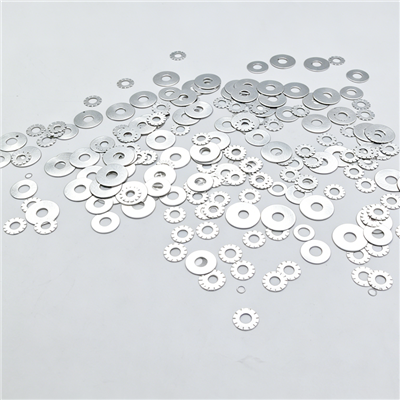
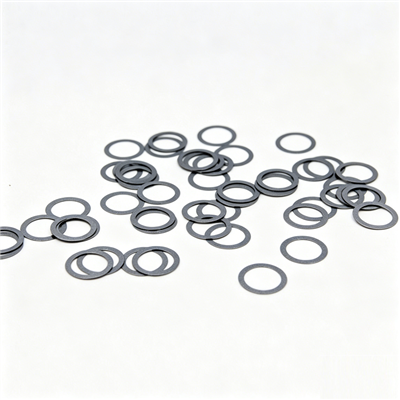
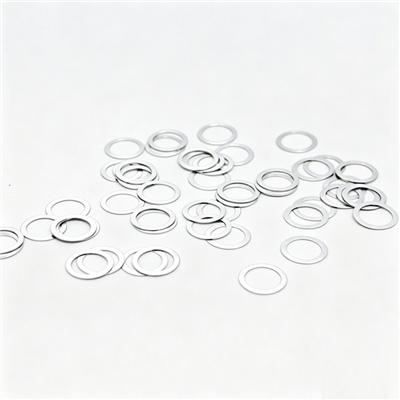
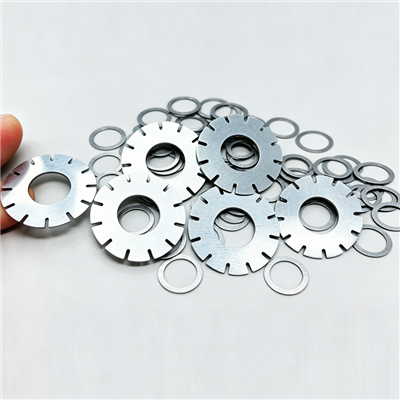
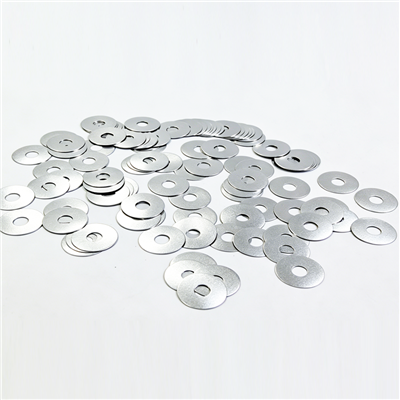
A steel shim, also called a valve shim or shock shim, is installed inside the shock absorber piston assembly, positioned in the piston valve system or base valve system, and works together with valve seats, springs and orifice passages. It is made from Sandvik 20C, SK4 or SK5, C100S, 65Mn, or stainless grades. During the compression and rebound strokes the valve shim opens or closes as the oil flows, regulating the flow rate through the orifice passages and generating the required damping force. Because shims of different thicknesses, diameters and combinations can be stacked, one purchase order often covers a tuning family rather than a single part.
Bonpora produces outer diameters from 4 mm to 60 mm, inner diameters from 0 to 50 mm and thicknesses from 0.1 mm to 1.0 mm, supports development from customer samples or drawings, and offers full process service from material selection and heat treatment through to mass production, with validation according to damping tuning requirements. Production follows the IATF 16949 quality management system and carries a one year or 100,000 km warranty, whichever comes first, for material and manufacturing defects. The practical consequence for a buyer is that the order is really a specification of geometry, material and flatness, not simply a list of part numbers.
Shims are bought as a family because one damper platform uses several thicknesses and diameters. Planning the range before requesting prices avoids both excess stock and repeated small orders.
Build the range around the tuning increments used by the engineering team rather than around every value the tooling can produce. A practical thickness series has small steps in the region where the damper is sensitive and wider steps elsewhere, and a diameter series that follows the seat sizes in the valve designs being serviced. Write down the intended use of each step so that a quotation can be requested for the sizes that will actually move.
Decide early whether to buy loose shims, sorted by size, or kits packed to a specific stack. A kit reduces the risk of a wrong shim in a rebuild and is easier to issue to a workshop, while loose shims give the tuning technician freedom and reduce the number of stock keeping units. Many distributors do both, holding loose shims for service and kits for the models that account for most of the volume. The packing decision also changes the price, because sorting and kit assembly are labour, not material.
Most quotation delays in this category come from an incomplete request. Send one sheet containing all of the following, and the technical review can be completed before pricing starts.
| Data item | Detail to include |
|---|---|
| Identification | Part description, damper or valve application, internal reference |
| Geometry | Outer diameter, inner diameter, thickness, and the tolerance on each |
| Material | Grade for each size, or the property requirement the grade has to meet |
| Condition | Hardness or heat treatment state, surface condition, edge requirement |
| Flatness and burr | Flatness limit, burr height limit, and the inspection method |
| Volume | Annual quantity per size, first order split, expected growth |
| Evidence | Inspection report format, sample quantity, target approval and production dates |
Where the tuning programme is still being developed, state that the sizes are subject to change and ask for the tooling that allows a range of thicknesses to be produced. This is the point at which a supplier with a heat treatment line and a grinding capability can add value, because a tuning iteration often needs a new thickness rather than a new shape.
The named grades behave differently as elastic discs and have different stable thickness ranges. A buyer comparing quotations should confirm which grade is being offered instead of comparing only the price.
| Grade | General character | Buyer note |
|---|---|---|
| Sandvik 20C | Consistent strip quality, well suited to thin disc shims | Ask for the strip certificate with the batch |
| SK4 and SK5 | Spring steel grades with good elastic behaviour | Confirm the hardness and the flattening process |
| C100S | High carbon strip for thin, stiff discs | Watch the edge quality after blanking |
| 65Mn | Widely available spring steel, economical | Confirm flatness after heat treatment, not only before |
| Stainless grades | Corrosion resistance for dampers in wet or marine use | Check that the mechanical properties match the spring grades |
Flatness decides whether a stack sits against its seat uniformly, and burr height at the inner and outer edge decides whether the shims lie flat on each other. Both should appear in the purchase order as measurable values with a stated method, because a supplier cannot be held to a requirement that was never written down. The same applies to the edge condition on a stamped shim: a sheared edge with a tall burr can hold the group open and change the low speed damping.
Thickness tolerance is normally quoted as a band on the strip or on the finished shim, and the measurement position matters on very thin parts. Ask where the thickness is measured, how many points per part are checked and which instrument is used, then compare those answers between suppliers. Two offers with the same nominal tolerance can produce noticeably different stack behaviour if one is measured at the centre and the other at the edge.
Shim prices are driven by tooling amortisation and by the thickness of the strip being processed, so the quantity structure matters as much as the unit rate.
| Cost element | How it behaves |
|---|---|
| Blanking or fine blanking tool | One-time cost per geometry, amortised quickly at volume |
| Material and strip yield | Depends on the nesting layout and on the thickness purchased |
| Heat treatment and flattening | Batch cost, so small lots carry a higher share per piece |
| Cleaning, deburring and inspection | Labour driven, and higher for the thinnest sizes |
| Sorting and kit assembly | Only applies if kits rather than loose shims are ordered |
Ask for a price at three quantities and identify where the price curve flattens. The flattening point is usually where heat treatment and tooling are fully absorbed, and buying at or above that quantity is the cheapest way to reduce unit cost without changing the specification. Where a new geometry is needed, ask for the tooling to be quoted separately so that it stays visible in the negotiation.
The source data confirms that custom development is supported based on customer samples or drawings, with validation support according to damping tuning requirements. Use that route deliberately. Send the sample with the measured geometry and the intended damping target, then request a sample batch at the production process settings rather than a hand-made example, because a hand-made part does not demonstrate the capability of the line.
Validate the sample on a damper force measurement rig and keep the result with the stack sheet. Once the curve is confirmed, ask the supplier to freeze the process parameters, including the heat treatment batch and the flattening method, and to record them against the part number. Freezing the process is what allows a later delivery to be compared with the approved sample.
Development and production follow the IATF 16949 quality management system, so the evidence to request is the certificate plus the documents behind it for the specific part. Ask for the control plan, the inspection report for the supplied batch, the material certificate for the strip and the heat treatment record. A supplier who can supply all four for the part you are buying is controlling the process rather than testing the output. Confirm also that the warranty terms are written into the order: one year or 100,000 km, whichever comes first, covering material and manufacturing defects, with a stated claim procedure.
Shims are light and flat, so freight is usually a small share of landed cost, but packaging still matters for quality. A shim that travels loose in a bag can be bent at an edge, and a bent shim will be rejected at assembly. Specify flat packing in rigid trays or between boards, with the size marked on the outside, and confirm the moisture protection if the parts are stainless or if the journey crosses a humid season. Where the order includes kits, agree the marking and the count per bag, because a short kit is discovered at the rebuild rather than at goods-in.
Score candidates on capability and evidence rather than on unit price alone. A short scorecard keeps the comparison honest when several offers arrive together.
| Criterion | Evidence to look for |
|---|---|
| Quality system | Current IATF 16949 certificate with a scope covering shims or valve components |
| Process control | Strip certificate, heat treatment records, flattening method, deburring method |
| Measurement | Flatness, burr and thickness inspection with a named method and instrument |
| Development | Record of sample and drawing based projects, including tuning iterations |
| Capacity and lead time | Committed lead time at your volume, and response to a revised quantity |
| Warranty handling | Written claim route matching the one year or 100,000 km terms |
Cover the seat sizes and tuning increments in use rather than the full production capability. Bonpora can produce outer diameters from 4 mm to 60 mm, inner diameters from 0 to 50 mm and thicknesses from 0.1 mm to 1.0 mm, so the limit is not the tooling but the stock you want to carry.
Yes, because the elastic behaviour of the shim depends on the strip. Ask for the strip certificate, the heat treatment record and the batch inspection report together. Production follows the IATF 16949 quality management system, so those records exist and should be available on request.
As measurable values with a stated inspection method and instrument, quoted per batch. Without a written limit the requirement cannot be enforced at goods-in, and a tilted or burr held stack changes the damping at low rod speed in a way that is difficult to diagnose later.
The point at which tooling and heat treatment costs are fully absorbed, which is where the price curve flattens. Request prices at three quantities, identify that point, and place orders at or above it rather than splitting the volume across several small lots.
Start from the steel shim range to review the diameters and thicknesses available, then compare the base values in the steel shim specification outline with your own drawing. The manufacturing process guide explains which process steps drive cost and quality, the stack assembly guide shows how flatness and burr affect the finished damper, and the failure analysis guide helps separate a material defect from a tuning decision. The dampers that carry the stack are listed under shock absorber parts, and custom sizes or tuning iterations are handled through custom parts. Send your drawings or samples through the contact page for a quotation.