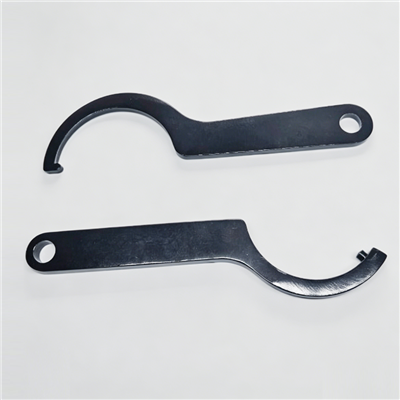
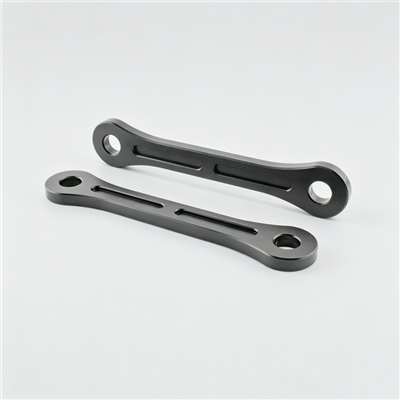
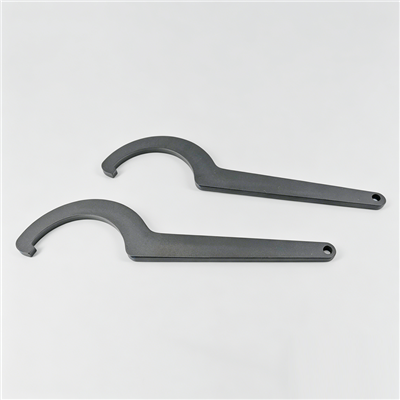
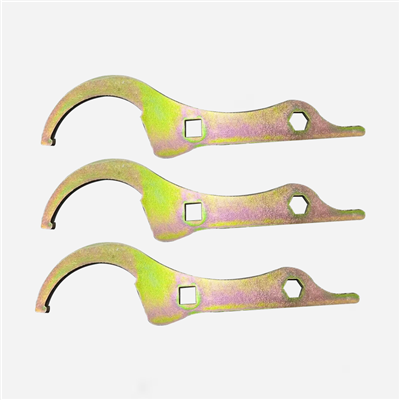
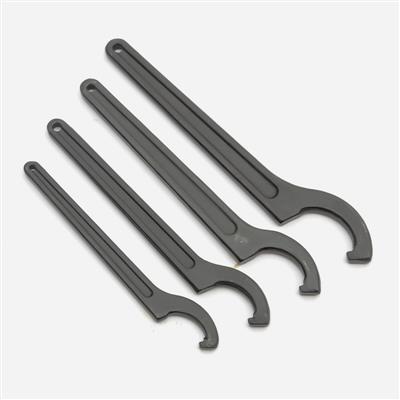
Wrench
Description
A wrench or a purpose-built assembly tool sits at the centre of almost every fitting, service and inspection task on a vehicle programme, yet it never appears on the bill of materials of the finished product. Bonpora classifies this group as process equipment: tooling used during production, assembly, maintenance or inspection that is not assembled onto the final product. Three duties are listed for the group. The first is assisting in the installation or removal of other parts, for example special wrenches and press-fit tooling. The second is positioning or clamping workpieces so that machining and assembly stay accurate. The third is inspecting a specific dimension or a performance value, which is the role of go/no-go gauges and special inspection fixtures. Custom design is accepted from a customer application scenario, a drawing or an existing tool sample, and ergonomics and service life can be optimised within the same order. This article concentrates on that last promise. It explains how handle shape, grip, weight and reaction force decide whether a tool is safe and comfortable to use all shift, and it sets out what a purchasing team should write into the specification.
What a Wrench Contributes to the Process Chain
A hand tool is a load path. The operator supplies a small force, the tool multiplies it through lever length, and the fastener or the workpiece absorbs the result. Everything an ergonomics assessment looks at follows from that single sentence: how much force the operator must produce, in which direction it travels through the wrist and forearm, and how long the effort is repeated.
The Three Duty Groups in Practice
Install and removal duty covers any threaded, pressed or clipped joint that has to be made or broken. Here the tool is judged on torque transfer, on how positively it engages the fastener head, and on the space it needs to swing. Position and clamp duty covers fixtures, hold-downs and setting tools that hold a part while another operation runs. The ergonomic question changes, because the operator now holds a load for minutes rather than seconds and needs the tool to stay put without constant muscular effort. Inspection duty covers gauges and checking fixtures, where the requirement is repeatability rather than force: the same reading must come back from every operator on every shift.
Why the Same Wrench Cannot Serve Every Station
A single wrench family is often pushed across an entire line to simplify purchasing. In practice the three duties pull in opposite directions. A long handle helps break a corroded fastener loose but becomes a hazard when the task is a short repeated torque on a confined fastener, because the extra length invites over-application. A smooth polished finish wipes clean easily and suits an inspection bench, while a textured grip is safer when hands are oily. Treating the tool as station-specific hardware is the first step toward an ergonomics specification that operators accept instead of work around.
Torque Transfer and Reaction Force
Every tightening operation produces an equal and opposite reaction. Part of that reaction travels into the workpiece and the fixture, and part of it travels back through the tool into the operator. Which share goes where is decided by handle length, handle angle and how well the tool engages the fastener.
Where the Reaction Load Actually Goes
On a well-supported joint, reaction is taken by the fixture or by a reaction arm, and the operator mainly guides the tool. On an unsupported joint, the operator absorbs the reaction. That is the arrangement to avoid on high-torque fasteners, and it is also the reason a long handle should be paired with a support rather than trusting the operator to hold the load. In purchasing terms this is a specification line: state whether the station has a reaction support, and state the maximum torque the operator may be asked to react by hand.
Leverage, Handle Length and Swing Clearance
Leverage is a compromise. Extra length reduces the hand force required for a given torque, which lowers the peak grip effort, but it also reduces the clearance needed to swing and it increases the moment the operator must control if the fastener releases suddenly. A practical specification lists the fastener size, the target torque, the available swing arc measured on the actual part, and the desired handle length as a range. A tool chosen inside that range keeps the effort inside comfort while still fitting the station.
Grip and Handle Geometry
Grip design decides how much of the hand force actually reaches the fastener and how much is lost to the hand closing around an awkward shape. It also decides how hard the skin is pressed against the handle across a shift.
Grip Diameter and Hand Span
Hands come in a wide range of sizes, and a grip that suits a large hand can force a smaller hand into an open pinch. For repetitive work, a handle that lets the fingers wrap with a little overlap generally transfers torque more comfortably than a very thick or very thin one. Where the population using the tool is mixed, a mid-range diameter plus a length that allows the whole hand to sit on the handle is more manageable than a single extreme size. If a station is staffed by several operators, ask the supplier to confirm the actual handle diameter rather than the nominal drawing value, because coatings and grip sleeves change the finished dimension.
Cross Section, Texture and Glove Compatibility
A round handle allows the hand to rotate slightly, which can be comfortable on low-torque work but offers less indexing feedback. A handle with a flat or oval section gives the operator a reference for the direction of pull. Texture should provide grip when the surface is oily, without being aggressive enough to abrade skin. Where gloves are mandatory, gloves reduce sensitivity and effective grip, so a slightly larger diameter and a more deliberate texture usually work better than a polished handle. Test the glove and the tool together at the station rather than separately.
Fatigue on a Repetitive Assembly Station
Fatigue is a function of peak force, posture and cycle count, and cycle count is often the number nobody has written down. Asking for the takt time and the number of fasteners per unit is enough for a supplier to judge whether a tool belongs in a hand or on a support.
Cycle Count as a Real Specification Line
A fastener tightened twenty times a shift and a fastener tightened four hundred times a shift need different tools even when the torque is identical. High cycle counts favour lower hand force, shorter travel and predictable engagement so the operator does not have to re-seat the tool. Including cycles per shift in the request also lets the supplier propose a ratcheting mechanism, a preset device or a powered option where the manual version would be the wrong answer.
Reducing Peak Grip Force Instead of Average Force
Average force is rarely what hurts. The short spikes at break-loose, at final torque and at the moment a stuck fastener gives way are what operators feel. A tool that engages the fastener flats fully, that is aligned with the fastener axis before force is applied, and that does not require the wrist to be bent during the pull brings those peaks down. Purchasing can support this by specifying head engagement style and by insisting that the sample tool be tried on the real joint, not on a bench vice.
Weight, Material and Finish
Mass matters most when a tool is held away from the body. A heavy wrench used overhead, under a lifted vehicle or inside a body shell is a clearly different proposition from the same wrench used on a bench.
Steel, Aluminium and Composite Bodies
Steel remains the default for load-bearing jaws and for any tool that will see impact. Aluminium bodies reduce mass on long-handled tools and on tools held away from the body, at the cost of a softer surface that needs care around anvils and pivots. For special fixtures, a composite or polymer body can lower weight further and remove sharp metal edges from the operator contact area. The choice should follow the duty: strength where the jaws work, low mass where the operator carries the tool.
Finish, Cleanliness and Working Environment
Finish is not only cosmetic. Chrome plating resists corrosion and wipes clean, which suits assembly benches and inspection rooms. A black oxide or phosphate finish holds a light film of oil and is common around hot or dirty work. Rubber or polymer over-moulded grips insulate against cold handles in unheated shops and reduce vibration transfer. Where the station has cleanliness requirements, state them in the request: a tool with a rough cast finish or a foam-filled grip may not survive the cleaning cycle that the line already uses.
| Duty at the station | Typical tooling | Main ergonomic risk | Control written into the specification |
|---|---|---|---|
| Install or remove fasteners | Box end and combination wrenches, ratchet handles, press-fit tooling | Peak grip force at break-loose, wrist deviation during the pull | Head engagement style, handle length range, reaction support on high torque |
| Position or clamp workpieces | Hold-downs, setting fixtures, clamps | Sustained static load, awkward reach | Mass of the assembly, handle position, quick-release instead of continuous grip |
| Inspect dimensions or performance | Go/no-go gauges, checking fixtures | Pressing force on small contact areas, repeated re-seating | Contact area geometry, insertion force, operator feedback that does not need force |
| Service and repair in the field | Long-handled wrenches, special service tools | Overhead or below-vehicle posture, slip when hands are oily | Textured grip, tether point, mass limit, cold-weather grip material |
Slip, Pinch and Entrapment: Safety Rules That Matter
Hand tool incidents on an assembly floor follow a small number of patterns. Most are a slip that turns into a contact injury, a load that releases unexpectedly, or a hand caught between the tool and a fixed surface.
Common Incident Patterns
A wrench that slips off a fastener edge moves the hand a short distance at speed, and whatever is behind the hand becomes the injury. Fastener release under torque produces a similar result, because the operator is pulling hard in one direction and the resistance disappears. A third pattern is the pinch between the handle and a structure when the swing arc is tight. All three are influenced by tool geometry, which is why a swing clearance measurement belongs in the tool request alongside torque.
Tool-Specific Safety Notes
Box end and socket engagement should always be preferred where space allows, since full flank contact spreads load and reduces the chance of rounding the fastener head. Open end jaws are for accessibility, not for heavy torque. Ratchet mechanisms need a clear direction indicator so an operator does not load the mechanism backwards. Press-fit tooling and pullers should come with guards or retainers so that a released part cannot travel toward the operator. Inspection go/no-go gauges should be sized so that insertion force stays low enough to be felt, because a gauge pressed with force reports nothing useful.
| Hazard | Mechanism | Prevention built into the tool order |
|---|---|---|
| Slip off the fastener | Worn jaw, wrong head size, oil on the flats | Correct nominal size, hardened jaw with controlled tolerance, textured handle |
| Sudden release | Stored torque lost when a joint frees | Reaction support, shorter handle on high torque, two hand guidance where needed |
| Pinch or crush | Hand between handle and fixed structure | Swing arc measured on the part, low-profile head, offset pattern where space is tight |
| Repetitive strain | High cycle count with sustained grip | Lower hand force, quick-release, rotation of operators between stations |
| Thermal or cut contact | Bare metal handle in a cold or dirty area | Insulating grip, rounded edges, no burrs on contact surfaces |
Selection Checklist for the Purchasing Team
An ergonomics specification does not need to be long, but it does need to carry the numbers that lead to a tool change. The table below lists the data that consistently changes the supplier answer.
Data to Include With the Request
Fastener size and thread, target torque and the direction of the reaction, the measured swing arc at the station, cycles per shift, glove use, and the mass that an operator may reasonably carry. Add the environmental conditions: cleaning agents, temperature, oil or coolant contact, and any cleanliness class. When the request also carries the application scenario, the supplier can propose the grip and handle that fit the station rather than the one that happens to be in the catalogue.
A Simple Acceptance Test
Before a tool is approved, run a short trial on the real joint with an operator who will use it on a normal shift. Record whether the hand stays on the handle through the whole pull, whether the wrist stays neutral, whether the tool needs re-seating, and whether the operator reports discomfort. A tool that passes a bench torque test but fails this trial will be worked around on the line, which removes any benefit the specification was meant to deliver.
| Specification data | Why it changes the tool | How it is accepted |
|---|---|---|
| Fastener size and head form | Decides jaw geometry and engagement style | Visual fit check on the real fastener |
| Target torque and reaction direction | Decides handle length and whether a support is needed | Torque trial at the station |
| Measured swing arc | Rules out handle and head patterns that cannot move | Dry run on the assembled part |
| Cycles per shift | Decides whether a manual or assisted tool is appropriate | Operator trial over one shift |
| Glove use and environment | Decides grip diameter, texture and body material | Grip test with the specified glove |
| Mass limit away from the body | Decides body material and handle length | Weigh the finished tool |
Samples, First Article and Operator Sign-Off
Custom design is accepted from a scenario, a drawing or an existing tool sample, and ergonomics and service life can be optimised in the same conversation. The practical sequence is to send the input, agree the drawing, take a sample for trial, and then confirm the first production article against that agreed drawing. Keep the trial result with the drawing, because the grip and handle that were accepted are part of the specification, not a cosmetic detail. Where a tool replaces an existing one, the removed item is useful as a reference sample, but it should not be copied unchanged: the wear pattern on the old tool usually shows exactly which part of the geometry needs revising.
Referencing Standards and Internal Rules
Many buyers anchor a tool order to published hand tool standards, and some also reference internal ergonomics or machine safety rules that already apply on the site. Those references are useful as a common vocabulary, but they do not replace the station data. A standard can describe how a jaw should be hardened or how a handle should be marked; only the station can say what torque, clearance and cycle count the operator faces. If a supplier asks for the applicable standard, provide it together with the application scenario, so the answer addresses both the product rule and the workplace condition. Bonpora states that custom design is supported from a scenario, a drawing or an existing sample, and that ergonomics and service life can be optimised, which is the level of flexibility a station-specific request needs.
Frequently Asked Questions
Can one wrench size cover several stations?
It can cover several fasteners of the same size, but not several duties. Install, clamp and inspection tasks have different force and posture requirements, so a tool that suits one duty may be the wrong choice for another even when the fastener size matches.
How much torque should an operator apply by hand?
There is no single figure that fits every population. The practical approach is to keep hand-applied torque low, add a reaction support or an assisted device as torque rises, and confirm the limit with a trial using the operators who will do the work.
Does a thicker grip always mean a safer grip?
No. Beyond a certain diameter the fingers cannot wrap far enough, so the operator has to pinch rather than grip. A diameter that fits the hand of the user group transfers force better, and grip texture then handles the oily or gloved condition.
What should be sent with a custom tooling request?
Send the application scenario, the applicable drawing, or an existing tool sample, plus the station data: fastener size, target torque, swing arc, cycles per shift, glove use and environment. Any of the three inputs starts the design, and the station data decides the ergonomics.
Discuss Your Tooling Requirement
Ergonomics and shop safety are decided before the tool is ordered, in the numbers that go onto the request. Share the station data with the technical team at Bonpora Parts and Components Co.,Ltd. to review grip, handle length and swing clearance, or look at the wider process tooling range and the custom parts service that supports scenario, drawing and sample based designs. Background on the related metal components used in the same assemblies is available on the site.
Find Similar Products