sales@bonporaparts.com
0086-10-64988621
English
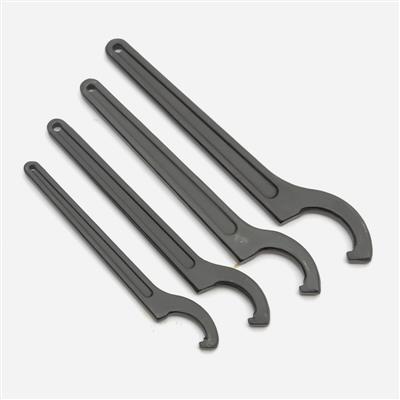
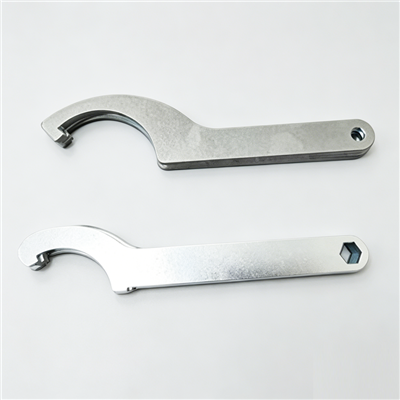
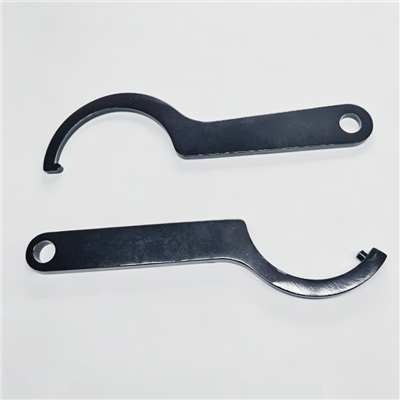
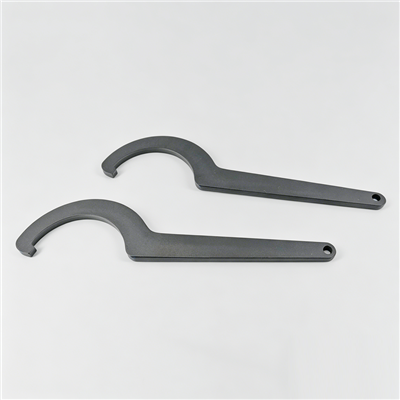
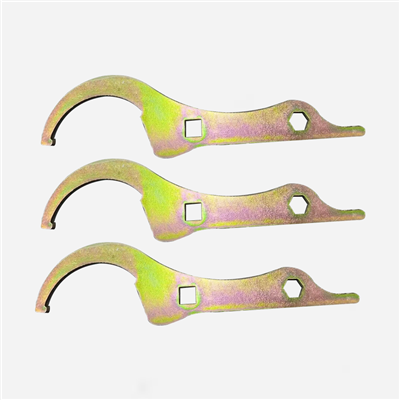
Process equipment such as wrenches and tooling is used in production, assembly, maintenance, or inspection processes. It is not assembled onto the final product and is considered process equipment. Its duties fall into three groups: assisting in installing or removing other parts, such as special wrenches and press-fit tooling, positioning or clamping workpieces to ensure machining or assembly accuracy, and inspecting specific dimensions or performance, such as go and no-go gauges and special inspection fixtures. Bonpora supports custom design from customer application scenarios, drawings or existing tool samples, and can optimise ergonomics and service life.
Buying process tooling in volume is a different exercise from buying it one piece at a time. The catalogue description is not the specification, the cheap offer is frequently the expensive one, and the item that matters most, the inspection gauge, is the one with the least visible quality difference. This guide is written for purchasing teams and tooling engineers who place volume orders and need a repeatable way to specify, quote, approve and audit these items.
The most common cause of an unusable delivery is a scope that described the function and omitted the constraint. Two suppliers can both quote a special wrench, and one of them will deliver a tool that cannot reach the position. Before sending an enquiry, define seven points in writing: the function, the fastener or feature being worked on, the torque or force transmitted, the access envelope, the material and hardness range, the finish and marking, and the packaging and ordering unit.
A useful test is whether a different supplier could read the scope and quote the identical article. If it cannot be restated that way, it is still a description rather than a specification.
Volume buyers almost always save more by standardising than by negotiating. Tool families that are used at many positions should be consolidated into the smallest number of part numbers that covers the work, with a single tool handling a range of sizes wherever the access permits. Standardisation reduces the cost per piece through larger batches, simplifies the tool crib, and makes it possible to hold sensible stock levels.
Custom tooling should then be reserved for the cases where it is genuinely needed: a position with no access for a standard tool, a torque requirement beyond the capacity of a hand tool, a clamping requirement with a marking risk on a finished surface, or an inspection feature that cannot be measured with a general purpose instrument. The custom design guide covers how those items are developed from a scenario, a drawing or a sample.
A quotation is only as good as the data behind it. A complete enquiry pack shortens the quotation cycle and removes the assumptions that later become price disputes. Include the following items.
The dimensions and material of the item the tool works on. The working torque or force, with any overload condition. The access conditions, described with a sketch, a drawing or photographs that include a rule for scale. The material and hardness range required, or the working condition if the buyer prefers the supplier to recommend them. The finish and the marking requirement. The annual volume with the call-off pattern, since a single annual figure hides whether the supplier must hold finished stock. The ordering unit, whether pieces, sets or kits, and the packaging standard. Finally, the first article approval process and the delivery point with Incoterms.
Tool pricing is more transparent than component pricing once the process is understood, and buyers who know the process negotiate better. Material grade is the first driver, because a chrome molybdenum tool costs more than a chrome vanadium one and the difference is real. The forming route is the second: forging has tooling cost that must be amortised, while machining from bar has higher material and cutting time per piece. Heat treatment is the third, and a controlled atmosphere furnace with recorded parameters costs more than an uncontrolled one, which is exactly where cheap offers are usually made.
Finishing is the fourth driver, since plating lines have fixed costs per batch and require bath chemistry control. Marking is the fifth, and laser marking or stamping with a serial number costs more than a generic item. Packaging is the sixth and is frequently underestimated, because tool sets, moulded trays and printed cartons add cost that a bare unit price does not show. Ask for each of these to be identified in the quotation, and ask separately whether tooling or set-up charges are included.
A quotation that omits hardness control, functional testing or packaging has not quoted the same article. Convert every offer to cost per usable piece delivered to the warehouse, including the cost of any incoming sorting or rework, before comparing. On tooling the sorting cost can easily exceed the price difference, because a tool that is out of tolerance is discovered at the point of use, where the labour is most expensive.
Tooling is often bought as a set rather than as a single item, and the ordering unit should be defined explicitly. A service kit typically contains the tool, the consumable inserts or pads it uses, and the fasteners or fittings needed to use it. Where a kit is specified, list every component with its part number and quantity in the enquiry, and require the packing list to match the kit list exactly.
Two practical points follow. First, consumables inside a kit should be separately orderable, because inserts and protective pads wear faster than the tool itself. Second, sets should be packed so that a missing item is visible on receipt; a moulded tray with a labelled position for each part makes an incomplete kit obvious in seconds rather than at the machine.
Never release a volume order on the strength of a catalogue photograph or a generic sample. Approve a pre-production item against a written list of characteristics, and keep it. For a wrench or press tool, the list should include the material certificate or grade marking, the working end dimension measured at two depths, the offset and overall length, the hardness at the specified location, the result of a functional torque or force test, the finish and adhesion where relevant, and the marking.
For inspection items the list is longer. Add the verification of the gauge against the reference used to set it, the initial wear allowance, the identification number and the calibration interval. A gauge is the one item in this category where an out of tolerance article does not fail visibly; it quietly approves work that should have been rejected. Keeping the approved sample and its measurement sheet is the only reliable way to resolve a dispute months later, and it also gives the incoming inspection team a physical reference.
Price is one line on the evaluation, and rarely the deciding one over several order cycles. The table below is a practical weighting for process tooling supply.
| Category | What to verify | Suggested weight |
|---|---|---|
| Process capability | Forging, machining and heat treatment in house or controlled sub-suppliers | 20 percent |
| Heat treatment control | Furnace records, atmosphere control, hardness testing equipment | 20 percent |
| Material traceability | Mill certificate linked to the batch, separation of grades on site | 15 percent |
| Dimensional and functional testing | Inspection plan, functional load test capability, records | 15 percent |
| Engineering support | Ability to review a scenario and propose geometry and hardness | 10 percent |
| Commercial terms | Unit price, set-up or tooling charges, MOQ, lead time, packaging | 10 percent |
| Documentation and response | Certificates, packing accuracy, complaint handling | 10 percent |
Score the same categories for every candidate and keep the worksheets, so that the decision can be explained and reviewed at the next order cycle rather than re-argued from scratch.
Most importers and distributors cannot run a metallurgical check, but the characteristics that matter can still be screened with modest equipment. A calliper and micrometer cover the working end and the critical dimensions, checked against the approved sample. A reference fastener or a master gauge covers the fit. Marking and finish are checked visually under good light. Hardness can be screened with a portable hardness tester, and while it is not a substitute for the supplier test, a reading well outside the specified range is a reliable reason to hold the batch.
Decide the sampling plan before the first delivery arrives. A workable approach is full check on the first article of a batch, then a reduced sample once three consecutive batches pass. Record the results against the batch code so that a drift becomes visible: a working end opening out across several shipments is a warning even while each individual tool is still inside tolerance, and it is the earliest signal that the supplier needs to review tooling wear or the hardness specification.
Because these items are not fitted to a product, they are easy to under-stock. Tooling stock should be planned by position and by frequency of use, not by average consumption. Keep at least one spare of any tool that is used daily, since the cost of a stopped line exceeds the cost of the spare by a wide margin on the first occurrence. Consumables such as press-fit inserts, protection pads and soft jaws should have a defined reorder level based on measured consumption, not on a visual check of the shelf.
Where a tool is custom, keep one spare and keep the drawing. A custom tool whose drawing has been lost is effectively a new project if the original breaks, and the reverse engineering cost, described in the custom parts service, is avoidable. Storing the tool and the drawing together, with the batch code and the approval record, is the cheapest form of insurance available.
| Mistake | Consequence | Prevention |
|---|---|---|
| Scope describes function only | Tool fits the fastener but cannot be used in position | State the access envelope and the torque |
| Hardness specified as a single value | Brittle tools that fail without warning | Specify a range with a check location |
| No approved first article retained | Disputes cannot be settled with facts | Approve against a written list and keep the sample |
| Heat treatment control not verified | Soft or brittle tools in the same batch | Require furnace records and hardness results per batch |
| Customising items that could be standard | Higher price, longer lead time, more spares | Standardise families, customise only where required |
| Consumables not separately orderable | Complete tool discarded when a pad wears out | List every kit component with its own part number |
| Freight ignored in the comparison | Lowest unit price is not the lowest landed cost | Compare cost per usable piece delivered |
Compare them on function and cost per cycle, not on process. Ask both suppliers for the material grade, the hardness range with the check location, and the result of a functional torque test. Forging generally gives better fatigue behaviour in a wrench used under repeated load, while machining is usually more economical for a special tool in small quantity.
For a machined item produced from bar, small quantities are practical because the tooling is a program rather than a die. For a forged or cast body, the order quantity is driven by the amortisation of the die or mould, so it is normally measured in larger batches. A prototype can always be produced separately to validate the design.
A material certificate traceable to the batch, heat treatment records with hardness results, an inspection report covering the characteristics listed at first article approval, and a packing list that matches the carton markings. For inspection items, add the gauge verification and the wear allowance at issue.
Buy sets where the parts are always used together and a missing component would stop the job, such as a press tool with its inserts and pads. Buy individual pieces where consumption rates differ widely, since a set forces the buyer to replace a whole kit when only one consumable has worn out. In practice, specify the set for convenience and require every component in it to be separately orderable.
Send the function, the item being worked on, the torque or force involved, the access conditions and the annual volume with the call-off pattern. The factory will propose the material, hardness and geometry, confirm the inspection plan and quote the tooling position separately where tooling is involved. Review the process tooling range, the selection and specification guide and the manufacturing guide before choosing the item, or reach the team through the contact page.