sales@bonporaparts.com
0086-10-64988621
English
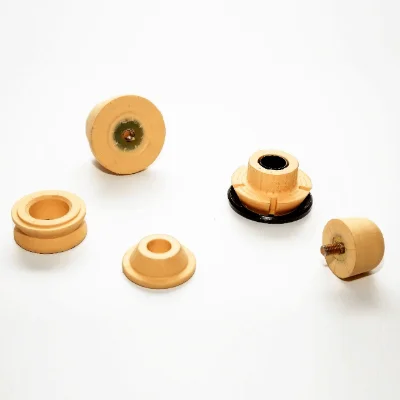
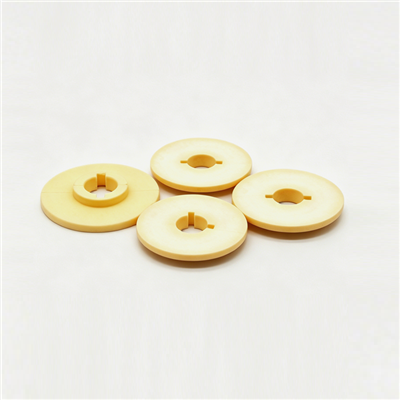
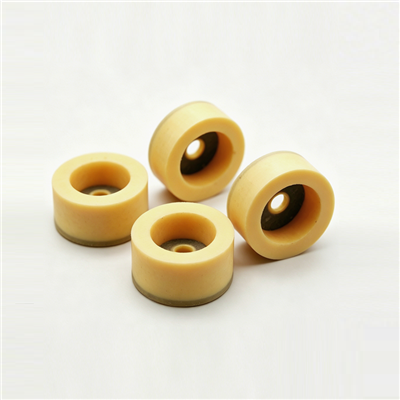
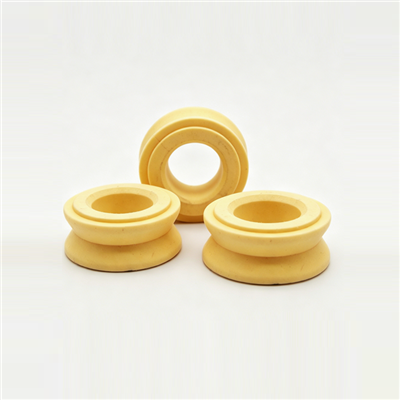
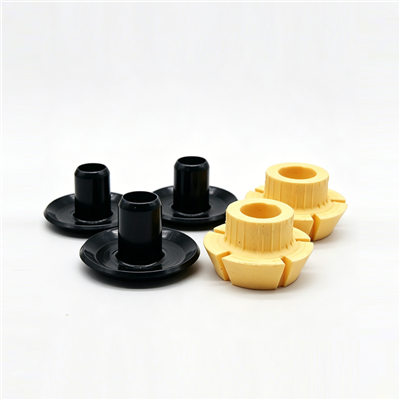
The cabin buffer listed in the Bonpora source row is an elastic component, typically made from high-elasticity polyurethane, installed between the truck cab and the chassis frame. It performs the same function as a jounce bumper, also called a bump stop, bump rubber, rubber buffer or strut bumper, and provides progressive auxiliary stiffness at the end of the compression stroke.
For a distributor or a large fleet, the buying problem is not the part itself but the range behind it. Heavy-duty trucks from Scania, MAN, DAF, Renault, Mercedes-Benz, BRG and Volvo use a large number of cab mount variants, and a buffer that fits one cab variant may not fit the next generation of the same model. A well planned range therefore starts from vehicle population data rather than from a supplier catalogue.
The quoted design life in the source row, not less than 80,000 km or two years under normal use, gives a useful planning rule. A fleet that covers 120,000 km a year will reach the design life within the first year, so the buffer behaves as a consumable and the annual volume is predictable from the vehicle count and the annual mileage.
Build the first order from the vehicles actually in service, then extend by reference popularity. The table below is a planning frame, not a stock list.
| Truck family | Range driver | Stock note |
|---|---|---|
| Scania | Cab type and generation changes | Split by generation to avoid returns |
| MAN | Model series and cab variant | Check air versus mechanical cab suspension |
| DAF | Model series and suspension type | Group by suspension type on the shelf |
| Renault Trucks | Model series and cab variant | Pair front and rear references |
| Mercedes-Benz | Chassis number lookup | Keep heat resistant variants separate |
| BRG | Original reference number | Confirm with a physical sample |
| Volvo | Cab type and ride height design | Note air suspended applications |
For each reference, decide whether it is a fast mover, a repair item or a special order. Fast movers justify a stock position, repair items can be held at a smaller quantity, and special orders are better handled on a made-to-order basis so that working capital is not tied up in slow lines.
An interchange list is a hypothesis. Take one line from the list, order a sample, and compare it against the removed part on the bench before the batch is released. Measure the outside diameter, the height, the bore or sleeve size and the position of any locating feature.
Chassis number, cab type, model series, and a photograph of the mount in place will resolve almost every ambiguity. Where the supplier works from a sample, send the removed part rather than a description of it.
For each reference, record which vehicle it was verified against, the date, and the person who checked it. When a counter sale is questioned later, that record settles the question quickly.
Polyurethane is specified by properties rather than by a single name, so two parts that look the same can behave differently. The source row names the characteristics inspected during production: static stiffness curve, compression set, hardness and appearance. A buyer should ask for evidence against the first three, and use appearance as the incoming inspection check.
| Characteristic | Evidence to request | Reason it matters |
|---|---|---|
| Static stiffness curve | Test report for the part number | Determines when the buffer starts carrying load |
| Compression set | Result for the compound batch | Predicts recovery after repeated full compression |
| Hardness | Durometer reading with tolerance | Fast incoming check without a test rig |
| Appearance | Sample and a written defect list | Catches flow marks, voids and flash early |
| Temperature capability | Statement against the stated range | Relevant for buffers near exhaust or engine heat |
The source row quotes a temperature range of minus 40 to plus 90 degrees Celsius which meets standard passenger car requirements, with the note that the material can be adjusted for special conditions. If your market includes cold climate or high heat applications, that adjustment should be part of the specification, not an afterthought.
A sample order is the cheapest risk control available. Ask for one to three pieces per candidate reference, inspect them against the removed part, and fit one to a vehicle on the duty cycle that matters in your market. A trial on a truck that works on broken surfaces will reveal more about service life than any catalogue statement.
Set acceptance criteria before the sample arrives: dimensions within the stated tolerance, hardness within the agreed band, and no visible defects. Then record the trial mileage and the condition of the buffer at the end of it. That record becomes the basis for the batch order and for the warranty discussion if performance differs.
Price per piece is not the purchase cost. The table below lists the lines that should appear in the comparison so that two offers can be judged on the same basis.
| Cost line | What to confirm |
|---|---|
| Unit price by quantity break | The breaks apply to the reference you actually order |
| Minimum order quantity | Whether it is per reference or per shipment |
| Tooling or setup charge | Whether a new drawing-based part carries a one-off cost |
| Packaging | Bulk carton, individual bag or private label requirement |
| Freight and insurance | Method, transit time and who arranges it |
| Duty and clearance | Applicable rate and the broker used |
| Inspection and documentation | Whether third party inspection is included or charged |
| Warranty handling | How a claim is processed and who pays the freight |
Packaging deserves a separate look. Polyurethane parts can be deformed by tight packing or by pressure from a heavy carton stacked on top, so the carton size and the loading pattern should be agreed rather than left to the supplier.
The source row states that quality control is to IATF 16949 and that the warranty is typically 1 to 2 years or 50,000 to 100,000 km, whichever applies. Both statements need to be pinned down on the purchase order: the exact document set supplied with each batch, and the exact warranty period, exclusions and claim procedure.
At a minimum, ask for the certificate reference, the inspection report for the batch, and a packing list that links the carton to the production lot. Where the part is safety related on the vehicle, a lot-linked report is worth the small extra cost, because it makes a field investigation possible without recalling the whole shipment.
Score each candidate supplier on the same scale so the comparison is factual rather than personal.
| Criterion | What to score |
|---|---|
| Technical capability | Ability to work to a drawing and to control stiffness |
| Quality system | Certification, inspection discipline, traceability |
| Sample responsiveness | Time and clarity of the sample offer |
| Production lead time | Stated lead time versus actual performance |
| Packaging quality | Carton strength, labelling, protection in transit |
| Communication | Response speed on technical questions |
| Commercial flexibility | Attitude to trial orders and mixed references |
| Warranty conduct | How previous claims were handled, if any |
Four mistakes account for most of the problems seen in this product line. The first is ordering from an interchange list without a physical sample, which produces a high return rate on the first shipment. The second is specifying by appearance only, so a part with the right shape but the wrong stiffness reaches the counter. The third is comparing landed cost without the packaging and freight lines, which hides a real difference between offers. The fourth is accepting a warranty statement that has never been written into the purchase order, which leaves the claim procedure undefined when it is needed.
A disciplined range plan, a verified sample per reference and a written specification remove all four problems at low cost.
Start with a sample for bench verification, then a small trial quantity for one or two vehicles before committing to a stock position. The trial result tells you more about service life than the first price offer does.
Sometimes. The source row lists the part as suitable for heavy-duty trucks including Scania, MAN, DAF, Renault, Mercedes-Benz, BRG and Volvo, but coverage of that kind is established per reference number. Confirm each application with vehicle data before publishing it in your catalogue.
Certificate reference to the quality standard, inspection report covering the inspected characteristics, and a packing list linking the carton to the production lot. Add a stiffness curve report where the application is sensitive to stiffness.
Agree the artwork, the carton size and the loading pattern before production, and ask for one pre-production carton to approve. Protecting the part in transit matters as much as the printed design.
Bonpora Parts and Components supplies cabin buffers and cab mount components for Scania, MAN, DAF, Renault, Mercedes-Benz, BRG and Volvo trucks, and makes custom polyurethane parts to drawing or sample. Review the commercial vehicle range, read the cabin buffer selection guide and the failure analysis article, or compare the polyurethane bump stop range. For drawing-based work see the custom parts service, and use the contact page to reach the sales and engineering team with your reference list.