sales@bonporaparts.com
0086-10-64988621
English
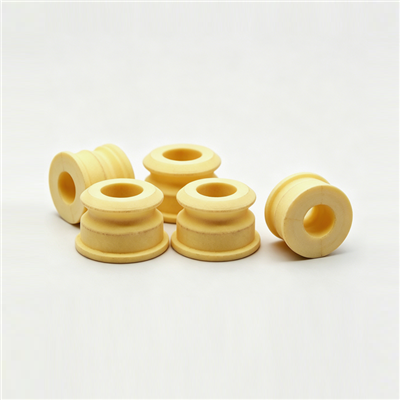
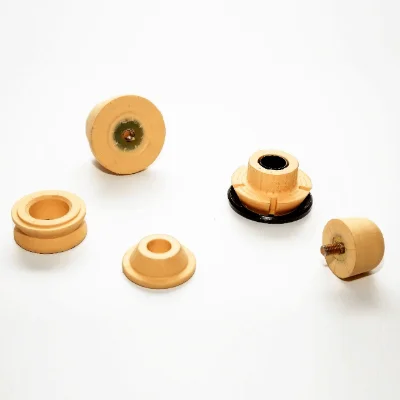
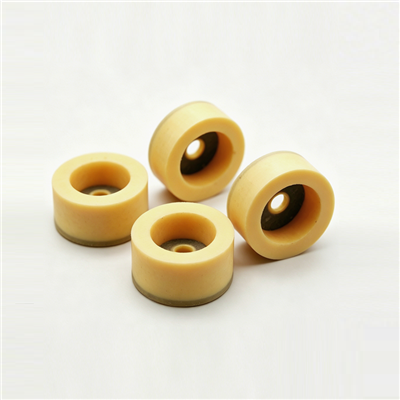
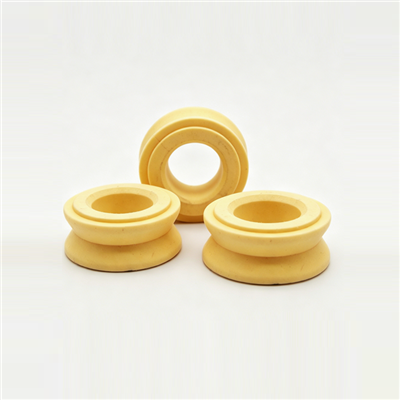
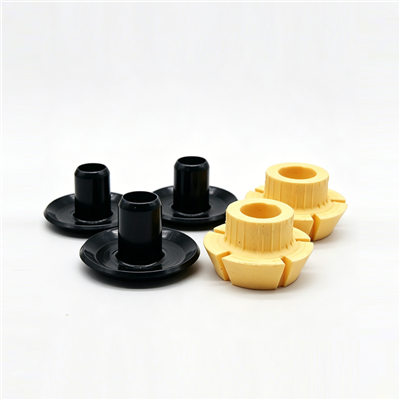
A washer for cabin, listed in the Bonpora catalogue as a cabin buffer, is the elastic element installed between the truck cab and the chassis frame. The source specification describes it as an elastic component typically made from high-elasticity polyurethane. Its function is the same as that of a jounce bumper, also known as a bump stop, bump rubber, rubber buffer or strut bumper: it provides progressive auxiliary stiffness at the end of the compression stroke.
On a heavy truck the cab is not rigidly bolted to the frame. It sits on a set of mounts and buffers that allow a controlled amount of movement, so road input, engine vibration and torsional frame flex do not reach the driver as a hard shock. As the mount compresses, the buffer stays passive for most of the travel and only starts to carry load once the gap between the two faces closes. From that point the stiffness rises quickly and the buffer limits the remaining travel.
Three duties follow from that behaviour. It provides auxiliary stiffness at the end of the compression stroke, it absorbs impact energy so metal-to-metal contact is avoided, and it reduces the noise and load that would otherwise be transferred through the structure. The result is a cab that still transmits road feel but does not crash into its own travel limit on a poor road or a loaded descent.
Because the part is a wear item, buyers usually replace it as part of a cab mount service rather than as a stand-alone repair. That makes specification accuracy the deciding factor: a buffer that is too soft bottoms out and transfers shock, while one that is too hard raises the effective spring rate of the cab mount and increases the vibration the driver feels.
Cab suspension layouts differ between truck families, and the same part number can be used in more than one position. Before ordering, it is worth confirming which of the following arrangements the vehicle uses.
The front pair of mounts usually carries a larger share of the vertical load and is located close to the firewall. They are commonly a rubber or polyurethane pad combined with a metal sleeve or cup, and the buffer sits on the same axis so that it limits travel when the mount is fully compressed.
Rear mounts on a tilting cab often combine the buffer with a pivot or a stabiliser element, because the cab must rotate when it is tilted for engine access. In this position the buffer also resists longitudinal rocking under braking and acceleration, so wear tends to appear earlier than on the front pair.
On a mechanically suspended cab the buffer is part of the primary load path and its stiffness curve matters directly. On an air suspended cab the air spring carries the static load and the buffer acts mainly as an end-stop and as a fallback if air pressure is lost. The same catalogue part can serve both, but the acceptance criteria for stiffness are different, which is why the static stiffness curve is one of the inspected characteristics.
Polyurethane is a good fit for this duty because the compound can be tuned. Hardness, resilience and compression set can be adjusted independently to a greater degree than with a plain rubber compound, so a supplier can hold the required stiffness curve while keeping the part elastic enough to recover after repeated full compression.
| Property | High-elasticity polyurethane | General-purpose rubber |
|---|---|---|
| Stiffness tuning | Wide range through hardness and formulation | Narrower, driven mainly by hardness |
| Abrasion and tear resistance | Good in a loaded end-stop role | Lower in the same duty |
| Oil and grease contact | Generally good resistance | Depends strongly on the base polymer |
| Compression set after repeated cycles | Controlled by compound selection | Usually higher over long service |
| Low temperature behaviour | Selected to suit the stated range | Often more flexible when cold |
The compound is not chosen in isolation. A buffer that will sit close to an exhaust or turbo component sees a different thermal load from one that only sees ambient air, so the formulation is matched to the position on the vehicle as well as to the required stiffness.
The catalogue data in the source row gives the operating envelope. Buyers who are replacing a worn part should confirm the physical dimensions against the removed component, because the same truck family can carry more than one cab mount variant across model years.
| Item | Catalogue value in the source row | What to confirm on the vehicle |
|---|---|---|
| Part description | Washer for cabin, cabin buffer | Position and mounting axis |
| Material | High-elasticity polyurethane | Whether a special compound is required |
| Function | Progressive auxiliary stiffness at end of compression | Remaining gap at static ride height |
| Temperature range | -40 degrees C to +90 degrees C | Proximity to heat sources |
| Design life | Not less than 80,000 km or 2 years under normal use | Actual duty cycle and road mix |
| Quality standard | IATF 16949 | Evidence required for the incoming inspection file |
| Warranty | Typically 1 to 2 years or 50,000 to 100,000 km | Terms agreed on the purchase order |
The temperature range quoted in the source row, minus 40 to plus 90 degrees Celsius, meets standard passenger car requirements, and the material can be adjusted for special conditions. For a truck that works in a cold climate or close to a hot exhaust run, that adjustment should be requested explicitly on the enquiry rather than assumed.
Two environment factors drive most premature failures. The first is heat: a buffer mounted near the exhaust or the engine compartment ages faster because the compound hardens and loses elasticity. The second is contamination: oil or diesel that reaches the buffer surface can soften some compounds and accelerate cracking.
A third factor is duty cycle. A long-haul tractor unit that spends most of its life on motorways loads the buffer less often than a construction or refuse vehicle that works on broken surfaces all day. The quoted design life assumes normal use, so a severe duty application should be treated as a shorter inspection interval rather than as a warranty argument.
The source row lists the part as suitable for heavy-duty trucks including Scania, MAN, DAF, Renault, Mercedes-Benz, BRG and Volvo. Coverage of that kind is normally established per reference number rather than per brand, so the enquiry should carry the original reference and the vehicle identification data.
| Truck family | Data to quote on the enquiry | Typical check at fitting |
|---|---|---|
| Scania | Chassis number and cab type | Mount height and buffer gap |
| MAN | Model series and cab variant | Condition of the metal cup or sleeve |
| DAF | Model series and suspension type | Whether the cab is air suspended |
| Renault Trucks | Model series and cab variant | Rear mount pivot play |
| Mercedes-Benz | Chassis number | Heat shielding near the buffer |
| BRG | Original reference number | Dimensional match with the removed part |
| Volvo | Chassis number and cab type | Static ride height of the cab |
Cross-reference tables are a starting point, not a guarantee. Where a supplier publishes an interchange list, the buyer should still verify one physical sample before releasing a batch order, because a reference that fits one cab variant may not fit the next generation.
The source row states a design life of not less than 80,000 km or two years under normal use, with no cracking, no excessive permanent deformation and no stiffness loss during that period. Those three conditions are the practical acceptance criteria, and they also describe what a fleet should look for during an inspection.
Production control is to IATF 16949. The inspections named in the source row are the static stiffness curve, compression set, hardness and appearance. For a buyer, that list translates into a useful incoming inspection plan: verify the certificate first, then check hardness and dimensions on a sample, and keep the stiffness curve report on file for traceability.
The warranty quoted in the source row is typically 1 to 2 years or 50,000 to 100,000 km, whichever comes first, and the exact terms are agreed on the order. Because the numbers vary with the compound and the application, they should be written into the purchase order instead of being taken from a general catalogue line.
Not every cab mount is a catalogue item. Where a fleet runs a bodybuilder conversion, a lifted chassis or a specialised vocational vehicle, the buffer is often made to a drawing. In that case the supplier works from a drawing or a sample and adjusts the compound to the required stiffness and temperature range.
Useful information to include with a drawing-based enquiry: the nominal dimensions with tolerances, the required static stiffness or load at a given deflection, the operating temperature window, the expected annual volume, and any requirement for a specific hardness or a colour. Where the original part is still available, sending one worn sample as a reference shortens the development step considerably.
Quote the truck family, the model series or chassis number, and the position of the buffer on the cab. State whether the cab is mechanically or air suspended.
Give the nominal dimensions, the required stiffness or load, the operating temperature range and the expected service interval. Attach a drawing where one exists.
State the annual volume, the packaging requirement, the required quality documents and any private label requirement. Where the part is safety related on the vehicle, ask for the inspection reports that apply to the batch.
The function is the same: both provide progressive auxiliary stiffness at the end of the compression stroke and prevent metal-to-metal contact. The difference is the application, since a cabin buffer works in the cab mount while a jounce bumper works in the suspension travel of an axle.
Look for cracking, a permanent set that no longer leaves the specified gap at ride height, a noticeable loss of elasticity, or a new hard knock over sharp bumps. Any of those conditions justifies removing the part and comparing it with a new one.
Sometimes, but it should not be the first step. Bottoming out is often caused by a worn mount, a lost air spring charge or a missing spacer rather than by the buffer itself. Raising the hardness without correcting the cause increases the vibration transmitted to the cab.
The truck family and position, the nominal dimensions, the required stiffness or load, the operating temperature range, the annual volume and the documents you need. With those items, a catalogue match or a drawing-based offer can be prepared without further questions.
Bonpora Parts and Components supplies cabin buffers and related cab mount components for Scania, MAN, DAF, Renault, Mercedes-Benz, BRG and Volvo trucks, alongside custom polyurethane parts made to drawing or sample. Review the commercial vehicle range, compare the polyurethane bump stop range, or read more on chassis and suspension components. For a drawing-based part, the custom parts service explains what to send, and the contact page reaches the engineering desk directly. You can also review the existing polyurethane buffer block article or browse the full product catalogue.