sales@bonporaparts.com
0086-10-64988621
English
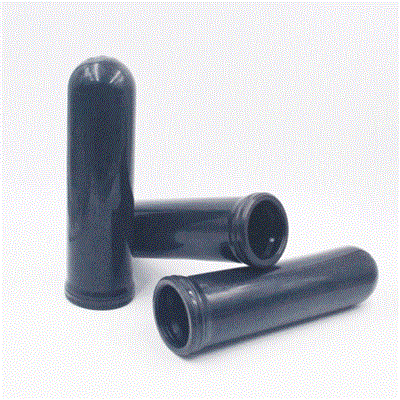
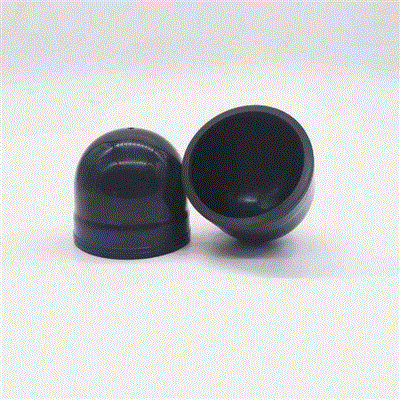
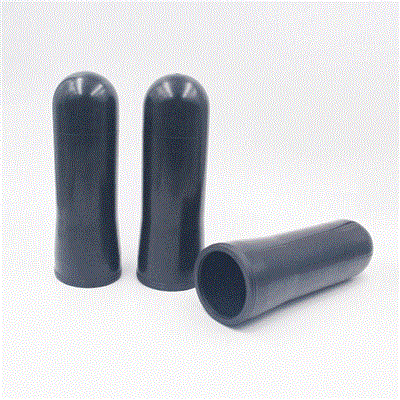
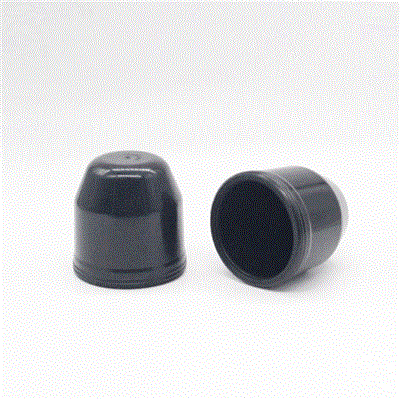
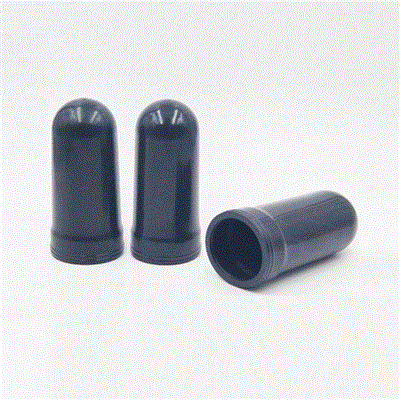
Piggyback shocks sometimes have an internal floating piston that separates oil and nitrogen. But more commonly, a rubber bladder reservoir holds the gas separately. This air bag tank is less likely to leak than a separate piston seal.
Main features:
Ensure oil and gas separation and avoid foaming
Actively prevent cavitation and improve overall impact performance
Provides consistent damping for optimal traction and control
Helps extend shock absorber life
Material: NBR, HNBR
Fleet managers rarely plan around a shock absorber bladder until a vehicle is off the road. The part costs very little, but when precharge is lost the damper fades, the ride becomes unstable, and the vehicle may be pulled from service for a repair that takes longer than the workshop expected. On a light van this is an inconvenience. On a loaded truck or a bus in a fixed timetable it is a lost revenue day.
The practical response is not to replace bladders more often than needed. It is to set an inspection interval that matches the duty cycle, watch the two or three indicators that predict trouble, and keep a small stock of correct replacement parts so that a repair is planned rather than reactive. This guide is written for fleet engineers, workshop supervisors, and maintenance planners working with piggyback and remote reservoir dampers.
Bladders fail slowly, and that is useful, because a slow failure leaves time to catch it. The first change is almost always measured rather than seen. Gas escapes through the rubber wall over time, pressure drops, and the damping curve drifts away from the value recorded at build.
Drivers notice this before the workshop does. Typical reported symptoms include a floaty or vague feel over undulations, more body roll in corners than the vehicle had when new, bottoming out on familiar routes with the same load, and a harsh knock on small sharp bumps as the damper loses control. Because these complaints build gradually, the driver often accepts them as normal wear, which is exactly why a written reporting habit matters.
More sudden failures are usually mechanical. A bladder can be cut by a burr left in the housing after a previous rebuild, pinched during fitting, or aged into a stiff part that cracks along a fold line in cold weather. The diagnostic path for each of these cases is set out in our bladder troubleshooting guide.
A single interval for the whole fleet is easy to write and usually wrong. Two vehicles on the same site can impose very different loads on a reservoir. Group the fleet into duty bands first, then set the interval for each band.
Steady speeds, moderate loads, and stable operating temperatures are the easiest conditions for a bladder. Suspension movement is smooth and continuous, oil temperatures stay in a narrow band, and the main long term change is slow permeation loss through the wall. These vehicles can carry the longest inspection interval.
Stop and start duty is harder than it looks. Frequent load changes, kerb strikes, speed humps, and constant compression cycles keep the bladder flexing and the oil warmer than highway work. Access roads and yard surfaces also increase the chance of mechanical damage to the reservoir and its fittings.
High load, rough ground, and dust create the most demanding case. Pressures run closer to the upper end of the design range, temperatures are high, and impact loading is frequent. Off road use adds stone damage risk and heavier contamination around the gas valve and cap. These vehicles need the shortest inspection interval and the closest attention to cap and valve condition.
| Duty band | Pressure check | Full damper inspection | Planning note |
|---|---|---|---|
| Light duty, highway | At each major service | Annually or at a defined mileage | Watch for slow precharge drift |
| Mixed urban delivery | Every second service | Twice a year | Include yard and kerb damage checks |
| Heavy haul and construction | Monthly or at short mileage | Quarterly | Inspect valve, cap, and fittings closely |
| Off road and seasonal use | Before and after each season | Annually plus pre season | Storage between seasons affects the part |
These intervals are a starting framework, not a rule. Adjust them using your own work order history once you have recorded a few replacement cycles, because the data from your operation is more accurate than any general table.
Connect a calibrated gauge to the gas valve and take the reading with the vehicle at normal ride height and at a consistent temperature, ideally not immediately after a long run. The absolute number matters less than the comparison with the value recorded when the damper was built and with the previous reading on the same unit. A trend line tells you far more than a single figure.
Look at the reservoir body, the cap joint, and the valve area. Oil weeping at the cap or around the valve is a strong signal, because oil on the gas side or gas escaping past the bead usually appear together. Check for stone chips, corrosion pitting, and any sign that the reservoir has been struck.
A rod that shows heavy wear or a rough finish can damage the seal and allow gas and oil to migrate. Discoloured oil on a recently serviced unit suggests overheating or contamination, and both shorten bladder life. If the oil is changed, note the quantity that came out, because a shortfall points to a leak path.
Write the pressure, the date, and the vehicle hours or mileage on the job card or in the fleet system. This record is what makes interval planning possible. Without it, every future decision is a guess and every failure looks sudden.
| Check item | Healthy condition | Meaning when it differs |
|---|---|---|
| Gas pressure | Close to the build value and stable between checks | Slow drop suggests permeation; a fast drop suggests a leak |
| Cap and valve joint | Dry, with no bubble stream under leak detection fluid | Weeping indicates a seal or bead problem |
| Oil condition | Within the specified colour and clarity | Discoloured oil points to heat or contamination |
| Piston rod surface | Smooth, with an even finish | Scoring damages the seal and pressures the bladder |
| Reservoir body | Clean, with no dents or pitting | Impact damage can pinch or cut the membrane |
| Driver feedback | Consistent handling under the usual load | New floating or bottoming means the curve has moved |
Rubber stiffens as temperature falls. A bladder that is already aged can become brittle enough to crack as the suspension compresses over a hard frost. Cold also reduces the flexibility of the neck bead, so an old part that seals in summer may weep in winter. Cold climate fleets should place the pre winter inspection at a point where there is still time to replace suspect parts.
Sustained heat accelerates ageing and raises gas pressure, which increases the load on the bead and the cap. Vehicles that idle for long periods or work in high ambient temperatures age their bladders faster than the mileage alone would suggest. In these conditions an HNBR grade is often worth the higher unit price, and the reasoning behind that choice is covered in our materials and quality control guide.
Contamination around the valve and cap damages seals and makes a correct pressure check harder. Salt and chemical exposure corrode the hardware around the reservoir. A simple clean around the valve before connecting a gauge prevents grit from being pushed into the sealing face, which is a common cause of a leak that appears immediately after an inspection.
| Factor | Planned replacement | Run to failure |
|---|---|---|
| Parts cost | Higher, because parts are changed on schedule | Lower on paper |
| Labour cost | Predictable, scheduled into normal service | Often urgent and premium rated |
| Vehicle availability | Controlled by the planner | Decided by the breakdown |
| Related damage risk | Low, because the damper is in good order | Higher, because other parts wear faster |
| Driver and load safety | Handling stays within expectations | Degrades before anyone notices |
| Record quality | Builds a useful history | Produces gaps and guesswork |
A middle path suits most fleets. Replace on condition using the inspection data, but set a maximum age for the part beyond which it is changed regardless of the reading. That combination controls both the surprise failure and the cost of unnecessary work.
| Fleet size in the same application | Suggested working stock | Notes |
|---|---|---|
| Up to 20 vehicles | Two or three dampers or rebuild kits | Hold one set for the busiest vehicle type |
| 20 to 100 vehicles | Kits covering the two most common part numbers | Include caps, clamps, and valves |
| Over 100 vehicles | Agreed consignment or scheduled replenishment | Set a reorder point from usage data |
Stock the small hardware as well as the bladder. Caps, clamps, and gas valves are inexpensive and are frequently the real cause of a leak, so a rebuild kit without them often produces a return visit. Rotate stock first in first out, and store bladders flat, sealed, and out of sunlight, because rubber continues to age in the stores.
Consolidating these items under one supplier simplifies the stock list and shortens the order cycle. The commercial side of that arrangement is described in our wholesale sourcing guide.
Every replacement is a data point. Record the vehicle, the duty band, the mileage or hours, the measured pressure at the last check, and the reason the part was changed. After a few months, patterns appear. One part number may fail earlier than another, or one vehicle group may show a consistent pressure trend.
Use those patterns to adjust intervals by band rather than across the whole fleet. If a group shows pressure holding well past the current interval, extend it. If another shows a fast average drop, shorten it and investigate whether the cause is a fitting fault rather than the bladder itself. This is a small amount of analysis for a meaningful reduction in unplanned downtime.
The most reliable early warning system in a fleet is a driver who knows what to report. Brief them on three questions: does the vehicle feel different under the usual load, does it bottom out where it did not before, and has the steering or body movement changed on familiar roads. A short note from the driver turns a vague complaint into a targeted inspection.
On the workshop side, a one page checklist keeps inspections consistent between technicians. Include the pressure reading, the leak check, the visual points, and the oil condition, and require the reading to be written down rather than remembered. Consistency is what makes the history usable.
A bladder is only one part of the damper, and a new bladder fitted to worn components will not restore the original behaviour. When the reservoir is opened, check the piston rod surface, the seals, and the valve stack, and replace anything that is outside its own limit. Ordering the bladder together with other shock absorber components keeps one rebuild to one visit and one set of consumables.
The same principle applies at the vehicle level. Damper condition interacts with the chassis and suspension system as a whole, so a fleet programme that tracks the bladder alone will still be surprised by wear elsewhere.
It depends on the duty band. Light highway vehicles can be checked at major services, while heavy haul and construction units should be checked monthly or at short mileage intervals. The important habit is to check at a consistent vehicle state and to compare against the build value and the previous reading, because a trend is more informative than a single number.
Condition based replacement gives the best value, but it needs reliable inspection records to work. The practical approach for most fleets is to replace on condition where the data supports it, and to apply a maximum age limit as a safety net so that a part showing no obvious fault is still renewed before it becomes a risk.
Usually yes, but only if they know what to look for. Loss of precharge changes the feel of the vehicle gradually, appearing as floating, extra body roll, or bottoming out on routes where the vehicle used to cope comfortably. Training drivers to report those changes early is one of the cheapest reliability measures available to a fleet.
Yes, at a modest level. A small stock of the two most common part numbers, plus caps, clamps, and valves, converts an urgent breakdown into a same day repair. Store them sealed, flat, and out of direct sunlight, and rotate stock first in first out so that the oldest parts are used first.
Send us your vehicle list, the duty bands, and the damper part numbers, and our engineers will help you map the right bladder grades to each application, propose inspection intervals, and build a working stock list that fits your workshop.
We supply NBR and HNBR nitrogen gas bladders in production volumes and support rebuild programmes with matched seals and hardware. Browse the nitrogen gas bladder category, review the options in our selection and specification guide, look through our full product index, or contact our export team to discuss a fleet programme.