sales@bonporaparts.com
0086-10-64988621
English
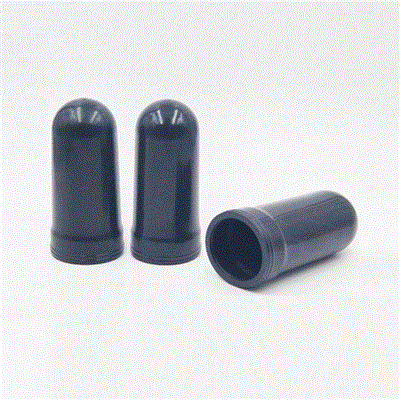
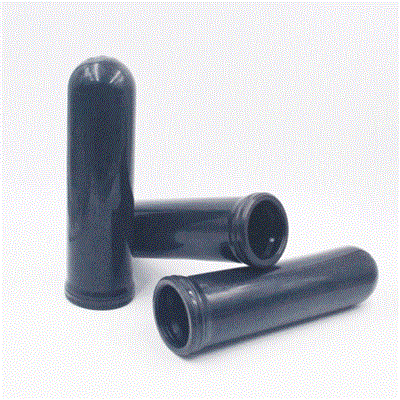
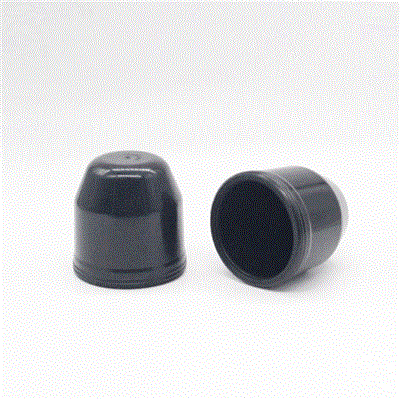
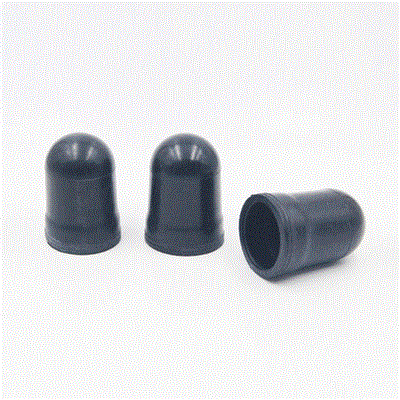
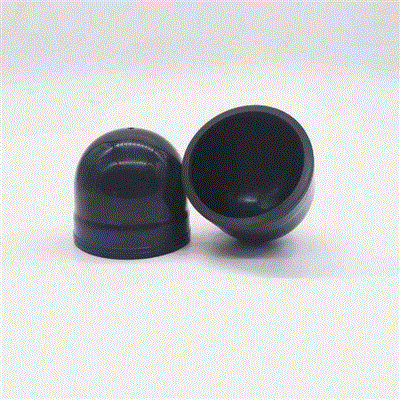
Piggyback shocks sometimes have an internal floating piston that separates oil and nitrogen. But more commonly, a rubber bladder reservoir holds the gas separately. This air bag tank is less likely to leak than a separate piston seal.
Main features:
Ensure oil and gas separation and avoid foaming
Actively prevent cavitation and improve overall impact performance
Provides consistent damping for optimal traction and control
Helps extend shock absorber life
Material: NBR, HNBR
A worn nitrogen gas bladder rarely announces itself. The vehicle simply feels less controlled than it did, and the workshop attention usually goes to the valve stack, the oil, or the springs. Because the bladder sits out of sight behind the reservoir cap, it is often the last item checked and the first item that should have been.
This guide is written for service managers, rebuild technicians, and warranty engineers who need a repeatable way to confirm a bladder fault, separate it from other causes, and decide between repair, replacement, and an upgrade. For dimensions and material selection, see our bladder selection and specification guide.
Bladder problems show up through the damping behaviour before they show up on a bench. Group the complaints you receive into the four patterns below, because each pattern narrows the list of suspects quickly.
The shock works when cold and loses control after twenty minutes of hard use. This pattern points to gas volume loss or oil aeration rather than valve wear. When precharge drops, the oil column no longer stays under positive pressure and cavitation begins as the fluid heats up.
A shock that feels firm or spikey immediately, especially over small ripples, often has an over inflated reservoir or a bladder that has hardened with age. A stiff membrane cannot absorb rod displacement smoothly, so the gas pressure rises faster than the damper was calibrated for.
Any oil film near the reservoir cap, the hose fitting, or the gas valve deserves attention. Oil on the gas side of the system means the separation function has already failed, and the bladder is no longer doing its job regardless of how it looks.
A soft knock or rattle during rapid compression can indicate a bladder that has collapsed into the housing and lost its preload, or a neck that has worked loose. Confirm it on the bench before condemning the whole damper.
| Failure mode | Visible signs on strip down | Root cause | Correct action |
|---|---|---|---|
| Nitrogen permeation | Bladder intact, pressure below specification | Normal gas diffusion through rubber over time | Recharge to specification and re test |
| Neck seal leakage | Oil staining at the neck, damp cap area | Damaged bead, over tightened clamp, scored seat | Replace bladder and inspect the seat |
| Membrane rupture | Split or pinhole, gas and oil mixed | Over pressure, pinch during assembly, sharp burr | Replace bladder, deburr the housing |
| Permanent set | Bladder collapsed and creased, low spring back | Long service at high temperature | Replace, and consider an HNBR grade |
| Ozone cracking | Fine surface cracks at the fold lines | Ozone exposure and aged compound | Replace, improve storage practice |
| Chemical swelling | Soft, swollen rubber, dimensional growth | Wrong oil or contaminated hydraulic fluid | Replace bladder and flush the system |
Slow pressure loss with no oil contamination is the most common finding of all, and it is not a defect. Nitrogen passes through rubber at a low but steady rate, which is why the pressure should be checked at every major service. Only when pressure falls faster than the documented rate, or when oil appears on the gas side, does the bladder itself need replacement.
A high share of early failures are caused during the rebuild rather than during service. Pinching the membrane on a sharp edge, twisting the neck while fitting the cap, or charging the reservoir before the bladder has seated properly all shorten life. Train the assembly step and keep a photograph of the correct seated position at the bench.
Write down the vehicle, the mileage or hours, the load condition, and when the symptom appears. A complaint described as rough ride is not actionable. A complaint described as fade after twenty minutes on a loaded delivery route is.
Measure the reservoir pressure with a calibrated gauge and compare it against the specification for that shock. Record the reading. This single number separates permeation from a genuine leak and gives you baseline data for the warranty file.
Drain a small oil sample and look for aeration, discolouration, metallic particles, and a strong burnt smell. Foamy or milky oil supports a gas separation fault. Oil that is dark and gritty points to wear elsewhere in the damper, and the bladder may be an innocent bystander.
Lay the bladder on a clean surface and inspect the fold lines, the crown, and the neck under bright light. Squeeze gently to check for stiffness, creases, and loss of elasticity. Measure the neck diameter and the overall length against the drawing, and note any permanent growth, because swelling reveals the wrong fluid.
After fitting a new bladder and recharging to specification, run a damper dyno comparison against a known good unit. A restored and consistent force curve confirms that the bladder was the root cause. A curve that is still weak means the fault lies in the valve stack or the oil.
| Symptom reported | Most likely cause | Confirm by |
|---|---|---|
| Fade after a long hard run | Low gas pressure or aeration | Pressure gauge, oil sample |
| Harsh over small bumps | Overcharge or aged stiff bladder | Pressure reading, bench squeeze test |
| Oil film at reservoir cap | Neck bead or seat damage | Visual inspection, dye check |
| Sudden total loss of damping | Membrane rupture | Oil on gas side, pressure zero |
| Knock on rapid compression | Collapsed bladder or loose neck | Bench inspection, torque check |
| Gradual loss over months | Normal nitrogen permeation | Compare against specified loss rate |
If the housing is sound, the oil is clean, and the valve stack passes a dyno check, fitting a new bladder and a fresh charge restores the damper. This is the normal outcome for permeation, ozone cracking, and isolated neck damage.
Where the same failure keeps returning on high temperature or heavy duty cycles, the fault is often grade selection rather than workmanship. Moving from NBR to HNBR raises the usable temperature ceiling and lowers compression set, which extends the interval between services. Discuss the duty cycle with your supplier before reordering.
Scored bores, cracked housings, corroded gas valves, and repeated oil contamination are not bladder problems. Replacing the bladder on a damaged damper simply moves the failure downstream. Compare the rebuild cost with a new unit before committing labour.
| Condition found | Recommended path |
|---|---|
| Clean housing, clean oil, low pressure only | Replace bladder, recharge, re test |
| Repeated high temperature failure | Replace and upgrade to HNBR |
| Oil contamination from wrong fluid | Replace bladder, flush and refill |
| Scored bore or cracked housing | Scrap the damper, do not rebuild |
Use a regulated nitrogen source with a calibrated gauge, charge slowly, and verify the pressure after the reservoir has equalised. Never use compressed air, because oxygen and moisture attack both the rubber and the oil. Record the final pressure on the job card so the next service has a reference point.
Keep spare bladders relaxed in their packaging, away from sunlight, ozone sources, and oily floors. Do not hang them over hooks, because a set crease becomes a crack initiation site. Apply first in first out rotation and check the cure date before use.
For fleet work, set a pressure check interval that matches the duty cycle rather than the calendar alone. High temperature and heavy load applications benefit from earlier checks. Logging the pressure at each visit turns a vague complaint about ride quality into a trend you can act on.
Replacement bladders, piston rods, and supporting shock absorber parts can be ordered together to keep a rebuild line supplied. See our wholesale sourcing guide if you need repeat volumes with defined inspection criteria.
Suppliers respond faster to evidence than to opinion. A complete claim includes the part number and cure date, the measured gas pressure on arrival, photographs of the bladder on the bench, the oil condition, the duty cycle, and the dyno result before and after repair. With that package, a genuine manufacturing defect is easy to separate from an assembly or specification error, and the correct party pays for the fix.
Some loss is expected because nitrogen diffuses slowly through rubber. The acceptable amount depends on the reservoir volume and the starting pressure, so the figure should come from the damper manufacturer. Any loss that is clearly faster than that documented rate, or any oil found on the gas side, justifies replacing the bladder.
No reliable field repair exists for a torn or permanently set membrane. Adhesives do not restore the elasticity the part needs, and a patch creates a stiff spot that tears under cycling. Replacement is the only dependable route, and the bladder is normally the cheapest component in the assembly.
Only if the fade comes from heat related ageing or compression set. If the fade is caused by a slow leak at the neck, a low precharge, or aerated oil from another source, changing the compound will not help. Diagnose the cause first, then choose the grade that addresses it.
For normal road use, a check at each major service is usually sufficient. For heavy duty, off road, or high temperature operation, a shorter interval tied to engine hours or route severity keeps the damper inside its intended pressure window and prevents the slow drift that quietly ruins ride quality.
Send us the shock datasheet, a photograph of the failed bladder, and the measured pressure, and our engineers will help you confirm the root cause and specify the right replacement grade. We supply NBR and HNBR bladders for piggyback and remote reservoir shocks, together with related chassis and suspension components. Browse the full nitrogen gas bladder category, review our product index, or contact our export team to start a request.