sales@bonporaparts.com
0086-10-64988621
English
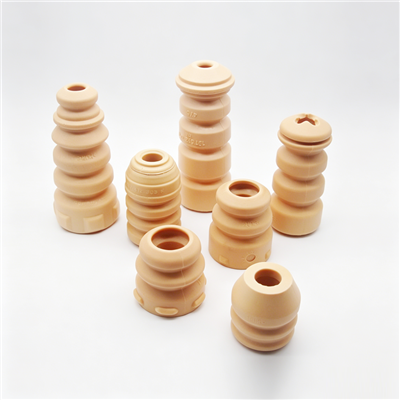
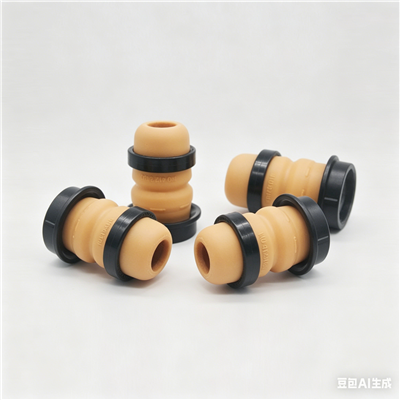
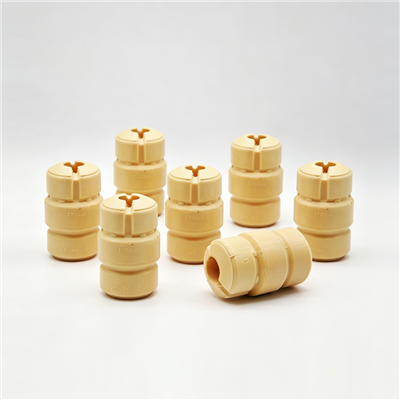
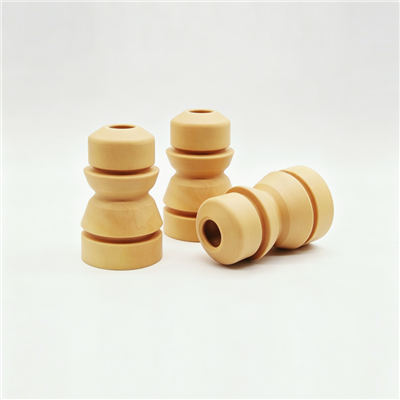
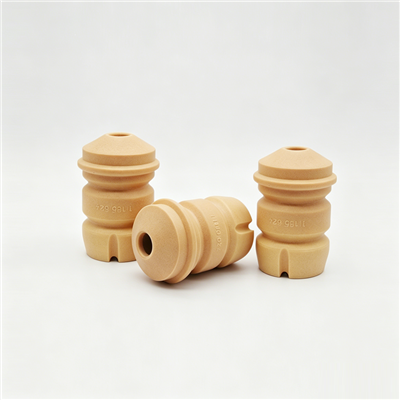
A jounce bumper, also known as a bump stop, bump rubber, rubber buffer or strut bumper, is an elastic component typically made of high elasticity polyurethane in an MDI or NDI system. It is installed on the piston rod of a shock absorber to provide progressive auxiliary stiffness at the end of the suspension compression stroke. It limits travel, prevents bottoming out, absorbs impact energy, reduces the noise and load from metal to metal contact, and improves ride comfort under large impacts.
In fleet terms, this is a low value part carrying a high consequence. The bumper itself costs very little compared with the labour needed to reach it, yet when it loses height or stiffness the suspension travels further before resistance builds, so more load reaches the upper mount and the body structure, more noise reaches the driver, and in some vehicles the geometry at the extremes of travel moves in ways the tyre does not tolerate well. A fleet that ignores bumpers does not avoid the cost; it transfers it to mounts, to body fixings and to a harsher ride that drivers report.
Bonpora states a design life of at least 80,000 km or 2 years under normal use, with no cracking, no excessive permanent deformation and no stiffness loss over that period, and a typical warranty of 1 to 2 years or 50,000 to 100,000 km. Two features of that statement shape a maintenance programme. First, the life is expressed in distance and in time, so a low mileage vehicle that spends years on poor roads still reaches its limit on the time element. Second, the qualifier under normal use means that a vehicle operating outside the normal envelope will not achieve the stated life, and the interval has to be adjusted rather than assumed.
Two identical vehicles on different routes will not finish their bumpers at the same mileage. The interval should follow how often the suspension reaches the end of its travel, because that is what wears the part.
A vehicle that runs at or near its gross weight, that carries a heavy rear load, or that tows will engage the bumpers far more often than a lightly loaded one. The same applies to a van used as a delivery vehicle with a partial load all day, because the sagging rear end brings the stop into contact during ordinary driving rather than only at the end of the stroke.
Repeated speed humps, broken surfaces, kerbs and unmade service roads generate the events that a bumper exists to soften. On these routes the number of engagements per kilometre rises sharply, and the part earns its keep while also wearing faster.
The stated range is -40°C to +90°C, which meets standard passenger car requirements, and the material can be adjusted for special conditions. Cold climate operation stiffens the material and makes cracking more likely on a part that is already aged, while hot climate operation with heavy loads accelerates set. Fleets operating at either extreme should not use the same interval as a fleet in a temperate region.
| Duty band | Typical use | Bumper inspection |
|---|---|---|
| Light | Low mileage, good roads, light load | At each scheduled service |
| Standard | Mixed routes, normal load | At each service, with a check whenever a strut is stripped |
| Heavy | Constant load, poor roads, frequent humps | At each service plus a mid interval check |
| Severe | Overload or towing, unmade roads, extreme climate | Mid interval check, replace with the strut |
Most bumper condition can be judged on the ramp in a few minutes, with the vehicle raised and the wheels hanging free. It is worth building these three checks into the standard service routine, because the failure is visible and measurable long before a driver reports it.
Measure and record static ride height at each service. A gradual reduction on one side or at one end points to a spring, a damper or a load issue that is using the bumper as a spring, and correcting the cause at that point is far cheaper than replacing bumpers repeatedly.
Look for cracking, for a part that has collapsed into a fraction of its free height, for polish on the contact face that shows how often the stop is engaging, and for an uneven contact pattern that suggests the rod or the mount is off centre.
Check the dust boot for splits or missing retention, because a broken boot exposes the bumper to grit and UV. Check the upper mount for collapse and the spring for corrosion or breaks while the vehicle is raised.
| Check | Record | Action threshold |
|---|---|---|
| Ride height, both sides | Measurement per service | Difference or trend outside the baseline |
| Bumper cracking | Photograph if present | Any crack found |
| Bumper free height | Compare with a new part | Visible loss that does not recover |
| Contact pattern | Describe if uneven | One sided wear, investigate the rod and mount |
| Dust boot | Condition and retention | Cracked or detached |
| Upper mount and spring | Condition | Collapse, corrosion, breakage |
The bumper cannot be reached without removing the strut and compressing the spring on most designs. That means the labour to replace it is already paid for whenever a strut is stripped for another reason, and fitting a new bumper at that point costs the part price only. A fleet that replaces dampers, mounts and bearings but reuses a bumper with visible set will pay the same labour again a short time later.
Both sides of an axle carry the same load and cover the same distance, so they normally wear together. Grouping the bumper with the dust boot and the upper mount as an axle set makes the stock list simple and removes the decision from the technician on the ramp.
| Job | Parts to group | Reason |
|---|---|---|
| Single strut repair | Bumper, boot, mount, bearing | Same labour, shared environment |
| Damper replacement | Bumper, boot, mount, bearing, spring seats | Assembly already apart |
| Axle overhaul | Full axle set, both sides | Symmetric behaviour |
Because bumper failure is gradual, the vehicles that need attention usually announce themselves before a scheduled inspection catches them.
A vehicle that returns with the same noise complaint over broken surfaces, or that has had a mount replaced already, is a candidate for a bumper check. Repeat visits for the same area are the strongest signal that the original diagnosis did not reach the cause.
Drivers describe bumper and strut wear as a thud, a bang over humps, a rear end that runs out of travel when loaded, or a vehicle that used to ride better. Encourage those reports to be written down with the route and the load, because the pattern often identifies one route or one loading condition rather than a single faulty vehicle.
| Signal | What it suggests | Response |
|---|---|---|
| Repeat noise complaint over humps | Failed or set bumper, or a mount issue | Bench check the bumper |
| Rear sags when loaded | Spring or damper using the bumper as a spring | Ride height check and ride evaluation |
| New mount already replaced | Load transfer from the end of the stroke | Check the bumper and damper |
| Drivers report a route specific thud | Frequent engagements on one route | Shorten the interval for that group |
| Category | Holding recommendation |
|---|---|
| Core profiles for the fleet | Hold to cover the monthly axle set volume |
| Profiles shared across models | Hold a single consolidated line |
| Low volume applications | Order with the strut job, allow lead time |
| Consumables in the same job | Boots, mounts and bearings stocked alongside |
| Records | Batch code retained with the job record |
Because the profiles repeat across platforms, a mixed fleet is usually served by fewer bumper references than the vehicle list implies. Grouping the fleet by profile rather than by model makes the stock list shorter, and it also makes the warranty records easier to keep, since a batch code can be traced to a group of vehicles rather than to a single unit.
In cold climates the priority is cracking, and the inspection should look closely at the base of the profile and at the washer interface where a cold material is least forgiving. Vehicles that stand outside and then move off on frozen surfaces are the ones to watch. In hot climates with heavy loads the priority is permanent deformation and stiffness loss, because the material sets faster when it is warm and continuously compressed. In both cases the underlying cause is usually the same: the bumper is being engaged far more often than the design intended, and the correction is to restore the spring and damper so that the stop returns to being an end stop.
Quality is controlled under an IATF 16949 system with inspection of static stiffness curve, compression set, hardness and appearance, and the typical warranty is 1 to 2 years or 50,000 to 100,000 km. Because those four inspection items define the part, a fleet claim is decided on the condition of the returned part rather than on its age alone. Keeping the fitment mileage, the batch code from the carton, the recorded free height and, where ride quality is the complaint, a note of loaded height against a reference part gives a claim the evidence it needs. Those records also make the interval review possible: a fleet that can see how long bumpers actually lasted on each route can lengthen or shorten the inspection interval on evidence rather than on assumption.
| Brand family | References listed on the Bonpora row |
|---|---|
| Volkswagen, Audi, Skoda, Seat | 8D0412131E, 8D0512131, 5Q0412303, 1S0412303, 1S0412303A, 5Q0511357F, 7L6412303, 7L0512131B, 6Q0512131B, 6X0512131A, 5Q0511357N |
| BMW, Mercedes Benz, Opel, Volvo, Porsche, Citroen | 0344418, 0344412, 0344409, 33531135624, 33531136395, 1683230844, 90112571, 93310506, 0344402, 770044, 33531138109, 2013232044, 31331124449 |
| Honda, Toyota, Lexus, Mazda, Mitsubishi | 51722-SWE-T01, 48331-12210, 48341-47010, 51722-SS0-004, 52722-SDA-A01, 52722-SM4-013, 51722-TF0-014, GJ6A-34-111C, 51722-SNA-904, 51722-SNA-003 |
| Chevrolet, Fiat, Jeep, Chrysler, Dodge | 96549925, 96403109, 93BB5K570AC, 84153144, 96859128, 523065, 51941991, 1780533, 51939952, 68063781AE, 1307842 |
At each scheduled service as a minimum, with the interval shortened on heavy and severe duty. Because the design life is expressed as at least 80,000 km or 2 years, a service interval around a third of that distance gives two or three opportunities to catch a failing part before it reaches the end of its stated life.
Yes, where the strut is already being stripped for another reason. The cost of the part is very small compared with the labour needed to reach it, and a bumper that has taken a set or begun to crack will otherwise become a second strip down. If the strut is not being opened, the decision can wait until the inspection shows a failure.
Recorded ride height, measured the same way every time. It shows whether the suspension has begun to sit lower and therefore whether the bumper is being used as a spring rather than as an end stop. Combined with a look at the contact pattern and the boot, it identifies most problems before a driver notices them.
It contributes to it. Without progressive resistance the suspension reaches a harder limit, which transfers more load into the upper mount, the body fixings and the surrounding structure. That is why the usual repair groups the bumper with the mount, the bearing and the boot rather than treating it as a single item.
Bonpora produces jounce bumpers in high elasticity polyurethane MDI and NDI systems for shock absorber piston rods, providing progressive auxiliary stiffness at the end of the compression stroke and improving ride comfort under large impacts, with a -40°C to +90°C working range, a design life of at least 80,000 km or 2 years under normal use, inspection of static stiffness curve, compression set, hardness and appearance under an IATF 16949 system, and a typical warranty of 1 to 2 years or 50,000 to 100,000 km. Start from the on road range, review the selection criteria in the jounce bumper specification guide, check the wear patterns in the jounce bumper failure analysis guide, order the job as an axle set through polyurethane bump stops, and send your fleet profile through the contact page.