sales@bonporaparts.com
0086-10-64988621
English
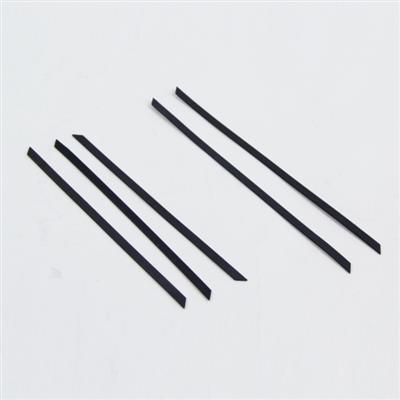
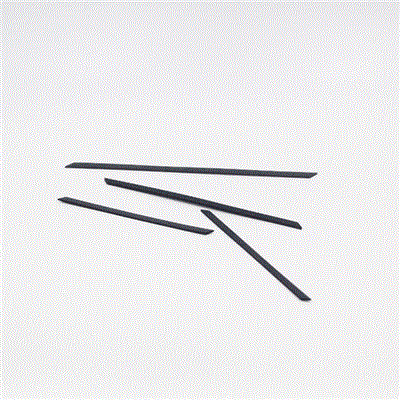
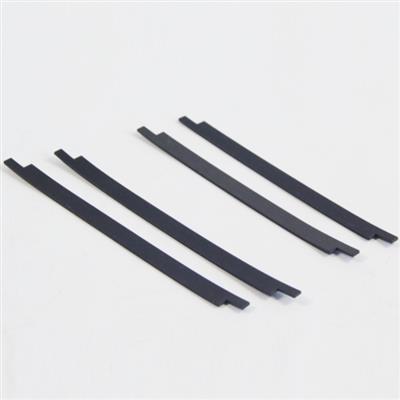
The piston ring, also named the piston band, is installed in the annular groove on the outer circumference of the shock absorber piston and reciprocates with the piston inside the shock absorber working cylinder. The main material is PTFE, polytetrafluoroethylene. Its function is to provide a seal between the piston and the working cylinder, preventing excessive internal leakage of oil during the compression and rebound strokes, and in that way ensuring stability and repeatability of the damping force. In some designs the band is also used to control oil flow restriction.
Bonpora states a design life of no less than 80,000 km or 5 years, and notes that even after wear the ring maintains effective sealing without compromising the basic performance of the shock absorber. A warranty of 1 year or 20,000 km is offered. Read together, those statements describe a part that is expected to wear gradually and keep working, which is exactly why diagnosis is not a simple worn or not worn question. A band that has lost material can still seal, and a band that still measures within size can still fail, because sealing depends on the fit between the band, the groove and the bore rather than on the band alone.
The band separates the two oil volumes either side of the piston. Because the piston moves in both directions, the seal has to hold under compression pressure and under rebound pressure, and the pressure differential reverses with every stroke. Any leakage path past the band reduces the oil that is forced through the valve stack, and the visible result is a damper that produces less force than its published curve suggests.
A design life expressed in distance and in years is a statement about wear rate under normal use. It is not a promise that applies to a cylinder that has been scored, to oil that has been contaminated, or to a unit that has been run with a bent rod. Establishing which of those conditions applies is the first step in any diagnosis, because a band replaced on a damaged cylinder will fail again on the same schedule.
The characteristic complaint is a damper that feels soft, that allows the body to float after a bump, or that shows a lower force trace on a dynamometer than the reference. The usual mechanism is leakage past the band, which may come from wear, from permanent deformation that has reduced the installed contact pressure, or from a gap that has opened as the band expanded with temperature.
Oil outside the unit does not come from the band itself. It comes from the rod seal or the rod guide. The band is involved indirectly, because leakage past the band raises the oil volume and pressure that the rod seal has to contain. A unit that weeps at the rod, with a noisy or soft action, is worth checking on both sides of the piston before any seal is replaced.
PTFE creeps under sustained load. A band that has been compressed in the groove for a long period takes a set, and the set reduces the contact pressure against the bore. This is the failure that most often hides behind a dimensional check, because the band can be within its thickness tolerance and still not pressurise the bore adequately.
The cut in the band exists so that the ring can be fitted and so that it can expand to the bore. That cut is a controlled leak path, and its size is a design decision. Under heat the band expands, the cut closes, and contact pressure rises. Under cold the cut opens. A cut that is too wide at working temperature produces blow by; a cut that closes completely produces scuffing and local overheating.
Where the gap opens over a chamfer or a port edge, or where pressure is high and the band is unsupported, material can extrude into the opening and be nibbled away stroke by stroke. The result is an irregular, torn band edge and a sudden loss of sealing rather than gradual wear.
Particle contamination from a worn rod seal, a scored bore or assembly debris abrades the band and the bore together. In this case the band is the messenger rather than the cause, and a replacement band fitted without cleaning and inspecting the bore will not last.
| Symptom | Likely mechanism | Evidence to collect | Action |
|---|---|---|---|
| Soft action, low force trace | Blow by past the band | Force trace against a reference | Measure groove and bore before re ringing |
| Oil at the rod | Rod seal, aggravated by internal leakage | Oil colour, seal condition | Check the piston side as well as the rod side |
| Force fades when hot | Thermal expansion, set, cut closure | Cold and hot traces | Review material and cut configuration |
| Noise over sharp bumps | Intermittent sealing at low pressure | Trace at low stroke speed | Check installed gap and bore finish |
| Torn or ragged band edge | Extrusion at a gap or port | Photographs of the band and the bore edge | Check chamfer and pressure support |
| Scored bore and band | Abrasive contamination | Oil particle check, bore surface | Clean or replace the cylinder assembly |
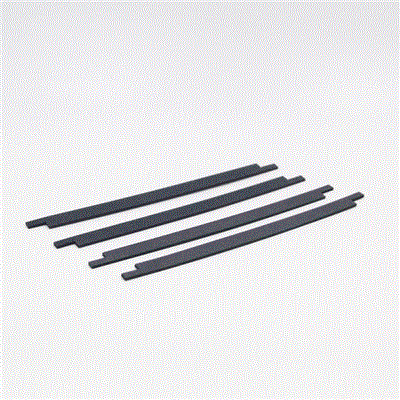
Bonpora supplies piston bands with Z cut and V cut configurations across the size programme. The cut is not a manufacturing detail, because it determines how the band behaves when it expands and how it seals at the joint.
A Z cut creates a stepped overlap at the joint, so the two ends interleave rather than meeting edge to edge. The overlap obstructs a straight leakage path through the gap, which is useful where the band must hold pressure with a relatively open gap at ambient temperature.
A V cut forms an angled joint. It is simpler to produce and, when the angle is correctly chosen, the two faces slide against each other as the band expands so that the joint stays closed. It is sensitive to the direction of fitting and to the angle accuracy.
Whichever cut is used, the installed gap must be set so that it is open at the lowest service temperature and still supported at the highest. That window is narrow on a band that expands significantly, which is why the gap should be confirmed on the actual piston rather than copied from a nominal table.
| Feature | Z cut | V cut |
|---|---|---|
| Joint form | Stepped overlap | Angled face to face |
| Leak path | Longer and tortuous | Direct, closed by expansion |
| Fit direction | Less sensitive | Must follow the design direction |
| Typical use | Higher pressure sealing | General sealing and easy assembly |
| Watch item | Correct overlap length | Joint angle and face finish |
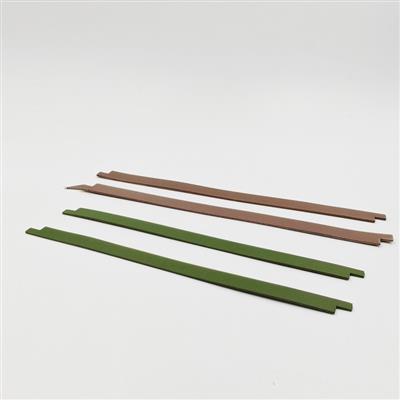
PTFE is the base material across the range, and it can be supplied in different compounds to suit the application. Virgin PTFE is the most chemically inert and the softest. Filled compounds raise stiffness, reduce creep and improve thermal conductivity, which helps the band shed the friction heat generated at the bore contact. The choice is made against bore finish, oil type, pressure and expected temperature rather than on wear resistance alone.
| Consideration | Practical effect on sealing |
|---|---|
| Creep resistance | Better retained contact pressure at end of life |
| Stiffness | Better pressure support, less extrusion at the gap |
| Thermal expansion | Sets the installed gap window |
| Bore finish compatibility | Controls wear rate on both surfaces |
| Chemical compatibility | Protects the band in the specific oil |
Bonpora lists the sizes as length, width and thickness in millimetres, with the cut configuration noted. The table below reproduces the released list. Treat these as nominal figures from the catalogue and confirm them against the piston groove on the unit being repaired, because the groove width and the bore determine the fitted condition.
| Length (mm) | Width (mm) | Thickness (mm) |
|---|---|---|
| 178 | 5 | 1.0 |
| 163.5 | 7 | 1 |
| 162 | 10 | 1.5 |
| 162 | 8 | 1.5 |
| 149 | 8 | 1.5 |
| 149 | 4 | 1.5 |
| 149 | 10 | 1.5 |
| 137 | 4 | 1.5 |
| 130.5 | 8 | 1.5 |
Length is the decisive dimension, because it sets the fitted circumference and therefore the installed gap. Two bands with the same width and thickness but different lengths are not interchangeable. Confirm length around the groove, confirm that the groove width accepts the band width without pinching, and confirm that the thickness gives light contact with the bore before the unit is filled.
A force against velocity trace taken cold and again after the unit has been worked to temperature separates the mechanisms quickly. A band that leaks will show reduced force across the range. A band that expands and closes its gap will show force that rises then falls as temperature climbs. A band that is contaminated or scored will often show a trace that is uneven at low speed.
Colour, smell and suspended particles tell you whether the failure is mechanical or abrasive. Grey or black oil with visible particles points to bore or seal wear upstream, and the band is a symptom.
Measure the bore for roundness and taper, measure the groove for width and depth, and measure the piston for straightness on a surface plate or a dial gauge. A bent rod, a worn guide bush or an out of round bore will finish a new band on the same schedule as the old one.
| Measurement | Instrument | What it proves |
|---|---|---|
| Force trace, cold and hot | Damper dynamometer | Whether sealing loss is thermal or constant |
| Bore diameter and roundness | Bore gauge, internal micrometer | Whether the cylinder can seal a new band |
| Groove width and depth | Calliper, depth gauge | Correct band width and thickness |
| Band length around the groove | Tape or strip measurement | Installed gap |
| Piston and rod straightness | Dial gauge, surface plate | Whether misalignment caused the wear |
| Oil particles | Visual or filter check | Whether contamination is present |
Where the bore is round and within size, the groove is undamaged and the rod runs true, fitting a new band restores the unit. Where the bore is scored, the cylinder is not recoverable by re ringing and the correct decision is to replace the assembly or the damper. Where the complaint is external oil at the rod, the rod seal and guide should be renewed at the same time, because returning a unit with a new band and an old seal moves the leak rather than curing it.
Matching the band to the piston is the second half of the job. Bonpora customises different diameters, thicknesses, gap configurations and materials based on customer drawings or samples, with matching design according to piston dimensions, which means the fastest route to a correct replacement is a measured sample or a drawing of the piston groove rather than a size description.
Bonpora offers a 1 year or 20,000 km warranty, and quotes a design life of no less than 80,000 km or 5 years for the ring, noting that even after wear the ring maintains effective sealing without compromising basic performance. The practical consequence for a claim is that the age of the part alone does not establish a defect. A claim is normally decided on whether the unit stayed within its published force behaviour, whether the bore and piston are within limits, and whether contamination or misalignment is present. Keeping the force trace, the oil condition record and the measurements with the job sheet answers all three questions at the time they are easiest to answer.
Compare a force trace against a reference and check the internal leakage path before and after the piston. A band that is leaking reduces force across the velocity range, while a valve stack problem often changes the shape of the curve rather than the level. Confirm the groove, the bore and the band surface as well, because set and contamination produce the same symptom.
Yes where the bore is round and within size, the groove is undamaged and the rod runs true. The band is a serviceable component and the piston is designed to be re ringed when the matching dimensions are available. If the bore is scored or the rod is bent, re ringing will not hold and the assembly should be replaced.
Both are supplied across the size programme, and the choice depends on the pressure the joint has to hold and on how the band expands with temperature. The Z cut gives a longer leakage path at the joint, while the V cut relies on the angled faces closing as the band expands. In both cases the installed gap on the actual piston matters more than the cut name.
It describes wear under normal service conditions, with the ring still maintaining effective sealing as it wears. It does not cover a scored bore, contaminated oil or a misaligned rod, all of which shorten life regardless of the band. Bonpora states a warranty of 1 year or 20,000 km, so a claim within that term is assessed on the condition of the cylinder as well as on the ring.
Bonpora supplies PTFE piston rings, also named piston bands, for the annular groove on the shock absorber piston, sealing against the working cylinder to keep damping force stable and repeatable, with a design life of no less than 80,000 km or 5 years, a 1 year or 20,000 km warranty, and customisation of diameters, thicknesses, gap configurations and materials to customer drawings or samples. Start from the piston ring range, review the specification detail in the piston ring and piston band guide, check the mating components in piston rods and shock absorber parts, look at custom parts for a drawing based supply, and send your piston data through the contact page.