sales@bonporaparts.com
0086-10-64988621
English
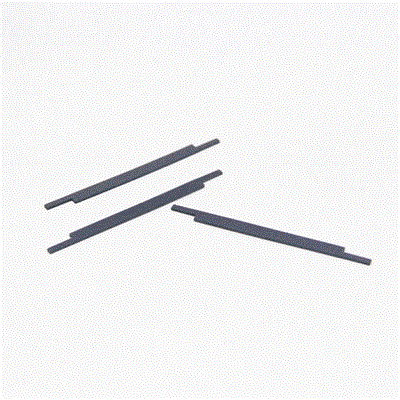
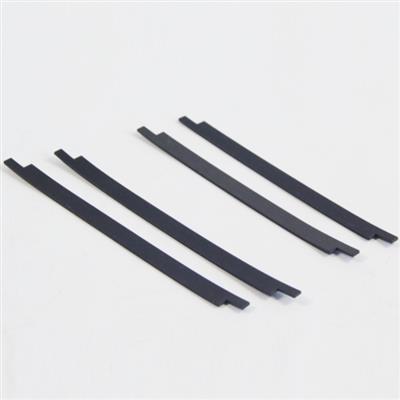
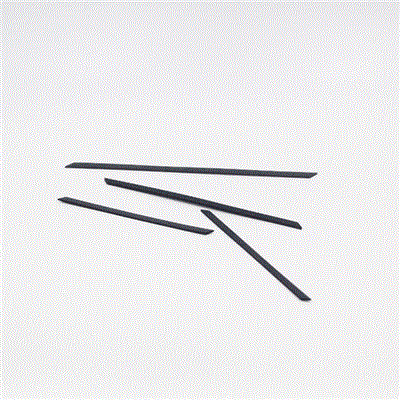
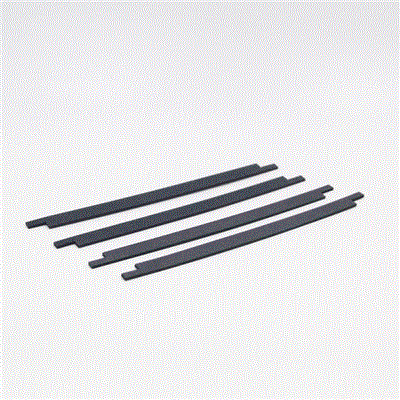
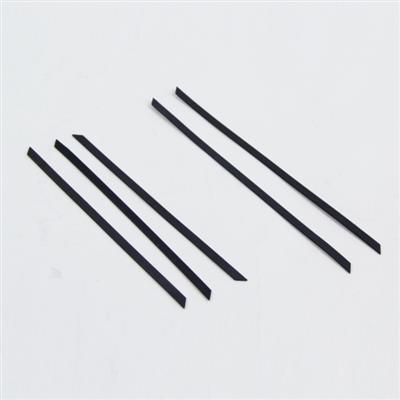
The source row describes a piston ring, also called a piston band, fitted in the annular groove on the outer circumference of the shock absorber piston and reciprocating with the piston inside the working cylinder. Its main material is PTFE, its job is to seal between the piston and the cylinder so that oil leakage during compression and rebound stays within limits, and in some designs it also helps to control oil flow restriction. The design life is stated as no less than 80,000 km or 5 years, with a warranty of 1 year or 20,000 km.
For a distributor the part occupies almost no shelf space and costs very little per piece, which makes it easy to treat as an afterthought. That is a mistake, because a rebuild that leaks is not attributed to a cheap band; it is attributed to the rebuild. Range planning and supplier control for this part deserve the same attention as a larger component, and they cost far less.
The source row notes that rings are matched to piston dimensions, and lists a size reference in the form of length multiplied by width multiplied by thickness for Z cut and V cut configurations. Because the ring has to match both the piston groove and the cylinder bore, the practical stocking key is the piston family rather than the ring dimension in isolation.
| Reference size (length x width x thickness, mm) | Supply note |
|---|---|
| 178 x 5 x 1.0 | Longest listed band, thinnest section |
| 163.5 x 7 x 1 | Wide band, thin section |
| 162 x 10 x 1.5 | Wide and thicker, higher pressure use |
| 162 x 8 x 1.5 | Common combination size |
| 149 x 10 x 1.5 | Wide band for larger pistons |
| 149 x 8 x 1.5 | Common combination size |
| 149 x 4 x 1.5 | Narrow band |
| 137 x 4 x 1.5 | Narrow band, smaller piston |
| 130.5 x 8 x 1.5 | Shortest listed band |
Both Z cut and V cut are available, and customers rarely want to be told that the configuration they need is a special order. Where demand is predictable, holding both configurations in the fastest moving sizes is more useful than holding twice as many sizes in one configuration.
A ring is quoted by dimension, compound and cut. An enquiry that omits any of the three will produce either an unusable offer or a delay while the supplier asks questions.
Where a customer has an existing part, sending a sample for measurement is usually faster than describing it. Compound identification by filler type may be difficult from a sample alone, so stating the application and the fluid used is a useful substitute.
Sample approval for this part should be dimensional and functional rather than visual. Measure total length, width, thickness and gap across the cut, check flatness on a surface plate, and fit one band to a piston of the intended size to confirm that it seats in the groove without twisting.
A functional check is worth the extra time. Assemble a sample damper, work it through its stroke and confirm that the damping feel is consistent in both directions. A ring with the wrong gap or a twisted band will often show up here rather than on a vehicle, which is the cheapest possible place to find the fault.
Record the approved sample measurements in writing. For a repeat order, that record is what prevents a slow drift in dimensions across several deliveries, when each batch is individually acceptable but the cumulative change is not.
| Cost element | What to confirm |
|---|---|
| Unit price by quantity break | The break applies to the size and cut you order |
| Minimum order quantity | Per size, per cut, or per shipment |
| Setup charge | Whether a custom size carries a one-off cost |
| Sample charge | Whether it is credited against the first batch |
| Packaging | Flat pack, tube, or bagged by size and cut |
| Freight and insurance | Method and transit time |
| Duty and clearance | Rate and broker |
A thin PTFE band that is packed in a loose bag with others can take a permanent set and arrive bowed or twisted. Because a bowed band still measures correctly when it is held flat for inspection, the damage can pass goods inwards and only appear at assembly. Flat packing, separated by size and cut, avoids the problem entirely and costs almost nothing.
| Criterion | Evidence to request |
|---|---|
| Compound control | Filler type confirmed against the approved part |
| Molding and sintering | Process parameters recorded per batch |
| Skiving control | Thickness results measured across the strip |
| Cut quality | Gap and end geometry checked, no burrs |
| Dimensional discipline | Release record against the drawing or approved sample |
| Packaging standard | Flat pack, labelled by size and cut |
| Responsiveness | Sample lead time and clarity of the offer |
| Commercial conduct | How previous shortfalls or claims were handled |
The most informative questions are about what happens when a batch is out of specification. A supplier who can describe a containment process is operating a system; one who describes only the inspection routine is relying on luck.
Rings occupy little space, so the temptation is to order in large quantities and forget them. Three practices keep the stock usable. Store the bands flat, not folded or hanging. Keep them away from sustained heat, because PTFE compounds can take a set under load at elevated temperature. And rotate by batch, so that old stock is consumed before new deliveries rather than remaining at the back of the shelf indefinitely.
The design life quoted in the source row is a service life rather than a shelf life, and the material does not expire in storage. What does change is the geometry: a band that has been stored badly is no longer flat, and a band that is not flat cannot seal evenly.
Start with the sizes that match the piston families your customers rebuild most often, in both cut configurations where demand justifies it, and add sizes as the order history shows a need. The reference list in the source row is a sensible starting point for a general range.
Rarely. The saving per piece is small, while the cost of a comeback, a reopened damper and a damaged reputation is not. Compare gap control, dimensional consistency and packaging before comparing price.
Yes. The source row confirms customisation of diameters, thicknesses, gap configurations and materials based on customer drawings or samples, with matching design according to piston dimensions.
Ordering by size alone and ignoring the gap or the cut configuration. Two rings can share the same length, width and thickness and still behave differently in a damper because of the gap and the joint geometry.
Bonpora Parts and Components produces PTFE piston rings and piston bands for shock absorbers in Z cut and V cut configurations, with custom diameters, thicknesses, gap configurations and materials matched to piston dimensions. Review the piston ring range, read the selection guide, the manufacturing and quality guide and the installation guide, or compare the shock absorber component range. Send your piston dimensions, size list and annual quantities through the contact page, or use the custom parts service for a size outside the standard range.