sales@bonporaparts.com
0086-10-64988621
English
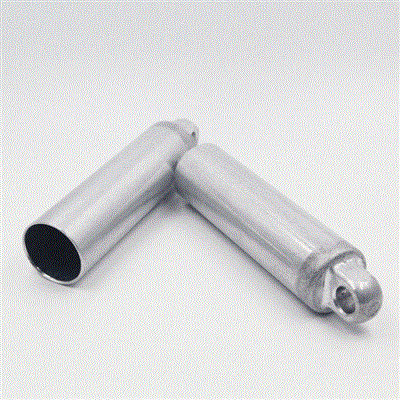
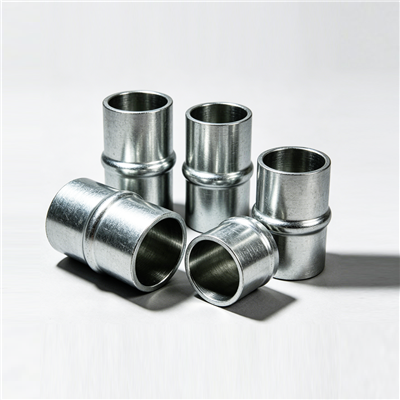
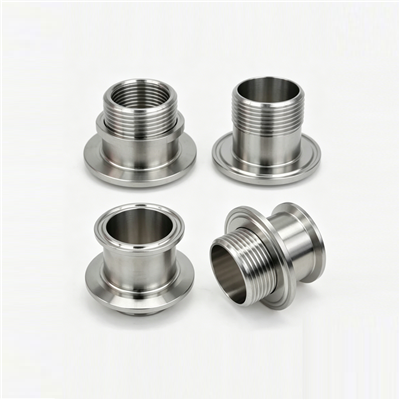
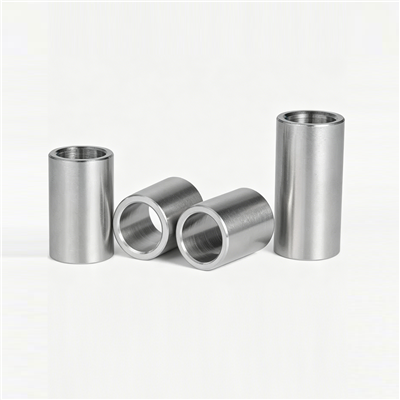
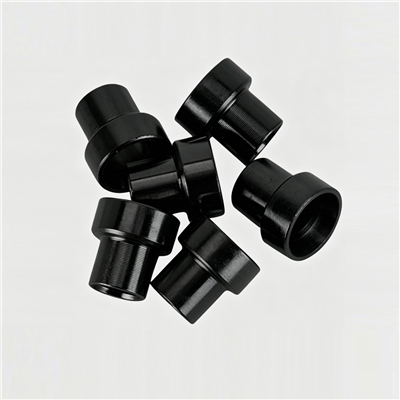
A sleeve, also supplied as a bushing or a tube, is installed inside a hole or on the exterior of a shaft type part. It appears in connection structures, in pipe and wire passageways through walls, and at the bushing positions of moving components, where it protects wires, pipes and moving parts from abrasion, spaces adjacent components to control axial or radial clearance, and withstands radial pressure or provides a low friction surface.
Sleeves are frequently bought as a family rather than as a single item, because one assembly may need three or four lengths and diameters that all do the same job. That habit keeps the purchasing paperwork short and creates a specific risk: a supplier who is competitive on the simple protection sleeve may not be able to hold the tolerance on the bearing sleeve in the same drawing pack. This guide is aimed at the buyer building that drawing pack and the quoted order, and covers the data a factory needs, where the price really comes from, and how to check a delivery before it reaches the line.
The first decision is how to divide the parts between suppliers. Sleeves fall into three purchasing groups, and they rarely belong with the same source.
These are simple tubes, usually with a generous tolerance and a deburred end. They are the most price sensitive and the easiest to source, and the main quality risk is a sharp edge or a missing lead in rather than a dimension.
Length and end squareness are the critical characteristics here, because the assembled gap is the sum of the sleeve length and the faces it sits between. A supplier who cuts and faces on a lathe to a controlled length is the right fit; a supplier who only cuts tube to a nominal length is not.
Bore size, wall thickness concentricity, surface finish and material selection all matter at once, and the material may be a copper alloy or a hardened steel rather than a plain tube. Keep these parts with a supplier who can show capability data on the bore, and consider them a separate sourcing project even when they sit on the same drawing pack.
Two quotations can only be compared if they were built on the same information. Include the following on the enquiry for every sleeve, even where the answer seems obvious.
| Data group | What to state | Why it changes the price |
|---|---|---|
| Geometry | Inside diameter, outside diameter and length with tolerances; chamfer or radius at both ends | Determines whether bar, seamless tube or welded tube is used, and how many operations |
| Critical characteristic | Bore size, wall concentricity, end squareness or length, as applicable | Tells the supplier which feature must be inspected and which can be left wider |
| Material and hardness | Base material to a stated grade, plus any heat treatment and hardness range | Heat treatment adds an operation and a distortion risk that has to be planned for |
| Surface treatment | Plating type and thickness class, passivation, anodising or dry film lubricant | Coating is often the largest difference between two quotes for the same part |
| Quantity | Annual volume, first order quantity, call off pattern | Sets whether the part is machined from bar or run from tube with dedicated tooling |
| Packing | Bulk, small box, counted, kit packed with the mating parts | Counting and packing a low value part can cost more than making it |
When two quotations for the same sleeve differ widely, the explanation is usually in the stock form or in the tolerance, not in the material price.
| Choice | Cost effect | What the buyer gives up |
|---|---|---|
| Welded and drawn tube | Lowest material and machining cost | A longitudinal seam; not the first choice for a loaded bore |
| Seamless tube | Moderate | Higher stock cost, but no seam and less machining |
| Turned from bar | Highest material cost, best concentricity | Material consumed in the drilled core |
| Cut and faced only | Low machining cost | Wider length and squareness band, so a spacing duty suffers |
| Ground outside diameter or honed bore | Adds an operation and handling | Pays only where the fit or the surface finish is functionally required |
| Heat treatment | Adds cost plus a straightening risk | Necessary for wear surfaces, unnecessary for protection sleeves |
| Plating or anodising | Cost scales with surface area and thickness class | Required for corrosion, but a source of fit change if the bore is coated |
With a part this inexpensive, a physical sample remains the cheapest form of risk control. Ask for a sample with a dimensional report that lists the measured value of each critical characteristic against its tolerance, and measure the sample yourself before approving it.
Check the bore and outside diameter in two directions at both ends, the wall thickness at four points, the overall length and the end squareness. Then fit the sample in the real assembly and confirm that the sleeve presses in with steady force, that the bore clearance allows the intended movement, and that any cable or hose passes through freely.
Keep one approved sample, signed by both parties, along with the drawing revision it was made to. It is the reference that makes a later delivery dispute resolvable in minutes rather than weeks, and it is particularly useful where more than one supplier makes the same part.
Sleeves are hollow, light and long, so freight is driven by volume rather than by weight. Packing density therefore has a direct effect on the landed cost, and two suppliers at the same unit price can end far apart once the cartons are compared. Ask for the carton dimensions, the quantity per carton and the quantity per pallet with the quotation, and check nesting: sleeves often pack far more efficiently when the supplier counts them into a fitted tray rather than dropping them into a bulk bag. Add the freight, the duties, the inland transport, the cost of incoming inspection, the cost of the safety stock that covers the lead time, and the cost of any rework caused by a rejected lot. For a family of sleeves, the ordering pattern matters too, because several lengths sourced together will usually ship in one consignment and reduce the freight per piece.
| Assessment area | Question to ask | Evidence to request |
|---|---|---|
| Material control | Can the mill certificate be traced to the delivered lot? | Incoming inspection record, certificate with heat number |
| Stock form | Is the part made from bar, seamless tube or welded tube? | Process route statement for the specific part |
| Capability | What is the capability on the bore and the outside diameter? | Capability study or inspection data from recent lots |
| Heat treatment and plating | Done in house or subcontracted? | Process certificate, hardness report, coating thickness report |
| Edge and cleanliness control | How are burrs and chips controlled before packing? | Deburring process and a final cleanliness check |
| Lead time and flexibility | Standard lead time, minimum order quantity, small batch capability | Recent delivery performance and a sample of past orders |
Full inspection of every sleeve is not economic, so use an attribute sampling plan that matches the risk. Protection sleeves need a visual check for burrs, sharp bore edges, corrosion and length, on a sample from each lot. Spacing sleeves need the length and squareness verified on a sample, because those are the characteristics that show up in the assembly. Bearing sleeves deserve a dimensional check on each lot, covering the bore in two directions, the outside diameter where the fit matters, and the wall thickness. Record the lot number with the result so a problem found on the line can be traced to the whole delivery, and keep one sample from each lot until the next one arrives. For repeat orders, hold the approved reference sample and the drawing revision, and re-approve whenever the supplier changes the stock form, the heat treatment source or the plating line, because those are the changes that quietly move a dimension.
Bonpora supports customisation of different lengths, inner and outer diameters and chamfer forms based on drawings or samples, and produces both single pieces and batches, which suits a project that starts as a repair and becomes a scheduled order. Where only a worn sample exists, send a photograph with a ruler alongside the measured inside diameter, outside diameter and length, and let the factory confirm the interpretation before production. Further guidance on the factory side is in the sleeve manufacturing guide, and the specification side is covered by the sleeve selection guide. A new project can be raised through a custom parts enquiry, and related machined components are grouped under metal components.
It depends on the stock form and the operations. A sleeve cut from tube that the factory already stocks can run in small quantities, while a part that needs dedicated tooling, heat treatment and plating makes more sense at a larger annual volume. Send the drawing and the expected annual quantity and the factory will state the practical break even point.
Often yes, because one consignment reduces freight per piece and one set of paperwork reduces administration. The exception is a family that mixes simple protection sleeves with loaded bearing sleeves, where the tolerance and material capability requirements are different. Splitting those two groups usually produces a better result than forcing one supplier to cover both.
Compare landed cost rather than unit price. Add freight, duties, inland transport, incoming inspection and the cost of the safety stock needed to cover the lead time, then adjust for the packing density of each offer using the carton and pallet data. A slightly higher unit price with a better packing density often wins on the total.
Check the lot traceability documents first, then sample the characteristics that matter for the duty: bore and outside diameter for a bearing sleeve, length and squareness for a spacing sleeve, and edges, length and corrosion for a protection sleeve. Compare the measured values against the approved reference sample rather than against memory.
Send Bonpora Parts and Components Co.,Ltd. the drawing or sample for each sleeve in the family, the inside diameter, outside diameter and length with tolerances, the material and hardness, the surface treatment, the chamfer forms, the annual quantity and the required packing format. The factory will confirm the achievable tolerances, propose the stock form and process route, and quote single pieces or batch production for assembly line use. See the full sleeve, bushing and tube range or contact the team to discuss a sourcing plan.