sales@bonporaparts.com
0086-10-64988621
English
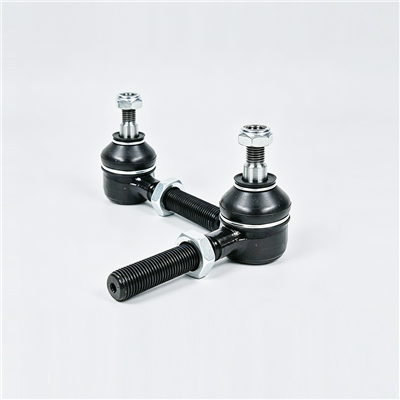
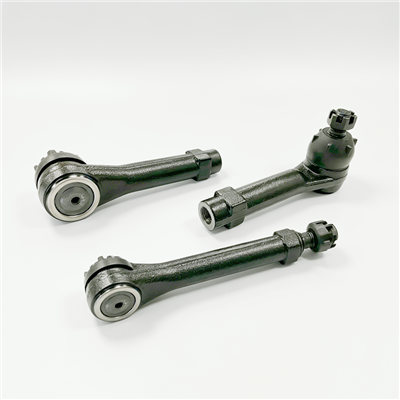
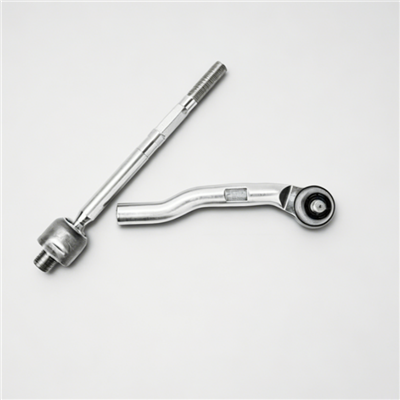
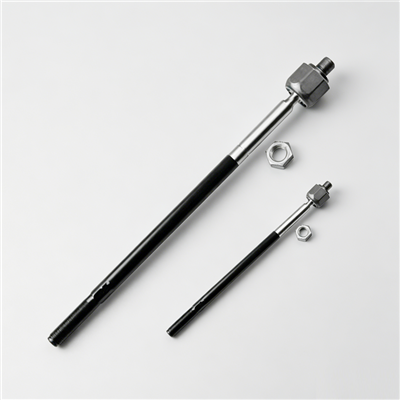
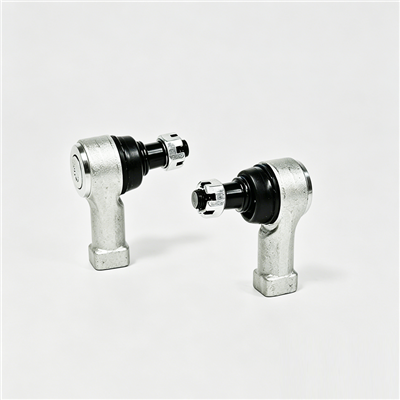
A tie rod, also named steering linkage, track rod, drag link or steering tie rod end, connects the steering gear or steering arm to the steering knuckle arm. It transmits steering torque so the wheels turn, and it adjusts toe angle because the rod length is set during wheel alignment. The rod body is made of carbon steel or aluminium alloy, and the end ball joint is made of surface hardened alloy steel. Bonpora inspects ball joint torque, axial play, dust cover sealing and overall tensile strength, and provides a one year or 30,000 km quality guarantee against ball joint wear or looseness.
In fleet use the rod is loaded on every steering input, which on a busy urban route can be several thousand times a day. That loading is concentrated in one small joint and one adjuster thread, so the useful life is decided less by distance than by how often the steering is worked and how much road shock reaches the joint. A programme built around those two factors costs less than a policy of replacing parts when a driver complains.
Two vehicles with the same odometer can be thousands of kilometres apart in steering joint condition. The difference comes from the duty, not from the calendar.
Delivery and municipal vehicles accumulate steering inputs far faster than long-distance vehicles, and a heavy or near-limit load multiplies the force through the linkage on every turn. Vehicles that regularly manoeuvre at full lock also work the joint through its full angular travel, which is where a worn spherical face becomes noticeable first.
A recorded kerb strike or a pothole impact can damage a ball joint and a tie rod without bending anything visible, so it belongs in the maintenance history. Road salt and coastal air attack the dust cover, and once the cover leaks, grit reaches the bearing surface and wear accelerates sharply. Where the cover is the weak point, the useful life is set by the cover rather than by the steel.
| Duty band | Typical profile | Suggested inspection interval |
|---|---|---|
| Urban delivery | Frequent turning, low speed, many stops | Every 15,000 km or 3 months |
| General mixed | Mixed urban and highway, normal load | Every 20,000 km or 6 months |
| Heavy or towing | Near-limit load, frequent manoeuvring | Every 15,000 km or 3 months |
| Salt belt or coastal | De-icing salt or sea air | Every 15,000 km or 3 months, plus a cover check after each winter |
Steering checks split into a fast check that a driver or a walk-round can complete, and a measured check that belongs in the workshop.
With the vehicle on level ground, ask the walk-round to look at each visible tie rod end for a split, hardened or displaced dust cover, grease loss around the joint, a bright wear mark on the rod body and a missing or loose jam nut. Then turn the steering through a small angle and listen for a single knock rather than a rattle. Record what was seen rather than a general comment, because a specific note in the history makes the next inspection faster.
Add a workshop inspection after any recorded kerb strike, wheel impact or pothole event that the driver reported. Impact damage to a steering joint often leaves the geometry correct and the joint loose, so the check should include a measured axial play reading rather than a visual inspection alone.
A road test tells you that something moves, not how much. A measurement turns the finding into a trend that supports a planned replacement.
| Recorded field | Why the programme needs it |
|---|---|
| Odometer at inspection | Builds a wear rate for the same reference across the fleet |
| Measured axial play | Distinguishes a joint at the start of wear from one at the end |
| Steering wheel free play | Separates a joint problem from a rack or column problem |
| Dust cover condition | Shows whether the cause is contamination rather than load |
| Toe reading where available | Detects a drift caused by a loosening adjuster thread |
| Action taken and part reference | Allows comparison between batches and suppliers |
Keep the readings with the vehicle history rather than in the workshop diary. Two readings six months apart are more useful than one precise reading taken at the moment of failure, because the trend tells you how much service life remains.
Tyres are a free indicator of steering condition, and a fleet that reviews tyre wear patterns at each service will often find a loose tie rod before a driver notices anything.
Feather edges across the tread and a stepped wear pattern are a sign of a toe setting that has changed, while one-sided wear on both front tyres can indicate a linkage problem rather than a wheel alignment value that was set incorrectly. When a tyre pattern appears on a vehicle that had a correct alignment at its last inspection, measure the tie rod joints and the adjuster locking before correcting the toe again.
If the fleet records tyre fitment dates, tread depths and rotation intervals, join them to the steering inspection records for the same vehicle. A vehicle that starts consuming front tyres faster than its sisters is a candidate for an early joining inspection, even when the odometer is well short of the planned interval.
Planned replacement keeps the work inside a scheduled service visit instead of on a roadside. Set the interval from your own history rather than from the odometer alone.
| Signal | Interpretation | Action |
|---|---|---|
| Axial play above the workshop limit | Joint wear has reached the rejection point | Replace the joint and complete an alignment |
| Persistent knock with measured play | Wear confirmed by measurement | Plan replacement at the next service |
| Split or hardened dust cover only | Contamination risk before wear begins | Replace the joint, since a cover cannot be resealed reliably |
| Toe drift between two alignments | Adjuster thread or locking is loosening | Inspect the sleeve, the jam nut and the joint together |
| Uneven front tyre wear with a recent alignment | Linkage movement, not a setting error | Measure both sides before setting the toe again |
A tie rod replacement changes the toe, so the alignment belongs with the job. Grouping the replacement with tyre rotation or a scheduled alignment keeps the vehicle off the road once instead of twice, and it also means the new joint is verified on the alignment equipment immediately after fitting. Where the fleet has its own alignment equipment, book the job so that the operator who sets the toe also confirms the jam nut torque and the sleeve locking, since that is the point at which an incorrect lock is easiest to catch.
Steering references multiply quickly across a mixed fleet. Group the stock by vehicle family and keep the quantities tied to the number of vehicles rather than to the catalogue size.
| Stock group | Basis for the quantity | Cover policy |
|---|---|---|
| Core references | Fitted to the most numerous platform | Hold two service cycles of expected demand |
| Older platforms | Small counts with long remaining life | Hold one cycle and reorder on first use |
| Single source references | Any reference with one approved supplier | Hold one additional set as protection |
| Fixings and consumables | Ball stud nuts, jam nuts, rack boot clamps | Store with the core references |
Store the rods straight and protected. A rod left leaning in a corner can take a set, and a surface hardened stud with a machined taper will rust in a damp store, which becomes a warranty argument when the part is fitted. Keep the lot marking visible so a batch can be traced if a fault appears, and issue new ball stud nuts and jam nuts with every replacement where the specification calls for renewal.
The published terms cover one year or 30,000 km against ball joint wear or looseness. To use that cover without a dispute, keep the part reference and lot number, the fitted date and odometer, the measured axial play or the recorded noise finding, and a note of the alignment values after fitting. A claim supported by a measurement and a record of the toe setting is much easier to settle than one supported by a driver description alone. Keep a short list of rejected claims too, since a pattern of claims rejected for installation damage usually points at a training need or a missing tool rather than at the part.
Drivers notice a change in steering feel before a measurement shows wear, so give them a simple way to report it. A short form with three prompts, what was felt, where it happened and whether the steering changed after an impact, produces a usable record. Feed that record back into the inspection programme: if several vehicles on one route report the same symptom, the interval for that duty band is too long, and if one vehicle reports it repeatedly, the fault may lie elsewhere in the steering system.
Between every 15,000 and 20,000 km depending on duty. Urban delivery, heavy load, salt belt and coastal vehicles belong at the shorter interval, and general mixed routes can use the longer one. Add an inspection after any reported kerb strike or wheel impact.
Usually yes. Check the dust cover for splits and grease loss, look for a bright contact mark on the rod, and measure axial play with a dial indicator where access allows. Record the value with the odometer reading so that the next inspection has something to compare against.
Yes. The rod length sets the toe angle and is adjusted during wheel alignment, so any replacement changes the setting. Complete the alignment and record the final toe values before the vehicle returns to service.
Keep the part reference and lot number, the fitted date and odometer, the measured play or the recorded symptom, and the alignment values after fitting. With the cover set at one year or 30,000 km, those four items are normally enough to support a claim without an argument.
Start from the tie rod range to confirm which references are fitted across the fleet, and read the tie rod specification outline to compare the base values with your measured readings. The failure analysis guide matches a symptom to its cause before parts are ordered, and the installation guide keeps the workshop procedure consistent so that a cover is never twisted on assembly. Where a repair is traced to a production deviation rather than to wear, the manufacturing guide explains which line control should have caught it. The control arm range covers the lower suspension joints that are often inspected in the same visit, and fleet quantities and stock arrangements can be arranged through the contact page.