sales@bonporaparts.com
0086-10-64988621
English
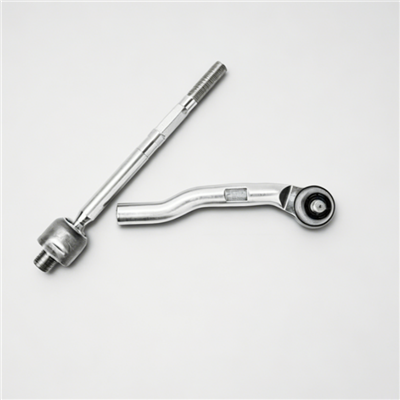
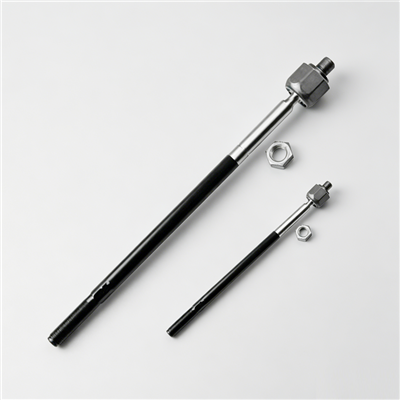
A tie rod, also named a steering linkage, track rod, drag link or steering tie rod end, connects the steering gear or the steering arm to the steering knuckle arm. It does two jobs. It transmits steering torque so that the road wheels turn, and it adjusts the toe angle, because the rod length is set during a wheel alignment. On the Bonpora range the rod body is made of carbon steel or aluminium alloy and the end ball joint is made of alloy steel with a surface hardened finish. Those two sentences already divide the part into two buying problems: the rod body is essentially a length, thread and taper item, while the ball joint is a wear item with its own test regime and its own warranty exposure.
That division matters commercially. A distributor who buys on price alone and mixes rod lengths inside one carton will spend the margin on fitment returns. A distributor who buys to a written data sheet, matches references before quoting and keeps the batch code from each carton can settle any joint complaint quickly, because the evidence trail exists from the start.
Overseas buyers do not all use the same words. Steering linkage, track rod, drag link and tie rod end can all appear in one mailbox, and on some vehicles the drag link is a separate centre link rather than an end. Before a quotation is issued, agree one vocabulary in writing and use it on the purchase order, otherwise a container can be loaded with the correct parts under the wrong description and held at destination.
Ask the factory to quote the rod body and the ball joint separately, even when the part is supplied assembled. The rod body specification covers material, outside diameter, wall or solid section, length between centres, thread size and pitch, and taper dimensions where a taper seat is used. The joint specification covers the stud diameter, thread, taper angle, torque to rotate, axial play limit, dust cover material and the surface hardening depth. When both halves are quoted in one line, a later complaint cannot be traced to a component, and neither can a cost reduction.
The first commercial decision is which variants deserve shelf space. A programme built from the vehicle parc you already sell parts for will turn faster than a programme built from a supplier catalogue, because the workshop ordering the tie rod is usually already buying brake, suspension and steering parts from the same source.
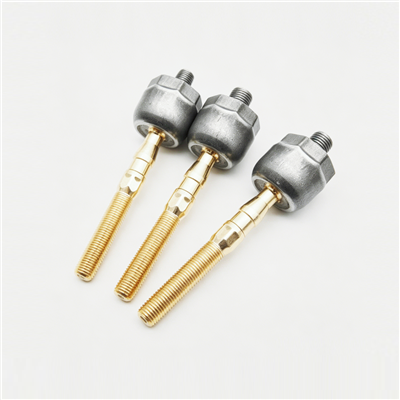
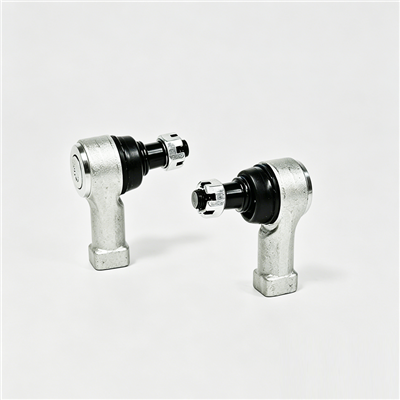
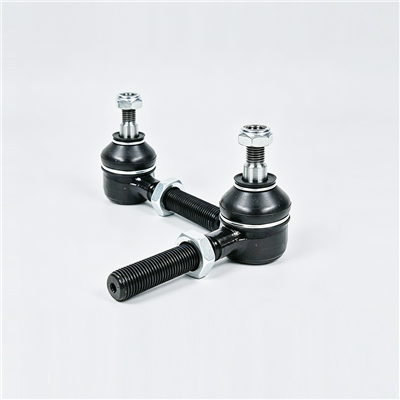
Tie rod ends are sold by position. The outer joint sits at the knuckle arm and carries the most exposed joint. The inner joint attaches to the rack or to the centre link and takes the axial load. On rack and pinion vehicles a separate rack end is often listed alongside the tie rod end, and buyers who stock one without the other create a second order and a second freight charge.
Production rods are fixed length and set on the alignment rig. Adjustable rods carry a threaded sleeve or a turnbuckle so that the length can be altered in service, and they are common in modification and motorsport catalogues. Adjustable rods widen the fitment claim, so they need a clearer data sheet rather than a shorter one.
| Variant | Typical position | Adjustment | Stock priority |
|---|---|---|---|
| Outer tie rod end | Knuckle arm | Threaded onto the rod | High, wears first |
| Inner tie rod end | Rack or centre link | Threaded or pinned | High, ordered with the outer |
| Rack end | Inside the steering rack | Fixed length | Medium, pairs with the boot kit |
| Centre drag link | Between steering arms | Fixed or sleeved | Medium, application specific |
| Adjustable rod assembly | Any position | Sleeve or turnbuckle | Low volume, high margin |
References are the fastest route to a correct quotation. A request that states only the vehicle model forces the factory to guess between trim levels and production splits, and guessing is the main cause of wrong parts in the first container.
Send the original equipment reference, any competitor reference you currently sell, and the vehicle make, model, year range and axle position. Where a reference crosses several applications, list them, so that the factory can confirm whether one part covers all of them or whether two lengths are involved. Keep a note of which references were supplied by you and which were matched by the factory, because the matched ones carry more risk.
On a first order it is worth measuring a removed part. Record the length between the centres of the two joints, the thread size and pitch on both ends, the direction of each thread, the taper diameter and taper angle of the stud, and the stud thread. Photographs alongside a rule remove most of the remaining doubt.
| RFQ field | What to state | Why it matters |
|---|---|---|
| OE reference | Full reference, no abbreviations | Fastest and least ambiguous match |
| Cross references | Competitor numbers currently stocked | Allows a consolidated programme |
| Application | Make, model, year range, axle, position | Separates trim and generation splits |
| Length | Centre to centre, millimetres | Prevents a toe adjustment out of range |
| Threads | Size, pitch and left or right hand | Controls adjustment direction |
| Taper | Diameter, angle, stud thread | Controls seat security at the knuckle |
| Quantity | First order and annual forecast | Sets tooling and scheduling options |
| Packaging | Neutral, private label or printed | Avoids a repack at destination |
Material statements belong in the tender, not in a marketing sentence. A specification that names the material family, the hardening method and the test items gives the buyer something to compare and gives the supplier a defined obligation.
Carbon steel rod bodies are the standard choice for production replacement. Aluminium alloy bodies reduce mass and are used on some passenger car applications and on modified vehicles. Whichever is chosen, state the material family on the drawing and on the label, because the two are not interchangeable in service and a mixed carton is a fitment risk.
The stud and housing are made from alloy steel and the working surfaces are surface hardened. Surface hardening is what produces a hard wearing race without making the stud brittle through its section. Ask for the hardening method and the case depth to be stated, and treat an unstated hardening process as an open item rather than a detail.
The dust cover is the cheapest component in the assembly and the one that decides joint life in wet or salted conditions. Confirm the cover material, whether it is secured by a spring clip or a retaining ring, and the grease type and fill. Finish specification for the rod body, such as a coating class or a plated finish, should also be written down, since coastal and winter road markets judge the part on appearance long before they judge the joint.
| Item | Steel option | Aluminium option | Buyer check |
|---|---|---|---|
| Rod body | Carbon steel | Aluminium alloy | Material stated on drawing and label |
| Mass | Higher | Lower | Match the application, not the preference |
| Ball joint stud | Alloy steel, surface hardened | Alloy steel, surface hardened | Hardening method and case depth |
| Dust cover | Rubber or thermoplastic | Rubber or thermoplastic | Retention method and material grade |
| Finish | Coating or plating class | Coating or plating class | Stated salt spray expectation |
Bonpora inspects ball joint torque, axial play, dust cover sealing and overall tensile strength. Those four items map directly onto how a tie rod fails in service, so they are the right things to name in a supply agreement.
Torque to rotate measures the resistance inside the socket. It is checked on assembly and is the number that separates a tight joint from a loose one. A joint that rotates below the released minimum can produce steering wander and a complaint that looks like an alignment problem.
Axial play is movement along the stud axis. It is the item most closely linked to the wear guarantee, because a knock over bumps and a steering shimmy are usually traced to play rather than to the rod. Check the released limit and the measuring method, so that a workshop and a factory measure the same thing.
Sealing is checked because joint life depends on keeping water and abrasive dust outside the socket. A cover that is correctly seated, correctly clipped and free of moulding flash is a functional requirement rather than a cosmetic one.
A tensile test on the complete assembly demonstrates that the rod, the threads and the joint connection hold together under steering and impact loads. It is the test that gives an importer confidence in a new tooling set, so ask for it on first article and on any change of material or supplier.
Tie rods can be customised in length, end connection threads and ball joint sizes, and can be supplied as OE replacement or as adjustable aftermarket rods. Customisation is therefore a normal route rather than a special favour, but it only works when the input data is complete.
Send the sample, a photograph of the sample beside a rule, the vehicle application, the annual quantity, and a note of which dimensions are critical. Mark the critical dimensions on the drawing. If a sample is not available, a dimensioned drawing plus an OE reference is workable, and a 3D file shortens the discussion further.
Ask whether the quoted price assumes existing tooling or new tooling, who owns the tooling, how long tooling takes, what the first article process is, and what happens to the fixture if the programme is discontinued. Ask also for the packaging drawing, because a private label programme usually needs the carton design approved before the first production run rather than after it.
Steering parts are long, threaded and easily damaged. Packaging is part of the specification, and it should protect the threads, the dust cover and the taper.
| Packaging item | Requirement |
|---|---|
| Thread protection | Cap or sleeve on both threads, no metal to metal contact |
| Dust cover | Free of load, no part of the carton pressing on the cover |
| Unit pack | Poly bag or printed box with the part number and application |
| Master carton | Rigid, marked with quantity, reference and batch code |
| Pallet | Even layers, strapped, long parts on one layer to avoid bending |
| Documents | Packing list, reference list and inspection record per batch |
Unit price is only one line. A tie rod programme should be compared on delivered cost per vehicle application, with the accessory and freight content made visible.
| Cost line | What to include |
|---|---|
| Unit price | Ex works or FOB as quoted, with incoterm stated |
| Tooling | Amortised over the first order or over the forecast |
| Packaging | Neutral, private label and printing setup |
| Inspection | Third party testing if required by the buyer |
| Freight | Volume weight for long parts, not just mass |
| Duty and clearance | Per destination, per reference |
| Claim cost | Expected return rate multiplied by the fitted cost |
| Question | Evidence to request |
|---|---|
| Is the material fixed on the drawing? | Drawing with material and hardening stated |
| Are the four inspections routine? | Inspection record per batch |
| Can the reference be traced? | Batch code linked to packing list |
| Is customisation supported? | Sample and drawing process in writing |
| Is packaging repeatable? | Approved carton and label artwork |
| Is the warranty position clear? | Term, scope and claim procedure |
Bonpora applies a 1 year or 30,000 km quality guarantee covering ball joint wear or looseness. The wording is specific to joint condition, which shapes the evidence worth collecting. Record the batch code, the fitment mileage and the alignment reading taken after fitting. A claim supported by an alignment record is straightforward to assess, because incorrect toe loads a new joint continuously and wears it out early, and that is an assembly outcome rather than a part defect. A claim with no alignment record cannot be separated from an installation error, which is why the record habit protects the buyer as much as the supplier.
Minimum order quantity depends on whether the reference uses existing tooling or requires a new length and thread combination. References already in production are usually quoted at carton or pallet quantities, while a new customisation is quoted with a tooling charge and a first order quantity that covers setup. Ask for both figures separately so that the true cost of a new reference is visible.
Yes. Private label packaging is a normal part of a customisation programme, and the practical requirement is approved artwork plus a packaging drawing before the first production run. Allow time for the artwork approval step, because a container that is ready before the carton design is approved will either ship neutral or wait.
Confirm the OE reference first, then check the length between centres, the thread sizes and the taper dimensions against a removed part. On a first order, ask for a sample or a first article inspection record and fit one part to a vehicle before releasing the bulk quantity. A physical check on one vehicle is cheaper than a fitment return on a container.
A packing list with part numbers and quantities, a reference cross list, a batch code record and an inspection record for the four test items. Where a third party inspection is ordered, keep that report with the batch record. These documents are what make a warranty claim or a fitment query resolvable without returning the parts.
Bonpora produces tie rods with carbon steel or aluminium alloy rod bodies and surface hardened alloy steel ball joints, inspected for ball joint torque, axial play, dust cover sealing and overall tensile strength, with a 1 year or 30,000 km quality guarantee on ball joint wear or looseness, and offers customisation of length, end connection threads and ball joint sizes for OE replacement or adjustable aftermarket use. Start from the tie rod range, review the technical background in the steering tie rod specification guide, understand the wear pattern in the tie rod wear diagnosis guide, check the surrounding axle parts in chassis and suspension, mounting bushings and stabilizer bars, look at custom parts for project work, and send your application data through the contact page.