sales@bonporaparts.com
0086-10-64988621
English
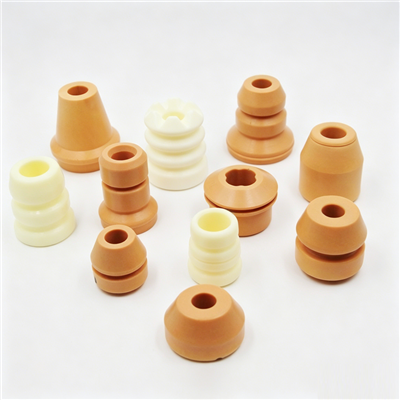
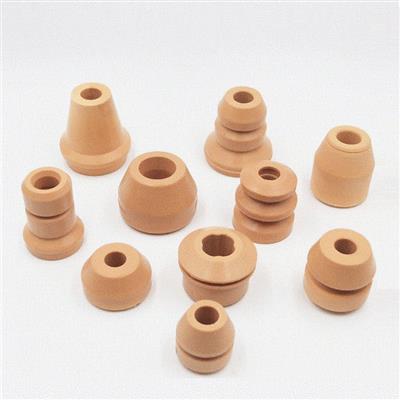
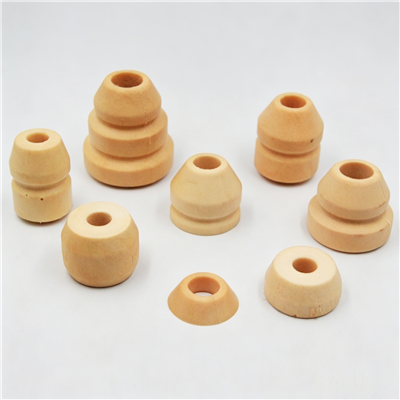
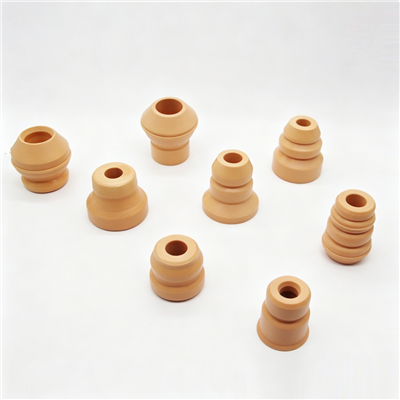
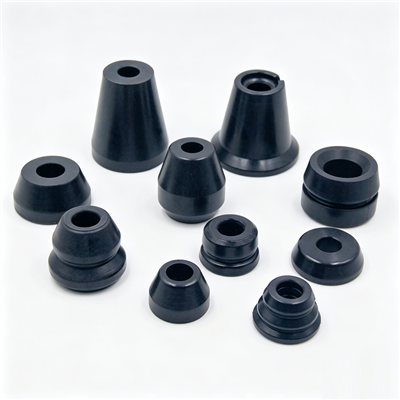
The part in the Bonpora range is listed as OE number MB3C-18061-1 20, described as a bump stop in brown with a plastic cup. It is offered as a single piece with a price unit of 1.00 USD per piece, an MOQ of 300 pieces, FOB Shanghai as the price term, a lead time of 2 weeks and China as the country of origin.
Those published terms are the starting point rather than the whole specification, because a bump stop is a dimension driven component. Two parts can share a colour and a description and still differ in bore, height, outer profile and cup retention. The sections below set out what to confirm before the first order is placed so that a quotation becomes a repeatable purchase.
| Published item | Value listed | What a buyer should confirm |
|---|---|---|
| OE number | MB3C-18061-1 20 | The full reference on the drawing and the platform list it serves |
| Description | Bump stop, brown, with plastic cup | Compound type, cup material and method of retention |
| Price unit | 1.00 USD per piece | Whether the price holds at the quantity actually ordered |
| MOQ | 300 pieces | Whether a smaller sample order is accepted before the first batch |
| Price term | FOB Shanghai | Port, packing, and who arranges the onward freight |
| Lead time | 2 weeks | Whether the clock starts at order confirmation or at deposit |
| Origin | China | Marking and documentation required in the destination market |
A bump stop is a progressive spring element fitted to limit suspension travel and to control the last part of the compression stroke. It works alongside the damper rather than replacing it, and its value is measured in the way it absorbs the final few centimetres of travel without transferring a shock into the body structure.
A bump stop supplied with a plastic cup has two elements that must work together. The elastomer body provides the progressive force, and the cup locates and retains the body on its seat. The cup also protects the base of the stop from the concentrated load at the mounting face, which is where two different materials meet and where a poorly matched assembly starts to move. Bonpora offers the part in this configuration, and the same range supports custom development for related references.
The reference on this row is a useful identifier, but it is not a specification on its own. Treat it as the key that unlocks the drawing, not as the whole description.
Note that the row carries both a base number and a trailing suffix, written as MB3C-18061-1 20. The suffix can denote a revision, a colour change or a dimensional variant within the same family, so the order documents should repeat the reference exactly as issued rather than truncating it. A shortened reference is one of the commonest reasons for a wrong part arriving at goods-in.
Ask for the crossing list that shows which vehicles the reference serves, and compare it with the models you actually supply. Where the same plate is used across several platforms, one reference can cover a wider range than the workshop expects, and knowing that ratio helps both stock planning and pricing. Where the list is short, the part is a candidate for stocking in depth rather than breadth.
The cup is a small component with a disproportionate effect on how long the assembly lasts, so it deserves its own questions in the request.
The cup seats the elastomer body and spreads the load at the mounting face. If retention is by interference alone, the seat diameter and the cup wall thickness decide the grip, and a cup that is slightly loose will work free over time and produce noise before any material failure appears. Ask how the cup is retained, whether a positive feature such as a flange or a shoulder is used, and what the specified interference or clearance is at the seat.
The brown colour is part of the specification rather than a decoration. Colour is commonly used to identify a compound or a stiffness within a product family, so the brown version of this stop may correspond to a specific hardness or formulation that differs from another colour in the same family. Confirm the compound family and the hardness value, and confirm whether the colour is controlled as a specification or allowed to vary. Where the colour is a customer requirement, it should be stated on the drawing.
Before a first order, verify the part against a removed sample or the vehicle itself. Three checks remove most of the risk.
Measure the bore, the outer diameter at the load face, the free height and the height of the cup where it engages. The interface dimensions decide whether the part will seat; the outline decides whether it will fit in the available space. Record both on a single sheet and keep it with the drawing so that the next batch can be compared.
Inspect the mating seat for corrosion, fretting and deformation. A worn seat will not hold a new stop correctly, and the resulting movement looks exactly like a faulty part, which is a difficult position to argue from once the parts have been fitted. A very small amount of work on the seat before fitting is usually cheaper than a rejected consignment.
The listed MOQ of 300 pieces sets the smallest sensible order, but the quantity that produces the best value may be higher once packing and freight are counted.
| Quantity band | Practical effect | Buyer note |
|---|---|---|
| Below the listed MOQ | Usually quoted as a sample or trial order | Ask explicitly, since a sample route is often available |
| At the MOQ of 300 pieces | Standard production lot at the listed unit price | Best for a first order to confirm quality and packing |
| Several multiples of the MOQ | Freight per piece falls and packing can be optimised | Request a price at two or three quantities before deciding |
| Container fill quantities | Lowest freight per piece, but more working capital | Confirm carton dimensions against the container volume |
Because a bump stop is bulky relative to its value, the shipping volume matters as much as the unit price. Convert each offer to a cost per piece delivered at the same quantity before comparing, and include any duty and inland transport in the calculation.
Use the sample stage deliberately. Ask for a sample from the production process rather than a hand made example, then check the interface dimensions, the cup retention and the colour against the drawing. Where a sample is to be fitted to a vehicle, keep a second sample untouched as the reference of record for the batch that follows.
If the part is to be used on a modified or competition vehicle, the sample stage is also the point to confirm the free height and the compression behaviour. A tuning change made later, such as a shorter stop or a different hardness, is best handled as a custom item rather than by altering the standard reference, because the reference number and the drawing should stay aligned.
The listed price term is FOB Shanghai, which places the risk and the cost of the main carriage with the buyer after the goods are loaded. That choice is normal for a small first order and it keeps the seller price simple, but it means the buyer must arrange freight, insurance and import formalities.
| Term | Who arranges it | Practical note |
|---|---|---|
| Ex works | Buyer from the factory gate | Rarely the best choice for a small order |
| FOB Shanghai | Buyer after loading at the port | The listed term on this row; confirm the port and the packing |
| CIF destination port | Seller arranges freight and insurance | Simpler for a buyer without a forwarder |
| Delivered duty paid | Seller handles the whole journey | Convenient, but the price hides the freight component |
Payment terms are not listed on the row, so they should be agreed in writing with the order. A common arrangement for a first order is a deposit with the balance against the documents, moving to more open terms once two or three shipments have been completed on time. Whichever structure is used, keep the specification attached to the order so that a later price discussion cannot drift into a specification discussion.
A listed lead time of 2 weeks is a production commitment, not a delivery date. Add the inland transport to the port, the sea transit and the clearance time at destination to obtain the true replenishment period, then set the reorder point from that figure rather than from the production lead time.
For a workshop or distributor, hold a buffer that covers the true replenishment period plus the demand variability over that period. Where the part is fitted to a vehicle family with a stable repair rate, the demand is predictable and a modest buffer is sufficient. Where the reference serves a platform that is entering its service years, demand can rise quickly, so review the buffer after the first two shipments instead of setting it once and leaving it.
Ask for the inspection record with each batch, covering the dimensions that decide fit and the hardness of the elastomer. If the destination market requires a declaration of conformity or a material statement, request it with the quotation rather than after the goods have shipped. Keep the batch marking and the packing list together, so that a warranty question can be answered from the record rather than from memory.
Confirm the warranty terms in writing with the order. Bonpora publishes warranty terms for its range, and the exact period and the symptoms covered should appear on the order confirmation so that both sides are working from the same text.
They belong to the same family, but the trailing characters indicate a variant within it. Quote the reference exactly as issued on your own documents and ask the factory to confirm the suffix it will produce, since colour, hardness or a dimensional revision can be carried in those characters.
The cup locates and retains the elastomer body and spreads the mounting load at its base. Retention is normally achieved by the seat diameter and the cup wall thickness, so both values should be on the drawing and confirmed against the seat on the vehicle.
The listed MOQ is 300 pieces, and sample or trial orders are commonly available below it. Ask for a sample quotation before the first batch so that the interface dimensions and the cup retention can be checked on the vehicle.
It refers to production. The complete replenishment period also includes inland transport to Shanghai, the sea transit and destination clearance, so set the reorder point from the total period rather than from the production figure alone.
Start from the off-road range to see the bump stop references in production, and read the jounce bumper specification outline for the base values to compare with your drawing. The wholesale sourcing guide covers range planning, MOQ structure and supplier evaluation for this product family, the manufacturing guide explains how hardness and cup retention are controlled, and the failure analysis guide helps separate a worn seat from a failed stop before parts are ordered. A different free height or hardness is handled as a custom part, and drawings, samples or a target quantity can be sent through the contact page.