sales@bonporaparts.com
0086-10-64988621
English
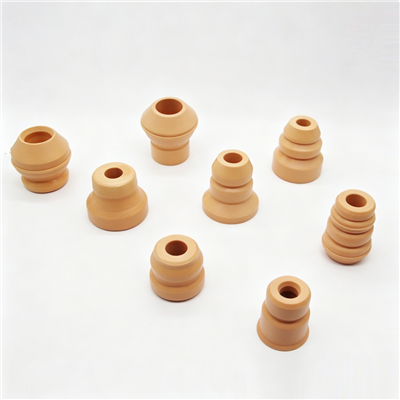
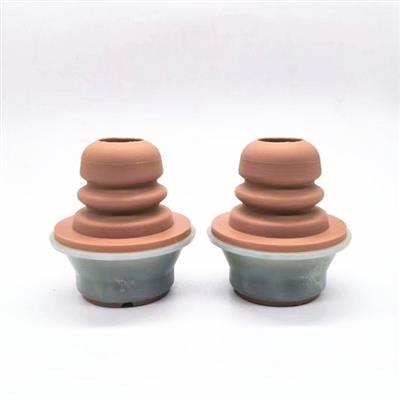
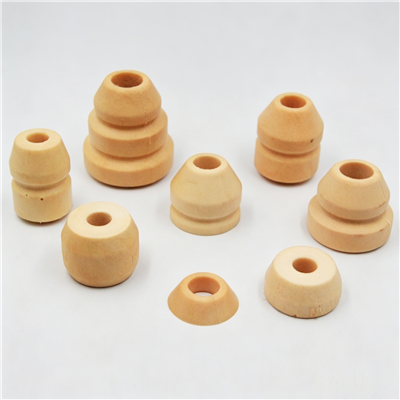
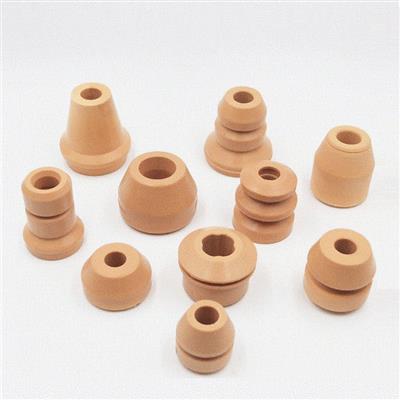
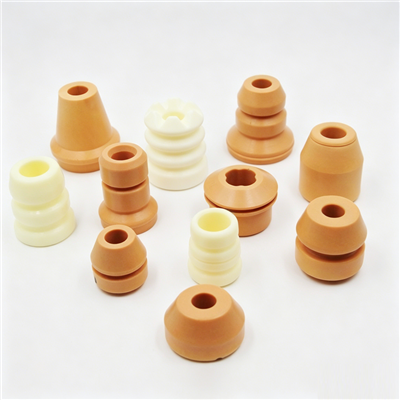
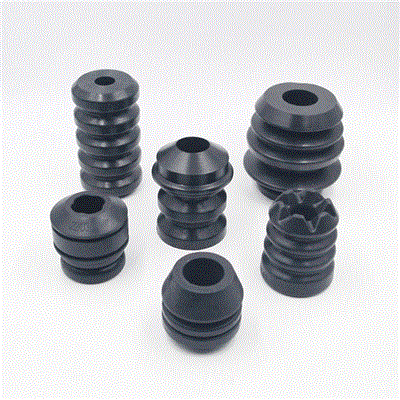
The jounce bumper described in the Bonpora source row is an elastic component typically made of high-elasticity polyurethane, using MDI or NDI chemistry. It is also known as a bump stop, bump rubber, rubber buffer or strut bumper, and it is installed in the suspension damper of off-road vehicles, including SUVs, pickups and race cars, as well as on motorcycles and motorsports applications.
Its duty is different from that of a conventional road car bumper. On a road car the part is usually touched only on a severe compression event. On an off-road vehicle it works much harder: a jump landing, a rock step or a washout can drive the suspension through its remaining travel in a fraction of a second, and the bumper is what stops the damper from reaching metal-to-metal contact.
Three functions follow from that. It provides progressive stiffness during significant suspension compression, it absorbs high-impact energy in extreme conditions such as jumps and rough terrain, and it protects the shock absorber and the frame from the loads that would otherwise pass through them. On a motorcycle the bump stop also serves as a rear suspension end-stop and can reduce chain impact, depending on the specific design.
Because the part is the last line of defence in the travel, it is also a tuning element. Changing its height, its hardness or the shape of its contact face changes how the vehicle behaves at the limit, which is why compound and geometry are specified together rather than treated as separate choices.
Many dampers carry the bumper on the shaft, where it is compressed between the shaft eye and the body as the suspension reaches full bump. This arrangement protects the damper internals and keeps the package compact.
Some off-road builds use an external stop mounted on the chassis or on the axle, and a pressure-driven air bump in place of a solid elastomer. An external polyurethane stop is simpler to service and easier to change when the setup is being tuned, because it does not require the damper to be rebuilt.
On a motorcycle the stop is part of the rear shock assembly. It works as the end-stop for the rear travel and, in some designs, is positioned to limit chain contact under full compression. Travel figures here are much smaller than on a truck, so the geometry of the stop matters more than its bulk.
Polyurethane is chosen because the compound can be designed to a stiffness curve. Hardness, resilience and compression set are set by formulation, and both MDI and NDI prepolymer systems are used in dynamic applications such as this one.
| Characteristic | MDI based polyurethane | NDI based polyurethane |
|---|---|---|
| Dynamic resilience | Good for a wide range of off-road use | Often chosen where high dynamic load and rebound matter |
| Processing | Commonly cast and moulded | More demanding to process, tighter control needed |
| Heat build-up under cycling | Acceptable at moderate cycle rates | Generally lower hysteresis in demanding cycles |
| Typical choice | General off-road and OEM style stops | Heavy duty and competition applications |
| Specified by | Hardness, stiffness curve, geometry | Hardness, stiffness curve, fatigue and tear performance |
Neither family is automatically better. The right choice depends on the load case, the travel, the cycle rate and the temperature the part will see, so a supplier is normally given the application data first and proposes the compound afterwards.
A jounce bumper is progressive: it stays soft for the first part of its travel and firms up as it is compressed further. That behaviour is what allows a long-travel suspension to use its full range without a hard stop at the end. The tuning variables are the free length, the hardness, the geometry of the contact face and the gap left at static ride height.
| Variable | Effect when increased | What to check on the vehicle |
|---|---|---|
| Free length | Earlier contact, less usable travel | Gap at static ride height |
| Hardness | Higher force for the same deflection | Ride quality at the limit |
| Contact area | Lower pressure on the contact face | Condition of the strike pad |
| Spring rate of the suspension | Changed bump point in the travel | Whether the stop is reached as designed |
For modified vehicles the important number is the travel that remains after the lift or the new spring rate has been fitted. A bumper that was correct with the original springs can become the limiting factor after a suspension change, which is why the source row notes that customisation is accepted against customer-provided modification travel, stiffness requirements and mounting dimensions.
The source row states a temperature range of minus 40 to plus 100 degrees Celsius, which is intended to suit high-temperature desert conditions as well as low-temperature snow environments. That range is wider than the one quoted for a road car part, reflecting the range of climates an off-road vehicle can meet in one season.
Two environment effects are worth planning for. Long periods of high ambient temperature combined with continuous cycling raise the internal temperature of the elastomer and accelerate ageing. Ozone and sunlight attack the surface of an exposed external stop, which is why ozone ageing resistance is one of the tests named in the source row. Keeping the part out of direct sun when the vehicle is stored and washing salt off the mounting hardware both extend life at low cost.
The same product family covers several vehicle types, but the section and the travel differ.
| Application | Typical duty | Section note |
|---|---|---|
| SUV | Mixed road and trail use, occasional heavy compression | Moderate section, stock travel |
| Pickup | Load variation plus rough surfaces | Check the gap at full load |
| Race car | High cycle rate, controlled travel | Stiffness curve matched to the setup |
| Motorcycle rear shock | Small travel, high frequency | Compact stop, chain clearance considered |
| Motorsport support use | Extreme impact, short service windows | Inspect and replace on a schedule |
Where a vehicle runs at or near its load limit for long periods, the bumper should be checked at full load rather than at kerb weight, because the gap at ride height changes with the load.
The source row states that under standard off-road operating conditions the design life is no less than 5 years or 80,000 km, and no less than 3 years or 30,000 km for motorcycles, with no cracking, no extrusion and no significant permanent deformation. Extrusion is the failure mode to watch for on this type of part, because a bumper that is repeatedly driven into a gap smaller than its section will deform outwards rather than compress cleanly.
An inspection has three parts. Look for circumferential or radial cracking on the free surface. Check whether the part recovers its free height after it has been fully compressed. Look at the strike pad and the surrounding structure for evidence of a hard stop, such as a polished face or a deformed pad. Any of the three justifies removing the part for a bench comparison against a new one.
Quality control for the parts described in the source row complies with IATF 16949. The tests named are the stiffness curve, fatigue life, tear strength and ozone ageing resistance.
| Test | What it demonstrates | Why a buyer should ask for it |
|---|---|---|
| Stiffness curve | The part reaches the designed force at the designed deflection | Confirms the tuning, not just the shape |
| Fatigue life | Cycles to failure under repeated compression | Predicts behaviour on long-travel use |
| Tear strength | Resistance to crack growth once a defect exists | Relevant after impact damage |
| Ozone ageing resistance | Surface durability in outdoor use | Matters for exposed external stops |
The source row also states a warranty of 1 year or 30,000 km covering material and manufacturing defects, with the note that the period may be adjusted for modified or racing applications because the usage intensity varies. For a competition customer that is a reasonable position, but the adjusted terms should be written into the order rather than assumed.
The source row states that customisation is accepted against customer-provided modification travel, stiffness requirements and mounting dimensions. In practice, three inputs make a drawing-based project straightforward: the suspension travel available at the stop, the force wanted at a given deflection, and the mounting interface with its tolerances.
Sending one worn or original part as a physical reference shortens development further, because the supplier can measure the interface rather than interpret it. If the vehicle is a competition build, say so at the enquiry stage: race use changes both the compound recommendation and the warranty position.
They describe the same part. Jounce bumper, bump stop, bump rubber, rubber buffer and strut bumper are all names for the elastic component that provides progressive stiffness at the end of the compression stroke.
Neither is universally better. MDI systems cover a wide range of general off-road applications, while NDI systems are often selected where high dynamic load and rebound behaviour matter most. The choice should follow the application data, not the label.
Look for cracking, extrusion, or a part that no longer recovers its free height after being fully compressed. A polished contact face or a deformed strike pad is a further sign that the suspension has been reaching a hard stop.
Yes. The source row notes that customisation is accepted against modification travel, stiffness requirements and mounting dimensions, so the starting point is the travel remaining after the suspension change rather than the original part number.
Bonpora Parts and Components supplies jounce bumpers and polyurethane suspension buffers for off-road vehicles, race cars and motorcycles, and produces custom parts to sample or drawing. Begin with the off-road vehicle range, compare the polyurethane bump stop range, or read the road vehicle jounce bumper guide for the standard application. Drawing-based projects are handled through the custom parts service, related suspension content sits under chassis and suspension components, and the contact page reaches the engineering desk directly.